


Search results
Search for "aluminium" in Full Text gives 178 result(s) in Beilstein Journal of Organic Chemistry.
Analogues of amphibian alkaloids: total synthesis of (5R,8S,8aS)-(−)-8-methyl- 5-pentyloctahydroindolizine (8-epi-indolizidine 209B) and [(1S,4R,9aS)-(−)-4-pentyloctahydro- 2H-quinolizin- 1-yl]methanol
Beilstein J. Org. Chem. 2008, 4, No. 5, doi:10.1186/1860-5397-4-5
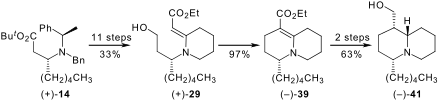
- reduced with lithium aluminium hydride in diethyl ether to give the alcohol (−)-23 in 97% yield (See Supporting Information File 1 for full experimental data). The corresponding methanesulfonate (−)-24 (66%) was then defunctionalised by an improved procedure, which entailed treatment with freshly prepared
- behaviour of five- and six-membered enaminones proved to be all too well founded. In the indolizidine series, the robust enaminone 17 survived reduction with lithium aluminium hydride, leaving only the saturated ester to be reduced. With the six-membered analogue 28, the enaminone unit was far more
- synthesis before the introduction of other incompatible functional groups (lactam, thiolactam, enaminone). The only feasible option was to go back to the chiral amine (+)-14, reduction of which with lithium aluminium hydride gave the unstable amino alcohol (+)-30 in 97% yield as long as the amine was added


Transition- metal/Lewis acid free synthesis of acyl benzothiophenes via C-C bond forming reaction
Beilstein J. Org. Chem. 2007, 3, No. 35, doi:10.1186/1860-5397-3-35

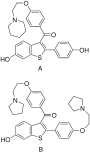
- generation of aluminium waste that needs to be disposed of. Additionally, formation of unidentified side products is very common in this reaction. Therefore, the use of this method especially in large scale preparation might present major drawbacks. To overcome these difficulties we, therefore, focused on



A convenient allylsilane- N-acyliminium route toward indolizidine and quinolizidine alkaloids
Beilstein J. Org. Chem. 2007, 3, No. 32, doi:10.1186/1860-5397-3-32
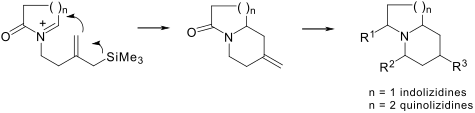
- chloride and CeCl3. The mixture was then hydrolysed with 1N HCl to give methylenindolizidinones 5a and 5b in a 4:1 ratio. Reduction of the mixture of lactams 5a and 5b with lithium aluminium hydride gave methylenindolizidines 6a and 6b which were separated by flash chromatography. Osmium tetroxide
- 26b with lithium aluminium hydride afforded a 4:1 mixture of methylenindolizidines 27a and 27b in quantitative yield. These isomers were separated. Palladium-catalysed hydrogenation of 27a was found to be stereoselective, giving a mixture of 28a and (-)-(dendroprimine) 22 in a 3:1 ratio. Using similar
- :20). Flash column chromatography gave pure 31a in 18% yield, but 29a and 30a could not be separated (50% yield). A mixture of the three isomers was used without purification for the next step. This mixture was then reduced with lithium aluminium hydride to give the indolizidines 28a, 22 and 29b. In


Other Beilstein-Institut Open Science Activities



