


Search results
Search for "calculations" in Full Text gives 926 result(s) in Beilstein Journal of Organic Chemistry. Showing first 200.
Facile approach to N,O,S-heteropentacycles via condensation of sterically crowded 3H-phenoxazin-3-one with ortho-substituted anilines
Beilstein J. Org. Chem. 2024, 20, 336–345, doi:10.3762/bjoc.20.34
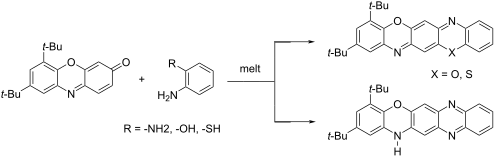
- –H proton. Therefore, three tautomeric forms are possible for 5 (Scheme 4), one of which, the 7H-tautomer 7b, inevitably adopts a bipolar or biradical structure. According to the data from the DFT calculations performed at the B3LYP/6-311++G(d,p) approximation (Figure S6, Supporting Information File
- reaction products as 12H-quinoxaline[2,3-b]phenoxazines was confirmed through DFT calculations, X-ray crystallography, and NMR spectroscopy. Electronic absorption spectra (Table 2 and Figures 5–7) and electrochemical properties (Table 3) of the heteropentacyclic compounds 4a–h, 5a–c, 6a,b, and 10c revealed
- ). The DFT calculations [32] were performed using the Gaussian 16 program package [33] with the B3LYP functional [34] and the 6-311++G(d,p) basis set. The structures corresponding to minima on the potential energy surface and states with broken symmetry [20] were found through complete optimization of


Unveiling the regioselectivity of rhodium(I)-catalyzed [2 + 2 + 2] cycloaddition reactions for open-cage C70 production
Beilstein J. Org. Chem. 2024, 20, 272–279, doi:10.3762/bjoc.20.28
- opening. Keywords: cycloadditions; DFT calculations; [70]fullerene; open-cage fullerenes; rhodium; Introduction The discovery of C60 (buckminsterfullerene) in 1985 [1] initiated the search for possible technological applications of fullerenes. Nowadays, applications for these carbon-based molecules have
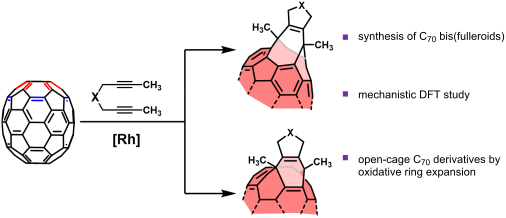
- group was substituted by a mesyl substituent and BIPHEP was used as a model phosphine ligand instead of Tol-BINAP to reduce the computational cost. The calculations, conducted at the B3LYP-D3/cc-pVTZ-PP(SMD=o-DCB)//B3LYP-D3/cc-pVDZ-PP level (see full computational details in Supporting Information File
- in both cases. This preference was rationalized by means of DFT calculations. Moreover, the photooxidation of one of the C–C double bonds of the new bis(fulleroids) afford open-cage C70 derivatives having a 12-membered ring opening. It is noteworthy to mention that examples of open-cage C70


Photochromic derivatives of indigo: historical overview of development, challenges and applications
Beilstein J. Org. Chem. 2024, 20, 228–242, doi:10.3762/bjoc.20.23
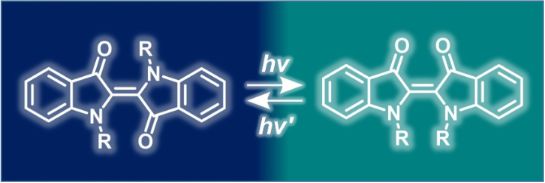
- '-dinitrobenzoylindigo 18b were provided by de Melo and co-workers in 2020 using modern femtosecond spectroscopic techniques as well as TD-DFT calculations [60]. In 1989, Takahashi and co-workers reported an important study of geometry and conformational stability of indigo and its N,N'-disubstituted derivatives [61][62
- along with theoretical calculations [43]. It was found that N-aryl substituents in combination with the polar solvents result in the rapid non-radiative deactivation upon excitation of the initial E-isomer of indigo. At the same time, N-aryl substituents significantly increased the barrier for the





Perspectives on push–pull chromophores derived from click-type [2 + 2] cycloaddition–retroelectrocyclization reactions of electron-rich alkynes and electron-deficient alkenes
Beilstein J. Org. Chem. 2024, 20, 125–154, doi:10.3762/bjoc.20.13
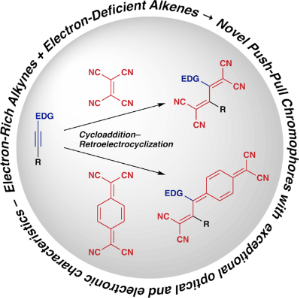
- also performed theoretical calculations, unveiling that the ring-opening step presented a higher energy barrier compared with the ring-formation step, particularly when the DCV compounds lacked aryl substituents. Subsequently, they successfully isolated the corresponding cyclobutene intermediate 13
- on the fullerene sphere. This was followed by a nucleophilic attack of the fullerene carbanion on one of the cyano groups, ultimately yielding 33. Computational calculations also suggested that the rearrangement was facilitated by the destabilization of the reactant due to steric interactions
- . The absolute configurations of the axially chiral TCBD and DCNQ derivatives were ascertained by a comparative analysis of the experimental CD spectra against the spectra derived from time-dependent density functional theory (TD-DFT) calculations. The axial chirality was stabilized by the steric


Electron-beam-promoted fullerene dimerization in nanotubes: insights from DFT computations
Beilstein J. Org. Chem. 2024, 20, 92–100, doi:10.3762/bjoc.20.10
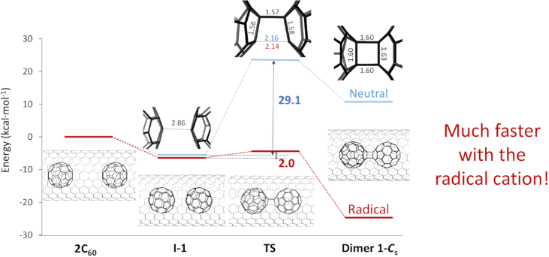
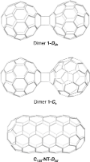
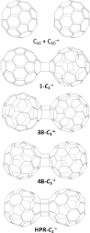
- pressures and high temperatures [13][14][15]. We aim to shed light in these reaction mechanisms and energy profiles by using complementary methodologies as standard density functional theory (DFT) calculations and first-principles Car–Parrinello molecular dynamics (CPMD) simulations. Firstly, we have
- (periodic calculations using VASP code) by comparing with other more standard procedures (non-periodic calculations using ADF code; see Computational methods for details) when computing the energy profile for the radical cation C60 + C60+. Besides, we computed the profile for the neutral dimerization C60
- -TEM images and movies will provide us a deeper understanding of fullerene coalescence processes in peapods. Computational Methods The Amsterdam Density Functional (ADF) code [21][22] was used for the electronic structure calculations and to optimize reactants, products, intermediates and transition




Optimizing reaction conditions for the light-driven hydrogen evolution in a loop photoreactor
Beilstein J. Org. Chem. 2024, 20, 74–91, doi:10.3762/bjoc.20.9
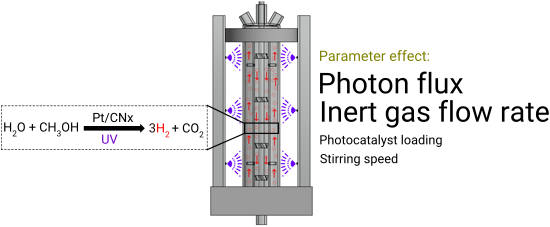
- an exhaust gas line. To align the results using photocatalysts from different batches, an adjustment factor of 2.212 was calculated. The calculations are shown in Supporting Information File 1, Figure S8. Design of experiments A DOE analysis was used to evaluate the effect of four operating


Cycloaddition reactions of heterocyclic azides with 2-cyanoacetamidines as a new route to C,N-diheteroarylcarbamidines
Beilstein J. Org. Chem. 2024, 20, 17–24, doi:10.3762/bjoc.20.3
- (sigma) = 0.0978) which were used in all calculations. The final R1 was 0.0693 (I > 2σ(I)) and wR2 was 0.1849 (all data). The refined twin ratio was 0.6748(18):0.3252(18). The experiment was accomplished on the automated X-ray diffractometer «Xcalibur Ruby» with CCD detector following standard procedures



Studying specificity in protein–glycosaminoglycan recognition with umbrella sampling
Beilstein J. Org. Chem. 2023, 19, 1933–1946, doi:10.3762/bjoc.19.144
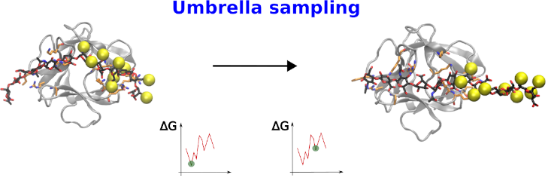
- analysis of the contacts between protein and GAG molecules established in the course of the simulation. Binding free energy calculations MM/GBSA (molecular mechanics generalized born surface area) model igb = 2 [48] from AMBER20 was used for free energy calculations on the trajectories obtained from RS
- manner more sound for the applied protocol, is to estimate PMF along the reaction coordinate. Such calculations also support the conclusion that the applied protocol did not succeed in returning the system to the original binding pose (Supporting Information File 1, Figures S9–S11). In comparison to the




Beyond n-dopants for organic semiconductors: use of bibenzo[d]imidazoles in UV-promoted dehalogenation reactions of organic halides
Beilstein J. Org. Chem. 2023, 19, 1912–1922, doi:10.3762/bjoc.19.142
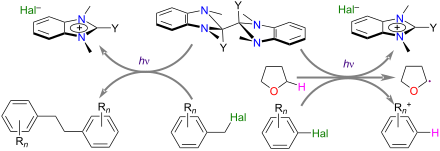
- potentials of the halides that can be reduced in this way, quantum-chemical calculations, and steady-state and transient absorption spectroscopy suggest that UV irradiation accelerates the reactions via cleavage of the dimers to the corresponding radical monomers. Keywords: dehalogenation; n-dopant
- weak shoulder at ca. 400 nm (ε400 ≈ 150 M−1 cm−1), whereas (Cyc-DMBI)2 exhibits only a strong feature with a maximum at 327 nm (εmax = 13000 M−1 cm−1). TD-DFT calculations (M06/6-31G(d,p), isolated molecules) qualitatively reproduce the different behavior of the two dimers: for (Cyc-DMBI)2 the S0→S1
- longer-time spectra with Cyc-DMBI• having a blue-shifted absorption relative to N-DMBI•, consistent with the observed features arising from the monomeric radicals. Intersystem crossing (ISC) from the singlet to triplet excited state is also a possibility and TD-DFT calculations suggest that the dimer T1



Controlling the reactivity of La@C82 by reduction: reaction of the La@C82 anion with alkyl halide with high regioselectivity
Beilstein J. Org. Chem. 2023, 19, 1858–1866, doi:10.3762/bjoc.19.138
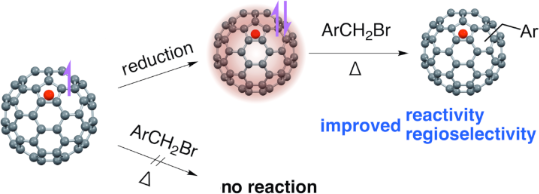
- analysis of the single-bonded adduct 3a revealed the addition site of the p-methoxybenzyl group on La@C2v-C82. Theoretical calculations indicated that the addition site carbons in neutral La@C2v-C82 have high spin density, whereas those in the La@C2v-C82 anion do not have high charge densities. Thus, the
- @Ih-C80]2− = −1.62 V vs Fc+/Fc; C602− = −1.50 V vs Fc+/Fc)). The different reactivity of [M3N@Ih-C80]2− was explained by theoretical calculations. The charge density of the highest occupied molecular orbital (HOMO) was more highly localized on the fullerene cage for [Lu3N@Ih-C80]2−, whereas it was
- 2299232 (for 3a) contains the supplementary crystallographic data for this study. This data was provided free of charge by the joint Cambridge Crystallographic Data Centre and Fachinformationszentrum Karlsruhe Access Structures Service. Theoretical calculations POAV (θσπ−90º) and charge densities values


Thienothiophene-based organic light-emitting diode: synthesis, photophysical properties and application
Beilstein J. Org. Chem. 2023, 19, 1849–1857, doi:10.3762/bjoc.19.137
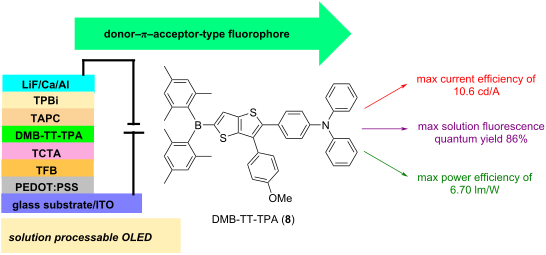
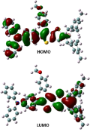
- . The high thermal stability is profitable for the preparation of stable and durable OLED devices. Computational chemistry Ground-state geometry optimization of DMB-TT-TPA (8) was performed using density functional theory (DFT) calculations with the Gaussian 16 software at the B3LYP/6-31G (d,p) level
- and TT units, the LUMO was found to be delocalized through the dimesitylboron and TT ring, the results being in line with the experimental values of our previous study [23]. On the basis of the optimized ground-state geometry, time-dependent DFT (TD-DFT) calculations were conducted in THF to
- computation data, 1H and 13C NMR spectra. Acknowledgements The authors thank Dilara Gunturkun for DFT calculations, Istanbul Technical University (ITU). Funding The authors thank THD-2023-44904, PTA-2023-44900, TGA-2023-44077, TDA-2022-43696 numbered ITU BAP Projects and 122Z568 numbered TUBITAK 1001 Project


Recent advancements in iodide/phosphine-mediated photoredox radical reactions
Beilstein J. Org. Chem. 2023, 19, 1785–1803, doi:10.3762/bjoc.19.131
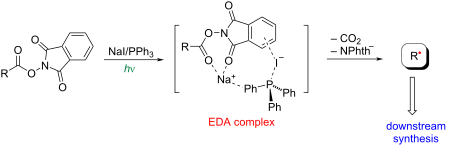
- esters 8, 9 without the requirements of phosphine or other photocatalysts (Scheme 5). Through the use of density functional theory (DFT) calculations, they elucidated the mechanism behind this process. It was revealed that the formation of a photoactive EDA complex, which subsequently generated alkyl




Selectivity control towards CO versus H2 for photo-driven CO2 reduction with a novel Co(II) catalyst
Beilstein J. Org. Chem. 2023, 19, 1766–1775, doi:10.3762/bjoc.19.129
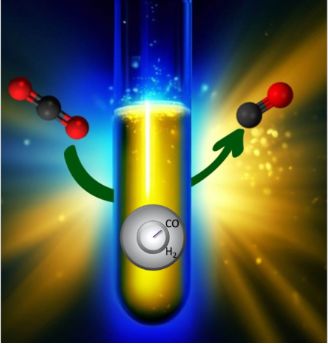
- proposed mechanism is only tentative and should be confirmed by further analyses and theoretical calculations. In any case, the addition of proton sources should be beneficial for the CO2 pathway, and in the system, we studied so far, the only plausible proton source is the bezimidazolidine derivative


Charge carrier transport in perylene-based and pyrene-based columnar liquid crystals
Beilstein J. Org. Chem. 2023, 19, 1755–1765, doi:10.3762/bjoc.19.128
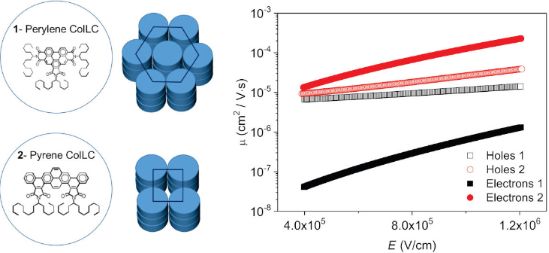
- molecular π-stacking inside the columns. The pyrene crystallizes bellow 166 °C, preserving the close-packed columnar rectangular structure of the mesophase. Photophysical analysis and numerical calculations assisted the interpretation of positive and negative charge carrier mobilities obtained from fitting
- charge transport behavior. DFT calculations assisted the interpretation of electron and hole migration mechanism using the frontier orbital energies and the conjugation within the π-system. Results and Discussion The syntheses of 1 and 2 were previously published in [25] and [26], respectively. 1 is a
- ][48]. RIJ requires the specification of an auxiliary basis set for the Coulomb part (Def2/J) and a numerical integration grid for the exchange part (DefGrid-2) [49]. Analytical harmonic vibrational frequency calculations were conducted to verify if the ground state is a minimum on the potential energy


Unprecedented synthesis of a 14-membered hexaazamacrocycle
Beilstein J. Org. Chem. 2023, 19, 1728–1740, doi:10.3762/bjoc.19.126
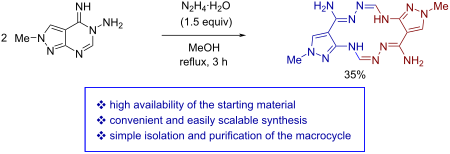
- 156.6, 152.1, 151,9, 128.3, 105.6 ppm and 160.9, 158.9, 157.4, 123.3, 98.4 ppm, respectively. The corresponding experimental shifts (155.0, 151.8, 149.9, 128.4, 105.4 ppm) were in good agreement with the structure 8. It is noteworthy that the DFT B3LYP/6-311++G(d,p) calculations using the PCM solvation
- pyrazolopyrimidine 8 into macrocycle 5 in MeOH solution were estimated by the DFT B3LYP/6-311++G(d,p) calculations. Relative Gibbs free energies of the starting, final, and intermediate molecular systems (Figure 1) were calculated using the Gibbs free energies for the most stable isomers of 8, macrocycle 5
- that the geometry of the intermediate bis-amidrazone C facilitates macrocycle 5 formation. The DFT B3LYP/6-311++G(d,p) calculations of ten different tautomers and stereoisomers of bis-amidrazone C (DMSO and MeOH solutions) revealed that the structure shown in Scheme 6 is the most stable. Clearly, the


Effects of the aldehyde-derived ring substituent on the properties of two new bioinspired trimethoxybenzoylhydrazones: methyl vs nitro groups
Beilstein J. Org. Chem. 2023, 19, 1713–1727, doi:10.3762/bjoc.19.125
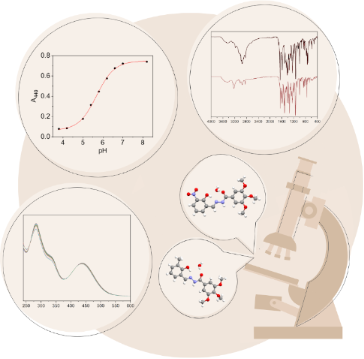
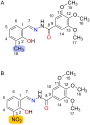
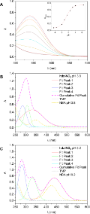
- liquors and, in both cases, XRD confirmed the obtention of the (E)-isomer, in an anti-conformation. Computational calculations (gas and water phases) were performed in order to confirm some of the structural and vibrational aspects of the compounds. An important intramolecular H bond involving the
- compounds are stable at physiological-like conditions, especially the methyl-derived one, which qualifies them for further toxicological and activity studies, such as those involving trivalent metal ions sequestering in the context of neurodegenerative diseases. Keywords: DFT calculations; N-acylhydrazones
- calculate the electrostatic potential over an electronic density map as well. For hdz-NO2, results show the alternated slipped stack motif involves the assembly of portions with opposite electrostatic potentials. Computational calculations were performed in order to confirm some of the structural and






A deep-red fluorophore based on naphthothiadiazole as emitter with hybridized local and charge transfer and ambipolar transporting properties for electroluminescent devices
Beilstein J. Org. Chem. 2023, 19, 1664–1676, doi:10.3762/bjoc.19.122
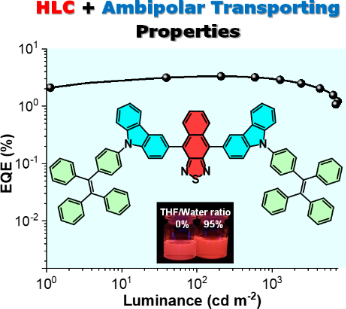
- MALDI-TOF-MS techniques. To examine the electronic properties of D–A TPECNz, density functional theory (DFT) calculations at the B3LYP level of theory with the 6-31G(d,p) basis set were performed. It has been previously reported that the twist angle of the D–A segment has a significant role in
- . To further figure out excited-state properties of TPECNz, the natural transition orbitals (NTOs) of singlet (S) and triplet (T) excited states were executed based on time-dependent (TD)-DFT calculations at the CAM-B3LYP/6-31G(d) level of theory. As shown in Figure 1b, the hole and particle of TPECNz
- characteristics of HLCT and weak AIE were clearly evidenced by a solvatochromic study, emission in THF/water investigation, and theoretical calculations. These synergetic properties could benefit for effective utilization of excitons in the OLED. A collaborative consequence of its D–A–D-type structure, a strong


Benzoimidazolium-derived dimeric and hydride n-dopants for organic electron-transport materials: impact of substitution on structures, electrochemistry, and reactivity
Beilstein J. Org. Chem. 2023, 19, 1651–1663, doi:10.3762/bjoc.19.121
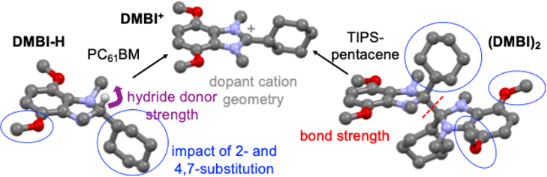
- previously reported for the Y = cyclohexyl, R = R' = H derivative 1e2 (1.640(4) Å) [14], despite DFT calculations indicating that the former dimer is considerably more weakly bonded [8][14] and kinetic evidence for the “cleavage-first” mechanism occurring in doping reactions using 1b2 but not 1e2 (see below
- according to: where ΔGdiss(12) is the free-energy change for dissociation of 12 to 1• (dissociation energetics are not estimated in the present work, but have been estimated using DFT calculations for 1b–e2 in previous works [8][14] and, in favorable cases, can be experimentally estimated using electron
- localized; indeed DFT calculations for the Y = alkyl 1e• derivative indicate spin density almost entirely on the 2-position of the five-membered ring, while for Y = aryl and metallocenyl examples 1b•, 1c•, and 1d• there is substantial spin delocalization onto the Y-substituents [14][55]. Different extents


Sulfur-containing spiroketals from Breynia disticha and evaluations of their anti-inflammatory effect
Beilstein J. Org. Chem. 2023, 19, 1604–1614, doi:10.3762/bjoc.19.117
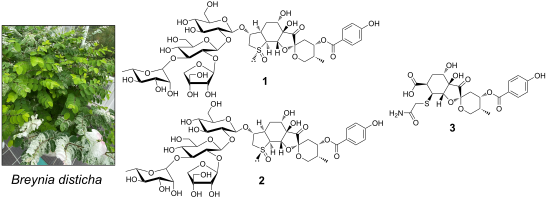
- electrospray ionization HRESIMS analysis, and quantum chemical electronic CD calculations. Furthermore, the absolute configurations of sugar residues were determined by derivatization of the hydrolysates with ʟ-cysteine methyl ester and o-tolyl isothiocyanate followed by HPLC analysis. The anti-inflammatory
- ′, and 24 conformers for 3. The geometry of each conformer was optimized using DFT calculations at the B3LYP/6-31G(d) level of theory [20][21] with the conductor-like polarizable continuum model (CPCM) solvent model (MeOH) and Gibbs free energy was calculated subsequent frequency calculations. Time
- -dependent (TD)-DFT calculations at the B3LYP/6-31+G(d,p) level with CPCM solvent model (MeOH) [22] were performed for the optimized conformers. The resulting ECD spectra calculated for each conformer were averaged using Boltzmann populations evaluated at 300 K from Gibbs free energy calculated from the



Complexes of resorcin[4]arene with secondary amines: synthesis, solvent influence on “in-out” structure, and theoretical calculations of non-covalent interactions
Beilstein J. Org. Chem. 2023, 19, 1525–1536, doi:10.3762/bjoc.19.109
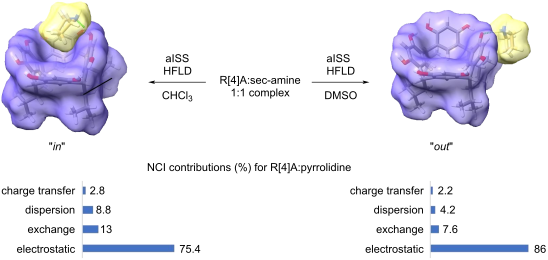
- , finally, the structure with the lowest energy, with the functional PBE0-D4/mTZVPP/CPCM. The Hartree–Fock plus London dispersion (HFLD) method was used for the study of non-covalent interactions (NCI). The calculations lead to the conclusion that a reduction in electrostatic interactions and an increase in
- exchange and dispersion interactions in CHCl3 in relation to DMSO are the driving forces behind the placement of sec-amine molecules into the R[4]A cavity and the formation of “in” type complexes. Keywords: complexes; DFT calculations; hydrogen bond; resorcin[4]arene; supramolecular chemistry
- atoms, presenting a challenging and time-consuming task for geometry optimization calculations and screening via DFT methods. Recent advancements have introduced fast semi-empirical DFT methods such as xTB [15], which enable their use in preliminary screening for molecular dynamics or searching for




Unraveling the role of prenyl side-chain interactions in stabilizing the secondary carbocation in the biosynthesis of variexenol B
Beilstein J. Org. Chem. 2023, 19, 1503–1510, doi:10.3762/bjoc.19.107
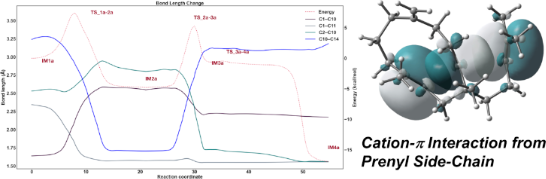
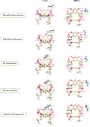
- possibility of through-space interactions with prenyl side chains using DFT calculations. Our calculations show that (i) the unstable secondary carbocation is stabilized by the cation–π interaction from prenyl side chains, thereby lowering the activation energy, (ii) the four-membered ring formation is
- , computational chemistry including DFT [5][6][7][8][9], QM/MM [10][11][12][13][14][15][16] and QM/MM MD [14][15][16][17] calculations have been used for the biosynthetic studies of terpene/terpenoids [18]. Terpene-forming reactions, which involve various types of carbocation species stabilized by
- investigated the biosynthetic pathways using DFT calculations to validate the above-mentioned aspects. Results and Discussion The detailed structures of the intermediates and transition states were elucidated by computational analysis. Interestingly, we have found an interaction between the secondary



N-Sulfenylsuccinimide/phthalimide: an alternative sulfenylating reagent in organic transformations
Beilstein J. Org. Chem. 2023, 19, 1471–1502, doi:10.3762/bjoc.19.106
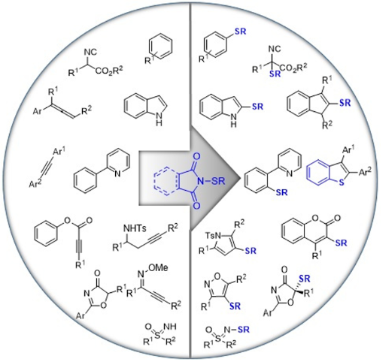
- first thiolation and intramolecular cyclization of propargyl azides the removal of N2 and a proton. Subsequently, monothiolated perroles were subjected to the second thiolation process to prepare 3,4-bisthiolated pyrroles. Cyclic voltammetry and DFT calculations revealed that the 3,4-bisthiolated




Cyclization of 1-aryl-4,4,4-trichlorobut-2-en-1-ones into 3-trichloromethylindan-1-ones in triflic acid
Beilstein J. Org. Chem. 2023, 19, 1460–1470, doi:10.3762/bjoc.19.105
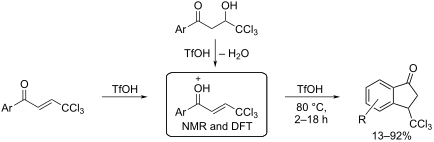
- , the O-protonated forms ArC(=OH+)CH=CHCCl3, which are then cyclized into the target CCl3-indanones. These cations have been studied experimentally by means of NMR spectroscopy in TfOH and theoretically by DFT calculations. Under the same superacidic conditions in TfOH, CCl3-hydroxy ketones (1-aryl
- =CHC(=O)Me] with arenes in Brønsted superacid TfOH (triflic acid, CF3SO3H) furnishes 3-methyl-1-trichloromethylindenes (Scheme 1a) [11]. Based on NMR analysis in TfOH and theoretical DFT calculations, it has been found that the reaction proceeds through an intermediate formation of the O-protonated
- calculations, and to study their intramolecular cyclization in triflic acid into the synthetically and medicinally relevant (see recent reviews [12][13][14][15][16][17][18]) indan-1-ones. Results and Discussion The synthesis of 1-aryl-4,4,4-trichloro-3-hydroxybutan-1-ones (CCl3-hydroxy ketones) 1a–o was


Application of N-heterocyclic carbene–Cu(I) complexes as catalysts in organic synthesis: a review
Beilstein J. Org. Chem. 2023, 19, 1408–1442, doi:10.3762/bjoc.19.102
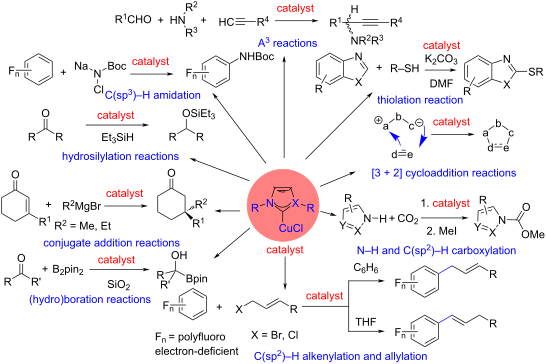
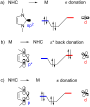
- as σ-donor ligands only. However, subsequent experimental [18] and theoretical [19] studies revealed that a simultaneous back donation from the d-orbital of the metal to the π*-orbital of the NHC occurs in these species, which was also corroborated by energy decomposition analysis (EDA) calculations
- on C1 enhancing its nuceophilicity (Figure 9). The Mulliken charge, obtained from the NBO calculations, was found to be almost double at the C–H atom in the complexed alkyne (−0.294) as compared to the free alkyne (−0.129). Furthermore, as depicted in Figure 10, the HOMO–LUMO energy gap in the NHC–Cu










Organic thermally activated delayed fluorescence material with strained benzoguanidine donor
Beilstein J. Org. Chem. 2023, 19, 1289–1298, doi:10.3762/bjoc.19.95
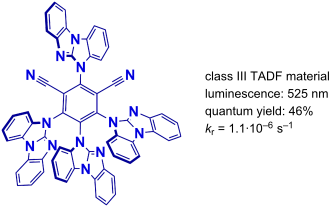
- region of ca. 380–460 nm with ε up to 1900 M−1 cm−1 (Table 2). Both loCT and deCT bands are observed for the benchmark material 4CzIPN [16] while originating from HOMO to LUMO transition in line with the theoretical calculations (Tables S1, S3, and S4, Supporting Information File 1). All CT bands
- experience a very weak solvatochromic effect with increasing solvent polarity from cyclohexane to dichloromethane. This indicates only minor change of the dipole moment upon vertical excitation from S0 (6.4 D) to S1 (7.2 D) excited states according to the TD-DFT theoretical calculations (Table S2, Supporting
- π-conjugation. The twisted structure of the 4BGIPN ensures that the donor groups accommodate the highest occupied molecular orbital (HOMO) while the acceptor 4,6-dicyanobenzene moiety contains the lowest unoccupied molecular orbital (LUMO) and is supported by the TD-DFT calculations. A comparison of





