


Search results
Search for "correlation" in Full Text gives 644 result(s) in Beilstein Journal of Organic Chemistry. Showing first 200.
Methodologies for the synthesis of quaternary carbon centers via hydroalkylation of unactivated olefins: twenty years of advances
Beilstein J. Org. Chem. 2021, 17, 1565–1590, doi:10.3762/bjoc.17.112
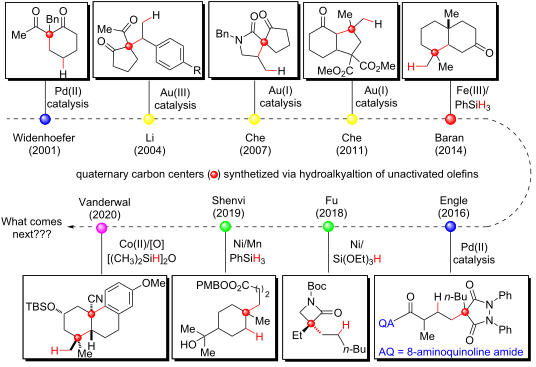
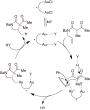
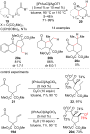
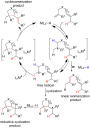
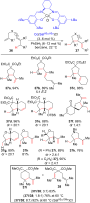
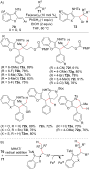
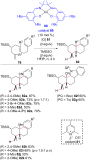
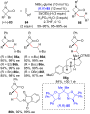
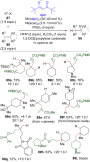
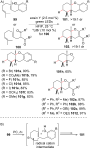
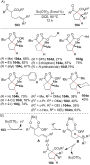
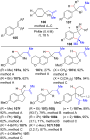
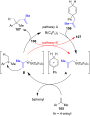
- suggested that iridium serves as a π-Lewis acid (although one could propose a C–H activation pathway) that activates the olefin by coordination due to the correlation observed between the nature of the Ir counterion and the reaction yields. Radical-based approaches Olefin hydroalkylation via metal hydride













Chemical synthesis of C6-tetrazole ᴅ-mannose building blocks and access to a bioisostere of mannuronic acid 1-phosphate
Beilstein J. Org. Chem. 2021, 17, 1527–1532, doi:10.3762/bjoc.17.110
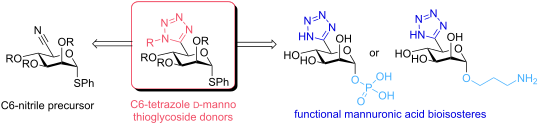
- of the PMB group on the tetrazole ring for each compound. For 11, a correlation of tetrazole Cq (δC = 150.4 ppm) with the benzylic protons of the PMB group (δH = 5.66 ppm, see Supporting Information File 1, Figure S3), was observable. Similar analysis for 12 indicated no such correlation. In order to


Cascade intramolecular Prins/Friedel–Crafts cyclization for the synthesis of 4-aryltetralin-2-ols and 5-aryltetrahydro-5H-benzo[7]annulen-7-ols
Beilstein J. Org. Chem. 2021, 17, 1481–1489, doi:10.3762/bjoc.17.104
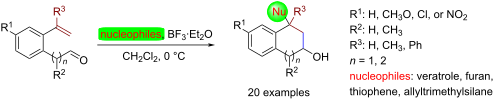
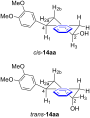
- 13C NMR chemical shift for C2 is expected to be in the range of 60 to 70 ppm and the assignment of H3 was based on the HSQC correlation between H3 and C2. Then, H1 and H2 could be assigned by COSY and HSQC experiments. Following that, NOE analysis was applied to analyze the relative cis- and trans
- -configuration. If there is an NOE correlation between H1 and H3, and meanwhile H1 and H3 also have a strong NOE correlation with H2a, the compound is assigned to be cis-configured. Otherwise, it was assigned to be the trans-isomer (see Supporting Information File 1 for details). Having determined the suitable




Analogs of the carotane antibiotic fulvoferruginin from submerged cultures of a Thai Marasmius sp.
Beilstein J. Org. Chem. 2021, 17, 1385–1391, doi:10.3762/bjoc.17.97
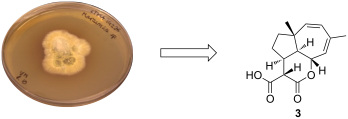
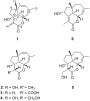
- (δH 4.89) and H-13 (δH 1.01) in the COSY spectrum (Figure 2). Furthermore, the relative configurations of C-6 and C-10 were elucidated by the ROESY correlation (Figure 3) depicted between H-6 (δH 2.57) and H-10 (δH 2.75). All these correlations also support the structure of compound 2. Metabolite 4



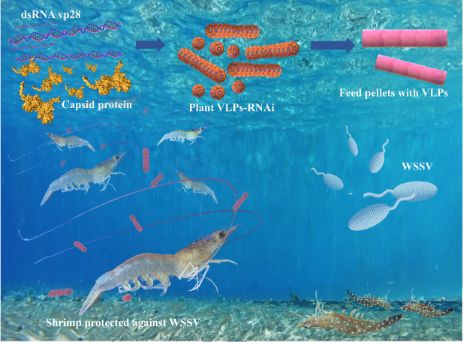
Antiviral therapy in shrimp through plant virus VLP containing VP28 dsRNA against WSSV
Beilstein J. Org. Chem. 2021, 17, 1360–1373, doi:10.3762/bjoc.17.95
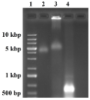
- difficult. The correlation of the TEM and EMSA results suggests that the band in the agarose gel migrated slightly less than the wild type CCMV corresponds to, in multiple icosahedral capsids and short tubes with dsRNA. Similar results have been obtained with long ssRNA [42]. In contrast, the band that is



A new glance at the chemosphere of macroalgal–bacterial interactions: In situ profiling of metabolites in symbiosis by mass spectrometry
Beilstein J. Org. Chem. 2021, 17, 1313–1322, doi:10.3762/bjoc.17.91
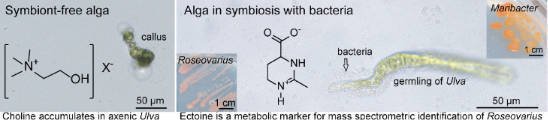
- and between thallus and rhizoid tissues. Significant features were searched in the PCA loading plots and also in the pattern hunter plots obtained from a correlation analysis based on the Pearson correlation coefficient R. A one-way ANOVA with Fisher's LSD post hoc test (P-value < 0.05) was performed



Stereoselective syntheses of 3-aminocyclooctanetriols and halocyclooctanetriols
Beilstein J. Org. Chem. 2021, 17, 705–710, doi:10.3762/bjoc.17.59

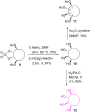
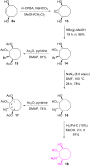
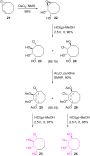
- correlation is due to the small coupling constant (J = 2.2 Hz). On the other hand, the resonance signal of H-3 appears as a doublet of doublets at 3.95 ppm with coupling constants of J = 8.6 and 2.2 Hz. The large coupling constant (J = 8.6 Hz) clearly supports the trans relation of the protons H-3 and H-4 and
- at 5.62 ppm is strong. This strong correlation is due to the large coupling constant (J = 8.7 Hz). The fact that the proton H-4 appears as a doublet of doublet of doublets with coupling constants of J = 13.1, J = 8.7, and 3.3 Hz also supports the trans relation (J = 8.7 Hz) of the protons H-4 and H-3



Menthyl esterification allows chiral resolution for the synthesis of artificial glutamate analogs
Beilstein J. Org. Chem. 2021, 17, 540–550, doi:10.3762/bjoc.17.48
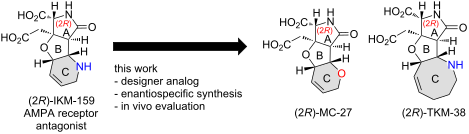
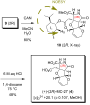
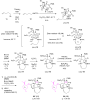
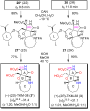
- important NOESY correlation observed for 10* is also shown in Scheme 4. The conformational analysis of the (2S)-isomer carried out by CONFLEX (MMFF94S), however, was not very encouraging since the four contiguous single bonds between the heterotricycle and the menthyl group were found to be freely rotating








CF3-substituted carbocations: underexploited intermediates with great potential in modern synthetic chemistry
Beilstein J. Org. Chem. 2021, 17, 343–378, doi:10.3762/bjoc.17.32
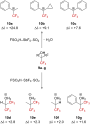
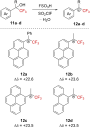
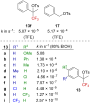
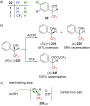
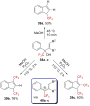
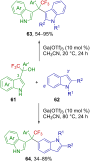
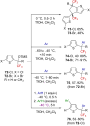
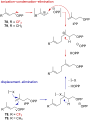
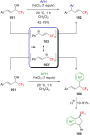
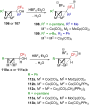
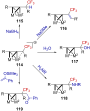
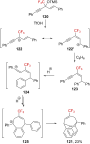
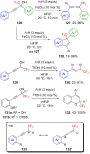
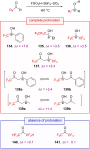
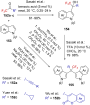
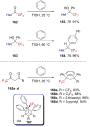
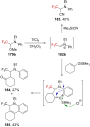
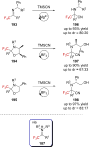
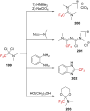
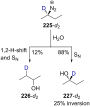
- correlation, established as log(k) = f(σ+), gave a linear dependence of the rate with the σ+ parameters of the aryl substituents, with a behavior in agreement with the transient formation of a carbenium ion. The slope of the straight line, ρ+ = −7.46, reflects the very high electron demand induced by the CF3
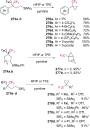
- obtained. Similarly, the nature of the aromatic substituent influenced the solvolysis rate, with an observed acceleration for substrates adorned with electron donor substituents and a deceleration for those carrying electron-withdrawing substituents. The Hammett–Brown correlation gave a straight line, with
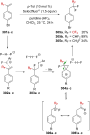
- ]. The Hammett–Brown correlation considering derivatives 34 (Figure 6) gave a linear free-energy correlation with ρ+ = −3.98, which is approximately half the value of those previously reported for the benzylic α-CF3-substituted tosylate derivatives 13 substituted by a methyl group (Figure 2) [43][48
































Exploring the possibility of using fluorine-involved non-conjugated electron-withdrawing groups for thermally activated delayed fluorescence emitters by TD-DFT calculation
Beilstein J. Org. Chem. 2021, 17, 210–223, doi:10.3762/bjoc.17.21
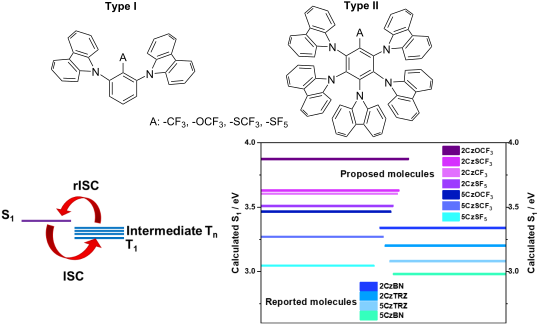
- lack of correlation between the computed |VSOC|2 × exp[−(ΔEST2)] and the experimentally determined krISC values. The significantly higher experimental krISC can be explained by the presence of intermediate triplet states leading to second order spin-vibronic coupling to mediate rISC in 5CzTRZ [24


Control over size, shape, and photonics of self-assembled organic nanocrystals
Beilstein J. Org. Chem. 2021, 17, 42–51, doi:10.3762/bjoc.17.5
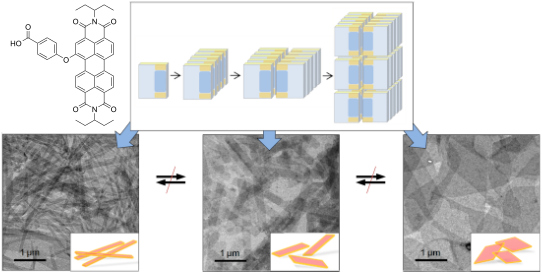
- - and morphology-dependent properties arising from confinement effects and strong interactions between neighboring atoms [1][2][3]. The correlation between nanoparticle size and the related electronic and optical properties has extensively been studied, leading to applications in novel technologies and




The fluorescence of a mercury probe based on osthol
Beilstein J. Org. Chem. 2021, 17, 22–27, doi:10.3762/bjoc.17.3
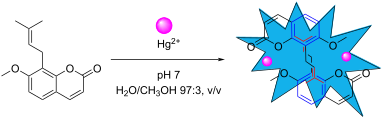
- selectivity for Hg2+. The fluorescence intensity of OST showed a good linear correlation with the Hg2+ concentration (6.0 × 10⁻⁵ to 24.0 × 10⁻⁵ mol∙L−1, R2 = 0.9954), and the detection limit of the probe was 5.04 × 10⁻⁸ mol∙L−1, which can be used for the determination of Hg2+ traces. Keywords: fluorescence


Molecular basis for protein–protein interactions
Beilstein J. Org. Chem. 2021, 17, 1–10, doi:10.3762/bjoc.17.1
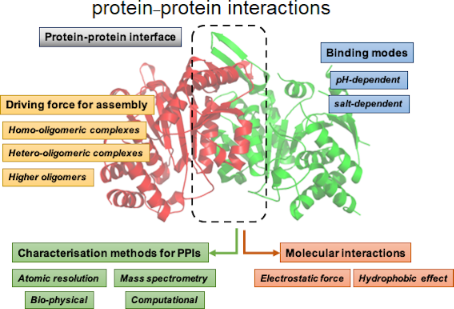
- strength dependence is β-lactamase and its protein inhibitor BLIP, where binding decreases significantly as the salt concentration increases [53]. Chen et al. analysed the structural and thermodynamic data of 113 heterodimeric complexes and discussed the correlation between binding affinity and amount of


Secondary metabolites of Bacillus subtilis impact the assembly of soil-derived semisynthetic bacterial communities
Beilstein J. Org. Chem. 2020, 16, 2983–2998, doi:10.3762/bjoc.16.248
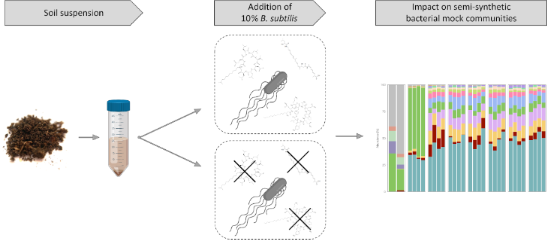
- surfactin mutant. A similar but smaller correlation with two bacillaene mutant-treated communities was detectable as well. These results imply a negative impact of either surfactin or bacillaene on the four ASVs. Interestingly, the vector-based analysis suggests that, depending on the ASVs, the genus
- diversity was estimated with the Shannon diversity index in the R package phyloseq [76]. The beta diversity was determined by dissimilarities among the samples with the Bray–Curtis distance and visualised in a nMDS with the R package vegan [78]. The correlation of individual ASVs on the overall bacterial
- correlation. Abundance ratios for each genus and replicate (points) in the control community compared to the WT-treated (A) and to the sfp-treated community (B). Red-box plots highlight the statistical significance, which is defined as P ≤ 0.05 (*), P ≤ 0.01 (**), and P ≤ 0.001 (***). The relative abundance


Changed reactivity of secondary hydroxy groups in C8-modified adenosine – lessons learned from silylation
Beilstein J. Org. Chem. 2020, 16, 2854–2861, doi:10.3762/bjoc.16.234

- the evaluation. The H3’-signal was easily assigned owing to its HMBC correlation with C5’, which is missing for all of the other protons. Its distinct multiplicity in the two spectra in Figure 1 already indicates a different coupling environment in the two isomers. The merged signal of H2’ and 3’-OH
- in Figure 1A reveals a HMBC correlation of both protons with C4’, but only H2’ shows a correlation with C1’. In Figure 1B, the OH signal shows a correlation with C1’, and, very importantly, not with C4’, which in combination with the distinct multiplicity of H3’ clearly indicates that the spectrum in
- measurements. A) The merged 1H signal at 5.17 ppm results from the H2’ and an OH group, since the H3’ can be clearly identified through the HMBC correlation with C5’. The zoomed region shows the HMBC correlation of the OH group with C4’, which together with the weaker signal between H2’ and C1’ identifies this


Nocarimidazoles C and D, antimicrobial alkanoylimidazoles from a coral-derived actinomycete Kocuria sp.: application of 1JC,H coupling constants for the unequivocal determination of substituted imidazoles and stereochemical diversity of anteisoalkyl chains in microbial metabolites
Beilstein J. Org. Chem. 2020, 16, 2719–2727, doi:10.3762/bjoc.16.222
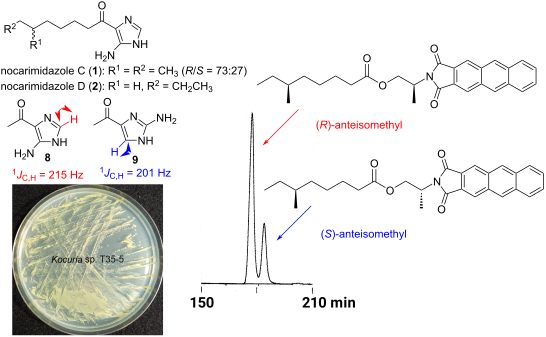
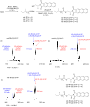
- -11/H-14, H-12/H-13) were defined by the analysis of the COSY spectrum (Figure 2). Meanwhile, HMBC correlations from the two methyl protons (H-13 and H-14) to well-resolved C-11, and C-12, along with a correlation from H-14 to C-10, allowed to assemble an anteisomethyl terminus from C-10 to C-14. The
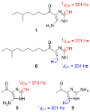
- correlation from H-2 to C-6 established the linkage between the chain part and the imidazole ring (Figure 2). The remaining question was whether the amino group is bound to C-2 or C-5 in the imidazole ring. A literature survey suggested a diagnostic use of 1JC,H coupling constants [23]. In imidazole and ʟ
- of one doublet methyl and one methine signal. Two aliphatic fragments, H-7/H-8/H-9 and H-14/H-15, were identified from COSY correlation data. These fragments were then joined into a nonbranching linear alkyl chain by HMBC correlations from H-15 to C-13 and H-8 to C-10, though H-11/C-11 and H-12/C-12



A heterobimetallic tetrahedron from a linear platinum(II)-bis(acetylide) metalloligand
Beilstein J. Org. Chem. 2020, 16, 2701–2708, doi:10.3762/bjoc.16.220
- , correlation of the proton. Low- and high-resolution electrospray ionization mass spectrometry (ESIMS) spectra were recorded on a Bruker Daltonic LTQ Orbitrap XL. The UV–vis spectrum was recorded on a Specord 200 spectrometer (Analytik Jena AG) at ambient temperature. 4-Ethynylaniline (1) [50], trans-[Pt(PBu3


Optical detection of di- and triphosphate anions with mixed monolayer-protected gold nanoparticles containing zinc(II)–dipicolylamine complexes
Beilstein J. Org. Chem. 2020, 16, 2687–2700, doi:10.3762/bjoc.16.219
- to better control the properties. Future work will aim at establishing this correlation. In addition, the substrate scope of the mixed monolayer-protected AuNPs will be extended by introducing other receptor motifs. An attractive option would be the use of Schmuck’s guanidiniocarbonylpyrrole moiety


Synthesis and characterization of S,N-heterotetracenes
Beilstein J. Org. Chem. 2020, 16, 2636–2644, doi:10.3762/bjoc.16.214

- precursors and amines [11][12], the series of S,N-heteroacenes has been systematically extended from pentamer SN5 [13][14] up to a stable and still soluble S,N-heterotridecacene SN13 [7][15][16][17]. Correlation of, e.g., absorption or redox potentials vs conjugated chain length led to interesting structure


Anion exchange resins in phosphate form as versatile carriers for the reactions catalyzed by nucleoside phosphorylases
Beilstein J. Org. Chem. 2020, 16, 2607–2622, doi:10.3762/bjoc.16.212
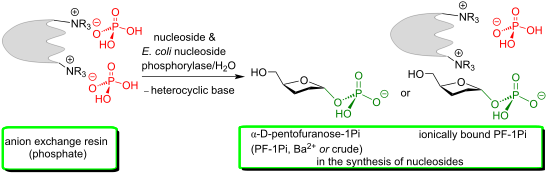
- : 87.90 (C1′), 73.48 (C2′), 70.61 (C3′), 85.86 (C4′), 61.63 (C5′); furfuryl fragment: 141.81 (correlation with the proton resonance at 7.56 ppm), 110.43 (correlation with the proton resonance at 6.38 ppm), 106.63 (correlation with the proton resonance at 6.25 ppm), the C1-ipso at 152.87 and the CH2


Synthesis of 4-substituted azopyridine-functionalized Ni(II)-porphyrins as molecular spin switches
Beilstein J. Org. Chem. 2020, 16, 2589–2597, doi:10.3762/bjoc.16.210
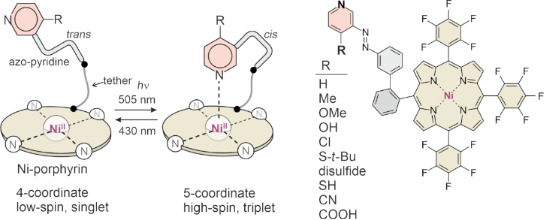
- state. 4-Substituted pyridines exhibit a distinguished correlation between basicity and coordination strength as axial ligands with Ni-porphyrins [12]. Hence, Hammet σ values might be used to predict and to systematically optimize the performance of the spin switch. In previous studies we have shown


Comparative ligand structural analytics illustrated on variably glycosylated MUC1 antigen–antibody binding
Beilstein J. Org. Chem. 2020, 16, 2540–2550, doi:10.3762/bjoc.16.206
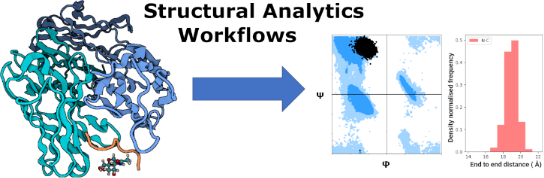
- but this shows no correlation to the effect of glycosylation, for example, Pro6, Ala7 (Figure S1 and S2 in Supporting Information File 1), and finally, the conformational preference seen for glycosylation in solution aligns with the preference seen for both bound antigens, for example, Asp3 and Thr4

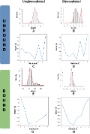


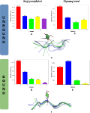
NMR Spectroscopy of supramolecular chemistry on protein surfaces
Beilstein J. Org. Chem. 2020, 16, 2505–2522, doi:10.3762/bjoc.16.203
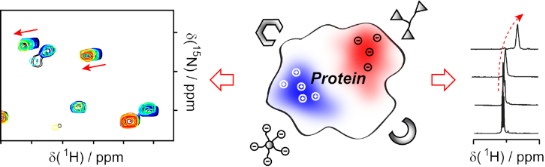
- the ligand needs to dissociate again from the protein in order to be detected. Therefore, strong (nM or better) binders are not suitable for these experiments. No information about the binding site(s) on the protein is obtained. Magnetization transfer via NOE depends on a molecule’s correlation




Conformational preferences of fluorine-containing agrochemicals and their implications for lipophilicity prediction
Beilstein J. Org. Chem. 2020, 16, 2469–2476, doi:10.3762/bjoc.16.200
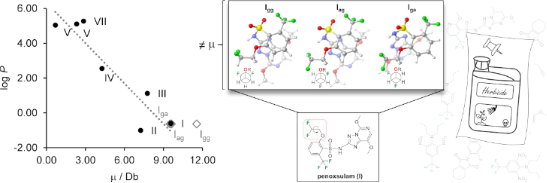
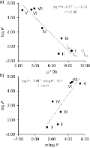
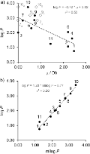
- organic molecule, as above mentioned. Therefore, this work also seeks to assess a correlation between calculated μ values and experimental log P measures, in order to unveil the dependence of lipophilicity with molecular conformation. Results and Discussion Conformational analysis of penoxsulam Given the
- known in the literature [23] and, accordingly, it differs from the energy minimum conformations computed in this work. However, a conformational search in the gas phase, as performed herein, is necessary to fully understand the intramolecular interactions and to establish the correlation between μ and
- log P, since this physicochemical property does not depend on the geometry of penoxsulam inside a biological receptor. Effect of molecular conformation on log P Herein, we aim at evaluating the correlation of molecular conformation with lipophilicity, described in terms of the n-octanol/water



Styryl-based new organic chromophores bearing free amino and azomethine groups: synthesis, photophysical, NLO, and thermal properties
Beilstein J. Org. Chem. 2020, 16, 2282–2296, doi:10.3762/bjoc.16.189

- with different polarities and showed absorption in the visible region and green-red emission with low quantum yields. The absorption and the emission maxima were shifted bathocromically by increasing the solvent’s polarity. However, there was no correlation with the polarity parameters of the solvents
- absorption maxima (λabsmax), oscillator strengths (f), and relevant transitions and their contributions (w) are given in Table 1 and Table S1 in Supporting Information File 1). The shifts of the absorption maxima of the dyes were little dependent on the solvent polarity and there was no obvious correlation
- all dyes 3–7 and 8–12 were recorded in the same solvents of various polarities that were used in the UV–vis studies, and the results are summarized in Table 1 and Table S1 (Supporting Information File 1). All dyes showed fluorescence properties and there was no direct correlation of the increase of





