


Search results
Search for "cycloaddition" in Full Text gives 739 result(s) in Beilstein Journal of Organic Chemistry. Showing first 200.
Cs2CO3-Promoted reaction of tertiary bromopropargylic alcohols and phenols in DMF: a novel approach to α-phenoxyketones
Beilstein J. Org. Chem. 2022, 18, 420–428, doi:10.3762/bjoc.18.44
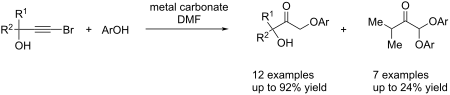
- involved in various transformations including homo- and cross-coupling [1][2][3][4][5][6][7], addition [1][8][9], cycloaddition [1][10][11] and other reactions. Of particular synthetic value is the addition to the triple bond of bromoacetylenes to provide vinyl adducts, which can undergo numerous

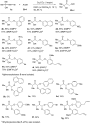


Menadione: a platform and a target to valuable compounds synthesis
Beilstein J. Org. Chem. 2022, 18, 381–419, doi:10.3762/bjoc.18.43
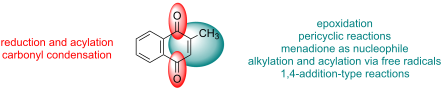
- -LED light [111]. Under these conditions, menadione (10) and terminal alkynes 66 underwent a [2 + 2] cycloaddition reaction generating compounds containing cyclobutene rings (67a–c), that are important precursors in natural products syntheses. It is important to note that the choice of the blue-LED


Borylated norbornadiene derivatives: Synthesis and application in Pd-catalyzed Suzuki–Miyaura coupling reactions
Beilstein J. Org. Chem. 2022, 18, 368–373, doi:10.3762/bjoc.18.41
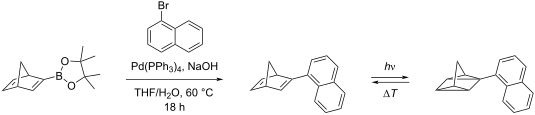
- recently gained considerable attention because of its ability to store light-energy by the photo-induced intramolecular [2 + 2] cycloaddition to the metastable quadricyclane [1][2][3][4][5][6][7]. The latter may be transformed back to the starting norbornadiene in an exothermic process upon heating or


Synthesis of 5-unsubstituted dihydropyrimidinone-4-carboxylates from deep eutectic mixtures
Beilstein J. Org. Chem. 2022, 18, 331–336, doi:10.3762/bjoc.18.37
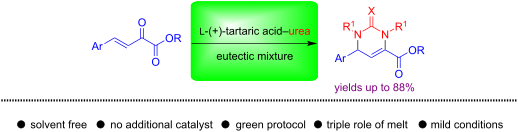
- replacement of organic solvents. The melts are stable against air and have very low vapor pressures resembling the properties of ionic liquids. In addition, the polarity of these melts is very high [33]. Recently, we have explored several organic transformations such as coupling reaction, cycloaddition


A Se···O bonding catalysis approach to the synthesis of calix[4]pyrroles
Beilstein J. Org. Chem. 2022, 18, 325–330, doi:10.3762/bjoc.18.36
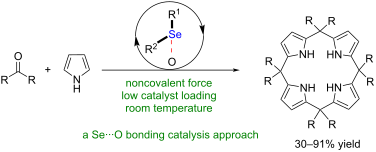
- phosphonium selenide catalysts which showed catalytic activity in assembly reactions [41], Michael addition reactions [41], Rauhut–Currier reactions [42], cyanosilylation reactions [43], and cycloaddition of vinylindoles through chalcogen–π bonding catalysis [44]. Our previous works demonstrated that Se···O



Site-selective reactions mediated by molecular containers
Beilstein J. Org. Chem. 2022, 18, 309–324, doi:10.3762/bjoc.18.35
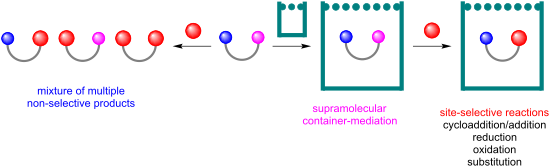
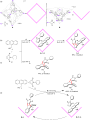
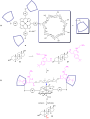
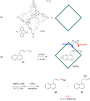
- containers. The emphasis is on those reactions that give different product distributions on the potential reactive sites inside the containers than they do outside, free in solution. Specific cases include site-selective cycloaddition and addition of arenes, reduction of epoxides, α,β-unsaturated aldehydes
- , that is, selective reactions that take place at one specific potential reactive site out of the similar others, in this review. In the following part, the literature reports will be mainly divided according to the reaction types, namely cycloaddition/addition, reduction, oxidation, and substitution
- . Review Cycloaddition/addition Cycloaddition reactions have long been applied to molecular container-mediated enzyme-mimicking transformations [27][31][32][33], and the Fujita group has done pioneering research works in this direction [27][34]. In 2006, the authors reported unique Diels–Alder reactions of






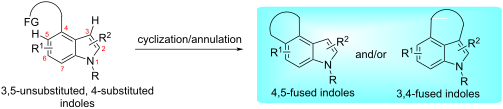
Regioselectivity of the SEAr-based cyclizations and SEAr-terminated annulations of 3,5-unsubstituted, 4-substituted indoles
Beilstein J. Org. Chem. 2022, 18, 293–302, doi:10.3762/bjoc.18.33
- 2021, Deng et al. showcased an unprecedented iridium-catalyzed asymmetric [4 + 3] cycloaddition of racemic 4-indolyl allylic alcohols 22 with α-imino esters 23 as azomethine ylide precursors to afford azepino[3,4,5-cd]indoles 24 in good yields and with complete regioselectivity and generally excellent
- cyclization leading to the formation of polycyclic azepino[5,4,3-cd]indoles. Synthesis of azepino[3,4,5-cd]indoles via iridium-catalyzed asymmetric [4 + 3] cycloaddition of racemic 4-indolyl allylic alcohols with azomethine ylides. Aldimine condensation/1,6-hydride transfer/Mannich-type cyclization cascade of


New advances in asymmetric organocatalysis
Beilstein J. Org. Chem. 2022, 18, 240–242, doi:10.3762/bjoc.18.28

- disclosed important discoveries with proline and imidazolidinones as ample chiral catalysts for aldol [7][8], Diels–Alder [9], dipolar cycloaddition [10], and Mannich reactions [11]. The organic chemistry community this time took a tremendous interest in this concept, which led to many valuable developments
Anomeric 1,2,3-triazole-linked sialic acid derivatives show selective inhibition towards a bacterial neuraminidase over a trypanosome trans-sialidase
Beilstein J. Org. Chem. 2022, 18, 208–216, doi:10.3762/bjoc.18.24
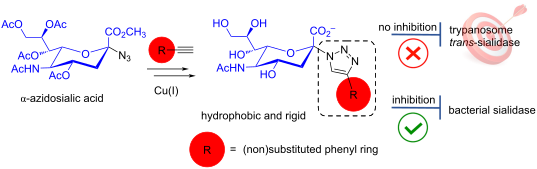
- sialic acid derivatives in good yields and high purity via copper-catalysed azide–alkyne cycloaddition (CuAAC, click chemistry) and evaluated their activity towards TcTS and neuraminidase. Surprisingly, the compounds showed practically no TcTS inhibition, whereas ca. 70% inhibition was observed for
- ) has also been introduced at C-2 of α-triazole-linked sialic acid derivatives modified at C-9 as ligands for the transmembrane glycoprotein CD22 [21]. In this sense, we have synthesised a small series of 1,2,3-triazole-linked sialic acid derivatives via copper-catalysed azide–alkyne cycloaddition
- broad range of substrates, solvents, and reaction conditions; all these parameters have to be carefully planned to avoid low yields or even no product formation, as previously described for compound 1 [20]. Amongst the vast number of reported procedures, the 1,3-dipolar cycloaddition was performed with



Regioselective synthesis of methyl 5-(N-Boc-cycloaminyl)-1,2-oxazole-4-carboxylates as new amino acid-like building blocks
Beilstein J. Org. Chem. 2022, 18, 102–109, doi:10.3762/bjoc.18.11
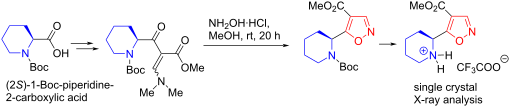
- -oxazoles are: the 1,3-dipolar cycloaddition of alkenes and alkynes with nitrile oxides, and the reaction of a three-carbon atom component, such as a α,β-unsaturated ketone or a 1,3-diketone with hydroxylamine hydrochloride [33]. Recently, Rosa et al. reported a useful procedure for the synthesis of various
- regioisomeric 1,2-oxazole derivatives. Accordingly, the synthetic route starts from the condensation of 1,3-diketones with N,N-dimethylformamide dimethylacetal to form β-enamino ketoester. The latter undergoes a subsequent cycloaddition reaction with hydroxylamine to form regioisomerically substituted 1,2


Efficient and regioselective synthesis of dihydroxy-substituted 2-aminocyclooctane-1-carboxylic acid and its bicyclic derivatives
Beilstein J. Org. Chem. 2022, 18, 77–85, doi:10.3762/bjoc.18.7
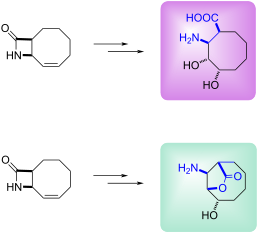
- . Results and Discussion Initially, we focused on the synthesis of β-lactam 2, which was prepared by the cycloaddition of chlorosulfonyl isocyanate (CSI) to cis,cis-1,3-cyclooctadiene, as described in the literature [26]. β-Lactam 2 was transformed into cis-amino ester 3 by cleavage of the lactam ring with


Bifunctional thiourea-catalyzed asymmetric [3 + 2] annulation reactions of 2-isothiocyanato-1-indanones with barbiturate-based olefins
Beilstein J. Org. Chem. 2022, 18, 25–36, doi:10.3762/bjoc.18.3
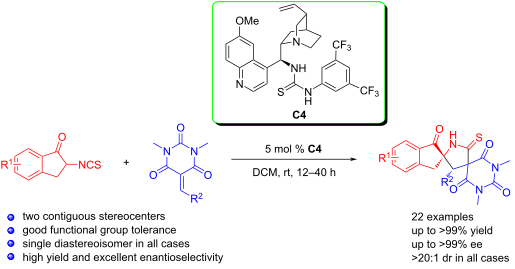
- construction of bispirobarbiturates [30][31]. In 2019, for example, An and co-workers reported an asymmetric Michael/Mannich [3 + 2] cycloaddition reaction between N-(2,2,2-trifluoroethyl)isatin ketimines and barbiturate-based olefins (Scheme 1a) [32]. Based on the current knowledge, the construction of




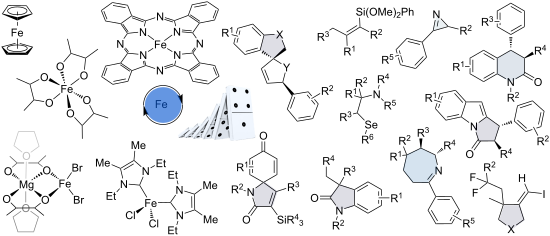
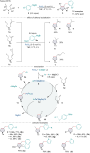
Iron-catalyzed domino coupling reactions of π-systems
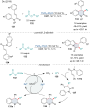
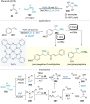
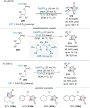
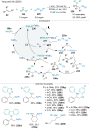
Beilstein J. Org. Chem. 2021, 17, 2848–2893, doi:10.3762/bjoc.17.196


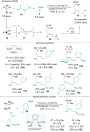
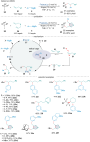


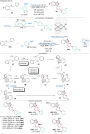
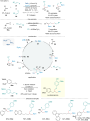









Biological properties and conformational studies of amphiphilic Pd(II) and Ni(II) complexes bearing functionalized aroylaminocarbo-N-thioylpyrrolinate units
Beilstein J. Org. Chem. 2021, 17, 2812–2821, doi:10.3762/bjoc.17.192
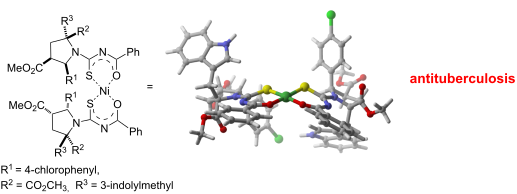
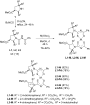
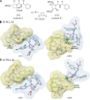
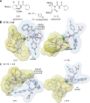
- -dipolar cycloaddition [16][21][22], were submitted to the reaction with benzoyl isothiocyanate in refluxing acetonitrile to obtain compounds L1, L2 and L3 in good yields [16][21]. Due to the very low biological activity of these ligands by themselves, the chelation with nickel(II) and palladium(II) was

The PIFA-initiated oxidative cyclization of 2-(3-butenyl)quinazolin-4(3H)-ones – an efficient approach to 1-(hydroxymethyl)-2,3-dihydropyrrolo[1,2-a]quinazolin-5(1H)-ones
Beilstein J. Org. Chem. 2021, 17, 2787–2794, doi:10.3762/bjoc.17.189
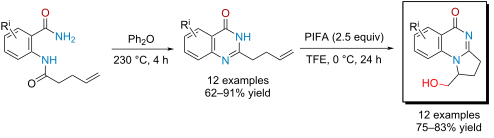
- well as by Sm(OTf)3-catalyzed stereoselective [3 + 2] cycloaddition of bis-silyldienediolate and imines, in turn synthesized from anthranylamides and benzaldehydes [32]. A promising approach to the synthesis of 2,3-dihydropyrrolo[1,2-a]quinazolin-5(1H)-one derivatives substituted at the pyrrolidine


Me3Al-mediated domino nucleophilic addition/intramolecular cyclisation of 2-(2-oxo-2-phenylethyl)benzonitriles with amines; a convenient approach for the synthesis of substituted 1-aminoisoquinolines
Beilstein J. Org. Chem. 2021, 17, 2765–2772, doi:10.3762/bjoc.17.186
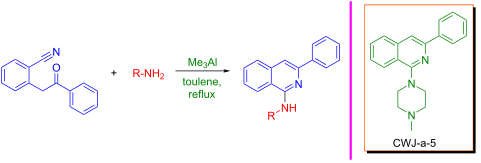
- cycloaddition reactions and also serves as a precursor for the generation of important functional groups like amines, aldehydes, ketones and carboxylic acids. Even though the nitrile functional group is prevalent in the transformation into different functional groups, the synthetic approaches that incorporate




Recent advances in the asymmetric phosphoric acid-catalyzed synthesis of axially chiral compounds
Beilstein J. Org. Chem. 2021, 17, 2729–2764, doi:10.3762/bjoc.17.185
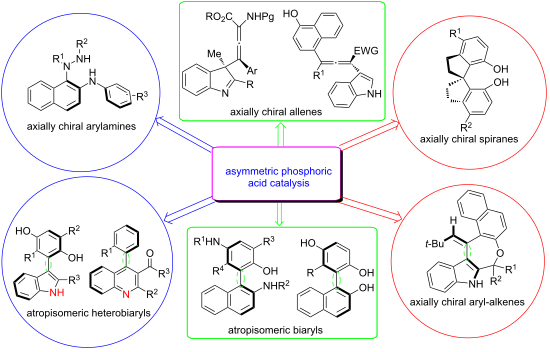
- axial chiral compounds has been paid much attention [6], and great progress has been made in recent years. For example, many remarkable activities have been undertaken to develop strategies such as dynamic kinetic resolution, atroposelective coupling, cycloaddition, and chirality conversion for the
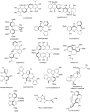
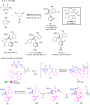
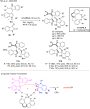
- ]. Zhou and co-workers published an excellent paper in 2019 on the conversion of central to axial chirality in an enantioselective [3 + 2] annulation of 1-styrylnaphthols 32 with azonaphthalenes 33. Under defined conditions, the cycloaddition product 34 was prepared in high yield (99%) with exclusive
- diastereoselectivity and 99% ee in the presence of the chiral phosphoric acid CPA 2. Subsequently, using the chiral phosphoric acid-catalyzed [3 + 2] formal cycloaddition and a moderate DDQ oxidation method over 34, enantiomerically enriched 2,3-diarylbenzoindoles 35 were successfully prepared by performing a central








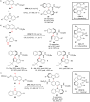


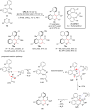


Synthesis of highly substituted fluorenones via metal-free TBHP-promoted oxidative cyclization of 2-(aminomethyl)biphenyls. Application to the total synthesis of nobilone
Beilstein J. Org. Chem. 2021, 17, 2668–2679, doi:10.3762/bjoc.17.181
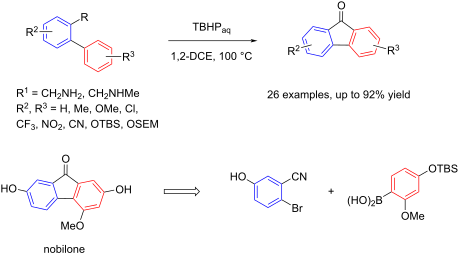
- radical cyclizations [22], Pschorr reactions [23], and diverse cycloaddition protocols [24][25]. Especially transition-metal-catalyzed cross-coupling reactions starting from benzophenones, benzoic acids, dihalogenated benzene building blocks and others have emerged as new approaches in recent years [26


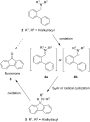

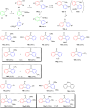


Synthesis of new bile acid-fused tetrazoles using the Schmidt reaction
Beilstein J. Org. Chem. 2021, 17, 2611–2620, doi:10.3762/bjoc.17.174
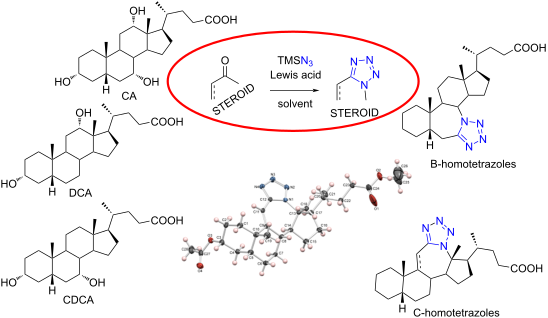
- ]. The main approach in the synthesis of the tetrazoles is 1,3-dipolar cycloaddition between azide and nitrile. These reactions often follow the principles of “click” chemistry [20]. Although the formation of tetrazole in the Schmidt reaction of ketones was noted in the original study by Schmidt himself
- , derivatives of bile acid, androstene, and cholestane were prepared, with the tetrazole ring not being fused to the steroid core [30][31][32][33]. Some fused steroidal tetrazole derivatives were obtained by intramolecular 1,3-dipolar cycloaddition [34][35]. It should be noted that the Schmidt reaction


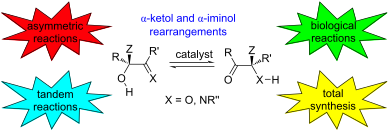
α-Ketol and α-iminol rearrangements in synthetic organic and biosynthetic reactions
Beilstein J. Org. Chem. 2021, 17, 2570–2584, doi:10.3762/bjoc.17.172
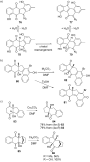
- episilvestrol (35), natural products with potent anticancer properties. The step prior to the rearrangement involved a photoinduced [3 + 2] cycloaddition between hydroxyflavone 36 and methyl cinnamate (37), resulting in the bicyclic α-ketol 38 as a mixture of diastereomers (Ph and CO2Me groups trans) (Figure 9
- the mixture of 38 and 39 induced a second α-ketol rearrangement to 40 as a tautomeric mixture. The same research group later utilized the same [3 + 2] cycloaddition and α-ketol rearrangement approach to prepare the 2′′′-epimer of 35, which bears an inverted methyl acetal in the dioxane ring, but this
- 44 through a vinylogous α-ketol rearrangement of 45 to 46. Tandem reaction consisting of a Diels–Alder cycloaddition followed by an α-ketol rearrangement, part of the total synthesis of delitschiapyrone A (49). Single-pot reaction consisting of Claisen and α-ketol rearrangements, part of the total




Recent advances in the tandem annulation of 1,3-enynes to functionalized pyridine and pyrrole derivatives
Beilstein J. Org. Chem. 2021, 17, 2462–2476, doi:10.3762/bjoc.17.163
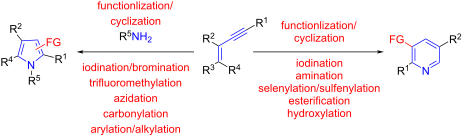
- esterified pyridines 29 in moderate to high yield. It is worth noting that 1,3-enynes 28 bearing internal alkyne moieties were not tolerated as substrates. In 2016, Aïssa and co-workers reported a nickel-catalyzed [4 + 2]-cycloaddition of 3-azetidinones 30 with 1,3-enynes 31 for the synthesis of 3‑hydroxy
- -4,5-alkyl-substituted pyridines 33 (Scheme 11) [53]. The transformation involved a two-step sequence of successive reactions: Firstly, the nickel-catalyzed [4 + 2]-cycloaddition of 1,3-enynes 31 and N-Ts-substituted 3-azetidinone 30 afforded dihydropyridinones 32 in good yield. The next step involved
- chalcogenoamination. The derivatization of 5‑selenyl- and 5-sulfenyl-substituted nicotinates. The tandem reaction of nitriles, Reformatsky reagents, and 1,3-enynes. Nickel-catalyzed [4 + 2]-cycloaddition of 3-azetidinones with 1,3-enynes. Electrophilic iodocyclization of 2-nitro-1,3-enynes to pyrroles. Electrophilic




Efficient synthesis of polyfunctionalized carbazoles and pyrrolo[3,4-c]carbazoles via domino Diels–Alder reaction
Beilstein J. Org. Chem. 2021, 17, 2425–2432, doi:10.3762/bjoc.17.159
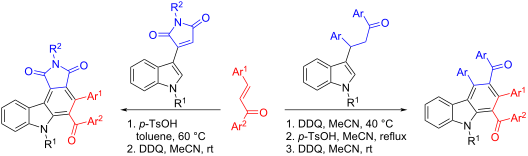
- that this acid-catalyzed cycloaddition reaction proceeded through a concerted Diels–Alder reaction mechanism. The acid-catalyzed Diels–Alder reaction afforded a mixture of two diastereoisomers, which decreased the synthetic value of the reaction. Thus, after the first step reaction, a DDQ


Synthesis and antimicrobial activity of 1H-1,2,3-triazole and carboxylate analogues of metronidazole
Beilstein J. Org. Chem. 2021, 17, 2377–2384, doi:10.3762/bjoc.17.154
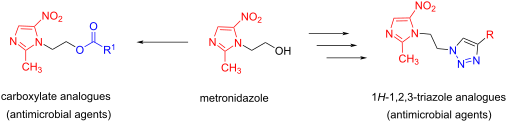
- . The structure of metronidazide 3 was unambiguously confirmed by single crystal X-ray analysis (Figure 3). The next step was carried out by using “click” chemistry involving the 1,3-dipolar cycloaddition reaction between metronidazide 3 and alkyne derivative 4a in the presence of CuI and Hünig’s base


Synthesis of phenanthridines via a novel photochemically-mediated cyclization and application to the synthesis of triphaeridine
Beilstein J. Org. Chem. 2021, 17, 2340–2347, doi:10.3762/bjoc.17.152
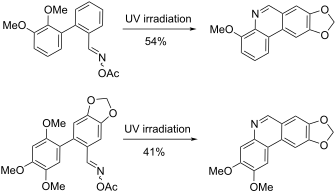
- ], rhodium-mediated alkyne [2 + 2 + 2] cycloaddition reactions [3], and the palladium-catalysed aerobic domino Suzuki coupling/Michael addition reaction [4]. The most attractive and common strategies to phenanthridines rely on intramolecular cyclizations of various ortho-functionalized biaryl precursors




Synthesis of O6-alkylated preQ1 derivatives
Beilstein J. Org. Chem. 2021, 17, 2295–2301, doi:10.3762/bjoc.17.147
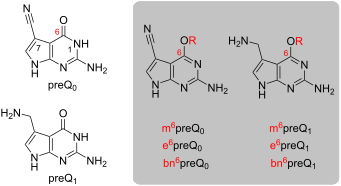
- -diaminopyrimidin-4-one to the nitroolefin 2-[(2E)-3-nitroprop-2-en-1-yl]-1H-isoindole-1,3(2H)-dione [23]. Finally, Carell reported a cycloaddition route relying on α-brominated 3-phthalimidopropanal and diaminopyrimidin-4-one [24][25]. We further optimized this path for the synthesis of 15N-labeled prequeuosine





