


Search results
Search for "dimer" in Full Text gives 381 result(s) in Beilstein Journal of Organic Chemistry. Showing first 200.
Crystal structure of the inclusion complex of cholesterol in β-cyclodextrin and molecular dynamics studies
Beilstein J. Org. Chem. 2018, 14, 838–848, doi:10.3762/bjoc.14.69

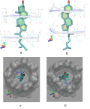
- of cholesterol in β-CD. The inclusion complex crystallizes in the triclinic space group P1 forming head-to-head dimers which are stacked along the c-axis. One well-defined cholesterol molecule ‘axially’ encapsulated inside the β-CD dimer and 22 water molecules that stabilize the complexes in the
- host A and host B) arranged co-axially so that the secondary rim (head) of the one faces the secondary rim of the other forming a head-to-head dimer via intermolecular hydrogen bonds between their O3n-H hydroxy groups. A cholesterol molecule is found fully encapsulated inside the β-CD dimeric cavity
- methyl group, which is perpendicular to the mean plane of the sterol’s ring system, and the inner H5 hydrogens of the 3rd and 4th glucopyranose of host A macrocycle. The C18 methyl group of the guest, which has the same orientation with that of C19, is located at the interface of the β-CD dimer and does



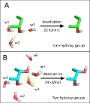
Phosphodiester models for cleavage of nucleic acids
Beilstein J. Org. Chem. 2018, 14, 803–837, doi:10.3762/bjoc.14.68



Investigating radical cation chain processes in the electrocatalytic Diels–Alder reaction
Beilstein J. Org. Chem. 2018, 14, 642–647, doi:10.3762/bjoc.14.51
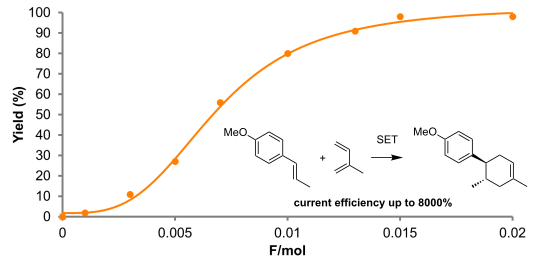
- efficiency of 3167% (Table 2, entry 4). Under these conditions, the undesired dimerization of trans-anethole (1) took place to give the dimer 4. However, we found that the electrochemical radical cation Diels–Alder reaction was also possible from the dimer, whose photochemical version was reported by Yoon
- the electrocatalytic Diels–Alder reaction (1: 1 mM; 2: 2000 mM). GC–MS monitoring of the electrocatalytic Diels–Alder reaction (1: 2 M; 2: 6 M). Blue dots show the dimer 4. SET-triggered Diels–Alder reaction of trans-anethole (1) and isoprene (2). Undesired dimerization of trans-anethole (1


Enzyme-free genetic copying of DNA and RNA sequences
Beilstein J. Org. Chem. 2018, 14, 603–617, doi:10.3762/bjoc.14.47
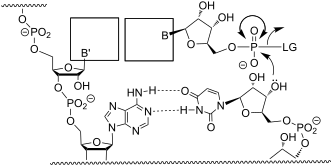
- neighboring monomers have reacted, and Figure 14b shows the binding mode of a GpppG dimer that was found to bind in a fashion described as structurally similar to the proposed intermediate shown on the left-hand side [53]. In the latter case, LNA residues were used in the template strand to facilitate


Stimuli-responsive oligonucleotides in prodrug-based approaches for gene silencing
Beilstein J. Org. Chem. 2018, 14, 436–469, doi:10.3762/bjoc.14.32
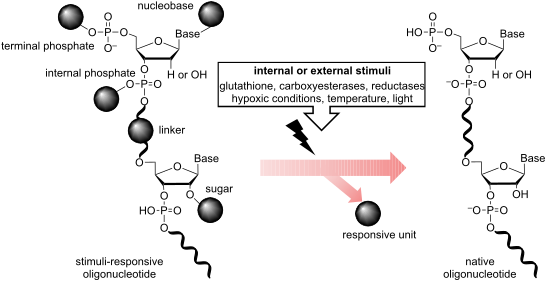
- the modified ONs in addition to an increase in their nuclease resistance. Thus, two Japanese groups have proposed prodrug-type phosphotriester ONs responsive to GSH (Scheme 1) [13][14]. Ono presented a preliminary study on a model of a thymidine dimer with differently substituted benzyl groups at the


Preparation of trinucleotide phosphoramidites as synthons for the synthesis of gene libraries
Beilstein J. Org. Chem. 2018, 14, 397–406, doi:10.3762/bjoc.14.28
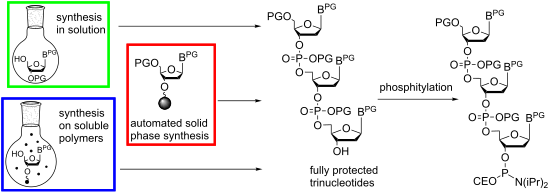
- -protected monomer. Upon selective removal of either the 5'-O-DMTr group or the 3'-O-levulinoyl group, the dimer was extended in 5' or 3' direction [26]. All other reports describe strategies, where the dimers are extended unidirectional, either in 5'-direction [25][26][27][29][30] or 3'-direction [31][32
- -azidomethylbenzoyl)-protected nucelosides, followed by removal of the 5'-O-DMTr group and extension of the dimer to the trimer by coupling of another N-acyl-3'-O-(o-chlorophenylphosphate)nucleoside. The final removal of the 2-azidomethylbenzoyl group occurred by reduction of the azide with triphenylphosphine in
- group, the dimer was reacted with another N-acyl-5'-O-DMTr-protected nucleoside-3'-O-phosphoramidite to afford the trimer. The 3'-O-TBDMS group was selectively removed under mild conditions with trimethylamine/3HF (Figure 4B) with strict control of pH to leave the β-cyanoethyl groups at the


Recent developments in the asymmetric Reformatsky-type reaction
Beilstein J. Org. Chem. 2018, 14, 325–344, doi:10.3762/bjoc.14.21
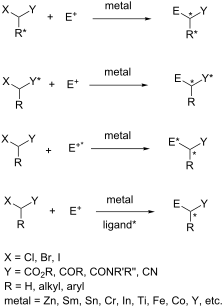
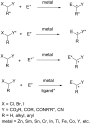
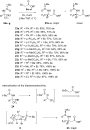
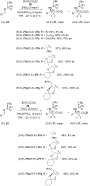
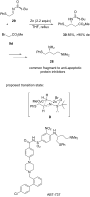
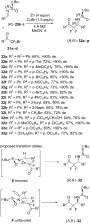
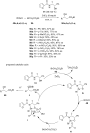
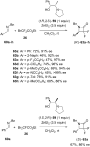
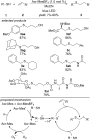
- nucleophilic addition of ethyl iodoacetate to the Si face of the cyclic imine 67 affording the final β-amino ester 68 and regenerating dimer M. In 2017, a related chiral ligand 69 employed at only 10–20 mol % of catalyst loading was reported by the same authors to be capable of catalyzing in combination with











Polarization spectroscopy methods in the determination of interactions of small molecules with nucleic acids – tutorial
Beilstein J. Org. Chem. 2018, 14, 84–105, doi:10.3762/bjoc.14.5
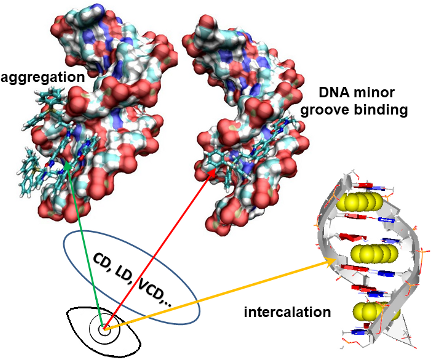
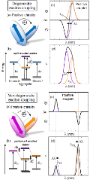
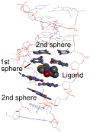
- ligand aggregates binding to polynucleotides (Figure 2). Many naturally occurring small molecules owe different biological activities due to aggregation, for instance, the close analogs netropsin (the single molecule in the DNA minor groove) and distamycin (the dimer in DNA minor groove) [13]. In






Photocatalytic formation of carbon–sulfur bonds
Beilstein J. Org. Chem. 2018, 14, 54–83, doi:10.3762/bjoc.14.4











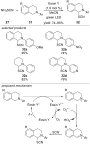


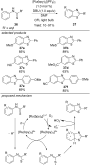
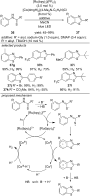


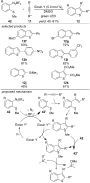














From dipivaloylketene to tetraoxaadamantanes
Beilstein J. Org. Chem. 2018, 14, 1–10, doi:10.3762/bjoc.14.1

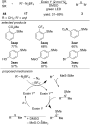
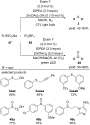
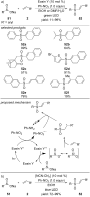
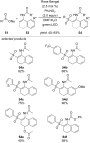
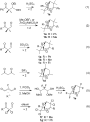
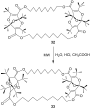
- unusual reaction steps: (i) the conversion of the dimer 3 of dipivaloylketene (2) to bisdioxines (2,6,9-trioxabicyclo[3.3.1]nona-3,7-dienes) 4, by the addition of nucleophiles, and (ii) the facile acid-catalyzed hydrolysis of 4 with concomitant transannular cyclization. Following this route a wide variety
- to −20 °C. However, it dimerizes at room temperature to afford an 88% yield of the thermally very stable dimer 3, which still carries a ketene function [16]. Compound 3 is formed through a [2 + 4] cycloaddition between one molecule of the α-oxoketene 2 and the carbonyl C=O bond of a second molecule
- . It is noteworthy that in the presence of DMSO a different dimer 7 is formed, again in high yield, originating from a [2 + 4] cycloaddition between a molecule of the α-oxoketene and the ketene C=O bond of the second molecule (Scheme 3) [17]. The treatment of the dimeric ketene 3 with nucleophiles





A Brønsted base-promoted diastereoselective dimerization of azlactones
Beilstein J. Org. Chem. 2017, 13, 2663–2670, doi:10.3762/bjoc.13.264

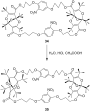
- dimer was assigned as being trans, by X-ray crystallographic analysis. The kinetic reaction profile was determined by using 1H NMR reaction monitoring and revealed a second order overall kinetic profile. Furthermore, by employing this methodology, a diastereoselective total synthesis of a functionalized
- azlactone dimer, which is a versatile heterocycle containing two stereogenic centers (Figure 1). Kobayashi and co-workers demonstrated the rich reactivity of azlactones conducting the dimerization reaction using strong bases as catalysts; however, higher temperatures and long reaction times were required
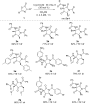
- diastereomer was assigned by X-ray analysis. Finally, one of the products was selectively reduced to provide a functionalized analogue of streptopyrrolidine, a marine natural product isolated from Streptomyces sp. As shown in Table 1, our studies started with the synthesis of dimer 2a using azlactone 1a in the




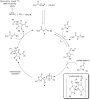

![[Graphic 5]](/bjoc/content/inline/1860-5397-13-264-i10.svg?max-width=637&scale=1.18182) vs time for the dimerization of azlactone 1a.
vs time for the dimerization of azlactone 1a.

Regioselective decarboxylative addition of malonic acid and its mono(thio)esters to 4-trifluoromethylpyrimidin-2(1H)-ones
Beilstein J. Org. Chem. 2017, 13, 2617–2625, doi:10.3762/bjoc.13.259
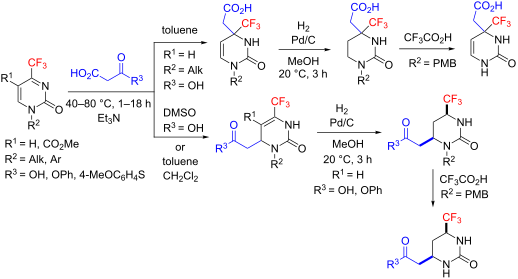
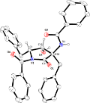
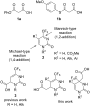
- heterochiral dimer in the crystal state. Intermolecular hydrogen bonds in the dimer are shown as dashed lines. Thermal ellipsoids are defined at 50% probability. Hydrogenation of compounds 4–6 and preparation of N1(3)-unsubstituted compounds 9–11d. Screening of the reaction conditions for organic base



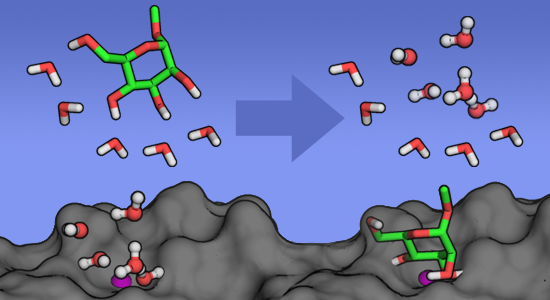
What contributes to an effective mannose recognition domain?
Beilstein J. Org. Chem. 2017, 13, 2584–2595, doi:10.3762/bjoc.13.255
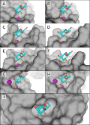
- for the formation of a homodimer of A (Figure 8B) [40]. It is believed that this dimer enables transport of the lectin from the Golgi apparatus to cell membranes [73]. Due to a dislocated glutamate in the side chain of the homodimer (Figure 8B), the affinity for calcium binding and therefore also





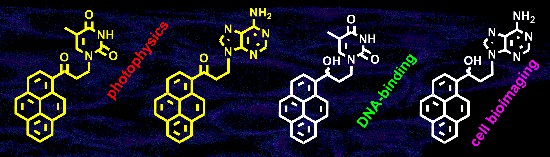
Pyrene–nucleobase conjugates: synthesis, oligonucleotide binding and confocal bioimaging studies
Beilstein J. Org. Chem. 2017, 13, 2521–2534, doi:10.3762/bjoc.13.249
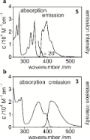
- observed in the molecular structures of the metallocene–nucleobase derivatives [24][29]. In addition, each molecule of 2 in the dimer is further involved in a Cl···O halogen bond with an adjacent molecule of chloroform (Figure 3). Further details of intermolecular interactions present in the crystal




Synthesis and supramolecular properties of regioisomers of mononaphthylallyl derivatives of γ-cyclodextrin
Beilstein J. Org. Chem. 2017, 13, 2509–2520, doi:10.3762/bjoc.13.248
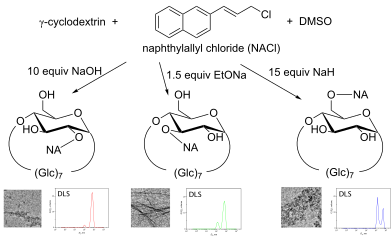
- concentrations of 100, 10, and 1 mM. 1H NMR spectra of 3-O-derivative 2b in D2O at concentrations of 100, 10, and 1 mM. Putative objects and interactions in naphthylallyl-γ-CD solution, depicted schematically for 6I-O-naphthylallyl-γ-CD (2c). (a) Cyclic supramolecular dimer based on inclusion complexation. (b


Solvent-free copper-catalyzed click chemistry for the synthesis of N-heterocyclic hybrids based on quinoline and 1,2,3-triazole
Beilstein J. Org. Chem. 2017, 13, 2352–2363, doi:10.3762/bjoc.13.232
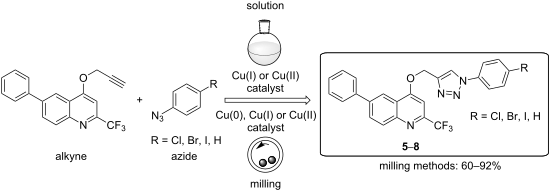
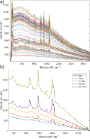
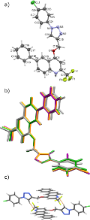
- molecules (Figure 5b and Supporting Information File 1, section 7). Compound 5 may serve as a model for the crystal structure description. The molecules of 5 are linked by one C–H∙∙∙N hydrogen bond, so forming a dimer via eighteen-membered ring (e.g., see Figure 5c for 5) which can be described by graph-set
- gray. c) Capped-stick representation of 5, showing the dimer formed by C–H∙∙∙N hydrogen bond (orange stippled lines). Synthetic procedures for preparation of p-halogen-substituted and non-substituted phenyl-1,2,3-triazole 6-phenyl-2-(trifluoromethyl)quinolines. Reaction conditions and yields for the



One-pot syntheses of blue-luminescent 4-aryl-1H-benzo[f]isoindole-1,3(2H)-diones by T3P® activation of 3-arylpropiolic acids
Beilstein J. Org. Chem. 2017, 13, 2340–2351, doi:10.3762/bjoc.13.231
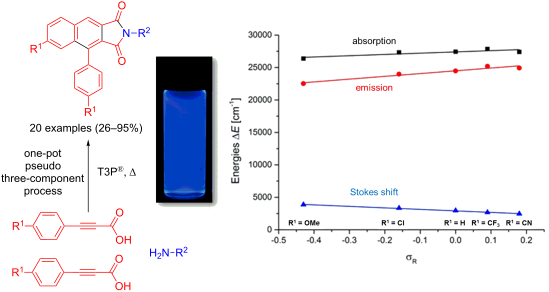
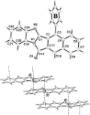
- 5 (left) and a centrosymmetric dimer formation by π–π interactions (right) (ellipsoids are drawn at the 40% probability level). The ORTEP-type plot of the asymmetric unit of the crystal structure 6 (top) and π-stacking interactions (bottom) (ellipsoids are drawn at the 40% probability level




Synthesis and application of trifluoroethoxy-substituted phthalocyanines and subphthalocyanines
Beilstein J. Org. Chem. 2017, 13, 2273–2296, doi:10.3762/bjoc.13.224
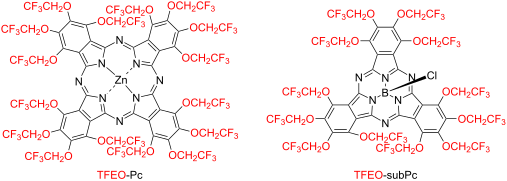
- phthalocyanine. Furthermore, it is known that iron phthalocyanines easily form a μ-oxo dimer [53] that is connected face-to-face via oxygen, but a spectroscopic investigation revealed that it is difficult to form when using TFEO-FePc. This remarkable stability of TFEO-FePc is due to the low energy of the highest
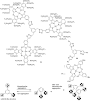
- compared with mononuclear phthalocyanines by chemically modifying each unit unsymmetrically caused by an electronic interaction between each unit [68]. In addition, since it is possible to separate charges in dimer-type phthalocyanines, they are expected to be applied to new electron or energy transfer
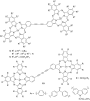
- systems [69] such as solar cell materials as well as photocatalysts for organic reactions. A phthalocyanine dimer in which TFEO-Pcs are directly linked by C–C bonds has been reported (Scheme 4) [70][71]. This homodimer was synthesized by a palladium-catalyzed homo-coupling reaction of two A3B type








A novel application of 2-silylated 1,3-dithiolanes for the synthesis of aryl/hetaryl-substituted ethenes and dibenzofulvenes
Beilstein J. Org. Chem. 2017, 13, 1900–1906, doi:10.3762/bjoc.13.185
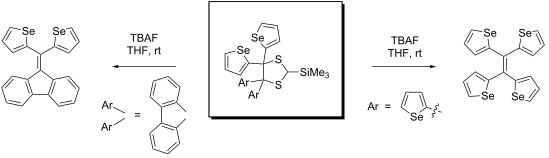
- ]. For example, in contrast to thiobenzophenone (1a), phenyl selenophen-2-yl thioketone (1b) does not form the corresponding 2,5-dihydro-1,3,4-thiadiazole of type 2, and even at −70 °C spontaneous elimination of N2 was observed. As products of this reaction, dimer 4 of the intermediate thiocarbonyl S


Pd(OAc)2/Ph3P-catalyzed dimerization of isoprene and synthesis of monoterpenic heterocycles
Beilstein J. Org. Chem. 2017, 13, 1807–1815, doi:10.3762/bjoc.13.175
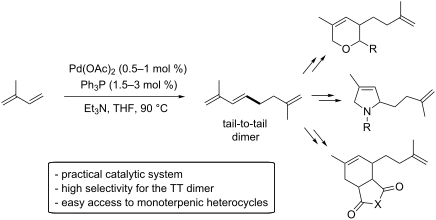
- procedure towards the tail-to-tail dimer using readily available Pd(OAc)2 and inexpensive triphenylphosphine as ligand. Furthermore, simple screw cap vials are employed, allowing carrying out the reaction at low pressure. In addition, the potential of the dimer as a chemical platform for the preparation of
- , titanium-, zirconium-, iron-, cobalt-, vanadium- or aluminum-based Ziegler-type catalysts lead mostly to the linear tail-to-head 2-TH dimer 2,6-dimethyl-1,3,6-octatriene (alloocimene) [27], and the use of nickel catalysts allows the preparation of the tail-to-tail dimer 2-TT (2,7-dimethyl-1,3,7-octatriene
- the tail-to-tail linkage [15][29]. Moreover, the naturally occurring head-to-tail 2-HT dimers, myrcene and ocimene, can be obtained in allylic alcohol when employing Pd(NO3)2/Ph3P/KOPh as catalytic system [30]. The head-to-head 2-HH dimer could also be prepared as major isomer under catalysis with the


18-Hydroxydolabella-3,7-diene synthase – a diterpene synthase from Chitinophaga pinensis
Beilstein J. Org. Chem. 2017, 13, 1770–1780, doi:10.3762/bjoc.13.171
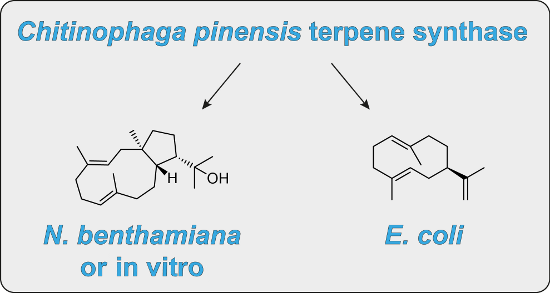
- diphosphate and the pyrophosphate sensor, a highly conserved arginine located 43 amino acids upstream of the NSE triad, and the RY dimer, a highly conserved motif at the C-terminus. The substrate is ionised by extrusion of diphosphate, yielding a highly reactive allyl cation that can react in a cyclisation


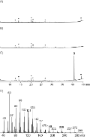

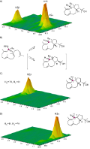
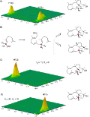
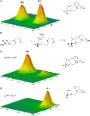

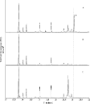
The chemistry and biology of mycolactones
Beilstein J. Org. Chem. 2017, 13, 1596–1660, doi:10.3762/bjoc.13.159
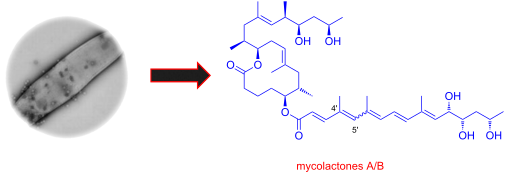


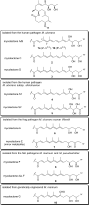







New electroactive asymmetrical chalcones and therefrom derived 2-amino- / 2-(1H-pyrrol-1-yl)pyrimidines, containing an N-[ω-(4-methoxyphenoxy)alkyl]carbazole fragment: synthesis, optical and electrochemical properties
Beilstein J. Org. Chem. 2017, 13, 1583–1595, doi:10.3762/bjoc.13.158

- )alkyl]-9H-carbazole-3-carbaldehydes 2a,b CV curves has shown two oxidation waves with potential peak values at 1.39 V (Eox1) and 1.81 V (Eox2) (Figure 7a). These peaks correspond to the formation of cation radical (Eox1) and dication (Eox2); the last one loses two protons and forms a dimer structure
- ) and dication (Eox2) of a generated dimer. A similar picture was also observed for oxidation processes taking place in the solutions of 1-({5-{9-[6-(4-methoxyphenoxy)hexyl]-9H-carbazolyl}thiophen-2-yl})ethanone (5b) and 2b (Figure 7). The CV curves of the first potential scan obtained in the process of


Molecular recognition of N-acetyltryptophan enantiomers by β-cyclodextrin
Beilstein J. Org. Chem. 2017, 13, 1572–1582, doi:10.3762/bjoc.13.157
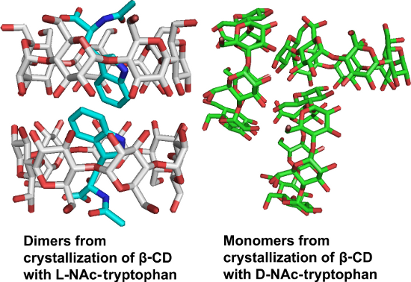
- stronger H-bonding of the carboxyl group, as well as more favorable methyl–phenyl interactions inside the cavity. In contrast, no discrimination is shown by β-CD for (R)- and (S)-flurbiprofen [11], since the crystals grown from the racemic mixture have both enantiomers enclosed (as a head-to-head dimer) in
- a β-CD dimer. In the case of substituted CDs, 2,3,6-tri-O-methyl-α-CD discriminates between (R)- and (S)-mandelic acid [12] as it forms very different crystals from a racemic mixture. The same host crystallizes exclusively with (R)-(−)-1,7-dioxaspiro[5.5]undecane, the Dacus Oleae pheromone, from an
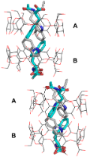
- percentage cannot be excluded. X-ray crystallography studies In the crystalline state, the structure of the inclusion complex of L-NAcTrp in β-CD comprises dimers. The asymmetric unit of the complex contains two crystallographically independent β-CD hosts (A and B) forming a dimer (Figure 2), in which two




A speedy route to sterically encumbered, benzene-fused derivatives of privileged, naturally occurring hexahydropyrrolo[1,2-b]isoquinoline
Beilstein J. Org. Chem. 2017, 13, 1413–1424, doi:10.3762/bjoc.13.138
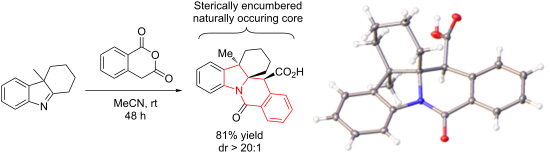
- formation of HPA dimer 11 and product of its decarboxylation 12 (Scheme 1). The formation of these two products (observed by 1H NMR) was recently reported by Knapp et al. [35] as a result from the treatment of HPA with a strong base (which was absent in our case). The failure to activate sterically hindered





