


Search results
Search for "hydrocarbons" in Full Text gives 185 result(s) in Beilstein Journal of Organic Chemistry.
Functionalized copolyimide membranes for the separation of gaseous and liquid mixtures
Beilstein J. Org. Chem. 2010, 6, 789–800, doi:10.3762/bjoc.6.86
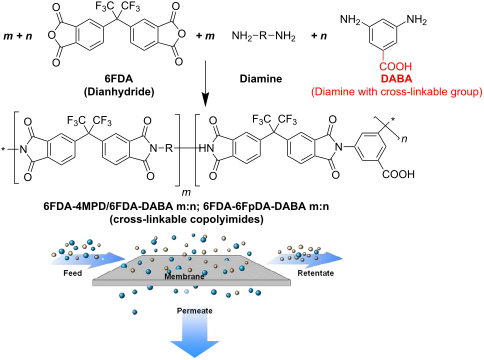
- hydrocarbons such as propylene, propane, aromatics or sulfur containing aromatics. Unfortunately, these components are present in mixtures of high commercial relevance and can be separated economically by single membrane units or hybrid processes where conventional separation units are combined with membrane
- [23][24], hydrocarbons, e.g., propylene and propane [25][26] or ethylene oxide [27]. Strong plasticization can even lead to a partial dissolution of the membrane as it has been found in aromatic/aliphatic separation [28]. These results indicate that if new markets for membrane systems are found, then
- separate the mixtures of saturated and unsaturated hydrocarbons to obtain, e.g., propylene of sufficient purity for polymerization reactions. As shown in Figure 6, a hybrid process combining a membrane unit and a distillation column could lead, depending on the separation characteristics of the membrane


Chromo- and fluorophoric water-soluble polymers and silica particles by nucleophilic substitution reaction of poly(vinyl amine)
Beilstein J. Org. Chem. 2010, 6, No. 79, doi:10.3762/bjoc.6.79
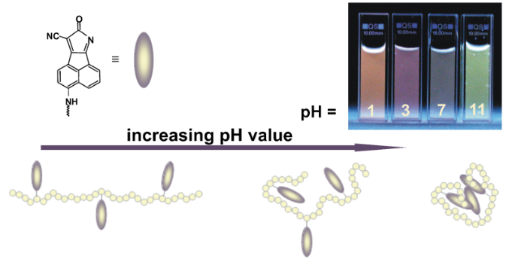
- hydrocarbons from the methylene units of the polymer backbone and surface contaminations (component peak A). Component peak B shows C–N bonds of primary amino groups of the polymer and the amine-side carbon atoms (O=CH–NH–C) of residual amido groups. Formamido groups (O=CH–NH–C) contribute to the component




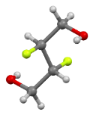
Synthesis and crystallographic analysis of meso-2,3-difluoro-1,4-butanediol and meso-1,4-dibenzyloxy-2,3-difluorobutane
Beilstein J. Org. Chem. 2010, 6, No. 62, doi:10.3762/bjoc.6.62

- ][33][34]. Herein we describe the first synthesis of meso-2,3-difluoro-1,4-butanediol 3 as a further simple vicinal difluoride building block as well as its successful monosilylation, and our attempts to employ 3 for the synthesis of fluorinated hydrocarbons. Results and Discussion Synthesis The





Novel loop-like aromatic compounds: a further step on the road to nanobelts and nanotubes
Beilstein J. Org. Chem. 2010, 6, No. 30, doi:10.3762/bjoc.6.30
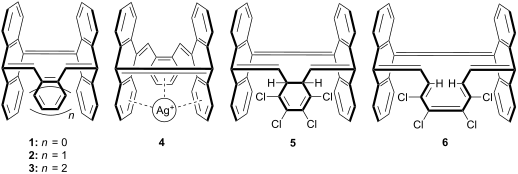
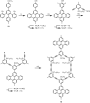
- reaction [7][8][11] and ring enlargement metathesis [12][13][14][15] of 9,9′,10,10′-tetradehydrodianthracene (TDDA) (7) [16]. In a second step we anticipated closing the tube walls by cyclodehydrogenation [17]. Results and Discussion We now report on the synthesis of five new compounds, two hydrocarbons
- analysis. The pure hydrocarbons 2 and 3 were prepared by Diels–Alder reaction of either 7 or 1 [20] with 1,2-bis(dibromomethyl)benzene (8) and sodium iodide to furnish the desired compounds, 2 and 3, in 60 and 40% yield, respectively (Scheme 1 and Scheme 2). During this simple one pot reaction, the sodium
- aromatic hydrocarbons form 1:1-complexes with silver(I). In all-Z-tribenzo[12]annulene [23], for instance, the Ag+ ion is coordinated by three double bonds in a crown-like geometry. Even although three double bonds with a similar geometry are available in our [12]annulene 2, coordination of the Ag+ ion is


Acid- mediated reactions under microfluidic conditions: A new strategy for practical synthesis of biofunctional natural products
Beilstein J. Org. Chem. 2009, 5, No. 40, doi:10.3762/bjoc.5.40
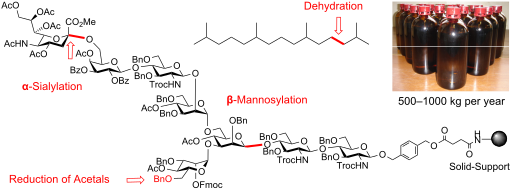
- products or the alkyl group-migrated compounds were produced. As expected, these hydrocarbons were very difficult to separate from the desired diene 20, even by repeated distillation or by silica gel chromatography, although the latter is not realistic for kilogram-scale purification. Inspired by the


Chemoselective reduction of aldehydes by ruthenium trichloride and resin- bound formates
Beilstein J. Org. Chem. 2008, 4, No. 53, doi:10.3762/bjoc.4.53

- as hydrocarbons [4], primary and secondary alcohols [5][6], and formic acid and its salts [7][8][9][10][11] have been used as the hydrogen source. Besides the use of Rh, Ir, Ni and Pd metals in CTH, carbonyl reduction using the combination of Ru(II)-ligand complexes and propan-2-ol in the presence of


Synthesis of 2,3,6,7-tetrabromoanthracene
Beilstein J. Org. Chem. 2008, 4, No. 41, doi:10.3762/bjoc.4.41

- , such as 2,3,6,7-tetradehydroanthracene (for constructing polycyclic aromatic hydrocarbons [13][14]) and 2,6,9,10-tetracyanoanthracene (which has been used as sensitizer for organic photoconductors [15]). Results and Discussion In Scheme 1, the reaction pathway is shown, starting from benzene, which is


Shape- persistent macrocycle with intraannular alkyl groups: some structural limits of discotic liquid crystals with an inverted structure
Beilstein J. Org. Chem. 2008, 4, No. 1, doi:10.1186/1860-5397-4-1
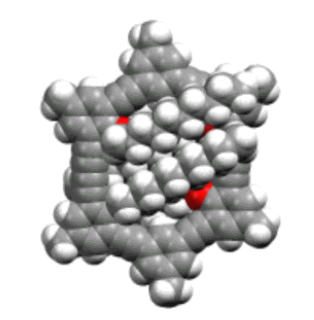
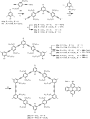
- ). The repeated purification process for all macrocycles was not optimized and is responsible for the rather low yield in the cyclization step. Our recent progress in the synthesis of functionalized polycyclic aromatic hydrocarbons (PAHs) opened the question about the influence of the presence of PAH



Part 1. Reduction of S-alkyl- thionocarbonates and related compounds in the presence of trialkylboranes/air
Beilstein J. Org. Chem. 2007, 3, No. 45, doi:10.1186/1860-5397-3-45

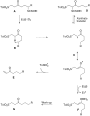
- reduction of S-alkyl-thionocarbonates, iodides and related compounds to the corresponding hydrocarbons at room temperature with good to excellent yields is described. This method uses a trialkylborane in excess (Et3B or Bu3B) and air. Background The reduction of functional groups such as S-alkyl
- similar compounds to the corresponding hydrocarbons that requires a trialkylborane in excess and air as initiator, at 20°C, or even at lower temperature.[17][18] Results and discussion During the last two decades, the number of applications of Et3B as radical initiator has increased tremendously. As Et3B


Transition- metal/Lewis acid free synthesis of acyl benzothiophenes via C-C bond forming reaction
Beilstein J. Org. Chem. 2007, 3, No. 35, doi:10.1186/1860-5397-3-35

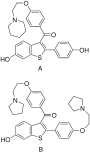
- starting materials and mild reaction conditions, ii) environmentally safe as the protocol is free from the use of inorganic Lewis acids as well as chlorinated hydrocarbons as solvent, iii) simple operational procedure. However, formation of a mixture of regioisomers is the major drawback of this protocol



Other Beilstein-Institut Open Science Activities



