Search results
Search for "separation" in Full Text gives 886 result(s) in Beilstein Journal of Organic Chemistry. Showing first 200.
Effect of a twin-emitter design strategy on a previously reported thermally activated delayed fluorescence organic light-emitting diode
Beilstein J. Org. Chem. 2021, 17, 2894–2905, doi:10.3762/bjoc.17.197
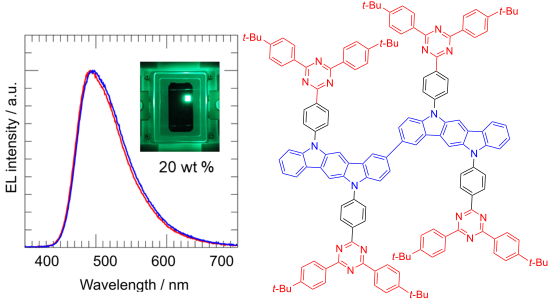
- separation of the HOMO and LUMO on donor and acceptor, respectively, will result in an S1→S0 transition with predominantly charge transfer (CT) character. Highly twisted donor–acceptor architectures are typically employed to realize small ΔEST [4][8]. SOC can be enhanced by ensuring that the nature of the S1


Selective sulfonylation and isonitrilation of para-quinone methides employing TosMIC as a source of sulfonyl group or isonitrile group
Beilstein J. Org. Chem. 2021, 17, 2822–2831, doi:10.3762/bjoc.17.193
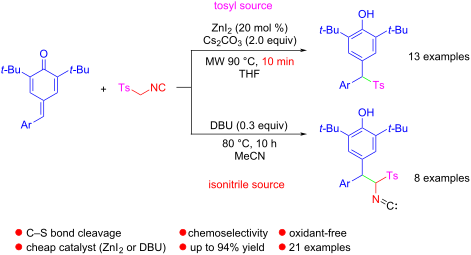
- 6). The reaction of 1a with TosMIC derivative 2c, bearing an aromatic ring smoothly occurred to provide product 3a; more importantly, the presence of p-chlorobenzaldehyde (I) released from 2c can be detected by separation and 1H NMR analysis (Scheme 6A). This result indicates that TosMIC may


Biological properties and conformational studies of amphiphilic Pd(II) and Ni(II) complexes bearing functionalized aroylaminocarbo-N-thioylpyrrolinate units
Beilstein J. Org. Chem. 2021, 17, 2812–2821, doi:10.3762/bjoc.17.192
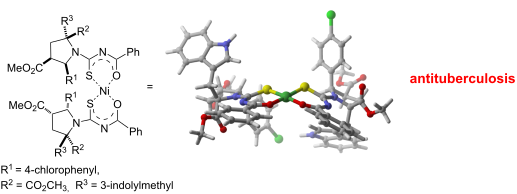
- causing of the selective formation of the cis- versus the trans-aggregate observed after X-ray diffraction analysis, but calculations did not give any clear interaction to confirm it. The polar solvent methanol used for the reaction and separation could favor this chemical arrangement. Ligands L1 and L3

Recent advances in the asymmetric phosphoric acid-catalyzed synthesis of axially chiral compounds
Beilstein J. Org. Chem. 2021, 17, 2729–2764, doi:10.3762/bjoc.17.185
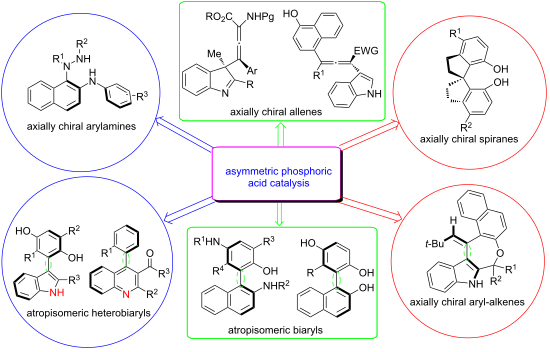
- -catalyzed enantioselective transformations [9][14][22][23]. Axial chirality is also found in chiral stationary phases for enantioselective separation, dopants in liquid-crystalline materials, chiroptical molecular switches, microporous soluble polymers, and interlocked nanotubes (Figure 3) [24]. In addition












The ethoxycarbonyl group as both activating and protective group in N-acyl-Pictet–Spengler reactions using methoxystyrenes. A short approach to racemic 1-benzyltetrahydroisoquinoline alkaloids
Beilstein J. Org. Chem. 2021, 17, 2716–2725, doi:10.3762/bjoc.17.183
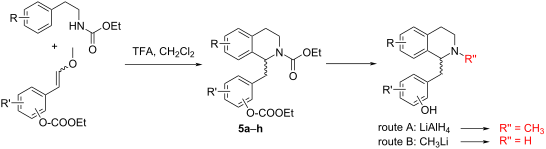
- enantiomerically pure alkaloids, as numerous methods for separation of enantiomers are well known in this field [52][53][54][55]. Further, this protocol might be extended to an asymmetric N-acyl-Pictet–Spengler condensation by using homochiral carbamates, as demonstrated by Comins [18], or by using


Synthetic strategies toward 1,3-oxathiolane nucleoside analogues
Beilstein J. Org. Chem. 2021, 17, 2680–2715, doi:10.3762/bjoc.17.182
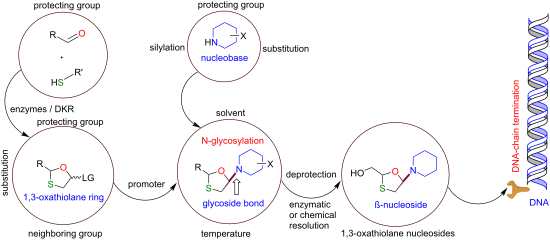
- -oxathiolane ring with different nucleobases in a way that only one isomer is produced in a stereoselective manner via N-glycosylation. An emphasis has been placed on the C–N-glycosidic bond constructed during the formation of the nucleoside analogue. The third focus is on the separation of enantiomers of 1,3
- ; separation of racemic nucleosides; stereoselectivity; Introduction Among all the biomolecules in an organism, nucleic acids, namely DNA and RNA, have the unique role of storing the genetic code – the nucleotide sequence that specifies the amino acid sequence of proteins that is essential for life on Earth
- , ii) a stereoselective N-glycosylation process that is compatible with an enantiomerically pure substrate, and iii) separation of enantiomers by chemical or enzymatic resolution methods. This review summarizes the methods used to synthesize 1,3-oxathiolane nucleosides. Many methods provide the








N-Sulfinylpyrrolidine-containing ureas and thioureas as bifunctional organocatalysts
Beilstein J. Org. Chem. 2021, 17, 2629–2641, doi:10.3762/bjoc.17.176
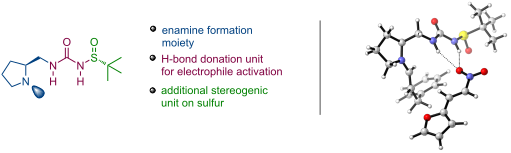
- which the key intermediate, pyrrolidine derivative 2, can be obtained in three steps according to the literature procedure [32]. Using this method, we obtained the product 2 in a yield comparable (56% overall yield) to that described in the literature. However, the difficult chromatographic separation


α-Ketol and α-iminol rearrangements in synthetic organic and biosynthetic reactions
Beilstein J. Org. Chem. 2021, 17, 2570–2584, doi:10.3762/bjoc.17.172
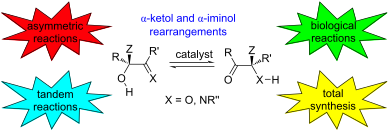
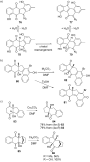
- used to shift a four-carbon chain one position on the bicyclic molecule 32 using the base calcium methoxide with a yield of 70% of 33 and a diastereomeric ratio of 3:1 (14:1 after separation) (Figure 8) [11]. Note that 33 bears an enone moiety, and therefore, this reaction is apparently the first




Cryogels: recent applications in 3D-bioprinting, injectable cryogels, drug delivery, and wound healing
Beilstein J. Org. Chem. 2021, 17, 2553–2569, doi:10.3762/bjoc.17.171
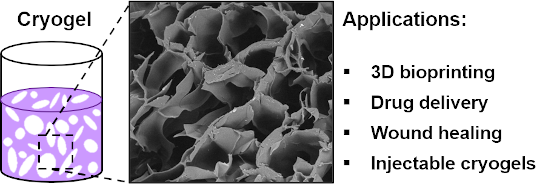
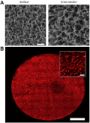
- material could be a potential for targeting release in the colon. 4. Other cryogel applications For cryogel biomedical applications not discussed in section 5, including cell separation, tissue engineering scaffolds, bioreactors and capturing of target molecules, the reader is directed to a recent review
- by Bakhshpour et al. [54]. In addition to the biomedical applications discussed in detail below, cryogels have a variety of potential uses in fields such as tissue engineering [12], chromatography, and separation applications. For example, for the filtration of biologically relevant molecules [19][42






Synthesis of 5-arylacetylenyl-1,2,4-oxadiazoles and their transformations under superelectrophilic activation conditions
Beilstein J. Org. Chem. 2021, 17, 2417–2424, doi:10.3762/bjoc.17.158

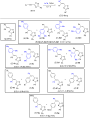
- Information File 1). It should be noted that attempts of chromatographic separation of triflates 4a–c into individual E- and Z-isomers on silica gel led to a decrease of their yields and a change in E/Z-ratio. That reveals instability of these compounds on silica gel. In the same reaction in H2SO4 (Scheme 4


Isolation and characterization of new phenolic siderophores with antimicrobial properties from Pseudomonas sp. UIAU-6B
Beilstein J. Org. Chem. 2021, 17, 2390–2398, doi:10.3762/bjoc.17.156
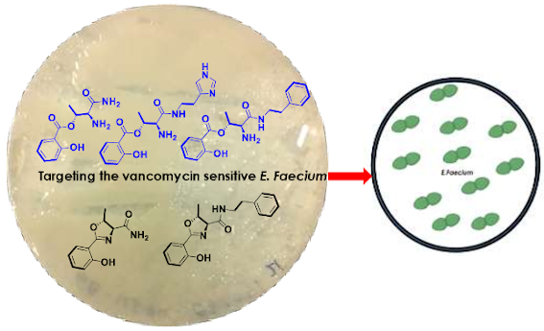
- crude extract. The extract (8.2 g) was dissolved in H2O and CH2Cl2 (700 mL, 50% v/v) and placed in a separating funnel for 5 min to allow for proper separation of the constituent mixture between the aqueous (6.21 g) and organic phases (1.99 g) [46]. The dichloromethane fraction (1.99 g) was


Advances in mercury(II)-salt-mediated cyclization reactions of unsaturated bonds
Beilstein J. Org. Chem. 2021, 17, 2348–2376, doi:10.3762/bjoc.17.153
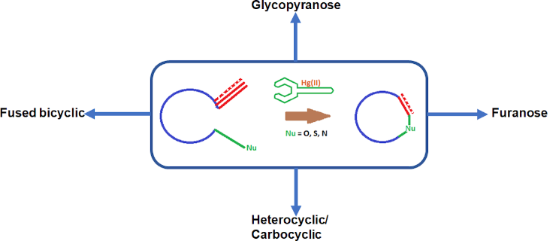
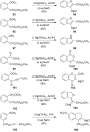
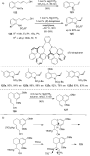
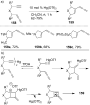
- -containing mixture of diastereomeric alicyclic derivatives 59. The tetrahydropyrimidin-4(1H)-one-mercuri trifluoroacetate derivative 59 on successive treatment with NaBr and LiBH4 gives a mixture of tetrahydropyrimidin-4(1H)-one derivatives 60 in the diastereomeric ratio of 63:37 after separation by column












Phenolic constituents from twigs of Aleurites fordii and their biological activities
Beilstein J. Org. Chem. 2021, 17, 2329–2339, doi:10.3762/bjoc.17.151

- fractions. The MeOH fraction was subjected to separation on a silica gel column (CHCl3/MeOH/H2O 6:1:0.1 → 1:1:0.1) to afford five fractions (BM1–BM5). Fraction BM3 (2.5 g) was fractionated over an RP-C18 silica gel column, eluting with gradient solvent system (25 → 100% aq. MeOH) to give nine subfractions


A novel methodology for the efficient synthesis of 3-monohalooxindoles by acidolysis of 3-phosphate-substituted oxindoles with haloid acids
Beilstein J. Org. Chem. 2021, 17, 2321–2328, doi:10.3762/bjoc.17.150
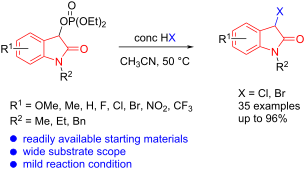
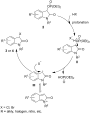
- chromatography separation is not usually required. This outcome indicated that the transformation could be applicable for larger-scale syntheses of 3-monohalooxindoles products. In addition, the structure of all products 3 and 4 was unambiguously assigned by 1H and 13C NMR spectroscopy and HRMS. Especially the




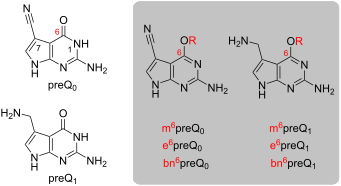
Synthesis of O6-alkylated preQ1 derivatives
Beilstein J. Org. Chem. 2021, 17, 2295–2301, doi:10.3762/bjoc.17.147
- vigorously for one and a half hour until satisfactory phase separation was achieved. The aqueous layer was separated and subsequently extracted three times with ethyl acetate. The combined organic layers were washed with brine, dried over magnesium sulfate and evaporated. The residue was purified by flash


Constrained thermoresponsive polymers – new insights into fundamentals and applications
Beilstein J. Org. Chem. 2021, 17, 2123–2163, doi:10.3762/bjoc.17.138
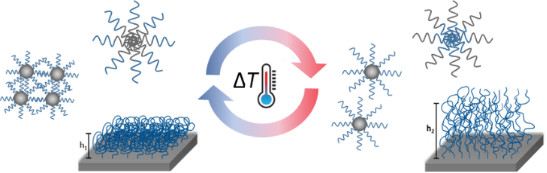
- thermoresponsive behavior of polymers is governed by oriented polymer–polymer interactions, such as hydrogen bonding or electrostatic interactions. As a function of temperature, these attractive interactions are formed and contribute to phase separation (T < UCST) or are increasingly destabilized and allow
- separation with an LCST or UCST and its dependence on brush parameters, such as local concentration, and thus on its influenceability. It has often been shown experimentally that the most pronounced conformational response of polymer brushes is achieved at moderate grafting densities [125]. Furthermore, the
- the chains on a surface and the intermolecular interaction that occurs, vertical phase separation is suppressed in systems such as polystyrene in cyclohexane, in contrast to free dissolved chains [128]. However, at vanishingly small concentrations, classical brushes always exhibit a behavior


A study on selective transformation of norbornadiene into fluorinated cyclopentane-fused isoxazolines
Beilstein J. Org. Chem. 2021, 17, 2051–2066, doi:10.3762/bjoc.17.132
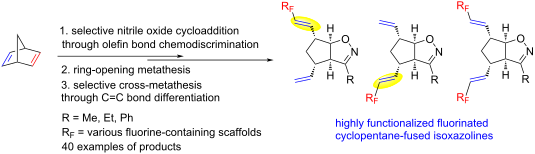
- (7g, Scheme 11). However, dimetathesized product (±)-18c was not formed, and isolation of monometathesized products (±)-18a and (±)-18b (or a mixture thereof) in pure form failed despite repeated attempts of chromatographic separation. Finally, isoxazoline (±)-5 was subjected to CM with 4
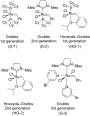
- attempts of chromatographic separation. Finally, CM reactions between isoxazoline (±)-6 and 4-fluorostyrene (7h) were studied (Scheme 18 and Table 16). HG-2 catalyst provided monocoupled (±)-25a and dicoupled (±)-25c in a comparable amount. With G-2 catalyst, both products were formed in higher yield. G-3
- regioselectivity in all successful CM reactions. The ratio of monometathesized products in CM reactions of (±)-4 and (±)-5 also depended on the catalyst. Generally, HG-2 catalyst provided the highest regioselectivity. Unfortunately, separation of regioisomeric monometathesized compounds proved to be impossible in




Regioselective N-alkylation of the 1H-indazole scaffold; ring substituent and N-alkylating reagent effects on regioisomeric distribution
Beilstein J. Org. Chem. 2021, 17, 1939–1951, doi:10.3762/bjoc.17.127
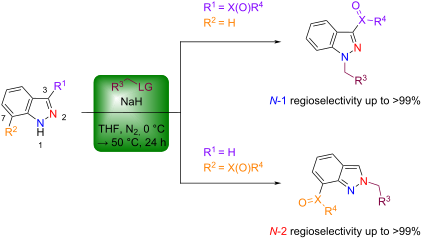
- from the N-2 position to the N-1 atom by the indazole C-3 substituent (vide infra). While the corresponding N-1 and N-2 regioisomers arising from the N-alkylation of C-3 substituted indazoles 12–24 were generally amenable to separation using wet flash column chromatography, the corresponding N-1- and N


Cationic oligonucleotide derivatives and conjugates: A favorable approach for enhanced DNA and RNA targeting oligonucleotides
Beilstein J. Org. Chem. 2021, 17, 1828–1848, doi:10.3762/bjoc.17.125
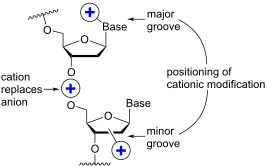
- to create an epimeric mixture of the dinucleotide phosphoramidate-linked derivatives with subsequent separation of the two stereoisomers. These were then incorporated into the desired ONs after O3’-desilylation and phosphitylation of the dimers [107]. The authors found that for each of the sequences


Development of N-F fluorinating agents and their fluorinations: Historical perspective
Beilstein J. Org. Chem. 2021, 17, 1752–1813, doi:10.3762/bjoc.17.123
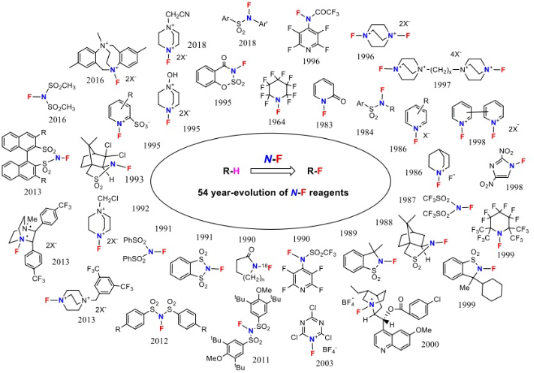
- treated with (−)-menthoxyacetyl chloride, followed by separation of the diastereomers. The chiral auxiliary was then removed with LiOH and the resulting sultams 27-5 as single enantiomers were fluorinated with 15% F2/He in the presence of KF to produce optically pure N-fluorosultam reagents (R)- and (S
- of 28-2, which was accompanied by 45% of unreacted 28-1. Interestingly, pure (R)-isomer 28-1 was obtained in 20% yield from the unreacted 28-1. The diastereomer separation of 28-2 was achieved by column chromatography to separate the (R)- and (S)-isomers of 28-2 in 21 and 31% yields, respectively






























Volatile emission and biosynthesis in endophytic fungi colonizing black poplar leaves
Beilstein J. Org. Chem. 2021, 17, 1698–1711, doi:10.3762/bjoc.17.118
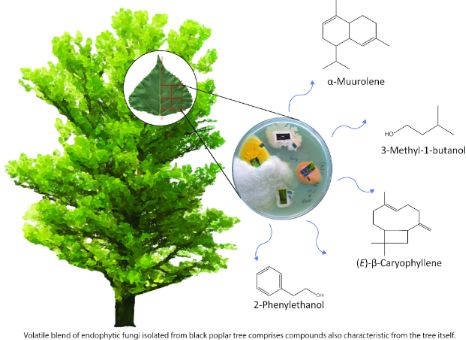
- mixture was incubated for 1 h at 60 °C. For separation of polysaccharides, 180 µL 5 M NaCl and 80 µL 10% CTAB were added and the mixture incubated further for 10 min at 65 °C. To extract nucleic acids by phase separation, 860 µL chloroform/isoamyl alcohol (24:1) was added and incubated on ice for 30 min
- detector (interface temp, 270 °C; quadrupole temp, 150 °C; source temp, 230 °C; electron energy, 70 eV). Chromatographic separation was achieved with an initial oven temperature of 45 °C held for 2 min, which was then increased to 180 °C with a gradient of 6 °C min−1, and then further increased to 300 °C



Copper-mediated oxidative C−H/N−H activations with alkynes by removable hydrazides
Beilstein J. Org. Chem. 2021, 17, 1591–1599, doi:10.3762/bjoc.17.113
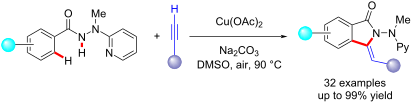
- determined by 1H NMR spectroscopy. Chromatographic separation was carried out on silica gel 60H (200–300 mesh) manufactured by Qingdao Haiyang Chemical Group Co. (China). High-resolution mass spectrometry (HRMS) was measured on a Thermo-DFS mass spectrometer. NMR spectra were recorded on a JEOL 600 NMR


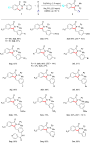


Chemical synthesis of C6-tetrazole ᴅ-mannose building blocks and access to a bioisostere of mannuronic acid 1-phosphate
Beilstein J. Org. Chem. 2021, 17, 1527–1532, doi:10.3762/bjoc.17.110
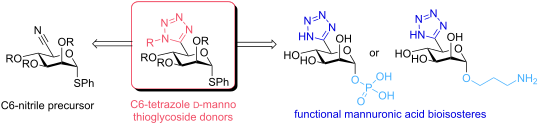
- % and exclusively β-selective [11]. Isomeric separation of this complex mixture was not completed at this stage and the material was next deprotected using hydrogenolysis to remove the benzyl groups. This furnished 20 in excellent yield (96%) as a 3:1 α/β mixture (δ 100.5 ppm [1JC1-H1 = 172 Hz, for the


Total synthesis of ent-pavettamine
Beilstein J. Org. Chem. 2021, 17, 1440–1446, doi:10.3762/bjoc.17.99
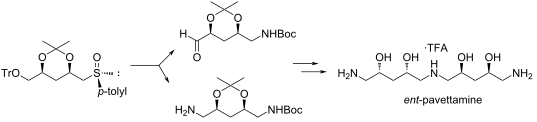
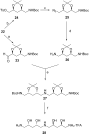
- or minimize the formation of diol 11 by performing the reduction step at temperatures lower than 15 °C but this significantly reduced the yield of the desired product, even with longer reaction times. Therefore, we had to be satisfied with separation of desired product 8 from unwanted 9 after the


Double-headed nucleosides: Synthesis and applications
Beilstein J. Org. Chem. 2021, 17, 1392–1439, doi:10.3762/bjoc.17.98
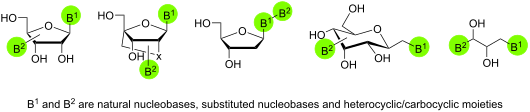
- strands of the duplex with separation of one regular base pair from each other [54]. 1,5-Furanosyl double-headed nucleosides In this category, the nucleosides contain the first natural nucleobase at the C-1′ position and the second natural nucleobase/aromatic moiety/heterocyclic ring attached at the C-5