


Search results
Search for "2-naphthylmethyl ether" in Full Text gives 2 result(s) in Beilstein Journal of Organic Chemistry.
Structural analysis of stereoselective galactose pyruvylation toward the synthesis of bacterial capsular polysaccharides
Beilstein J. Org. Chem. 2025, 21, 1671–1677, doi:10.3762/bjoc.21.131

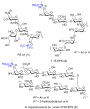
- -naphthylmethyl ether (Nap) protecting group was removed from disaccharide 10 using 2,3-dichloro-5,6-dicyano-1,4-benzoquinone (DDQ) in a DCM/H2O (9:1) mixture, giving a 94% yield of disaccharide acceptor 11. To enhance solubility, the trimethylsilyl (TMS) group was selectively added at the less hindered 2-O
- same reaction mixture, in situ activation of disaccharide donor 8 and acceptor 9 using TolSCl/AgOTf reagent combination was introduced. This two-step, one-pot glycosylation gave a 42% yield of disaccharide 10, maintaining good β-stereoselectivity at the galactosyl linkage (α/β = 1:5.8). The 2


Synthesis of monophosphorylated lipid A precursors using 2-naphthylmethyl ether as a protecting group
Beilstein J. Org. Chem. 2020, 16, 1955–1962, doi:10.3762/bjoc.16.162

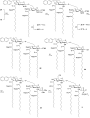
- problematic synthesis of monophosphorylated mono- and disaccharide lipid X using a combination of established chemistry and a novel 2-naphthylmethyl ether (Nap) protecting group for “permanent” protection of hydroxy groups. Of particular note is the fact that the key Nap protecting group is able to remain in
- ; lipid X; lipopolysaccharide; 2-naphthylmethyl ether; synthesis; Introduction Bacterial cell surfaces are decorated with various types of glycoconjugates (in the form of glycoproteins and glycolipids) that are known to participate in many biological processes, especially in the interactions between
- . More importantly, we employed the 2-naphthylmethyl ether (Nap) group for protection of various hydroxy groups on the carbohydrate and acyl moieties, aiming to provide an advantage over previous methods that mainly used the benzyl group [4][14][15][16] in synthesizing lipid A derivatives. We also aim at


Other Beilstein-Institut Open Science Activities



