


Search results
Search for "3-(dimethylsulfonio)propanoate" in Full Text gives 2 result(s) in Beilstein Journal of Organic Chemistry.
Breakdown of 3-(allylsulfonio)propanoates in bacteria from the Roseobacter group yields garlic oil constituents
Beilstein J. Org. Chem. 2021, 17, 569–580, doi:10.3762/bjoc.17.51
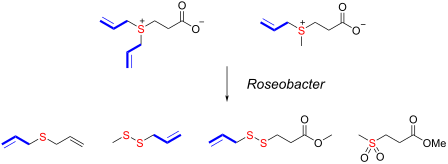
- Anuj Kumar Chhalodia Jeroen S. Dickschat Kekulé Institute of Organic Chemistry and Biochemistry, University of Bonn, Gerhard-Domagk-Straße 1, 53121 Bonn, Germany 10.3762/bjoc.17.51 Abstract Two analogues of 3-(dimethylsulfonio)propanoate (DMSP), 3-(diallylsulfonio)propanoate (DAllSP), and 3
- sativum; allyl sulfides; 3-(dimethylsulfonio)propanoate; Roseobacter; volatiles; Introduction The name of the allyl group has been introduced by Wertheim in 1844 when he investigated the constituents of garlic oil and derives from the botanical name of garlic (Allium sativum) [1]. During that time, the
- ]. For the macroalga Ulva mutabilis the presence of bacteria from the Roseobacter group is even mandatory for proper algal development, and 3-(dimethylsulfonio)propanoate (DMSP) is used as a chemotactic signal by the bacteria attracting them towards the algal host [12]. Many bacteria and fungi also


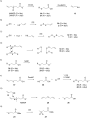


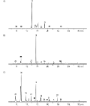
Identification of volatiles from six marine Celeribacter strains
Beilstein J. Org. Chem. 2021, 17, 420–430, doi:10.3762/bjoc.17.38
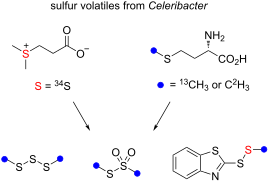
- compounds ethyl (E)-3-(methylsulfanyl)acrylate and 2-(methyldisulfanyl)benzothiazole were identified and their structures were verified by synthesis. Feeding experiments with [methyl-2H3]methionine, [methyl-13C]methionine and [34S]-3-(dimethylsulfonio)propanoate (DMSP) resulted in the high incorporation
- ][9]. Especially in algal blooms bacteria of the roseobacter group are highly abundant [10], and here they belong to the main players involved in the enzymatic degradation of the algal sulfur metabolite 3-(dimethylsulfonio)propanoate (DMSP, Scheme 1) [11]. Its catabolism leads either through the




Other Beilstein-Institut Open Science Activities



