


Search results
Search for "MBH reaction" in Full Text gives 10 result(s) in Beilstein Journal of Organic Chemistry.
C2 to C6 biobased carbonyl platforms for fine chemistry
- Jingjing Jiang,
- Muhammad Noman Haider Tariq,
- Florence Popowycz,
- Yanlong Gu and
- Yves Queneau
Beilstein J. Org. Chem. 2025, 21, 2103–2172, doi:10.3762/bjoc.21.165

Graphical Abstract

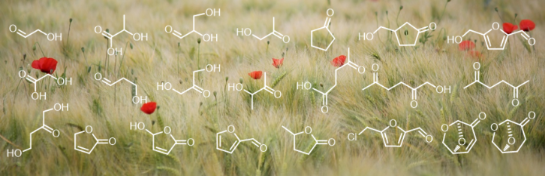
Figure 1: C2–C6 biobased carbonyl building blocks.

Scheme 1: Proposed (2 + 2) route to glycolaldehyde and glycolic acid from erythritol by Cu/AC catalyst (AC = ...

Scheme 2: Reductive amination of GCA.

Scheme 3: N-Formylation of secondary amines by reaction with GCA.

Scheme 4: Synthesis and conversion of hydroxy acetals to cyclic acetals.

Scheme 5: Synthesis of 3-(indol-3-yl)-2,3-dihydrofurans via three-component reaction of glycolaldehyde, indol...

Scheme 6: BiCl3-catalyzed synthesis of benzo[a]carbazoles from 2-arylindoles and α-bromoacetaldehyde ethylene...

Scheme 7: Cu/NCNSs-based conversion of glycerol to glycolic acid and other short biobased acids.

Scheme 8: E. coli-based biotransformation of C1 source molecules (CH4, CO2 and CO) towards C2 glycolic acid.

Scheme 9: N-Formylation of amines with C2 (a) or C3 (b) biomass-based feedstocks.

Scheme 10: Methods for the formation of propanoic acid (PA) from lactic acid (LA).

Scheme 11: Co-polymerization of biobased lactic acid and glycolic acid via a bicatalytic process.

Scheme 12: Oxidation of α-hydroxy acids by tetrachloroaurate(III) in acetic acid–sodium acetate buffer medium.

Figure 2: Selective catalytic pathways for the conversion of lactic acid (LA).

Scheme 13: Synthesis of 1,3-PDO via cross-aldol reaction between formaldehyde and acetaldehyde to 3-hydroxypro...

Scheme 14: Hydrothermal conversion of 1,3-dihydroxy-2-propane and 2,3-dihydroxypropanal to methylglyoxal.

Scheme 15: FLS-catalyzed formose reaction to synthesize GA and DHA.

Scheme 16: GCA and DHA oxidation products of glycerol and isomerization of GCA to DHA under flow conditions us...

Scheme 17: Acid-catalyzed reactions of DHA with alcohols.

Scheme 18: Synthesis of dihydroxyacetone phosphate from dihydroxyacetone.

Scheme 19: Bifunctional acid–base catalyst DHA conversion into lactic acid via pyruvaldehyde or fructose forma...

Scheme 20: Catalytic one-pot synthesis of GA and co-synthesis of formamides and formates from DHA.

Scheme 21: (a) Synthesis of furan derivatives and (b) synthesis of thiophene derivative by cascade [3 + 2] ann...

Scheme 22: Brønsted acidic ionic liquid catalyzed synthesis of benzo[a]carbazole from renewable acetol and 2-p...

Scheme 23: Asymmetric hydrogenation of α-hydroxy ketones to 1,2-diols.

Scheme 24: Synthesis of novel 6-(substituted benzylidene)-2-methylthiazolo [2,3-b]oxazol-5(6H)-one from 1-hydr...

Scheme 25: ʟ-Proline-catalyzed synthesis of anti-diols from hydroxyacetone and aldehydes.

Scheme 26: C–C-bond-formation reactions of a biomass-based feedstock aromatic aldehyde (C5) and hydroxyacetone...

Scheme 27: Ethanol upgrading to C4 bulk chemicals via the thiamine (VB1)-catalyzed acetoin condensation.

Scheme 28: One-pot sequential chemoenzymatic synthesis of 2-aminobutane-1,4-diol and 1,2,4-butanetriol via 1,4...

Scheme 29: Synthesis of 1,4-dihydroxybutan-2-one by microbial transformation.

Scheme 30: Conversion of polyols by [neocuproine)Pd(OAc)]2(OTf)2] to α-hydroxy ketones.

Scheme 31: Chemoselective oxidation of alcohols with chiral palladium-based catalyst 2.

Scheme 32: Electrochemical transformation of furfural to 5-hydroxy-2(5H)-furanone (HFO).

Scheme 33: Selective hydrodeoxygenation of HFO and oxidation to γ-butyrolactone (GBL).

Scheme 34: Photosensitized oxygenation of furan towards HFO via ozonide intermediates.

Scheme 35: Conversion of furfural to HFO and MAN by using mesoporous carbon nitride (SGCN) as photocatalyst.

Scheme 36: Synthesis of HFO from furan derivatives.

Scheme 37: Photooxidation of furfural to 5-hydroxy-2(5H)-furanone (HFO).

Scheme 38: Synthesis of Friedel–Crafts indole adduct from HFO.

Scheme 39: Conversion of HFO to α,γ-substituted chiral γ-lactones.

Scheme 40: Tautomeric transformation of HFO to formylacrylic acid.

Scheme 41: Hydrolysis of HFO to succinic acid in aqueous solution.

Scheme 42: Substitution and condensation reactions of 5-hydroxy-2(5H)-furanone (HFO).

Scheme 43: (a) Conversion of HFO towards valuable C4 chemicals and (b) anodic oxidation of 5-hydroxy-2(5H)-fur...

Figure 3: Conversion of HFO towards other natural and synthetic substances.

Scheme 44: Conversion of furfural to maleic anhydride (reaction a: VOx/Al2O3; reaction b: VPO).

Scheme 45: Conversion of furfural into succinic acid.

Scheme 46: Electro‑, photo‑, and biocatalysis for one-pot selective conversions of furfural into C4 chemicals.

Scheme 47: Production route of furfural from hemicellulose.

Scheme 48: Mechanism for xylose dehydration to furfural through a choline xyloside intermediate.

Scheme 49: Conversion of furfural to furfuryl alcohol and its derivatives.

Scheme 50: Conversion of furfural to furfuryl alcohol and 3-(2-furyl)acrolein.

Scheme 51: The aerobic oxidative condensation of biomass-derived furfural and linear alcohols.

Scheme 52: The single-step synthesis of 2-pentanone from furfural.

Scheme 53: Electrocatalytic coupling reaction of furfural and levulinic acid.

Scheme 54: Conversion of furfural to m-xylylenediamine.

Scheme 55: Conversion of furfural to tetrahydrofuran-derived amines.

Scheme 56: Formation of trans-4,5-diamino-cyclopent-2-enones from furfural.

Scheme 57: Production of pyrrole and proline from furfural.

Scheme 58: Synthesis of 1‑(trifluoromethyl)-8-oxabicyclo[3.2.1]oct-3-en-2-ones from furfural.

Scheme 59: Conversion of furfural to furfural-derived diacids.

Scheme 60: A telescope protocol derived from furfural and glycerol.

Scheme 61: A tandem cyclization of furfural and 5,5-dimethyl-1,3-cyclohexanedione.

Scheme 62: A Ugi four-component reaction to construct furfural-based polyamides.

Scheme 63: One-pot synthesis of γ-acyloxy-Cy7 from furfural.

Scheme 64: Dimerization–Piancatelli sequence toward humins precursors from furfural.

Scheme 65: Conversion of furfural to CPN.

Scheme 66: Synthesis of jet fuels range cycloalkanes from CPN and lignin-derived vanillin.

Scheme 67: Solar-energy-driven synthesis of high-density biofuels from CPN.

Scheme 68: Reductive amination of CPN to cyclopentylamine.

Scheme 69: Asymmetric hydrogenation of C=O bonds of exocyclic α,β-unsaturated cyclopentanones.

Scheme 70: Preparation of levulinic acid via the C5 route (route a) or C6 route (routes b1 and b2).

Scheme 71: Mechanism of the rehydration of HMF to levulinic acid and formic acid.

Scheme 72: Important levulinic acid-derived chemicals.

Scheme 73: Direct conversion of levulinic acid to pentanoic acid.

Scheme 74: Catalytic aerobic oxidation of levulinic acid to citramalic acid.

Scheme 75: Conversion of levulinic acid to 1,4-pentanediol (a) see ref. [236]; b) see ref. [237]; c) see ref. [238]; d) see r...

Scheme 76: Selective production of 2-butanol through hydrogenolysis of levulinic acid.

Scheme 77: General reaction pathways proposed for the formation of 5MPs from levulinic acid.

Scheme 78: Selective reductive amination of levulinic acid to N-substituted pyrroles.

Scheme 79: Reductive amination of levulinic acid to chiral pyrrolidinone.

Scheme 80: Reductive amination of levulinic acid to non-natural chiral γ-amino acid.

Scheme 81: Nitrogen-containing chemicals derived from levulinic acid.

Scheme 82: Preparation of GVL from levulinic acid by dehydration and hydrogenation.

Scheme 83: Ruthenium-catalyzed levulinic acid to chiral γ-valerolactone.

Scheme 84: Catalytic asymmetric hydrogenation of levulinic acid to chiral GVL.

Scheme 85: Three steps synthesis of ε-caprolactam from GVL.

Scheme 86: Multistep synthesis of nylon 6,6 from GVL.

Scheme 87: Preparation of MeGVL by α-alkylation of GVL.

Scheme 88: Ring-opening polymerization of five-membered lactones.

Scheme 89: Synthesis of GVL-based ionic liquids.

Scheme 90: Preparation of butene isomers from GVL under Lewis acid conditions.

Scheme 91: Construction of C5–C12 fuels from GVL over nano-HZSM-5 catalysts.

Scheme 92: Preparation of alkyl valerate from GVL via ring opening/reduction/esterification sequence.

Scheme 93: Construction of 4-acyloxypentanoic acids from GVL.

Scheme 94: Synthesis of 1,4-pentanediol (PDO) from GVL.

Scheme 95: Construction of novel cyclic hemiketal platforms via self-Claisen condensation of GVL.

Scheme 96: Copper-catalyzed lactamization of GVL.

Figure 4: Main scaffolds obtained from HMF.

Scheme 97: Biginelli reactions towards HMF-containing dihydropyrimidinones.

Scheme 98: Hantzsch dihydropyridine synthesis involving HMF.

Scheme 99: The Kabachnik–Fields reaction involving HMF.

Scheme 100: Construction of oxazolidinone from HMF.

Scheme 101: Construction of rhodamine-furan hybrids from HMF.

Scheme 102: A Groebke–Blackburn–Bienaymé reaction involving HMF.

Scheme 103: HMF-containing benzodiazepines by [4 + 2 + 1] cycloadditions.

Scheme 104: Synthesis of fluorinated analogues of α-aryl ketones.

Scheme 105: Synthesis of HMF derived disubstituted γ-butyrolactone.

Scheme 106: Functionalized aromatics from furfural and HMF.

Scheme 107: Diels–Alder adducts from HMF or furfural with N-methylmaleimide.

Scheme 108: Pathway of the one-pot conversion of HMF into phthalic anhydride.

Scheme 109: Photocatalyzed preparation of humins (L-H) from HMF mixed with spoiled HMF residues (LMW-H) and fur...

Scheme 110: Asymmetric dipolar cycloadditions on HMF.

Scheme 111: Dipolar cycloadditions of HMF based nitrones to 3,4- and 3,5-substituted isoxazolidines.

Scheme 112: Production of δ-lactone-fused cyclopenten-2-ones from HMF.

Scheme 113: Aza-Piancatelli access to aza-spirocycles from HMF-derived intermediates.

Scheme 114: Cross-condensation of furfural, acetone and HMF into C13, C14 and C15 products.

Scheme 115: Base-catalyzed aldol condensation/dehydration sequences from HMF.

Scheme 116: Condensation of HMF and active methylene nitrile.

Scheme 117: MBH reactions involving HMF.

Scheme 118: Synthesis of HMF-derived ionic liquids.

Scheme 119: Reductive amination/enzymatic acylation sequence towards HMF-based surfactants.

Scheme 120: The formation of 5-chloromethylfurfural (CMF).

Scheme 121: Conversion of CMF to HMF, levulinic acid, and alkyl levulinates.

Scheme 122: Conversion of CMF to CMFCC and FDCC.

Scheme 123: Conversion of CMF to BHMF.

Scheme 124: Conversion of CMF to DMF.

Scheme 125: CMF chlorine atom substitutions toward HMF ethers and esters.

Scheme 126: Introduction of carbon nucleophiles in CMF.

Scheme 127: NHC-catalyzed remote enantioselective Mannich-type reactions of CMF.

Scheme 128: Conversion of CMF to promising biomass-derived dyes.

Scheme 129: Radical transformation of CMF with styrenes.

Scheme 130: Synthesis of natural herbicide δ-aminolevulinic acid from CMF.

Scheme 131: Four step synthesis of the drug ranitidine from CMF.

Scheme 132: Pd/CO2 cooperative catalysis for the production of HHD and HXD.

Scheme 133: Different ruthenium (Ru) catalysts for the ring-opening of 5-HMF to HHD.

Scheme 134: Proposed pathways for preparing HXD from HMF.

Scheme 135: MCP formation and uses.

Scheme 136: Cu(I)-catalyzed highly selective oxidation of HHD to 2,5-dioxohexanal.

Scheme 137: Synthesis of N‑substituted 3‑hydroxypyridinium salts from 2,5-dioxohexanal.

Scheme 138: Ru catalyzed hydrogenations of HHD to 1,2,5-hexanetriol (a) see ref. [396]; b) see ref. [397]).

Scheme 139: Aviation fuel range quadricyclanes produced by HXD.

Scheme 140: Synthesis of HDGK from HXD and glycerol as a chain extender.

Scheme 141: Synthesis of serinol pyrrole from HXD and serinol.

Scheme 142: Synthesis of pyrroles from HXD and nitroarenes.

Scheme 143: Two-step production of PX from cellulose via HXD.

Scheme 144: Preparation of HCPN from HMF via hydrogenation and ring rearrangement.

Scheme 145: Suggested pathways from HMF to HCPN.

Scheme 146: α-Alkylation of HCPN with ethylene gas.

Scheme 147: Synthesis of 3-(hydroxymethyl)cyclopentylamine from HMF via reductive amination of HCPN.

Scheme 148: Production of LGO and Cyrene® from biomass.

Scheme 149: Synthesis of HBO from LGO and other applications.

Scheme 150: Construction of m-Cyrene® homopolymer.

Scheme 151: Conversion of Cyrene® to THFDM and 1,6-hexanediol.

Scheme 152: RAFT co-polymerization of LGO and butadienes.

Scheme 153: Polycondensation of HO-LGOL and diols with dimethyl adipate.

Scheme 154: Self-condensation of Cyrene® and Claisen–Schmidt reactions.

Scheme 155: Synthesis of 5-amino-2-(hydroxymethyl)tetrahydropyran from Cyrene®.
Morita–Baylis–Hillman reaction of 3-formyl-9H-pyrido[3,4-b]indoles and fluorescence studies of the products
- Nisha Devi and
- Virender Singh
Beilstein J. Org. Chem. 2022, 18, 926–934, doi:10.3762/bjoc.18.92
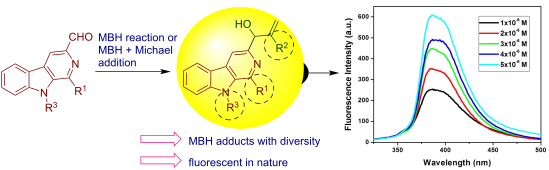
- and substituents was also studied during investigation of fluorescence properties of these derivatives. Keywords: β-carboline; DABCO; fluorescence; MBH reaction; Michael addition; structure–fluorescence activity relationship; Introduction Among the polycyclic alkaloids based on indole, the tricyclic
- medicinal importance is the reason that the synthesis of β-carboline-containing derivatives has been an exciting area for researchers [34][35][36][37][38][39][40]. The Morita–Baylis–Hillman (MBH) reaction is an astonishing C–C bond forming reaction between a carbonyl electrophile and an activated alkene
- leading to the formation of allylic alcohol; a highly functionalized product [41][42][43][44]. The chemistry of the MBH reaction is decorated with several unique features viz. atom economy, complexity generation and generation of a chiral center from a pro-chiral electrophile. The chemistry of the MBH

Graphical Abstract

Figure 1: Few examples of β-carboline-based drugs and bioactive natural products.

Figure 2: 1/3-Formyl-9H-β-carboline: new synthons for the synthesis of β-carboline-fused and substituted fram...

Figure 3: A summary of previous reports toward exploration of 3-formyl-9H-β-carbolines.

Scheme 1: Synthesis of 3-formyl-9H-pyrido[3,4-b]indole derivatives.

Scheme 2: Synthesis of C-3 substituted pyrido[3,4-b]indole MBH derivatives (7 and 8).

Scheme 3: Synthesis of C-3 substituted pyrido[3,4-b]indole MBH derivatives 10.

Figure 4: Library of C-3-substituted pyrido[3,4-b]indole MBH derivatives 7, 8 and 10.

Figure 5: Results of optimization for fluorescence studies: a) contact time; b) concentration; c) solvent.

Figure 6: Pictorial representation of structure–fluorescence activity relationship of C-3 substituted pyrido[...
Mechanochemical synthesis of small organic molecules
- Tapas Kumar Achar,
- Anima Bose and
- Prasenjit Mal
Beilstein J. Org. Chem. 2017, 13, 1907–1931, doi:10.3762/bjoc.13.186
- –Hillman reaction The Morita–Baylis–Hillman reaction (MBH) employs olefins, tertiary amine catalysts and electrophile aldehydes to produce multifunctional products. Mack et al., found a significant enhancement in the rate of a Morita–Baylis–Hillman (MBH) reaction under ball milling conditions (Scheme 5
- -(S)-proline derived catalyst [49]. b) Report using α,α-dipeptide-based catalyst [50]. Mechanochemical Michael reaction [51]. Mechanochemical organocatalytic asymmetric Michael reaction [52]. Mechanochemical Morita–Baylis–Hillman (MBH) reaction [53]. Mechanochemical Wittig reactions [55

Graphical Abstract

Scheme 1: Mechanochemical aldol condensation reactions [48].

Scheme 2: Enantioselective organocatalyzed aldol reactions under mechanomilling. a) Based on binam-(S)-prolin...

Scheme 3: Mechanochemical Michael reaction [51].

Scheme 4: Mechanochemical organocatalytic asymmetric Michael reaction [52].

Scheme 5: Mechanochemical Morita–Baylis–Hillman (MBH) reaction [53].

Scheme 6: Mechanochemical Wittig reactions [55].

Scheme 7: Mechanochemical Suzuki reaction [56].

Scheme 8: Mechanochemical Suzuki–Miyaura coupling by LAG [57].

Scheme 9: Mechanochemical Heck reaction [59].

Scheme 10: a) Sonogashira coupling under milling conditions. b) The representative example of a double Sonogas...

Scheme 11: Copper-catalyzed CDC reaction under mechanomilling [67].

Scheme 12: Asymmetric alkynylation of prochiral sp3 C–H bonds via CDC [68].

Scheme 13: Fe(III)-catalyzed CDC coupling of 3-benzylindoles [69].

Scheme 14: Mechanochemical synthesis of 3-vinylindoles and β,β-diindolylpropionates [70].

Scheme 15: Mechanochemical C–N bond construction using anilines and arylboronic acids [78].

Scheme 16: Mechanochemical amidation reaction from aromatic aldehydes and N-chloramine [79].

Scheme 17: Mechanochemical CDC between benzaldehydes and benzyl amines [81].

Scheme 18: Mechanochemical protection of -NH2 and -COOH group of amino acids [85].

Scheme 19: Mechanochemical Ritter reaction [87].

Scheme 20: Mechanochemical synthesis of dialkyl carbonates [90].

Scheme 21: Mechanochemical transesterification reaction using basic Al2O3 [91].

Scheme 22: Mechanochemical carbamate synthesis [92].

Scheme 23: Mechanochemical bromination reaction using NaBr and oxone [96].

Scheme 24: Mechanochemical aryl halogenation reactions using NaX and oxone [97].

Scheme 25: Mechanochemical halogenation reaction of electron-rich arenes [88,98].

Scheme 26: Mechanochemical aryl halogenation reaction using trihaloisocyanuric acids [100].

Scheme 27: Mechanochemical fluorination reaction by LAG method [102].

Scheme 28: Mechanochemical Ugi reaction [116].

Scheme 29: Mechanochemical Passerine reaction [116].

Scheme 30: Mechanochemical synthesis of α-aminonitriles [120].

Scheme 31: Mechanochemical Hantzsch pyrrole synthesis [121].

Scheme 32: Mechanochemical Biginelli reaction by subcomponent synthesis approach [133].

Scheme 33: Mechanochemical asymmetric multicomponent reaction[134].

Scheme 34: Mechanochemical Paal–Knorr pyrrole synthesis [142].

Scheme 35: Mechanochemical synthesis of benzothiazole using ZnO nano particles [146].

Scheme 36: Mechanochemical synthesis of 1,2-di-substituted benzimidazoles [149].

Scheme 37: Mechanochemical click reaction using an alumina-supported Cu-catalyst [152].

Scheme 38: Mechanochemical click reaction using copper vial [155].

Scheme 39: Mechanochemical indole synthesis [157].

Scheme 40: Mechanochemical synthesis of chromene [158].

Scheme 41: Mechanochemical synthesis of azacenes [169].

Scheme 42: Mechanochemical oxidative C-P bond formation [170].

Scheme 43: Mechanochemical C–chalcogen bond formation [171].

Scheme 44: Solvent-free synthesis of an organometallic complex.
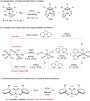
Scheme 45: Selective examples of mechano-synthesis of organometallic complexes. a) Halogenation reaction of Re...

Scheme 46: Mechanochemical activation of C–H bond of unsymmetrical azobenzene [178].

Scheme 47: Mechanochemical synthesis of organometallic pincer complex [179].

Scheme 48: Mechanochemical synthesis of tris(allyl)aluminum complex [180].

Scheme 49: Mechanochemical Ru-catalyzed olefin metathesis reaction [181].

Scheme 50: Rhodium(III)-catalyzed C–H bond functionalization under mechanochemical conditions [182].

Scheme 51: Mechanochemical Csp2–H bond amidation using Ir(III) catalyst [183].

Scheme 52: Mechanochemical Rh-catalyzed Csp2–X bond formation [184].

Scheme 53: Mechanochemical Pd-catalyzed C–H activation [185].

Scheme 54: Mechanochemical Csp2–H bond amidation using Rh catalyst.

Scheme 55: Mechanochemical synthesis of indoles using Rh catalyst [187].

Scheme 56: Mizoroki–Heck reaction of aminoacrylates with aryl halide in a ball-mill [58].

Scheme 57: IBX under mechanomilling conditions [8].

Scheme 58: Thiocarbamoylation of anilines; trapping of reactive aryl-N-thiocarbamoylbenzotriazole intermediate...
Catalytic asymmetric synthesis of biologically important 3-hydroxyoxindoles: an update
- Bin Yu,
- Hui Xing,
- De-Quan Yu and
- Hong-Min Liu
Beilstein J. Org. Chem. 2016, 12, 1000–1039, doi:10.3762/bjoc.12.98
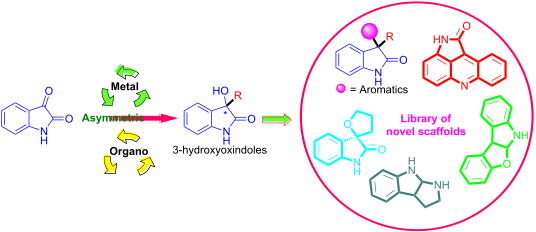
- . found that β-isocupreidine (β-ICD, cat. 22) can efficiently catalyze the Morita–Baylis–Hillman (MBH) reaction of isatins with maleimides to generate the 3-substituted 3-hydroxyoxindoles in excellent yields (up to 96% yield) and with excellent enantioselectivity (up to >99% ee) under mild conditions

Graphical Abstract

Figure 1: 3-Hydroxyoxindole-containing natural products and biologically active molecules.

Scheme 1: Chiral CNN pincer Pd(II) complex 1 catalyzed asymmetric allylation of isatins.

Scheme 2: Asymmetric allylation of ketimine catalyzed by the chiral CNN pincer Pd(II) complex 2.

Scheme 3: Pd/L1 complex-catalyzed asymmetric allylation of 3-O-Boc-oxindoles.

Scheme 4: Cu(OTf)2-catalyzed asymmetric direct addition of acetonitrile to isatins.

Scheme 5: Chiral tridentate Schiff base/Cu complex catalyzed asymmetric Friedel–Crafts alkylation of isatins ...

Scheme 6: Guanidine/CuI-catalyzed asymmetric alkynylation of isatins with terminal alkynes.

Scheme 7: Asymmetric intramolecular direct hydroarylation of α-ketoamides.

Scheme 8: Plausible catalytic cycle for the direct hydroarylation of α-ketoamides.

Scheme 9: Ir-catalyzed asymmetric arylation of isatins with arylboronic acids.

Scheme 10: Enantioselective decarboxylative addition of β-ketoacids to isatins.

Scheme 11: Ruthenium-catalyzed hydrohydroxyalkylation of olefins and 3-hydroxy-2-oxindoles.

Scheme 12: Proposed catalytic mechanism and stereochemical model.

Scheme 13: In-catalyzed allylation of isatins with stannylated reagents.

Scheme 14: Modified protocol for the synthesis of allylated 3-hydroxyoxindoles.

Scheme 15: Hg-catalyzed asymmetric allylation of isatins with allyltrimethylsilanes.

Scheme 16: Enantioselective additions of organoborons to isatins.

Scheme 17: Asymmetric aldol reaction of isatins with cyclohexanone.

Scheme 18: Enantioselective aldol reactions of aliphatic aldehydes with isatin derivatives and the plausible t...

Scheme 19: Enantioselective aldol reaction of isatins and 2,2-dimethyl-1,3-dioxan-5-one.

Scheme 20: Asymmetric aldol reactions between ketones and isatins.

Scheme 21: Phenylalanine lithium salt-catalyzed asymmetric synthesis of 3-alkyl-3-hydroxyoxindoles.

Scheme 22: Aldolization between isatins and dihydroxyacetone derivatives.

Scheme 23: One-pot asymmetric synthesis of convolutamydine A.

Scheme 24: Asymmetric aldol reactions of cyclohexanone and acetone with isatins.

Scheme 25: Aldol reactions of acetone with isatins.

Scheme 26: Aldol reactions of ketones with isatins.

Scheme 27: Enantioselective allylation of isatins.

Scheme 28: Asymmetric aldol reaction of trifluoromethyl α-fluorinated β-keto gem-diols with isatins.

Scheme 29: Plausible mechanism proposed for the asymmetric aldol reaction.
Scheme 30: Asymmetric aldol reaction of 1,1-dimethoxyacetone with isatins.

Scheme 31: Enantioselective Friedel-Crafts reaction of phenols with isatins.

Scheme 32: Enantioselective addition of 1-naphthols with isatins.

Scheme 33: Enantioselective aldol reaction between 3-acetyl-2H-chromen-2-ones and isatins.

Scheme 34: Stereoselective Mukaiyama–aldol reaction of fluorinated silyl enol ethers with isatins.

Scheme 35: Asymmetric vinylogous Mukaiyama–aldol reaction between 2-(trimethylsilyloxy)furan and isatins.

Scheme 36: β-ICD-catalyzed MBH reactions of isatins with maleimides.

Scheme 37: β-ICD-catalyzed MBH reactions of 7-azaisatins with maleimides and activated alkenes.

Scheme 38: Enantioselective aldol reaction of isatins with ketones.

Scheme 39: Direct asymmetric vinylogous aldol reactions of allyl ketones with isatins.

Scheme 40: Enantioselective aldol reactions of ketones with isatins.

Scheme 41: The MBH reaction of isatins with α,β-unsaturated γ-butyrolactam.

Scheme 42: Reactions of tert-butyl hydrazones with isatins followed by oxidation.

Scheme 43: Aldol reactions of isatin derivatives with ketones.

Scheme 44: Enantioselective decarboxylative cyanomethylation of isatins.

Scheme 45: Catalytic kinetic resolution of 3-hydroxy-3-substituted oxindoles.

Scheme 46: Lewis acid catalyzed Friedel–Crafts alkylation of 3-hydroxy-2-oxindoles with electron-rich phenols.

Scheme 47: Lewis acid catalyzed arylation of 3-hydroxyoxindoles with aromatics.

Scheme 48: Synthetic application of 3-arylated disubstituted oxindoles in the construction of core structures ...

Scheme 49: CPA-catalyzed dearomatization and arylation of 3-indolyl-3-hydroxyoxindoles with tryptamines and 3-...

Scheme 50: CPA-catalyzed enantioselective decarboxylative alkylation of β-keto acids with 3-hydroxy-3-indolylo...

Scheme 51: BINOL-derived imidodiphosphoric acid-catalyzed enantioselective Friedel–Crafts reactions of indoles...

Scheme 52: CPA-catalyzed enantioselective allylation of 3-indolylmethanols.

Scheme 53: 3-Indolylmethanol-based substitution and cycloaddition reactions.

Scheme 54: CPA-catalyzed asymmetric [3 + 3] cycloaddtion reactions of 3-indolylmethanols with azomethine ylide...

Scheme 55: CPA-catalyzed three-component cascade Michael/Pictet–Spengler reactions of 3-indolylmethanols and a...

Scheme 56: Acid-promoted chemodivergent and stereoselective synthesis of diverse indole derivatives.

Scheme 57: CPA-catalyzed asymmetric formal [3 + 2] cycloadditions.

Scheme 58: CPA-catalyzed enantioselective cascade reactions for the synthesis of C7-functionlized indoles.

Scheme 59: Lewis acid-promoted Prins cyclization of 3-allyl-3-hydroxyoxindoles with aldehydes.

Scheme 60: Ga(OTf)3-catalyzed reactions of allenols and phenols.

Scheme 61: I2-catalyzed construction of pyrrolo[2.3.4-kl]acridines from enaminones and 3-indolyl-3-hydroxyoxin...

Scheme 62: CPA-catalyzed asymmetric aza-ene reaction of 3-indolylmethanols with cyclic enaminones.

Scheme 63: Asymmetric α-alkylation of aldehydes with 3-indolyl-3-hydroxyoxindoles.

Scheme 64: Organocatalytic asymmetric α-alkylation of enolizable aldehydes with 3-indolyl-3-hydroxyoxindoles a...
Cupreines and cupreidines: an established class of bifunctional cinchona organocatalysts
- Laura A. Bryant,
- Rossana Fanelli and
- Alexander J. A. Cobb
Beilstein J. Org. Chem. 2016, 12, 429–443, doi:10.3762/bjoc.12.46
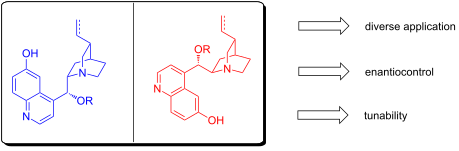
- a cinchona organocatalyst with a 6’-OH functionality came from Hatakeyama and co-workers in 1999 who demonstrated the use of β-ICPD in an asymmetric Morita–Baylis–Hillman (MBH) reaction [15][16][17][18] what is essentially an asymmetric C3-substituted ammonium enolate reaction (Scheme 1) [19][20
- processes, the tertiary amine adds into the conjugate ester as with the MBH reaction, but instead of the resulting C3-ammonium enolate reacting with an electrophile, an E1cB elimination of the carbonate occurs to generate another conjugated system. This can then undergo an attack by a Michael donor
- been developed by Frontier and co-worker using β-ICPD through a mechanism that is reminiscent of the MBH reaction (Scheme 7) [31]. In this process however, the tertiary amine adds to the conjugated system 25 in a 1,6-fashion to generate intermediate enolate 26. This undergoes a single bond rotation to

Graphical Abstract

Figure 1: The structural diversity of the cinchona alkaloids, along with cupreine, cupreidine, β-isoquinidine...

Scheme 1: The original 6’-OH cinchona alkaloid organocatalytic MBH process, showing how the free 6’-OH is ess...

Scheme 2: Use of β-ICPD in an aza-MBH reaction.

Scheme 3: (a) The isatin motif is a common feature for MBH processes catalyzed by β-ICPD, as demonstrated by ...

Scheme 4: (a) Chen’s asymmetric MBH reaction. Good selectivity was dependent upon the presence of (R)-BINOL (...

Scheme 5: Lu and co-workers synthesis of a spiroxindole.

Scheme 6: Kesavan and co-workers’ synthesis of spiroxindoles.

Scheme 7: Frontier’s Nazarov cyclization catalyzed by β-ICPD.

Scheme 8: The first asymmetric nitroaldol process catalyzed by a 6’-OH cinchona alkaloid.

Scheme 9: A cupreidine derived catalyst induces a dynamic kinetic asymmetric transformation.

Scheme 10: Cupreine derivative 38 has been used in an organocatalytic asymmetric Friedel–Crafts reaction.

Scheme 11: Examples of 6’-OH cinchona alkaloid catalyzed processes include: (a) Deng’s addition of dimethyl ma...

Scheme 12: A diastereodivergent sulfa-Michael addition developed by Melchiorre and co-workers.

Scheme 13: Melchiorre’s vinylogous Michael addition.

Scheme 14: Simpkins’s TKP conjugate addition reactions.

Scheme 15: Hydrocupreine catalyst HCPN-59 can be used in an asymmetric cyclopropanation.

Scheme 16: The hydrocupreine and hydrocupreidine-based catalysts HCPN-65 and HCPD-67 demonstrate the potential...

Scheme 17: Jørgensen’s oxaziridination.

Scheme 18: Zhou’s α-amination using β-ICPD.

Scheme 19: Meng’s cupreidine catalyzed α-hydroxylation.

Scheme 20: Shi’s biomimetic transamination process for the synthesis of α-amino acids.

Scheme 21: β-Isocupreidine catalyzed [4 + 2] cycloadditions.

Scheme 22: β-Isocupreidine catalyzed [2+2] cycloaddition.

Scheme 23: A domino reaction catalyst by cupreidine catalyst CPD-30.

Scheme 24: (a) Dixon’s 6’-OH cinchona alkaloid catalyzed oxidative coupling. (b) An asymmetric oxidative coupl...
Application of 7-azaisatins in enantioselective Morita–Baylis–Hillman reaction
- Qing He,
- Gu Zhan,
- Wei Du and
- Ying-Chun Chen
Beilstein J. Org. Chem. 2016, 12, 309–313, doi:10.3762/bjoc.12.33
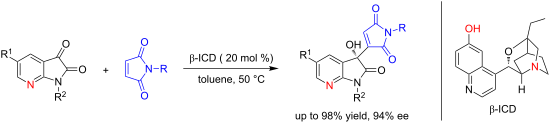
- reaction; Introduction The asymmetric Morita–Baylis–Hillman (MBH) reaction is one of the most powerful synthetic methods in organic chemistry, as it directly constructs carbon–carbon bonds in an atom-economical manner and provides densely functionalized molecules [1][2][3][4]. In particular, the direct
- formation of stereogenic quaternary carbon centers by enantioselective MBH reactions has been a fascinating and challenging area, because the compatible electrophiles are always limited to aldehydes or derivatives thereof. Since the first elegant work on the enantioselective MBH reaction between isatins and
- stereocontrol [6][7][8][9][10][11][12]. Maleimides are also good nucleophilic precursors in the MBH reactions and in 2013, Chimni developed an asymmetric MBH reaction of isatins and maleimides with excellent enantioselectivity [13]. Later, the same group expanded this strategy to isatin-derived ketimines under

Graphical Abstract

Figure 1: Bioactive 7-azaisatins and their derivatives.

Scheme 1: Further exploration with 7-azaisatin 1a and comparison with the previous work by Zhou [5].
Morita–Baylis–Hillman reaction of acrylamide with isatin derivatives
- Radhey M. Singh,
- Kishor Chandra Bharadwaj and
- Dharmendra Kumar Tiwari
Beilstein J. Org. Chem. 2014, 10, 2975–2980, doi:10.3762/bjoc.10.315

- with acrylate and acrylonitrile has also been developed resulting in high product yields. Keywords: acrylamide; isatin; ketimine; Morita–Baylis–Hillman; phenol; Introduction The Morita–Baylis–Hillman (MBH) reaction is an important carbon–carbon bond-forming reaction [1][2][3]. It involves the
- . [13] used dioxane/water in a 1:1 ratio, while Aggarwal et al. [14] used quinuclidine in methanol to carry out the MBH reaction of acrylamide. Connon et al. [15] utilized phenol and/or a H2O/t-BuOH 7:3 system for rate acceleration and Guo et al. used aryl activation [16][17]. Other reports made use of
- appending other functionalities/groups for intramolecular transformations. Other reports have used this feature for the development of an intramolecular MBH reaction: Corey et al. (total synthesis) [29], Pigge et al. (ruthenium complexes as an electrophile) [30], and Basavaiah et al. [31][32]. Isatin has

Graphical Abstract

Figure 1: MBH reaction and some selected activated alkenes.

Scheme 1: Substrate scope of the MBH reaction for various isatin and acrylamide derivatives. All reactions we...

Figure 2: ORTEP diagram of 3ea (ellipsoids are drawn at 50% probability).

Scheme 2: Substrate scope of the aza-MBH reaction for various isatin derivatives. All reactions were carried ...
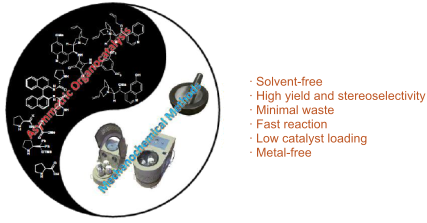
Mechanochemistry assisted asymmetric organocatalysis: A sustainable approach
- Pankaj Chauhan and
- Swapandeep Singh Chimni
Beilstein J. Org. Chem. 2012, 8, 2132–2141, doi:10.3762/bjoc.8.240
- catalyst activates and orients the β-ketoester. Morita–Baylis–Hillman (MBH) reaction The Morita–Baylis–Hillman (MBH) reaction provides a very useful and interesting method for the synthesis of β-hydroxycarbonyl compounds with an α-alkylidene group [49][50][51][52][53]. Mechanochemical methods of neat
- organocatalysts in an enantioselective MBH reaction and as cyanide ion sensors in organic solvents. Chiral bis-thiourea XI catalyses the MBH reaction of benzaldehyde (2b) and 2-cyclohexen-1-one (15) to provide MBH adduct 16 in 70% yield and 24% ee under neat grinding and LAG. Anhydride ring opening The
- Michael reaction assisted by pestle and mortar grinding. C-2 symmetric thiourea catalysed enantioselective MBH reaction. Quinine-catalysed ring opening of meso-anhydride by ball-milling. Ball-milling-assisted (A) synthesis of glycine schiff bases and (B) their organocatalytic asymmetric alkylation

Graphical Abstract

Scheme 1: Proline-catalysed aldol reaction in a ball-mill.

Scheme 2: Proline-catalysed aldol reaction between solid substrates (1b and 2a).

Scheme 3: (S)-Binam-L-prolinamide catalysed asymmetric aldol reaction by using a ball-mill. aConversion.

Scheme 4: Asymmetric aldol reaction assisted by ball-milling catalysed by dipeptides (A) with III and (B) wit...

Scheme 5: Thiodipeptide-catalysed asymmetric aldol reaction of (A) ketones with aldehydes and (B) acetone wit...

Scheme 6: Enantioselective Michael reaction of aldehydes with nitroalkenes catalysed by pyrrolidine-derived o...

Scheme 7: Chiral squaramide catalysed asymmetric Michael reaction assisted by ball-milling.

Scheme 8: Asymmetric organocatalytic Michael reaction assisted by pestle and mortar grinding.

Scheme 9: C-2 symmetric thiourea catalysed enantioselective MBH reaction.

Scheme 10: Quinine-catalysed ring opening of meso-anhydride by ball-milling.

Scheme 11: Ball-milling-assisted (A) synthesis of glycine schiff bases and (B) their organocatalytic asymmetri...

Scheme 12: Enantioselective amination of β-ketoester by using pestle and mortar.
Reactions of nitroxides XIII: Synthesis of the Morita–Baylis–Hillman adducts bearing a nitroxyl moiety using 4-acryloyloxy-2,2,6,6-tetramethylpiperidine-1-oxyl as a starting compound, and DABCO and quinuclidine as catalysts
- Jerzy Zakrzewski
Beilstein J. Org. Chem. 2012, 8, 1515–1522, doi:10.3762/bjoc.8.171

- aldehydes. Keywords: 4-acryloyloxy-2,2,6,6-tetramethylpiperidine-1-oxyl; DABCO; Morita–Baylis–Hillman reaction; nitroxides; quinuclidine; Introduction In the Morita–Baylis–Hillman (MBH) reaction, aldehydes react with a double bond activated by an electron-withdrawing group (EWG). The vinylic carbon
- phosphine [19] as a catalyst. The MBH reaction is a carbon–carbon bond forming process. This is the reason why a huge amount of research devoted to the reaction is reported every year. The application and scope of the reaction has been summarized in many review articles, e.g., [20], as well as the latest
- ones [21][22][23][24]. Some recent results concerning MBH reaction have been presented [6][16][18][25][26][27][28][29][30][31][32][33]. MBH adducts themselves are reported to be antiproliferative agents [34]; however, they are often applied as a tool for building more complex target structures, usually

Graphical Abstract

Scheme 1: MBH adducts 5a–o from 4-acryloyloxy-2,2,6,6-tetramethylpiperidine-1-oxyl.
Chiral multifunctional thiourea-phosphine catalyzed asymmetric [3 + 2] annulation of Morita–Baylis–Hillman carbonates with maleimides
- Hong-Ping Deng,
- De Wang,
- Yin Wei and
- Min Shi
Beilstein J. Org. Chem. 2012, 8, 1098–1104, doi:10.3762/bjoc.8.121
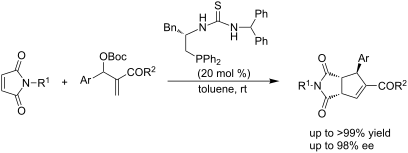
- was shown that chiral multifunctional thiourea-phosphines were excellent catalysts for the asymmetric aza-MBH reaction, asymmetric allylic substitution of MBH adducts, and asymmetric [3 + 2] annulation of MBH carbonates with electron-deficient olefins [52][53][54][55][56]. Hence, we initially used

Graphical Abstract

Scheme 1: Paths to the formation of 1,3-dipolar synthons by using a catalytic amount of phosphines.
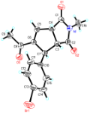
Figure 1: The ORTEP plot of compound 3r.

Figure 2: 31P NMR spectra (161.9 MHz, CDCl3) of control experiments.

Scheme 2: Proposed transition models.

Scheme 3: Dihydroxylation of 3c.



