


Search results
Search for "Schmidt reaction" in Full Text gives 15 result(s) in Beilstein Journal of Organic Chemistry.
Construction of CF2 moieties in FDA-approved drugs (2016–2025): industrial routes, mechanisms, and scale-up considerations
- Wenyan Yao,
- Huanhuan Zhang,
- Xiaolong Yang and
- Feng Liu
Beilstein J. Org. Chem. 2026, 22, 1122–1150, doi:10.3762/bjoc.22.91
- . It is noteworthy that a study [13] found that the yield of the difluoro acid 38 in route c decreased significantly during scale-up when using diphenyl phosphoryl azide (DPPA) for the Curtius rearrangement (the reason for the decrease was not described). Switching to the Schmidt reaction using NaN3

Graphical Abstract

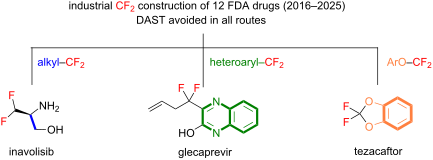
Figure 1: FDA-approved drugs containing CF2 groups (2016–2025). a) For tezacaftor (4), the 2018 approval year...

Figure 2: Synthesis of the alkyl–CF2 side chain in glecaprevir (1) and voxilaprevir (2).

Figure 3: Synthesis of the difluorinated intermediate 38 for ivosidenib (3).
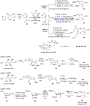
Figure 4: Synthesis of the difluorinated intermediate for cedazuridine (5).

Figure 5: Synthesis of the difluorinated intermediate for omaveloxolone (10).

Figure 6: Synthesis of the difluorinated intermediate for 1-(perfluorohexyl)octane (11).

Figure 7: Synthetic routes towards difluorinated intermediates for the synthesis of inavolisib.
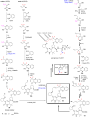
Figure 8: Synthesis of the difluorinated intermediate for glecaprevir.

Figure 9: Synthesis of the difluorinated intermediate for voxilaprevir.

Figure 10: Synthesis of the difluorinated intermediate for lenacapavir.

Figure 11: Synthesis of the difluorinated intermediate for oteseconazole.

Figure 12: Synthesis of the difluorinated intermediate for tezacaftor.

Figure 13: Synthesis of the difluorinated intermediate for difamilas (6).

Figure 14: Synthesis of the difluorinated intermediate for asciminib.

Figure 15: Mechanism of the deoxyfluorination of carbonyl groups using DAST.

Figure 16: Mechanism of the deoxyfluorination of carbonyl groups using SF4.

Figure 17: Mechanism of the fluorination of dithioketals using Olah’s reagent.

Figure 18: Mechanism of the fluorination of xanthates using AgF.

Figure 19: Mechanism of electrophilic fluorination using NFSI.

Figure 20: Mechanism of the Ni-catalyzed conversion of Ar–X to Ar–CF2H using Hu’s reagent.

Figure 21: Mechanism of the (Me3Si)3SiH-mediated intermolecular perfluoroalkylation of alkenes in water.

Figure 22: Mechanism of the formation of ArO–CF2H from ClF2COONa and ArOH.

Figure 23: Mechanism of the formation of ArO–CF2X from TMSCF2X and ArOH.
C2 to C6 biobased carbonyl platforms for fine chemistry
- Jingjing Jiang,
- Muhammad Noman Haider Tariq,
- Florence Popowycz,
- Yanlong Gu and
- Yves Queneau
Beilstein J. Org. Chem. 2025, 21, 2103–2172, doi:10.3762/bjoc.21.165

Graphical Abstract

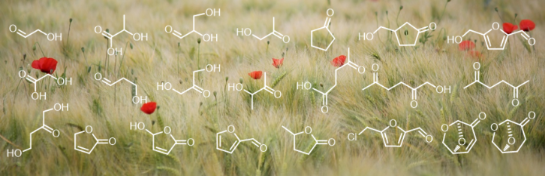
Figure 1: C2–C6 biobased carbonyl building blocks.

Scheme 1: Proposed (2 + 2) route to glycolaldehyde and glycolic acid from erythritol by Cu/AC catalyst (AC = ...

Scheme 2: Reductive amination of GCA.

Scheme 3: N-Formylation of secondary amines by reaction with GCA.

Scheme 4: Synthesis and conversion of hydroxy acetals to cyclic acetals.

Scheme 5: Synthesis of 3-(indol-3-yl)-2,3-dihydrofurans via three-component reaction of glycolaldehyde, indol...

Scheme 6: BiCl3-catalyzed synthesis of benzo[a]carbazoles from 2-arylindoles and α-bromoacetaldehyde ethylene...

Scheme 7: Cu/NCNSs-based conversion of glycerol to glycolic acid and other short biobased acids.

Scheme 8: E. coli-based biotransformation of C1 source molecules (CH4, CO2 and CO) towards C2 glycolic acid.

Scheme 9: N-Formylation of amines with C2 (a) or C3 (b) biomass-based feedstocks.

Scheme 10: Methods for the formation of propanoic acid (PA) from lactic acid (LA).

Scheme 11: Co-polymerization of biobased lactic acid and glycolic acid via a bicatalytic process.

Scheme 12: Oxidation of α-hydroxy acids by tetrachloroaurate(III) in acetic acid–sodium acetate buffer medium.

Figure 2: Selective catalytic pathways for the conversion of lactic acid (LA).

Scheme 13: Synthesis of 1,3-PDO via cross-aldol reaction between formaldehyde and acetaldehyde to 3-hydroxypro...

Scheme 14: Hydrothermal conversion of 1,3-dihydroxy-2-propane and 2,3-dihydroxypropanal to methylglyoxal.

Scheme 15: FLS-catalyzed formose reaction to synthesize GA and DHA.

Scheme 16: GCA and DHA oxidation products of glycerol and isomerization of GCA to DHA under flow conditions us...

Scheme 17: Acid-catalyzed reactions of DHA with alcohols.

Scheme 18: Synthesis of dihydroxyacetone phosphate from dihydroxyacetone.

Scheme 19: Bifunctional acid–base catalyst DHA conversion into lactic acid via pyruvaldehyde or fructose forma...

Scheme 20: Catalytic one-pot synthesis of GA and co-synthesis of formamides and formates from DHA.

Scheme 21: (a) Synthesis of furan derivatives and (b) synthesis of thiophene derivative by cascade [3 + 2] ann...

Scheme 22: Brønsted acidic ionic liquid catalyzed synthesis of benzo[a]carbazole from renewable acetol and 2-p...

Scheme 23: Asymmetric hydrogenation of α-hydroxy ketones to 1,2-diols.

Scheme 24: Synthesis of novel 6-(substituted benzylidene)-2-methylthiazolo [2,3-b]oxazol-5(6H)-one from 1-hydr...

Scheme 25: ʟ-Proline-catalyzed synthesis of anti-diols from hydroxyacetone and aldehydes.

Scheme 26: C–C-bond-formation reactions of a biomass-based feedstock aromatic aldehyde (C5) and hydroxyacetone...

Scheme 27: Ethanol upgrading to C4 bulk chemicals via the thiamine (VB1)-catalyzed acetoin condensation.

Scheme 28: One-pot sequential chemoenzymatic synthesis of 2-aminobutane-1,4-diol and 1,2,4-butanetriol via 1,4...

Scheme 29: Synthesis of 1,4-dihydroxybutan-2-one by microbial transformation.

Scheme 30: Conversion of polyols by [neocuproine)Pd(OAc)]2(OTf)2] to α-hydroxy ketones.

Scheme 31: Chemoselective oxidation of alcohols with chiral palladium-based catalyst 2.

Scheme 32: Electrochemical transformation of furfural to 5-hydroxy-2(5H)-furanone (HFO).

Scheme 33: Selective hydrodeoxygenation of HFO and oxidation to γ-butyrolactone (GBL).

Scheme 34: Photosensitized oxygenation of furan towards HFO via ozonide intermediates.

Scheme 35: Conversion of furfural to HFO and MAN by using mesoporous carbon nitride (SGCN) as photocatalyst.

Scheme 36: Synthesis of HFO from furan derivatives.

Scheme 37: Photooxidation of furfural to 5-hydroxy-2(5H)-furanone (HFO).

Scheme 38: Synthesis of Friedel–Crafts indole adduct from HFO.

Scheme 39: Conversion of HFO to α,γ-substituted chiral γ-lactones.

Scheme 40: Tautomeric transformation of HFO to formylacrylic acid.

Scheme 41: Hydrolysis of HFO to succinic acid in aqueous solution.

Scheme 42: Substitution and condensation reactions of 5-hydroxy-2(5H)-furanone (HFO).

Scheme 43: (a) Conversion of HFO towards valuable C4 chemicals and (b) anodic oxidation of 5-hydroxy-2(5H)-fur...

Figure 3: Conversion of HFO towards other natural and synthetic substances.

Scheme 44: Conversion of furfural to maleic anhydride (reaction a: VOx/Al2O3; reaction b: VPO).

Scheme 45: Conversion of furfural into succinic acid.

Scheme 46: Electro‑, photo‑, and biocatalysis for one-pot selective conversions of furfural into C4 chemicals.

Scheme 47: Production route of furfural from hemicellulose.

Scheme 48: Mechanism for xylose dehydration to furfural through a choline xyloside intermediate.

Scheme 49: Conversion of furfural to furfuryl alcohol and its derivatives.

Scheme 50: Conversion of furfural to furfuryl alcohol and 3-(2-furyl)acrolein.

Scheme 51: The aerobic oxidative condensation of biomass-derived furfural and linear alcohols.

Scheme 52: The single-step synthesis of 2-pentanone from furfural.

Scheme 53: Electrocatalytic coupling reaction of furfural and levulinic acid.

Scheme 54: Conversion of furfural to m-xylylenediamine.

Scheme 55: Conversion of furfural to tetrahydrofuran-derived amines.

Scheme 56: Formation of trans-4,5-diamino-cyclopent-2-enones from furfural.

Scheme 57: Production of pyrrole and proline from furfural.

Scheme 58: Synthesis of 1‑(trifluoromethyl)-8-oxabicyclo[3.2.1]oct-3-en-2-ones from furfural.

Scheme 59: Conversion of furfural to furfural-derived diacids.

Scheme 60: A telescope protocol derived from furfural and glycerol.

Scheme 61: A tandem cyclization of furfural and 5,5-dimethyl-1,3-cyclohexanedione.

Scheme 62: A Ugi four-component reaction to construct furfural-based polyamides.

Scheme 63: One-pot synthesis of γ-acyloxy-Cy7 from furfural.

Scheme 64: Dimerization–Piancatelli sequence toward humins precursors from furfural.

Scheme 65: Conversion of furfural to CPN.

Scheme 66: Synthesis of jet fuels range cycloalkanes from CPN and lignin-derived vanillin.

Scheme 67: Solar-energy-driven synthesis of high-density biofuels from CPN.

Scheme 68: Reductive amination of CPN to cyclopentylamine.

Scheme 69: Asymmetric hydrogenation of C=O bonds of exocyclic α,β-unsaturated cyclopentanones.

Scheme 70: Preparation of levulinic acid via the C5 route (route a) or C6 route (routes b1 and b2).

Scheme 71: Mechanism of the rehydration of HMF to levulinic acid and formic acid.

Scheme 72: Important levulinic acid-derived chemicals.

Scheme 73: Direct conversion of levulinic acid to pentanoic acid.

Scheme 74: Catalytic aerobic oxidation of levulinic acid to citramalic acid.

Scheme 75: Conversion of levulinic acid to 1,4-pentanediol (a) see ref. [236]; b) see ref. [237]; c) see ref. [238]; d) see r...

Scheme 76: Selective production of 2-butanol through hydrogenolysis of levulinic acid.

Scheme 77: General reaction pathways proposed for the formation of 5MPs from levulinic acid.

Scheme 78: Selective reductive amination of levulinic acid to N-substituted pyrroles.

Scheme 79: Reductive amination of levulinic acid to chiral pyrrolidinone.

Scheme 80: Reductive amination of levulinic acid to non-natural chiral γ-amino acid.

Scheme 81: Nitrogen-containing chemicals derived from levulinic acid.

Scheme 82: Preparation of GVL from levulinic acid by dehydration and hydrogenation.

Scheme 83: Ruthenium-catalyzed levulinic acid to chiral γ-valerolactone.

Scheme 84: Catalytic asymmetric hydrogenation of levulinic acid to chiral GVL.

Scheme 85: Three steps synthesis of ε-caprolactam from GVL.

Scheme 86: Multistep synthesis of nylon 6,6 from GVL.

Scheme 87: Preparation of MeGVL by α-alkylation of GVL.

Scheme 88: Ring-opening polymerization of five-membered lactones.

Scheme 89: Synthesis of GVL-based ionic liquids.

Scheme 90: Preparation of butene isomers from GVL under Lewis acid conditions.

Scheme 91: Construction of C5–C12 fuels from GVL over nano-HZSM-5 catalysts.

Scheme 92: Preparation of alkyl valerate from GVL via ring opening/reduction/esterification sequence.

Scheme 93: Construction of 4-acyloxypentanoic acids from GVL.

Scheme 94: Synthesis of 1,4-pentanediol (PDO) from GVL.

Scheme 95: Construction of novel cyclic hemiketal platforms via self-Claisen condensation of GVL.

Scheme 96: Copper-catalyzed lactamization of GVL.

Figure 4: Main scaffolds obtained from HMF.

Scheme 97: Biginelli reactions towards HMF-containing dihydropyrimidinones.

Scheme 98: Hantzsch dihydropyridine synthesis involving HMF.

Scheme 99: The Kabachnik–Fields reaction involving HMF.

Scheme 100: Construction of oxazolidinone from HMF.

Scheme 101: Construction of rhodamine-furan hybrids from HMF.

Scheme 102: A Groebke–Blackburn–Bienaymé reaction involving HMF.

Scheme 103: HMF-containing benzodiazepines by [4 + 2 + 1] cycloadditions.

Scheme 104: Synthesis of fluorinated analogues of α-aryl ketones.

Scheme 105: Synthesis of HMF derived disubstituted γ-butyrolactone.

Scheme 106: Functionalized aromatics from furfural and HMF.

Scheme 107: Diels–Alder adducts from HMF or furfural with N-methylmaleimide.

Scheme 108: Pathway of the one-pot conversion of HMF into phthalic anhydride.

Scheme 109: Photocatalyzed preparation of humins (L-H) from HMF mixed with spoiled HMF residues (LMW-H) and fur...

Scheme 110: Asymmetric dipolar cycloadditions on HMF.

Scheme 111: Dipolar cycloadditions of HMF based nitrones to 3,4- and 3,5-substituted isoxazolidines.

Scheme 112: Production of δ-lactone-fused cyclopenten-2-ones from HMF.

Scheme 113: Aza-Piancatelli access to aza-spirocycles from HMF-derived intermediates.

Scheme 114: Cross-condensation of furfural, acetone and HMF into C13, C14 and C15 products.

Scheme 115: Base-catalyzed aldol condensation/dehydration sequences from HMF.

Scheme 116: Condensation of HMF and active methylene nitrile.

Scheme 117: MBH reactions involving HMF.

Scheme 118: Synthesis of HMF-derived ionic liquids.

Scheme 119: Reductive amination/enzymatic acylation sequence towards HMF-based surfactants.

Scheme 120: The formation of 5-chloromethylfurfural (CMF).

Scheme 121: Conversion of CMF to HMF, levulinic acid, and alkyl levulinates.

Scheme 122: Conversion of CMF to CMFCC and FDCC.

Scheme 123: Conversion of CMF to BHMF.

Scheme 124: Conversion of CMF to DMF.

Scheme 125: CMF chlorine atom substitutions toward HMF ethers and esters.

Scheme 126: Introduction of carbon nucleophiles in CMF.

Scheme 127: NHC-catalyzed remote enantioselective Mannich-type reactions of CMF.

Scheme 128: Conversion of CMF to promising biomass-derived dyes.

Scheme 129: Radical transformation of CMF with styrenes.

Scheme 130: Synthesis of natural herbicide δ-aminolevulinic acid from CMF.

Scheme 131: Four step synthesis of the drug ranitidine from CMF.

Scheme 132: Pd/CO2 cooperative catalysis for the production of HHD and HXD.

Scheme 133: Different ruthenium (Ru) catalysts for the ring-opening of 5-HMF to HHD.

Scheme 134: Proposed pathways for preparing HXD from HMF.

Scheme 135: MCP formation and uses.

Scheme 136: Cu(I)-catalyzed highly selective oxidation of HHD to 2,5-dioxohexanal.

Scheme 137: Synthesis of N‑substituted 3‑hydroxypyridinium salts from 2,5-dioxohexanal.

Scheme 138: Ru catalyzed hydrogenations of HHD to 1,2,5-hexanetriol (a) see ref. [396]; b) see ref. [397]).

Scheme 139: Aviation fuel range quadricyclanes produced by HXD.

Scheme 140: Synthesis of HDGK from HXD and glycerol as a chain extender.

Scheme 141: Synthesis of serinol pyrrole from HXD and serinol.

Scheme 142: Synthesis of pyrroles from HXD and nitroarenes.

Scheme 143: Two-step production of PX from cellulose via HXD.

Scheme 144: Preparation of HCPN from HMF via hydrogenation and ring rearrangement.

Scheme 145: Suggested pathways from HMF to HCPN.

Scheme 146: α-Alkylation of HCPN with ethylene gas.

Scheme 147: Synthesis of 3-(hydroxymethyl)cyclopentylamine from HMF via reductive amination of HCPN.

Scheme 148: Production of LGO and Cyrene® from biomass.

Scheme 149: Synthesis of HBO from LGO and other applications.

Scheme 150: Construction of m-Cyrene® homopolymer.

Scheme 151: Conversion of Cyrene® to THFDM and 1,6-hexanediol.

Scheme 152: RAFT co-polymerization of LGO and butadienes.

Scheme 153: Polycondensation of HO-LGOL and diols with dimethyl adipate.

Scheme 154: Self-condensation of Cyrene® and Claisen–Schmidt reactions.

Scheme 155: Synthesis of 5-amino-2-(hydroxymethyl)tetrahydropyran from Cyrene®.
Synthesis of new bile acid-fused tetrazoles using the Schmidt reaction
- Dušan Đ. Škorić,
- Olivera R. Klisurić,
- Dimitar S. Jakimov,
- Marija N. Sakač and
- János J. Csanádi
Beilstein J. Org. Chem. 2021, 17, 2611–2620, doi:10.3762/bjoc.17.174
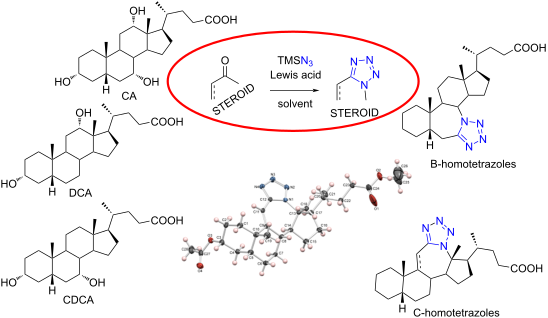
- , University of Novi Sad, Trg Dositeja Obradovića 4, 21000 Novi Sad, Serbia Oncology Institute of Vojvodina, Faculty of Medicine, University of Novi Sad, Put Dr Goldmana 4, 21204 Sremska Kamenica, Serbia 10.3762/bjoc.17.174 Abstract A practical and high-yielding Schmidt reaction for the synthesis of fused
- selective activity towards certain tumor cell lines. Keywords: antiproliferative activity; Schmidt reaction; steroids; tetrazoles; trimethylsilyl azide; Introduction Bile acids are naturally occurring steroidal surfactants that play various biological roles. Besides the well-known role as lipid
- ]. The main approach in the synthesis of the tetrazoles is 1,3-dipolar cycloaddition between azide and nitrile. These reactions often follow the principles of “click” chemistry [20]. Although the formation of tetrazole in the Schmidt reaction of ketones was noted in the original study by Schmidt himself

Graphical Abstract

Figure 1: Structures of the steroidal tetrazoles that showed anticancer potential in vitro.

Figure 2: Mechanism of the Schmidt reaction.

Scheme 1: Synthesis of 12-oxo intermediates. Reagents and conditions: a) EtOAc, pTsOH, reflux, 14 h (81%); b)...

Scheme 2: Synthesis of 7-oxo intermediate 11 from chenodeoxycholic acid (9). Reagents and conditions: a) EtOA...

Figure 3: Mercury [51] drawing of the molecular structures of compounds 13 and 14, with labelling of nonhydrogen ...

Figure 4: Dose dependence of the cytotoxicity of tested compounds on treated cell lines. All compounds were t...
Combination of multicomponent KA2 and Pauson–Khand reactions: short synthesis of spirocyclic pyrrolocyclopentenones
- Riccardo Innocenti,
- Elena Lenci,
- Gloria Menchi and
- Andrea Trabocchi
Beilstein J. Org. Chem. 2020, 16, 200–211, doi:10.3762/bjoc.16.23
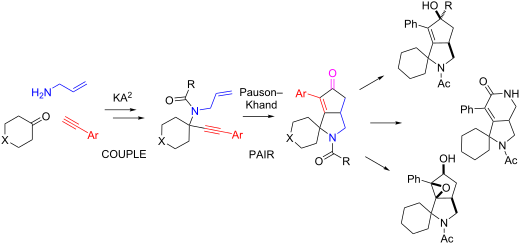
- imposed by the adjacent phenyl and cyclohexyl rings [59]. The treatment of compound 5 under Schmidt reaction conditions with sodium azide in TFA [60] resulted in the conversion to the corresponding six-membered ring lactam 39 in 41% yield, demonstrating the reactivity of the enone 5 at the carbonyl group

Graphical Abstract

Figure 1: Chemical structure of representative approved drugs containing a spirocyclic moiety.

Scheme 1: Synthetic strategies for accessing pyrrolocyclopentenone derivatives, including the novel couple/pa...

Scheme 2: Couple/pair approach using combined KA2 and Pauson–Khand multicomponent reactions.

Scheme 3: Follow-up chemistry on compound 5 taking advantage of the enone chemistry. Reaction conditions. (i)...
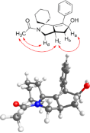
Figure 2: Top: Selected NOE contacts from NOESY 1D spectra of compound 36; bottom: low energy conformer of 36...

Figure 3: PCA plot resulting from the correlation between PC1 vs PC2, showing the positioning in the chemical...

Figure 4: PMI plot showing the skeletal diversity of compounds 3–39 (blue diamonds) with respect to the refer...
A metal-free approach for the synthesis of amides/esters with pyridinium salts of phenacyl bromides via oxidative C–C bond cleavage
- Kesari Lakshmi Manasa,
- Yellaiah Tangella,
- Namballa Hari Krishna and
- Mallika Alvala
Beilstein J. Org. Chem. 2019, 15, 1864–1871, doi:10.3762/bjoc.15.182

- [6][7], anhydrides [8], esters [9], and acyl azides [10] with amines by employing coupling reagents [11]. Alternative protocols include the Staudinger–Vilarrasa reaction [12], Schmidt reaction [13][14], Beckmann rearrangement [15], aminocarbonylation of aryl halides [16], Staudinger ligation [17

Graphical Abstract

Scheme 1: Comparison of our work with previous studies.
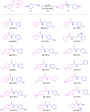
Scheme 2: Scope of pyridinium salts and benzylamine substrates. Reaction conditions: 1 (1 mmol), 2 (1 mmol), ...

Scheme 3: Scope of pyridinium salts and benzyl alcohol substrates. Reaction conditions: 1 (1 mmol), 4 (1 mmol...

Scheme 4: Scope of pyridinium salts, primary and secondary amine substrates. Reaction conditions: 1 (1 mmol), ...

Scheme 5: Control experiments for the oxidative cleavage of C–C bonds.

Scheme 6: Plausible reaction mechanism for the synthesis of N-alkylated benzamides 3.
An overview of recent advances in duplex DNA recognition by small molecules
- Sayantan Bhaduri,
- Nihar Ranjan and
- Dev P. Arya
Beilstein J. Org. Chem. 2018, 14, 1051–1086, doi:10.3762/bjoc.14.93
- anthraquinone–chalcone hybrids were synthesized using Claisen–Schmidt reaction in order to test their anticancer potential against human cancer cell lines and DNA binding affinity and specificity. It has been observed that three conjugates 32–34 exhibited significant cytotoxicity against LS174 and HeLa cancer

Graphical Abstract

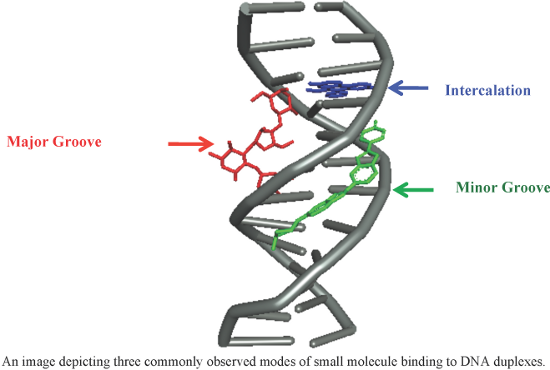
Figure 1: A figure showing the hydrogen bonding patterns observed in (a) duplex (b) triplex and (c) quadruple...
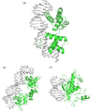
Figure 2: (a) Portions of MATα1–MATα2 are shown contacting the minor groove of the DNA substrate. Key arginin...

Figure 3: Chemical structures of naturally occurring and synthetic hybrid minor groove binders.
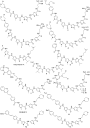
Figure 4: Synthetic structural analogs of distamycin A by replacing one or more pyrrole rings with other hete...

Figure 5: Pictorial representation of the binding model of pyrrole–imidazole (Py/Im) polyamides based on the ...

Figure 6: Chemical structures of synthetic “hairpin” pyrrole–imidazole (Py/Im) conjugates.

Figure 7: (a) Minor groove complex formation between DNA duplex and 8-ring cyclic Py/Im polyamide (conjugate ...

Figure 8: Telomere-targeting tandem hairpin Py/Im polyamides 23 and 24 capable of recognizing >10 base pairs; ...

Figure 9: Representative examples of recently developed DNA minor groove binders.

Figure 10: Chemical structures of bisbenzamidazoles Hoechst 33258 and 33342 and their synthetic structural ana...

Figure 11: Chemical structures of bisamidines such as diminazene, DAPI, pentamidine and their synthetic struct...

Figure 12: Representative examples of recently developed bisamidine derivatives.

Figure 13: Chemical structures of chromomycin, mithramycin and their synthetic structural analogs 91 and 92.

Figure 14: Chemical structures of well-known naturally occurring DNA binding intercalators.

Figure 15: Naturally occurring indolocarbazole rebeccamycin and its synthetic analogs.

Figure 16: Representative examples of naturally occurring and synthetic derivatives of DNA intercalating agent...

Figure 17: Several recent synthetic varieties of DNA intercalators.

Figure 18: Aminoglycoside (neomycin)–Hoechst 33258/intercalator conjugates.

Figure 19: Chemical structures of triazole linked neomycin dimers and neomycin–bisbenzimidazole conjugates.
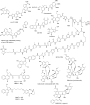
Figure 20: Representative examples of naturally occurring and synthetic analogs of DNA binding alkylating agen...

Figure 21: Chemical structures of naturally occurring and synthetic analogs of pyrrolobenzodiazepines.
Synthesis of 1-indanones with a broad range of biological activity
- Marika Turek,
- Dorota Szczęsna,
- Marek Koprowski and
- Piotr Bałczewski
Beilstein J. Org. Chem. 2017, 13, 451–494, doi:10.3762/bjoc.13.48
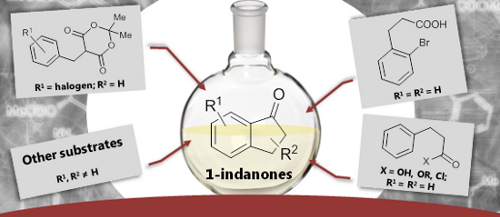

Graphical Abstract

Figure 1: Biologically active 1-indanones and their structural analogues.

Figure 2: Number of papers about (a) 1-indanones, (b) synthesis of 1-indanones.

Scheme 1: Synthesis of 1-indanone (2) from hydrocinnamic acid (1).

Scheme 2: Synthesis of 1-indanone (2) from 3-(2-bromophenyl)propionic acid (3).

Scheme 3: Synthesis of 1-indanones 5 from 3-arylpropionic acids 4.

Scheme 4: Synthesis of kinamycin (9a) and methylkinamycin C (9b).

Scheme 5: Synthesis of trifluoromethyl-substituted arylpropionic acids 12, 1-indanones 13 and dihydrocoumarin...

Scheme 6: Synthesis of 1-indanones 16 from benzoic acids 15.

Scheme 7: Synthesis of 1-indanones 18 from arylpropionic and 3-arylacrylic acids 17.

Scheme 8: The NbCl5-induced one-step synthesis of 1-indanones 22.

Scheme 9: Synthesis of biologically active 1-indanone derivatives 26.

Scheme 10: Synthesis of enantiomerically pure indatraline ((−)-29).

Scheme 11: Synthesis of 1-indanone (2) from the acyl chloride 30.

Scheme 12: Synthesis of the mechanism-based inhibitors 33 of coelenterazine.

Scheme 13: Synthesis of the indane 2-imidazole derivative 37.

Scheme 14: Synthesis of fluorinated PAHs 41.

Scheme 15: Synthesis of 1-indanones 43 via transition metal complexes-catalyzed carbonylative cyclization of m...

Scheme 16: Synthesis of 6-methyl-1-indanone (46).

Scheme 17: Synthesis of 1-indanone (2) from ester 48.

Scheme 18: Synthesis of benzopyronaphthoquinone 51 from the spiro-1-indanone 50.

Scheme 19: Synthesis of the selective endothelin A receptor antagonist 55.

Scheme 20: Synthesis of 1-indanones 60 from methyl vinyl ketone (57).

Scheme 21: Synthesis of 1-indanones 64 from diethyl phthalate 61.

Scheme 22: Synthesis of 1-indanone derivatives 66 from various Meldrum’s acids 65.

Scheme 23: Synthesis of halo 1-indanones 69.

Scheme 24: Synthesis of substituted 1-indanones 71.

Scheme 25: Synthesis of spiro- and fused 1-indanones 73 and 74.

Scheme 26: Synthesis of spiro-1,3-indanodiones 77.

Scheme 27: Mechanistic pathway for the NHC-catalyzed Stetter–Aldol–Michael reaction.

Scheme 28: Synthesis of 2-benzylidene-1-indanone derivatives 88a–d.

Scheme 29: Synthesis of 1-indanone derivatives 90a–i.

Scheme 30: Synthesis of 1-indanones 96 from o-bromobenzaldehydes 93 and alkynes 94.

Scheme 31: Synthesis of 3-hydroxy-1-indanones 99.

Scheme 32: Photochemical preparation of 1-indanones 103 from ketones 100.

Scheme 33: Synthesis of chiral 3-aryl-1-indanones 107.

Scheme 34: Photochemical isomerization of 2-methylbenzil 108.

Scheme 35: Synthesis of 2-hydroxy-1-indanones 111a–c.

Scheme 36: Synthesis of 1-indanone derivatives 113 and 114 from η6-1,2-dioxobenzocyclobutene complex 112.

Scheme 37: Synthesis of nakiterpiosin (117).

Scheme 38: Synthesis of 2-alkyl-1-indanones 120.

Scheme 39: Synthesis of fluorine-containing 1-indanone derivatives 123.

Scheme 40: Synthesis of 2-benzylidene and 2-benzyl-1-indanones 126, 127 from the chalcone 124.

Scheme 41: Synthesis of 2-bromo-6-methoxy-3-phenyl-1-indanone (130).

Scheme 42: Synthesis of combretastatin A-4-like indanones 132a–s.

Figure 3: Chemical structures of investigated dienones 133 and synthesized cyclic products 134–137.

Figure 4: Chemical structures of 1-indanones and their heteroatom analogues 138–142.

Scheme 43: Synthesis of 2-phosphorylated and 2-non-phosphorylated 1-indanones 147 and 148 from β-ketophosphona...

Scheme 44: Photochemical synthesis of 1-indanone derivatives 150, 153a, 153b.

Scheme 45: Synthesis of polysubstituted-1-indanones 155, 157.

Scheme 46: Synthesis of 1-indanones 159a–g from α-arylpropargyl alcohols 158 using RhCl(PPh3)3 as a catalyst.

Scheme 47: Synthesis of optically active 1-indanones 162 via the asymmetric Rh-catalyzed isomerization of race...

Scheme 48: Mechanism of the Rh-catalyzed isomerization of α-arylpropargyl alcohols 161 to 1-indanones 162.

Figure 5: Chemical structure of abicoviromycin (168) and its new benzo derivative 169.

Scheme 49: Synthesis of racemic benzoabicoviromycin 172.

Scheme 50: Synthesis of [14C]indene 176.

Scheme 51: Synthesis of indanone derivatives 178–180.

Scheme 52: Synthesis of racemic pterosin A 186.

Scheme 53: Synthesis of trans-2,3-disubstituted 1-indanones 189.

Scheme 54: Synthesis of 3-aryl-1-indanone derivatives 192.

Scheme 55: Synthesis of 1-indanone derivatives 194 from 3-(2-iodoaryl)propanonitriles 193.

Scheme 56: Synthesis of 1-indanones 200–204 by cyclization of aromatic nitriles.

Scheme 57: Synthesis of 1,1’-spirobi[indan-3,3’-dione] derivative 208.

Scheme 58: Total synthesis of atipamezole analogues 211.

Scheme 59: Synthesis of 3-[4-(1-piperidinoethoxy)phenyl]spiro[indene-1,1’-indan]-5,5’-diol hydrochloride 216.

Scheme 60: Synthesis of 3-arylindan-1-ones 219.

Scheme 61: Synthesis of 2-hydroxy-1-indanones 222.

Scheme 62: Synthesis of the 1-indanone 224 from the THP/MOM protected chalcone epoxide 223.

Scheme 63: Synthesis of 1-indanones 227 from γ,δ-epoxy ketones 226.

Scheme 64: Synthesis of 2-hydroxy-2-methylindanone (230).

Scheme 65: Synthesis of 1-indanone derivatives 234 from cyclopropanol derivatives 233.

Scheme 66: Synthesis of substituted 1-indanone derivatives 237.

Scheme 67: Synthesis of 7-methyl substituted 1-indanone 241 from 1,3-pentadiene (238) and 2-cyclopentenone (239...

Scheme 68: Synthesis of disubstituted 1-indanone 246 from the siloxydiene 244 and 2-cyclopentenone 239.

Scheme 69: Synthesis of 5-hydroxy-1-indanone (250) via the Diels–Alder reaction of 1,3-diene 248 with sulfoxid...

Scheme 70: Synthesis of halogenated 1-indanones 253a and 253b.

Scheme 71: Synthesis of 1-indanones 257 and 258 from 2-bromocyclopentenones 254.

Scheme 72: Synthesis of 1-indanone 261 from 2-bromo-4-acetoxy-2-cyclopenten-1-one (260) and 1,2-dihydro-4-viny...

Scheme 73: Synthesis of 1-indanone 265 from 1,2-dihydro-7-methoxy-4-vinylnaphthalene (262) and bromo-substitut...

Scheme 74: Synthesis of 1-indanone 268 from dihydro-3-vinylphenanthrene 266 and 4-acetoxy-2-cyclopenten-1-one (...

Scheme 75: Synthesis of 1-indanone 271 from phenylselenyl-substituted cyclopentenone 268.

Scheme 76: Synthesis of 1-indanone 272 from the trienone 270.

Scheme 77: Synthesis of the 1-indanone 276 from the aldehyde 273.

Scheme 78: Synthesis of 1-indanones 278 and 279.

Scheme 79: Synthesis of 1-indanone 285 from octa-1,7-diyne (282) and cyclopentenone 239.

Scheme 80: Synthesis of benz[f]indan-1-one (287) from cyclopentenone 239 and o-bis(dibromomethyl)benzene (286)....

Scheme 81: Synthesis of 3-methyl-substituted benz[f]indan-1-one 291 from o-bis(dibromomethyl)benzene (286) and...

Scheme 82: Synthesis of benz[f]indan-1-one (295) from the anthracene epidioxide 292.

Scheme 83: Synthesis of 1-indanone 299 from homophthalic anhydride 298 and cyclopentynone 297.

Scheme 84: Synthesis of cyano-substituted 1-indanone derivative 301 from 2-cyanomethylbenzaldehyde (300) and c...

Scheme 85: Synthesis of 1-indanone derivatives 303–305 from ketene dithioacetals 302.

Scheme 86: Synthesis of 1-indanones 309–316.

Scheme 87: Mechanism of the hexadehydro-Diels–Alder (HDDA) reaction.

Scheme 88: Synthesis of 1-indenone 318 and 1-indanones 320 and 321 from tetraynes 317 and 319.

Scheme 89: Synthesis of 1-indanone 320 from the triyn 319.

Scheme 90: Synthesis 1-indanone 328 from 2-methylfuran 324.

Scheme 91: Synthesis of 1-indanones 330 and 331 from furans 329.

Scheme 92: Synthesis of 1-indanone 333 from the cycloadduct 332.

Scheme 93: Synthesis of (S)-3-arylindan-1-ones 335.

Scheme 94: Synthesis of (R)-2-acetoxy-1-indanone 338.

Figure 6: Chemical structures of obtained cyclopenta[α]phenanthrenes 339.

Scheme 95: Synthesis of the benzoindanone 343 from arylacetaldehyde 340 with 1-trimethylsilyloxycyclopentene (...
Synthesis of a tricyclic lactam via Beckmann rearrangement and ring-rearrangement metathesis as key steps
- Sambasivarao Kotha,
- Ongolu Ravikumar and
- Jadab Majhi
Beilstein J. Org. Chem. 2015, 11, 1503–1508, doi:10.3762/bjoc.11.163
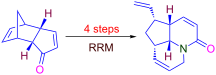
- in pure form from ethanol in 20% yield over two steps. Subsequently, we attempted to synthesize the desired lactam 9a via Schmidt reaction or BR of the keto derivative 7 in a single step. In this regard, the tricyclic ketone 7 was treated under different reaction conditions. These include: (a) NaN3

Graphical Abstract

Figure 1: Retrosynthetic analysis of tricyclic amide 1.

Scheme 1: Synthesis of tricyclic ketone 4.

Scheme 2: Beckmann rearrangement of oximes 8a and 8b.

Scheme 3: Beckmann rearrangement reaction in a single step.

Scheme 4: Synthesis of ring-rearrangement precursors.

Scheme 5: Synthesis of Beckmann rearrangement precursors.

Scheme 6: Beckmann rearrangement of oxime isomers 11a and 11b.

Figure 2: Molecular crystal structure of compound 11b.

Scheme 7: Synthesis of aza tricyclic compound 1 by RRM.
Selected synthetic strategies to cyclophanes
- Sambasivarao Kotha,
- Mukesh E. Shirbhate and
- Gopalkrushna T. Waghule
Beilstein J. Org. Chem. 2015, 11, 1274–1331, doi:10.3762/bjoc.11.142
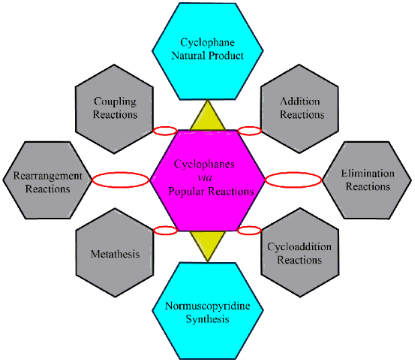

Graphical Abstract

Figure 1: General representation of cyclophanes.

Figure 2: cyclophanes one or more with heteroatom.

Figure 3: Metathesis catalysts 12–17 and C–C coupling catalyst 18.

Figure 4: Natural products containing the cyclophane skeleton.

Figure 5: Turriane family of natural products.

Scheme 1: Synthesis of [3]ferrocenophanes through Mannich reaction. Reagents and conditions: (i) excess HNMe2...

Scheme 2: Synthesis of cyclophanes through Michael addition. Reagents and conditions: (i) xylylene dibromide,...

Scheme 3: Synthesis of normuscopyridine analogue 37 through an oxymercuration–oxidation strategy. Reagents an...

Scheme 4: Synthesis of tribenzocyclotriyne 39 through Castro–Stephens coupling reaction. Reagents and conditi...

Scheme 5: Synthesis of cyclophane 43 through Glaser–Eglinton coupling. Reagents and conditions: (i) 9,10-bis(...

Scheme 6: Synthesis of the macrocyclic C-glycosyl cyclophane through Glaser coupling. Reagents and conditions...

Scheme 7: Synthesis of cyclophane-containing complex 49 through Glaser–Eglinton coupling reaction. Reagents a...

Scheme 8: Synthesis of cyclophane 53 through Glaser–Eglinton coupling. Reagents and conditions: (i) K2CO3, ac...

Figure 6: Cyclophanes 54–56 that have been synthesized through Glaser–Eglinton coupling.

Figure 7: Synthesis of tetrasubstituted [2.2]paracyclophane 57 and chiral cyclophyne 58 through Eglinton coup...

Scheme 9: Synthesis of cyclophane through Glaser–Hay coupling reaction. Reagents and conditions: (i) CuCl2 (1...

Scheme 10: Synthesis of seco-C/D ring analogs of ergot alkaloids through intramolecular Heck reaction. Reagent...

Scheme 11: Synthesis of muscopyridine 73 via Kumada coupling. Reagents and conditions: (i) 72, THF, ether, 20 ...

Scheme 12: Synthesis of the cyclophane 79 via McMurry coupling. Reagents and conditions: (i) 75, decaline, ref...

Scheme 13: Synthesis of stilbenophane 81 via McMurry coupling. Reagents and conditions: (i) TiCl4, Zn, pyridin...

Scheme 14: Synthesis of stilbenophane 85 via McMurry coupling. Reagents and conditions: (i) NBS (2 equiv), ben...
Figure 8: List of cyclophanes prepared via McMurry coupling reaction as a key step.

Scheme 15: Synthesis of paracyclophane by cross coupling involving Pd(0) catalyst. Reagents and conditions: (i...

Scheme 16: Synthesis of the cyclophane 112 via the pinacol coupling and 113 by RCM. Reagents and conditions: (...

Scheme 17: Synthesis of cyclophane derivatives 122a–c via Sonogoshira coupling. Reagents and conditions: (i) C...

Scheme 18: Synthesis of cyclophane 130 via Suzuki–Miyaura reaction as a key step. Reagents and conditions: (i)...

Scheme 19: Synthesis of the mycocyclosin via Suzuki–Miyaura cross coupling. Reagents and conditions: (i) benzy...

Scheme 20: Synthesis of cyclophanes via Wurtz coupling reaction Reagents and conditions: (i) PhLi, Et2O, C6H6,...

Scheme 21: Synthesis of non-natural glycophanes using alkyne metathesis. Reagents and conditions: (i) G-I (12)...

Figure 9: Synthesis of cyclophanes via ring-closing alkyne metathesis.

Scheme 22: Synthesis of crownophanes by cross-enyne metathesis. Reagents and conditions: (i) G-II (13), 5 mol ...

Scheme 23: Synthesis of (−)-cylindrocyclophanes A (156) and (−)-cylindrocyclophanes F (155). Reagents and cond...

Scheme 24: Synthesis of cyclophane 159 derivatives via SM cross-coupling and RCM. Reagents and conditions: (i)...

Scheme 25: Sexithiophene synthesis via cross metathesis. Reagents and conditions: (i) 161, Pd(PPh3)4, K2CO3, T...

Scheme 26: Synthesis of pyrrole-based cyclophane using enyne metathesis. Reagents and conditions: (i) Se, chlo...

Scheme 27: Synthesis of macrocyclic derivatives by RCM. Reagents and conditions: (i) G-I/G-II, CH2Cl2, 0.005 M...

Scheme 28: Synthesis of enantiopure β-lactam-based dienyl bis(dihydrofuran) 179. Reagents and conditions: (i) ...

Scheme 29: Synthesis of a [1.1.6]metaparacyclophane derivative 183 via SM cross coupling. Reagents and conditi...

Scheme 30: Synthesis of a [1.1.6]metaparacyclophane derivative 190 via SM cross coupling. Reagents and conditi...

Scheme 31: Template-promoted synthesis of cyclophanes involving RCM. Reagents and conditions: (i) acenaphthene...

Scheme 32: Synthesis of [3.4]cyclophane derivatives 200 via SM cross coupling and RCM. Reagents and conditions...
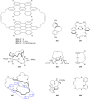
Figure 10: Examples for cyclophanes synthesized by RCM.

Scheme 33: Synthesis of the longithorone C framework assisted by fluorinated auxiliaries. Reagents and conditi...

Scheme 34: Synthesis of the longithorone framework via RCM. Reagents and conditions: (i) 213, NaH, THF, rt, 10...

Scheme 35: Synthesis of floresolide B via RCM as a key step. Reagents and conditions: (i) G-II (13, 0.1 equiv)...

Scheme 36: Synthesis of normuscopyridine (223) by the RCM strategy. Reagents and condition: (i) Mg, THF, hexen...

Scheme 37: Synthesis of muscopyridine (73) via RCM. Reagents and conditions: (i) 225, NaH, THF, 0 °C to rt, 1....

Scheme 38: Synthesis of muscopyridine (73) via RCM strategy. Reagents and conditions: (i) NaH, n-BuLi, 5-bromo...

Scheme 39: Synthesis of pyridinophane derivatives 223 and 245. Reagents and conditions: (i) PhSO2Na, TBAB, CH3...

Scheme 40: Synthesis of metacyclophane derivatives 251 and 253. Reagents and conditions: (i) 240, NaH, THF, rt...

Scheme 41: Synthesis of normuscopyridine and its higher analogues. Reagents and conditions: (i) alkenyl bromid...

Scheme 42: Synthesis of fluorinated ferrocenophane 263 via a [2 + 2] cycloaddition. Reagents and conditions: (...

Scheme 43: Synthesis of [2.n]metacyclophanes 270 via a [2 + 2] cycloaddition. Reagents and conditions: (i) Ac2...

Scheme 44: Synthesis of metacyclophane 273 by a [2 + 2 + 2] co-trimerization. Reagents and conditions: (i) [Rh...

Scheme 45: Synthesis of paracyclophane 276 via a [2 + 2 + 2] cycloaddition reaction. Reagents and conditions: ...

Scheme 46: Synthesis of cyclophane 278 via a [2 + 2 + 2] cycloaddition reaction. Reagents and conditions: (i) ...

Scheme 47: Synthesis of cyclophane 280 via a [2 + 2 + 2] cycloaddition. Reagents and conditions: (i) [(Rh(cod)(...

Scheme 48: Synthesis of taxane framework by a [2 + 2 + 2] cycloaddition. Reagents and conditions: (i) Cp(CO)2 ...

Scheme 49: Synthesis of cyclophane 284 and 285 via a [2 + 2 + 2] cycloaddition reaction. Reagents and conditio...

Scheme 50: Synthesis of pyridinophanes 293a,b and 294a,b via a [2 + 2 + 2] cycloaddition. Reagents and conditi...

Scheme 51: Synthesis of pyridinophanes 296 and 297 via a [2 + 2 + 2] cycloaddition. Reagents and conditions: (...

Scheme 52: Synthesis of triazolophane by a 1,3-dipolar cycloaddition. Reagents and conditions: (i) propargyl b...

Scheme 53: Synthesis of glycotriazolophane 309 by a click reaction. Reagents and conditions: (i) LiOH, H2O, Me...

Figure 11: Cyclophanes 310 and 311 prepared via click chemistry.

Scheme 54: Synthesis of cyclophane via the Dötz benzannulation. Reagents and conditions: (i) THF, 100 °C, 12 h...

Scheme 55: Synthesis of [6,6]metacyclophane by a Dötz benzannulation. Reagents and conditions: (i) THF, 100 °C...

Scheme 56: Synthesis of cyclophanes by a Dötz benzannulation. Reagents and conditions: (i) THF, 65 °C, 3 h; (i...

Scheme 57: Synthesis of muscopyridine (73) via an intramolecular DA reaction of ketene. Reagents and condition...

Scheme 58: Synthesis of bis[10]paracyclophane 336 via Diels–Alder reaction. Reagents and conditions: (i) DMAD,...

Scheme 59: Synthesis of [8]paracyclophane via DA reaction. Reagents and conditions: (i) maleic anhydride, 3–5 ...

Scheme 60: Biomimetic synthesis of (−)-longithorone A. Reagents and conditions: (i) Me2AlCl, CH2Cl2, −20 °C, 7...

Scheme 61: Synthesis of sporolide B (349) via a [4 + 2] cycloaddition reaction. Reagents and conditions: (i) P...

Scheme 62: Synthesis of the framework of (+)-cavicularin (352) via a [4 + 2] cycloaddition. Reagents and condi...

Scheme 63: Synthesis of oxazole-containing cyclophane 354 via Beckmann rearrangement. Reagents and conditions:...

Scheme 64: Synthesis of cyclophanes 360a–c via benzidine rearrangement. Reagents and conditions: (i) 356a–d, K2...

Scheme 65: Synthesis of cyclophanes 365a–c via benzidine rearrangement. Reagents and conditions: (i) BocNHNH2,...

Scheme 66: Synthesis of metacyclophane 367 via Ciamician–Dennstedt rearrangement. Reagents and conditions: (i)...

Scheme 67: Synthesis of cyclophane by tandem Claisen rearrangement and RCM as key steps. Reagents and conditio...

Scheme 68: Synthesis of cyclophane derivative 380. Reagents and conditions: (i) K2CO3, CH3CN, allyl bromide, r...

Scheme 69: Synthesis of metacyclophane via Cope rearrangement. Reagents and conditions: (i) MeOH, NaBH4, rt, 1...

Scheme 70: Synthesis of cyclopropanophane via Favorskii rearrangement. Reagents and conditions: (i) Br2, CH2Cl2...

Scheme 71: Cyclophane 389 synthesis via photo-Fries rearrangement. Reagents and conditions: (i) DMAP, EDCl/CHCl...

Scheme 72: Synthesis of normuscopyridine (223) via Schmidt rearrangement. Reagents and conditions: (i) ethyl s...

Scheme 73: Synthesis of crownophanes by tandem Claisen rearrangement. Reagents and conditions: (i) diamine, Et3...

Scheme 74: Attempted synthesis of cyclophanes via tandem Claisen rearrangement and RCM. Reagents and condition...

Scheme 75: Synthesis of muscopyridine via alkylation with 2,6-dimethylpyridine anion. Reagents and conditions:...

Scheme 76: Synthesis of cyclophane via Friedel–Craft acylation. Reagents and conditions: (i) CS2, AlCl3, 7 d, ...

Scheme 77: Pyridinophane 418 synthesis via Friedel–Craft acylation. Reagents and conditions: (i) 416, AlCl3, CH...

Scheme 78: Cyclophane synthesis involving the Kotha–Schölkopf reagent 421. Reagents and conditions: (i) NBS, A...

Scheme 79: Cyclophane synthesis involving the Kotha–Schölkopf reagent 421. Reagents and conditions: (i) BEMP, ...

Scheme 80: Cyclophane synthesis by coupling with TosMIC. Reagents and conditions: (i) (a) ClCH2OCH3, TiCl4, CS2...

Scheme 81: Synthesis of diaza[32]cyclophanes and triaza[33]cyclophanes. Reagents and conditions: (i) DMF, NaH,...

Scheme 82: Synthesis of cyclophane 439 via acyloin condensation. Reagents and conditions: (i) Na, xylene, 75%;...

Scheme 83: Synthesis of multibridged binuclear cyclophane 442 by aldol condensation. Reagents and conditions: ...

Scheme 84: Synthesis of various macrolactones. Reagents and conditions: (i) iPr2EtN, DMF, 77–83%; (ii) TBDMSCl...

Scheme 85: Synthesis of muscone and muscopyridine via Yamaguchi esterification. Reagents and conditions: (i) 4...

Scheme 86: Synthesis of [5]metacyclophane via a double elimination reaction. Reagents and conditions: (i) LiBr...

Figure 12: Cyclophanes 466–472 synthesized via Hofmann elimination.

Scheme 87: Synthesis of cryptophane via Baylis–Hillman reaction. Reagents and conditions: (i) methyl acrylate,...

Scheme 88: Synthesis of cyclophane 479 via double Chichibabin reaction. Reagents and conditions: (i) excess 478...

Scheme 89: Synthesis of cyclophane 483 via double Chichibabin reaction. Reagents and conditions: (i) 481, OH−;...

Scheme 90: Synthesis of cyclopeptide via an intramolecular SNAr reaction. Reagents and conditions: (i) TBAF, T...

Scheme 91: Synthesis of muscopyridine (73) via C-zip ring enlargement reaction. Reagents and conditions: (i) H...

Figure 13: Mechanism of the formation of compound 494.

Scheme 92: Synthesis of indolophanetetraynes 501a,b using the Nicholas reaction as a key step. Reagents and co...

Scheme 93: Synthesis of cyclophane via radical cyclization. Reagents and conditions: (i) cyclododecanone, phen...

Scheme 94: Synthesis of (−)-cylindrocyclophanes A (156) and (−)-cylindrocyclophanes F (155). Reagents and cond...

Scheme 95: Cyclophane synthesis via Wittig reaction. Reagents and conditions: (i) LiOEt (2.1 equiv), THF, −78 ...

Figure 14: Representative examples of cyclophanes synthesized via Wittig reaction.

Scheme 96: Synthesis of the [6]paracyclophane via isomerization of Dewar benzene. Reagents and conditions: (i)...
Natural phenolic metabolites with anti-angiogenic properties – a review from the chemical point of view
- Qiu Sun,
- Jörg Heilmann and
- Burkhard König
Beilstein J. Org. Chem. 2015, 11, 249–264, doi:10.3762/bjoc.11.28
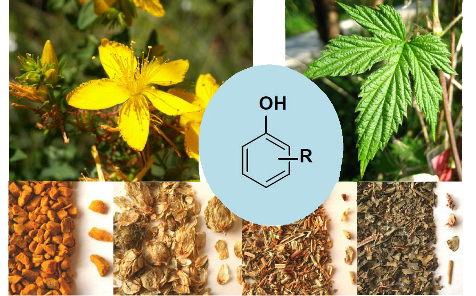
- diarylpentanoid moiety instead of the natural diarylheptanoid backbone. In some cases, this was amended by a central ring system and was labeled as monocarbonyl analog of curcumin (MACs, Figure 3). Bowen et al. [25] used the Claisen–Schmidt reaction for the synthesis of these analogs. The C7-chain linker between

Graphical Abstract

Figure 1: Structure of 4-hydroxybenzyl alcohol (HBA, 1).

Figure 2: Structure–activity relationship of curcumin analogs.

Scheme 1: Synthesis of curcumin (3). Reagents and conditions: (a) vanillin, 1,2,3,4-tetrahydroquinoline, HOAc...

Figure 3: Backbone and substitution of monocarbonyl analogs of curcumin (MACs) showing their structural diver...

Scheme 2: Exemplary synthesis of MAC representatives. Reagents and conditions: (a) 40% KOH, EtOH, 5 °C; stirr...

Scheme 3: Synthesis of ellagic acid (7). Reagents and conditions: (a) H2SO4, CH3OH; (b) (1) o-chloranil, Et2O...

Figure 4: Structure of resveratrol and its analogs.

Scheme 4: Synthesis of quinolone-substituted phenol 20. Reagents and conditions: (a) Ac2O, 2-hydroxybenzaldeh...

Scheme 5: Synthesis of quinolone-substituted phenol 23. Reagents and conditions: (a) Ac2O, 2-hydroxybenzaldeh...

Figure 5: Design of 4-amino-2-sulfanylphenol derivatives and their structure–activity relationship.

Scheme 6: Synthesis of 4-amino-2-sulfanylphenol derivatives. Reagents and conditions: (a) R1SO2Cl, pyridine, ...

Figure 6: Structures of two series of natural-like acylphloroglucinols.

Scheme 7: Synthesis of acylphloroglucinol derivatives 35–41. Reagents and conditions: (a) acyl chloride, AlCl3...

Scheme 8: Synthesis of acylphloroglucinol derivatives 43–51. Reagents and conditions: (a) isoprene, Amberlyst...

Figure 7: Analogs of (−)-EGCG for the prevention of oxidation and improvement of the bioavailability of the c...

Scheme 9: Synthesis of xanthohumol 58. Reagents and conditions: (a) MOMCl, diisopropylethylamine, CH2Cl2; (b)...

Scheme 10: Synthesis of genistein 60. Reagents and conditions: (a) 4-hydroxyphenylacetonitrile, anhydrous HCl,...

Scheme 11: Synthesis of fisetin (67) and quercetin (68). Reagents and conditions: (a) 3,4-dimethoxybenzaldehyd...

Figure 8: Structure of (2S)-7,2’,4’-trihydroxy-5-methoxy-8-(dimethylallyl)flavanone (69).
Preparation of neuroprotective condensed 1,4-benzoxazepines by regio- and diastereoselective domino Knoevenagel–[1,5]-hydride shift cyclization reaction
- László Tóth,
- Yan Fu,
- Hai Yan Zhang,
- Attila Mándi,
- Katalin E. Kövér,
- Tünde-Zita Illyés,
- Attila Kiss-Szikszai,
- Balázs Balogh,
- Tibor Kurtán,
- Sándor Antus and
- Péter Mátyus
Beilstein J. Org. Chem. 2014, 10, 2594–2602, doi:10.3762/bjoc.10.272

- in human neuroblastoma SH-SY5Y cells. Results and Discussion The starting material 4-aryl-2-phenyl-1,4-benzoxazepine (rac-5) for the domino Knoevenagel–[1,5]-hydride shift cyclization reaction was prepared from rac-flavanone (rac-8) in four steps (Scheme 2). The Schmidt reaction of rac-8 was carried

Graphical Abstract

Figure 1: Pharmacologically active derivatives 1–4 containing the 1,4-benzoxazepine moiety or its analogue.

Scheme 1: Domino Knoevenagel–[1,5]-hydride shift cyclization reaction for the preparation of condensed 1,4-be...

Scheme 2: i) a) NaN3, CF3COOH, b) H2O, Δ (77%); ii) LiAlH4, dry THF, Δ (80%); iii) 11b, K2CO3, toluene, Δ (71...

Figure 2: Lowest-energy conformers of a) trans-(2S,15aS)-7a (>99.9%) with the replacement of the N-methyl gro...

Figure 3: Lowest-energy conformers of a) cis-(2R,15aS)-7a (99.4%) with the replacement of the N-methyl groups...

Figure 4: HPLC-ECD spectra of the first-eluting (black curve) and second-eluting (red curve) enantiomers of a...

Figure 5: Protective effect of compound 7a on hydrogen peroxide-induced neurotoxicity in SH-SY5Y cells. ##P <...

Figure 6: Protective effect of compound 7b on β-amyloid25–35-induced neurotoxicity in SH-SY5Y cells. ##P < 0....
Electrocarboxylation: towards sustainable and efficient synthesis of valuable carboxylic acids
- Roman Matthessen,
- Jan Fransaer,
- Koen Binnemans and
- Dirk E. De Vos
Beilstein J. Org. Chem. 2014, 10, 2484–2500, doi:10.3762/bjoc.10.260
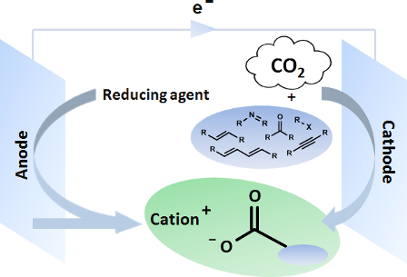
- –Schmidt reaction at high temperatures and CO2 pressures [13][14][15]. Sodium phenolate is selectively converted to salicylic acid, a precursor of Aspirin, while potassium phenolate exclusively yields p-hydroxybenzoic acid, used in polyester synthesis (Scheme 1) [16][17][18][19][20]. In order to generate
- like process continuity, atom economy and current efficiency. The shortcomings illustrated in this review emphasize the need for more innovative pathways to invent even more efficient and sustainable electrocarboxylation reactions. Synthesis of salicylic acid and p-hydroxybenzoic acid via Kolbe–Schmidt
- reaction [16][17][18][19][20]. Electroreduction of carbon dioxide to formic acid, methanol or methane. Electrochemical fixation of CO2 in olefins. Electrohydrodimerisation of acrylonitrile to adiponitrile [32]. Parallel paired electrosynthesis of phthalide and tert-butylbenzaldehyde dimethylacetal [34

Graphical Abstract

Scheme 1: Synthesis of salicylic acid and p-hydroxybenzoic acid via Kolbe–Schmidt reaction [16-20].

Scheme 2: Electroreduction of carbon dioxide to formic acid, methanol or methane.

Scheme 3: Electrochemical fixation of CO2 in olefins.

Scheme 4: Electrohydrodimerisation of acrylonitrile to adiponitrile [32].

Scheme 5: Parallel paired electrosynthesis of phthalide and tert-butylbenzaldehyde dimethylacetal [34].

Scheme 6: Overview of electrocarboxylation setups using (a) a sacrificial anode, (b) an inert anode, generati...

Scheme 7: General mechanism of the electrochemical dicarboxylation of conjugated dienes [49].

Scheme 8: Reported anodic reactions for the electrocarboxylation of 1,3-butadiene.

Scheme 9: General mechanism for electrocarboxylation of alkynes.

Scheme 10: Electrocarboxylation of ethyl cinnamate [70].

Scheme 11: General electrocarboxylation mechanism for carbonyl compounds (Y = O) and imines (Y = NH) [75-77].

Scheme 12: Electrocarboxylation mechanism of butyraldehyde proposed by Doherty [78].

Scheme 13: Electrocarboxylation of AMN to HN using a sacrificial aluminum anode [86].

Scheme 14: Electrocarboxylation of benzalaniline using a sacrificial aluminum anode [105].

Scheme 15: Electrocarboxylation of p-isobutylacetophenone with stable electrodes [94,95].

Scheme 16: Electrochemical carboxylation of MMP to MHA [110,111].

Scheme 17: General mechanism for electrocarboxylation of alkyl halides [122,124-126,128].

Scheme 18: Electrocarboxylation of benzylic chlorides as synthesis route for NSAIDs.

Scheme 19: Electrocarboxylation of 1,4-dibromo-2-butene [144].

Scheme 20: Convergent paired electrosynthesis of cyanoacetic acid, with X− = F4B−, ClO4−, HSO4−, Cl−, Br− [147].

Scheme 21: General scheme of carboxylation of weak acidic hydrocarbons with electrogenerated bases. RH: weakly...

Scheme 22: Electrocarboxylation of N-methyldiglycolimide to methoxymethane-1,1,1’-tricarboxylate precursors. R1...

Scheme 23: Electrochemical dimerization of CO2 with stable electrodes [153].
Raman spectroscopy as a tool for monitoring mesoscale continuous-flow organic synthesis: Equipment interface and assessment in four medicinally-relevant reactions
- Trevor A. Hamlin and
- Nicholas E. Leadbeater
Beilstein J. Org. Chem. 2013, 9, 1843–1852, doi:10.3762/bjoc.9.215
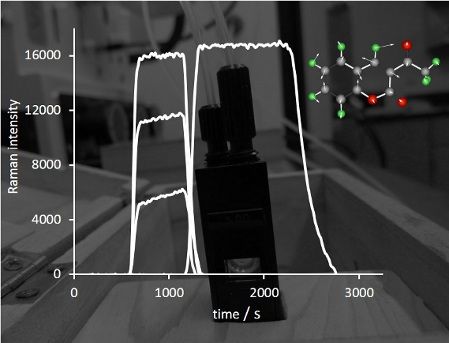
- (CH), 129.74 (CH), 130.93 (CH), 133.17 (C), 134.88 (C), 141.48 (CH), 168.00 (C), 194.87 (C) [54]. Typical procedure for monitoring the Claisen–Schmidt reaction Into a 50 mL volumetric flask was added 4-fluorobenzaldehyde (1.551 g, 12.5 mmol, 1 equiv) and acetophenone (1.637 g, 12.5 mmol, 1 equiv
- the Claisen-Schmidt reaction with acetophenone. Product conversion obtained for four aldehyde substrates in the Biginelli reaction with ethyl acetoacetate and urea. Supporting Information Supporting Information File 326: NMR spectra of the isolated products (1, 2a, 3d, 4a), further experimental

Graphical Abstract
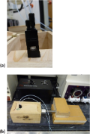
Figure 1: (a) Flow cell and (b) Raman interface used in the present study.

Scheme 1: The reaction between salicylaldehyde and ethyl acetoacetate to form 3-acetyl coumarin (1).

Figure 2: The Raman spectrum of 3-acetylcoumarin (1) generated using Gaussian 09 [40] at the B3LYP/6-31g(d) level...

Figure 3: Monitoring an aliquot of 3-acetyl coumarin (1) as it passes through the flow cell (scan time = 15 s...

Figure 4: Monitoring the conversion of salicylaldehyde and ethyl acetoacetate to 3-acetylcoumarin (1) across ...

Figure 5: Plot of Raman intensity of the peak arising at 1608 cm-1 vs concentration of 3-acetyl coumarin (1),...

Scheme 2: The Knoevenagel condensation of benzaldehyde and ethyl acetoacetate to yield (Z)-ethyl 2-benzyliden...

Figure 6: Monitoring the conversion of benzaldehyde and ethyl acetoacetate to (Z)-ethyl 2-benzylidene-3-oxobu...

Scheme 3: Claisen-Schmidt condensation of benzaldehyde with acetophenone to yield chalcone, 3a.

Figure 7: Monitoring the conversion of benzaldehyde with acetophenone to chalcone, 3a, across a range of reac...

Scheme 4: The Biginelli cyclocondensation of benzaldehyde, ethyl acetoacetate, and urea to yield 5-ethoxycarb...

Figure 8: Monitoring the conversion of benzaldehyde, ethyl acetoacetate, and urea to 5-ethoxycarbonyl-6-methy...
Synthetic applications of gold-catalyzed ring expansions
- David Garayalde and
- Cristina Nevado
Beilstein J. Org. Chem. 2011, 7, 767–780, doi:10.3762/bjoc.7.87
- intermolecular nucleophilic attack to give intermediate 47, which upon cycloisomerization affords the aromatic product (Scheme 14, path b). Toste and co-workers reported an intramolecular acetylenic Schmidt reaction using azides as internal nucleophiles to give substituted pyrroles (Scheme 15) [42]. Gold

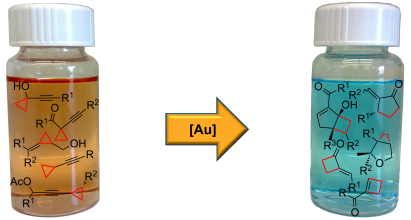
Graphical Abstract

Scheme 1: Transition metal promoted rearrangements of bicyclo[1.1.0]butanes.

Scheme 2: Gold-catalyzed rearrangements of strained rings.

Scheme 3: Gold-catalyzed ring expansions of cyclopropanols and cyclobutanols.

Scheme 4: Mechanism of the cycloisomerization of alkynyl cyclopropanols and cyclobutanols.

Scheme 5: Proposed mechanism for the Au-catalyzed isomerization of alkynyl cyclobutanols.

Scheme 6: Gold-catalyzed cycloisomerization of 1-allenylcyclopropanols.

Scheme 7: Gold-catalyzed cycloisomerization of cyclopropylmethanols.

Scheme 8: Gold-catalyzed cycloisomerization of aryl alkyl epoxides.

Scheme 9: Gold-catalyzed synthesis of furans.

Scheme 10: Transformations of alkynyl oxiranes.

Scheme 11: Transformations of alkynyl oxiranes into ketals.

Scheme 12: Gold-catalyzed cycloisomerization of cyclopropyl alkynes.

Scheme 13: Gold-catalyzed synthesis of substituted furans.

Scheme 14: Proposed mechanism for the isomerization of alkynyl cyclopropyl ketones.

Scheme 15: Cycloisomerization of cyclobutylazides.

Scheme 16: Cycloisomerization of alkynyl aziridines.

Scheme 17: Gold-catalyzed synthesis of disubstituted cyclohexadienes.

Scheme 18: Gold-catalyzed synthesis of indenes.

Scheme 19: Gold-catalyzed [n + m] annulation processes.

Scheme 20: Gold-catalyzed generation of 1,4-dipoles.

Scheme 21: Gold-catalyzed synthesis of repraesentin F.

Scheme 22: Gold-catalyzed ring expansion of cyclopropyl 1,6-enynes.

Scheme 23: Gold-catalyzed synthesis of ventricos-7(13)-ene.

Scheme 24: 1,2- vs 1,3-Carboxylate migration.

Scheme 25: Gold-catalyzed cycloisomerization of vinyl alkynyl cyclopropanes.

Scheme 26: Proposed mechanism for the cycloisomerization of vinyl alkynyl cyclopropanes.

Scheme 27: Gold-catalyzed 1,2-acyloxy rearrangement/cyclopropanation/cycloisomerization cascades.

Scheme 28: Formal total synthesis of frondosin A.

Scheme 29: Gold-catalyzed rearrangement/cycloisomerization of cyclopropyl propargyl acetates.
Synthesis of crispine A analogues via an intramolecular Schmidt reaction
- Ajoy Kapat,
- Ponminor Senthil Kumar and
- Sundarababu Baskaran
Beilstein J. Org. Chem. 2007, 3, No. 49, doi:10.1186/1860-5397-3-49

- Ajoy Kapat Ponminor Senthil Kumar Sundarababu Baskaran Department of Chemistry, Indian Institute of Technology Madras, Chennai-600 036, India 10.1186/1860-5397-3-49 Abstract An intramolecular Schmidt reaction strategy for the synthesis of various derivatives of crispine A using azido-ketone as a
- intramolecular Schmidt reaction of azides with carbonyl compounds.[11][12] Pearson and Aube have exploited the synthetic potential of the intramolecular Schmidt reaction in the synthesis of several indolizidine alkaloids. [11][12][13][14][15] Recently, we reported a novel approach for the construction of the
- (SAR) as well as to improve the efficacy of this novel anti-cancer agent, a flexible approach for the synthesis of various derivatives of crispine A is in great demand (Scheme 2). In 2000, Pearson reported the intramolecular Schmidt reaction based approach for the construction of benzo-fused

Graphical Abstract

Scheme 1: Epoxide initiated electrophilic cyclization of azide.

Scheme 2: Crispine A and its analogues.

Scheme 3: Intramolecular Schmidt reaction of olefin azide.

Scheme 4: Retrosynthetic approach for crispine A analogues.

Scheme 5: Synthesis of β-ketoester 7.

Scheme 6: Alkylation of ketal-ester 12.

Scheme 7: Synthesis of azido-ketone 6.

Scheme 8: The intramolecular Schmidt cyclization of azido-ketone 6.

Figure 1: ORTEP diagram of the acid derivative 4.

Scheme 9: Synthesis of acid analogue of crispine A.

Scheme 10: Synthesis of methyl analogue of crispine A.



