


Search results
Search for "autocatalysis" in Full Text gives 4 result(s) in Beilstein Journal of Organic Chemistry.
Anion–π catalysis on carbon allotropes
- M. Ángeles Gutiérrez López,
- Mei-Ling Tan,
- Giacomo Renno,
- Augustina Jozeliūnaitė,
- J. Jonathan Nué-Martinez,
- Javier Lopez-Andarias,
- Naomi Sakai and
- Stefan Matile
Beilstein J. Org. Chem. 2023, 19, 1881–1894, doi:10.3762/bjoc.19.140
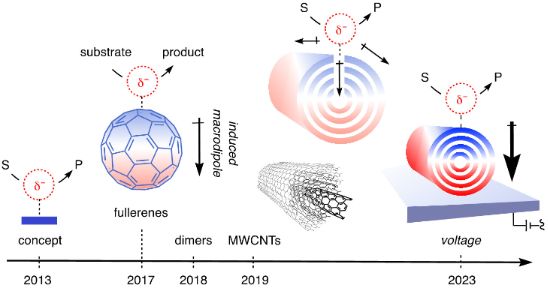
- . Currently, anion–π catalysis on carbon allotropes gains momentum because the combination with electric-field-assisted catalysis promises transformative impact on organic synthesis. Keywords: anion–π interactions; autocatalysis; catalysis; carbon nanotubes; Diels–Alder reactions; electric-field-induced
- tested anion–π catalysts. This result was consistent with the stabilization of the anionic intermediates IX and X and the respective transition states on the polarized fullerene surface. Anion–π autocatalysis on fullerenes The autocatalysis of epoxide-opening ether cyclization on π-acidic aromatic
- surfaces has been identified in 2018 as an emergent property of anion–π catalysis [69]. In this series, fullerene catalyst 31 was found to catalyze the cyclization of epoxide 32 into THF 33 (Figure 6). The rate enhancement for catalysis was 270, whereas autocatalysis accelerated the reaction by 1045 M−1

Graphical Abstract

Figure 1: (A) Anion–π catalysis: Stabilization of anionic transition states from substrate S to product P on ...

Figure 2: Bioinspired enolate addition chemistry to benchmark anion–π catalysts: Stabilization of “enol” inte...

Figure 3: Structure and activity of fullerene-amine dyads to catalyze the intrinsically disfavored but biolog...

Figure 4: Asymmetric anion–π catalysis of intrinsically disfavored exo-selective Diels–Alder reactions on ful...

Figure 5: Asymmetric anion–π catalysis to install remote stereogenic centers on fullerene catalyst 21, with n...
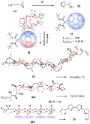
Figure 6: Primary anion–π autocatalysis on monofunctional fullerene 31, with catalytic and autocatalytic rate...

Figure 7: (A) Macrodipoles induced by anionic transition states account for anion–π catalysis on fullerenes. ...

Figure 8: Structure and activity of covalently and non-covalently modified SWCNTs and MWCNTs, with A/D ratios...

Figure 9: (A) Epoxide-opening ether cyclization on pristine carbon nanotubes occurs with (XVI) but not withou...

Figure 10: Electric-field-induced anion–π catalysis on MWCNTs 3 on graphite 76 in electrochemical microfluidic...
N-Sulfenylsuccinimide/phthalimide: an alternative sulfenylating reagent in organic transformations
- Fatemeh Doraghi,
- Seyedeh Pegah Aledavoud,
- Mehdi Ghanbarlou,
- Bagher Larijani and
- Mohammad Mahdavi
Beilstein J. Org. Chem. 2023, 19, 1471–1502, doi:10.3762/bjoc.19.106
- basic nature. However, the electron-poor ones exhibited less autocatalysis effect requiring the use of the Lewis base catalyst P. In 2019, Denmark and Panger disclosed a novel method for the preparation of γ‑lactams 133 through the reaction of alkenes 132 with N-thiophthalimides 14 in the presence of

Graphical Abstract

Scheme 1: Sulfur-containing bioactive molecules.

Scheme 2: Scandium-catalyzed synthesis of thiosulfonates.

Scheme 3: Palladium-catalyzed aryl(alkyl)thiolation of unactivated arenes.

Scheme 4: Catalytic cycle for Pd-catalyzed aryl(alkyl)thiolation of unactivated arenes.

Scheme 5: Iron- or boron-catalyzed C–H arylthiation of substituted phenols.

Scheme 6: Iron-catalyzed azidoalkylthiation of alkenes.

Scheme 7: Plausible mechanism for iron-catalyzed azidoalkylthiation of alkenes.

Scheme 8: BF3·Et2O‑mediated electrophilic cyclization of aryl alkynoates.

Scheme 9: Tentative mechanism for BF3·Et2O‑mediated electrophilic cyclization of aryl alkynoates.

Scheme 10: Construction of 6-substituted benzo[b]thiophenes.

Scheme 11: Plausible mechanism for construction of 6-substituted benzo[b]thiophenes.

Scheme 12: AlCl3‑catalyzed cyclization of N‑arylpropynamides with N‑sulfanylsuccinimides.

Scheme 13: Synthetic utility of AlCl3‑catalyzed cyclization of N‑arylpropynamides with N‑sulfanylsuccinimides.

Scheme 14: Sulfenoamination of alkenes with sulfonamides and N-sulfanylsuccinimides.

Scheme 15: Lewis acid/Brønsted acid controlled Pd-catalyzed functionalization of aryl C(sp2)–H bonds.

Scheme 16: Possible mechanism for Lewis acid/Brønsted acid controlled Pd-catalyzed functionalization of aryl C...

Scheme 17: FeCl3-catalyzed carbosulfenylation of unactivated alkenes.

Scheme 18: Copper-catalyzed electrophilic thiolation of organozinc halides.

Scheme 19: h-BN@Copper(II) nanomaterial catalyzed cross-coupling reaction of sulfoximines and N‑(arylthio)succ...

Scheme 20: AlCl3‑mediated cyclization and sulfenylation of 2‑alkyn-1-one O‑methyloximes.

Scheme 21: Lewis acid-promoted 2-substituted cyclopropane 1,1-dicarboxylates with sulfonamides and N-(arylthio...

Scheme 22: Lewis acid-mediated cyclization of β,γ-unsaturated oximes and hydrazones with N-(arylthio/seleno)su...

Scheme 23: Credible pathway for Lewis acid-mediated cyclization of β,γ-unsaturated oximes with N-(arylthio)suc...

Scheme 24: Synthesis of 4-chalcogenyl pyrazoles via chalcogenation/cyclization of α,β-alkynic hydrazones.

Scheme 25: Controllable synthesis of 3-thiolated pyrroles and pyrrolines.

Scheme 26: Possible mechanism for controllable synthesis of 3-thiolated pyrroles and pyrrolines.

Scheme 27: Co-catalyzed C2-sulfenylation and C2,C3-disulfenylation of indole derivatives.

Scheme 28: Plausible catalytic cycle for Co-catalyzed C2-sulfenylation and C2,C3-disulfenylation of indoles.

Scheme 29: C–H thioarylation of electron-rich arenes by iron(III) triflimide catalysis.

Scheme 30: Difunctionalization of alkynyl bromides with thiosulfonates and N-arylthio succinimides.·

Scheme 31: Suggested mechanism for difunctionalization of alkynyl bromides with thiosulfonates and N-arylthio ...

Scheme 32: Synthesis of thioesters, acyl disulfides, ketones, and amides by N-thiohydroxy succinimide esters.

Scheme 33: Proposed mechanism for metal-catalyzed selective acylation and acylthiolation.

Scheme 34: AlCl3-catalyzed synthesis of 3,4-bisthiolated pyrroles.

Scheme 35: α-Sulfenylation of aldehydes and ketones.

Scheme 36: Acid-catalyzed sulfetherification of unsaturated alcohols.

Scheme 37: Enantioselective sulfenylation of β-keto phosphonates.

Scheme 38: Organocatalyzed sulfenylation of 3‑substituted oxindoles.

Scheme 39: Sulfenylation and chlorination of β-ketoesters.

Scheme 40: Intramolecular sulfenoamination of olefins.

Scheme 41: Plausible mechanism for intramolecular sulfenoamination of olefins.

Scheme 42: α-Sulfenylation of 5H-oxazol-4-ones.

Scheme 43: Metal-free C–H sulfenylation of electron-rich arenes.

Scheme 44: TFA-promoted C–H sulfenylation indoles.
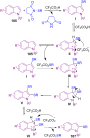
Scheme 45: Proposed mechanism for TFA-promoted C–H sulfenylation indoles.

Scheme 46: Organocatalyzed sulfenylation and selenenylation of 3-pyrrolyloxindoles.

Scheme 47: Organocatalyzed sulfenylation of S-based nucleophiles.

Scheme 48: Conjugate Lewis base Brønsted acid-catalyzed sulfenylation of N-heterocycles.

Scheme 49: Mechanism for activation of N-sulfanylsuccinimide by conjugate Lewis base Brønsted acid catalyst.

Scheme 50: Sulfenylation of deconjugated butyrolactams.

Scheme 51: Intramolecular sulfenofunctionalization of alkenes with phenols.

Scheme 52: Organocatalytic 1,3-difunctionalizations of Morita–Baylis–Hillman carbonates.

Scheme 53: Organocatalytic sulfenylation of β‑naphthols.

Scheme 54: Acid-promoted oxychalcogenation of o‑vinylanilides with N‑(arylthio/arylseleno)succinimides.

Scheme 55: Lewis base/Brønsted acid dual-catalytic C–H sulfenylation of aryls.

Scheme 56: Lewis base-catalyzed sulfenoamidation of alkenes.

Scheme 57: Cyclization of allylic amide using a Brønsted acid and tetrabutylammonium chloride.

Scheme 58: Catalytic electrophilic thiocarbocyclization of allenes with N-thiosuccinimides.

Scheme 59: Suggested mechanism for electrophilic thiocarbocyclization of allenes with N-thiosuccinimides.

Scheme 60: Chiral chalcogenide-catalyzed enantioselective hydrothiolation of alkenes.

Scheme 61: Proposed mechanism for chalcogenide-catalyzed enantioselective hydrothiolation of alkenes.

Scheme 62: Organocatalytic sulfenylation for synthesis a diheteroatom-bearing tetrasubstituted carbon centre.

Scheme 63: Thiolative cyclization of yne-ynamides.

Scheme 64: Synthesis of alkynyl and acyl disulfides from reaction of thiols with N-alkynylthio phthalimides.

Scheme 65: Oxysulfenylation of alkenes with 1-(arylthio)pyrrolidine-2,5-diones and alcohols.

Scheme 66: Arylthiolation of arylamines with (arylthio)-pyrrolidine-2,5-diones.

Scheme 67: Catalyst-free isothiocyanatoalkylthiation of styrenes.

Scheme 68: Sulfenylation of (E)-β-chlorovinyl ketones toward 3,4-dimercaptofurans.

Scheme 69: HCl-promoted intermolecular 1, 2-thiofunctionalization of aromatic alkenes.

Scheme 70: Possible mechanism for HCl-promoted 1,2-thiofunctionalization of aromatic alkenes.

Scheme 71: Coupling reaction of diazo compounds with N-sulfenylsuccinimides.

Scheme 72: Multicomponent reactions of disulfides with isocyanides and other nucleophiles.

Scheme 73: α-Sulfenylation and β-sulfenylation of α,β-unsaturated carbonyl compounds.
A recursive microfluidic platform to explore the emergence of chemical evolution
- David Doran,
- Marc Rodriguez-Garcia,
- Rebecca Turk-MacLeod,
- Geoffrey J. T. Cooper and
- Leroy Cronin
Beilstein J. Org. Chem. 2017, 13, 1702–1709, doi:10.3762/bjoc.13.164
- : artificial life; autocatalysis; automated platforms; chemical evolution; evolution before genes; evolution first; microfluidics; Introduction The transition from an inanimate inorganic world, principally consisting of minerals, gases and small organic compounds, to the living world with the first life forms

Graphical Abstract

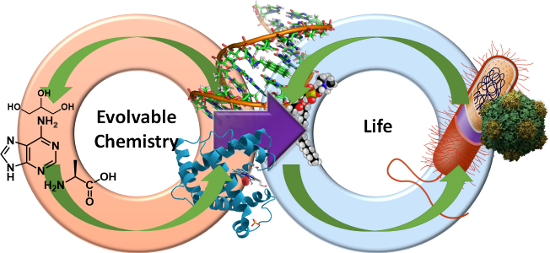
Figure 1: Evolution of life from non-living, complex chemistry via chemical evolution of complex chemical com...

Figure 2: Schematic describing the evolutionary process. The inner circle represents the robotic process and ...

Figure 3: Recursive size-based selection and recirculation of droplets. Monodisperse droplets loaded with com...
Figure 4: Osmotic exchange and coarsening of co-incubating aqueous microdroplets. 50 mM glycylglycine and pur...

Figure 5: Real-time, LabVIEWTM tracking of osmosis-driven coarsening of 50 mM glycylglycine and pure water dr...

Figure 6: Process of the automated microfluidic platform, in which recursive evolution is applied at both ind...

Figure 7: The proposed device for droplet selection and evolution. The device is comprised of the following m...

Figure 8: Photographic images of individual microfluidic modules, fabricated our laboratory in PDMS from stan...
Towards open-ended evolution in self-replicating molecular systems
- Herman Duim and
- Sijbren Otto
Beilstein J. Org. Chem. 2017, 13, 1189–1203, doi:10.3762/bjoc.13.118
- understanding of how life could have emerged from molecular building blocks and what is needed to create a minimal form of life in the laboratory. Keywords: autocatalysis; open-ended evolution; origin of life; self-replication; synthetic life; Introduction Mankind has always pondered upon its own existence
- , when there are virtually no template molecules in the mixture but only building blocks A and B, the bimolecular and binary complex pathways leading to the formation of T and Tinactive will be dominant. Clearly, the inactive template cannot lead to autocatalysis and therefore hinders the self
- -replication process. Upon formation of T, the autocatalytic pathway will become increasingly important, in principle allowing for exponential growth of the template. A requirement for effective autocatalysis, however, is the dissociation of the [T∙T] complex into two individual template molecules. If this

Graphical Abstract

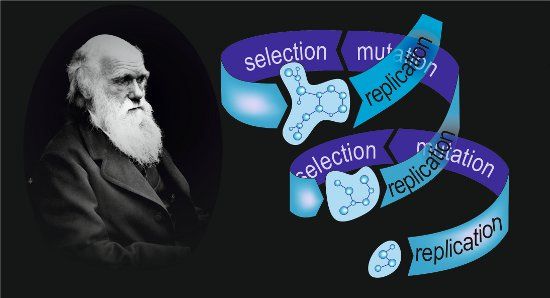
Figure 1: Three processes involved in Darwinian evolution. Species must be replicated to obtain a large popul...

Figure 2: Minimal system for self-replication. Building blocks A and B can react to form either template T or...
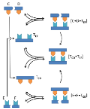
Figure 3: A cross-catalytic replication scheme in which the formation of one template stimulates the formatio...
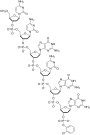
Figure 4: The first oligonucleotide capable of template directed self-replication without the need of enzymes...

Figure 5: Replication involving the SPREAD technique which prevents product inhibition. (1) A template molecu...

Figure 6: Figure showing (a) a coiled coil motif due to hydrophobic interactions between hydrophobic amino ac...

Figure 7: Self-replication of a helical peptide. Molecular recognition leads to the formation of a stable coi...

Figure 8: (a) Cross-catalyzed replication of template molecules E and E’ from their building blocks A(’) and B...

Figure 9: Distribution of the species present in the reaction mixture after 20 serial transfers. E and E’ mol...

Figure 10: (a) Secondary structure of the Azoarcus ribozyme consisting of four different strands of RNA, W, X,...

Figure 11: (a) The different combinations of IGS strands, tags and break junction give rise to a total of 48 d...

Figure 12: Figure depicting (a) building blocks consisting of a peptide attached to an aromatic ring. Building...

Figure 13: Plot showing the relative concentrations of set I (red), set II (blue) and the link between them; (...



