


Search results
Search for "cardiotoxicity" in Full Text gives 6 result(s) in Beilstein Journal of Organic Chemistry.
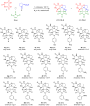
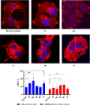
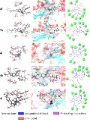
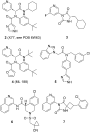
Spirobarbiturates with a pyrrolizidine moiety: synthesis, structure and biological evaluation
Beilstein J. Org. Chem. 2026, 22, 274–288, doi:10.3762/bjoc.22.20
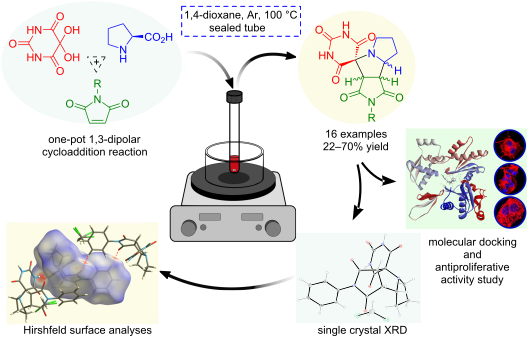
- absorption (HIA), in vitro permeability to Caco-2 cells (Caco2), in vitro binding to plasma proteins (PPB), solubility, and inhibition of CYP2D6. The following were selected as descriptors of toxicity: carcinogenicity for rats and mice, mutagenicity according to the Ames test, and cardiotoxicity by




On drug discovery against infectious diseases and academic medicinal chemistry contributions
Beilstein J. Org. Chem. 2022, 18, 1355–1378, doi:10.3762/bjoc.18.141

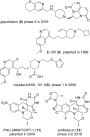
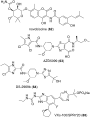
- , sponsored the phase 1 clinical trial of NXL 101 (10) [117]. This trial was however quickly stopped because of a forbidding QTc prolongation seen in human cardiograms. It then took a lot more synthetic work, illustrated by over 100 distinct patents, to alleviate this hERG channel-related cardiotoxicity risk







Drug targeting to decrease cardiotoxicity – determination of the cytotoxic effect of GnRH-based conjugates containing doxorubicin, daunorubicin and methotrexate on human cardiomyocytes and endothelial cells
Beilstein J. Org. Chem. 2018, 14, 1583–1594, doi:10.3762/bjoc.14.136
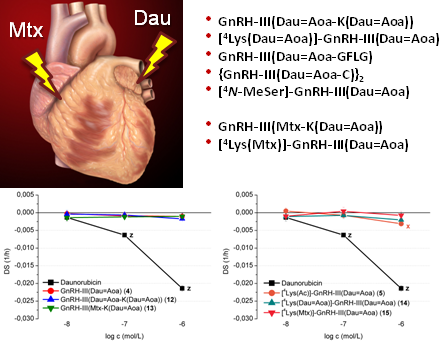
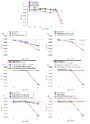
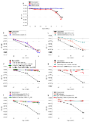
- potentially increases the tumor selectivity of drugs and decreases their cardiotoxicity. Increased expression of gonadotropin-releasing hormone (GnRH) receptors on the surface of tumor cells has been reported. Thus, the attachment of the aforementioned chemotherapeutic drugs to GnRH-based peptides may result
- : cardiotoxicity; drug targeting; GnRH-conjugates; HCM; HUVEC; impedimetry; Introduction Gonadotropin-releasing hormone (GnRH) is a peptide hormone secreted by the hypothalamus, which stimulates the release of follicle-stimulating hormone (FSH) and luteinizing hormone (LH) from the pituitary. Thus, it represents
- the DNA of the cancer cells. Methotrexate is an antimetabolite that inhibits the folate metabolism of tumor cells. All three drugs have a great number of adverse effects; doxorubicin and daunorubicin are especially known for their cardiotoxicity, leading to cardiomyopathy and heart failure [18][19


An overview of recent advances in duplex DNA recognition by small molecules
Beilstein J. Org. Chem. 2018, 14, 1051–1086, doi:10.3762/bjoc.14.93






Computational methods in drug discovery
Beilstein J. Org. Chem. 2016, 12, 2694–2718, doi:10.3762/bjoc.12.267



Cyclodextrin-based nanosponges as drug carriers
Beilstein J. Org. Chem. 2012, 8, 2091–2099, doi:10.3762/bjoc.8.235
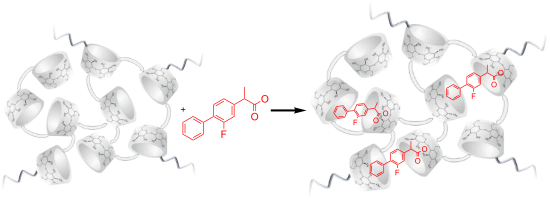
- agents, namely Cremophor EL (polyethoxylated castor oil). Unfortunately, Cremophor EL has been seen to cause serious side effects, such as neurotoxicity, nephrotoxicity and cardiotoxicity [35]. Cyclodextrin-based nanosponges were used to prepare a Cremophor-free formulation for paclitaxel administration


Other Beilstein-Institut Open Science Activities



