


Search results
Search for "counter electrode reaction" in Full Text gives 2 result(s) in Beilstein Journal of Organic Chemistry.
First example of organocatalysis by cathodic N-heterocyclic carbene generation and accumulation using a divided electrochemical flow cell
Beilstein J. Org. Chem. 2022, 18, 979–990, doi:10.3762/bjoc.18.98
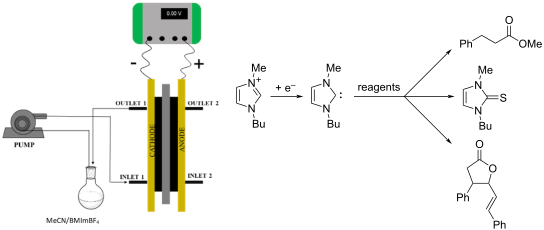
- the electrodes so that lower concentrations of supporting electrolytes are needed to provide sufficient conductivity [28]. Applications of flow electrochemistry reported in the literature are mainly devoted to anodic oxidations, carried out in undivided cells, in which the counter electrode reaction
- oxidation of BF4− was required as the counter electrode reaction, and 10% of methanol was added to the anolyte solution. In this case (Table 1, entry 2) 13% of thione was obtained and the electrode did not show any signs of consumption. The same yield (13%) was obtained using nickel as cathode material


Electrocarboxylation: towards sustainable and efficient synthesis of valuable carboxylic acids
Beilstein J. Org. Chem. 2014, 10, 2484–2500, doi:10.3762/bjoc.10.260
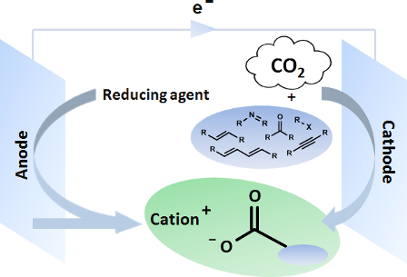
- ; counter electrode reaction; electrocarboxylation mechanism; reactor setup; Introduction Carbon dioxide recycling Implementing sustainable, resource-efficient chemical processes to meet the world’s growing demand for energy and chemicals is one of today’s major challenges. Depletion of fossil resources
- from the anolyte. This way high current densities can be obtained at relatively low potentials leading to minimized energy consumption. The absence of unwanted anodic reactions allows maintaining high current efficiencies without real difficulty. Furthermore, this counter electrode reaction delivers
- . Considerable efforts have been made in investigating other electrocarboxylation systems. Replacing the sacrificial anode with a stable anode brings along several challenges. First of all, a counter electrode reaction must be identified, delivering counter cations to balance the charge of the carboxylate anions


Other Beilstein-Institut Open Science Activities



