


Search results
Search for "cryo-EM" in Full Text gives 6 result(s) in Beilstein Journal of Organic Chemistry.
Synthesis of a HDAC inhibitor–nanogold probe for cryo-EM visualization in class I HDAC co-repressor complexes
Beilstein J. Org. Chem. 2026, 22, 480–485, doi:10.3762/bjoc.22.35
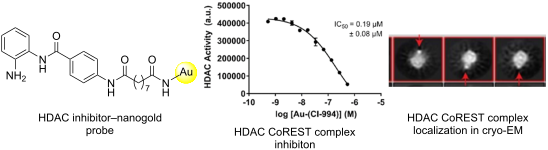
- inhibitor CI-994, for cryo-electron microscopy (cryo-EM) visualization of the HDAC catalytic domain within class I HDAC co-repressor complexes. The nanogold probe retained HDAC inhibitory activity comparable to CI-994 against the HDAC1-LSD1-CoREST complex in vitro. In cryo-EM studies, 2D class averages
- domain within the CoREST complex. Keywords: CI-994; co-repressor complex; CoREST; cryo-EM; gold nanoparticle; HDAC; Introduction Histone deacetylase (HDAC) enzymes catalyze the hydrolysis of acetyl groups from N-acetylated lysine residues in histone proteins. HDACs are also capable of the deacetylation
- nucleosomal substrate specificity [5][6], and each complex has distinct cellular functions [7]. Cryo-electron microscopy (cryo-EM) has revolutionized structural biology by enabling high-resolution, three-dimensional visualization of macromolecular multiprotein complexes in differing functional states



Applications of microscopy and small angle scattering techniques for the characterisation of supramolecular gels
Beilstein J. Org. Chem. 2024, 20, 2608–2634, doi:10.3762/bjoc.20.220
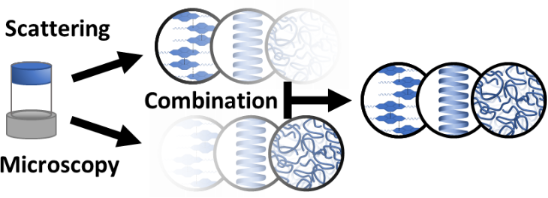
- material in its hydrated state. Cryogenic techniques utilise a vitrification process to maximise the formation of vitreous ice to minimise the formation of ice crystals which can disrupt the material structure. The ability of cryo-EM to probe the structure of soft nanostructured materials has led to a


Computational toolbox for the analysis of protein–glycan interactions
Beilstein J. Org. Chem. 2024, 20, 2084–2107, doi:10.3762/bjoc.20.180
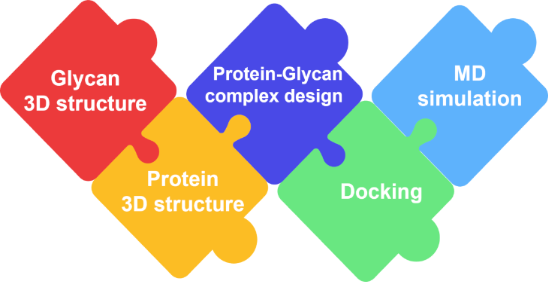
- . Several experimental techniques, including NMR, X-ray crystallography and Cryo-EM, can provide critical information for the characterisation of protein structure and conformation. Their widespread and wisely use permitted to experimentally determine the structures of around 200,000 proteins [78], all
- predicted protein interfaces into the docking process through ambiguous interaction restraints and allows the specification of precise distance restraints (e.g., based on MS cross-links). It also supports a range of experimental data, including NMR residual dipolar couplings, pseudo contact shifts, and cryo
- -EM maps, positioning HADDOCK as a versatile tool capable of handling various modelling scenarios, such as protein–protein, protein–nucleic acids, and protein–ligand interactions. The majority of existing docking software was originally designed for small, rigid, drug-like molecules, therefore


Molecular basis for protein–protein interactions
Beilstein J. Org. Chem. 2021, 17, 1–10, doi:10.3762/bjoc.17.1
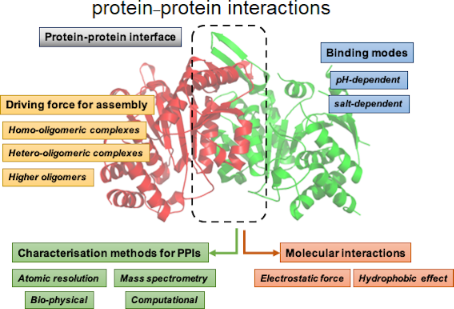
- microscopy (cryo-EM) [14]. Traditionally, X-ray crystallography was the preferred method to solve the protein structure and determine protein–protein interfaces. However, protein crystallography has the limitation that some protein assemblies have a low diffraction quality and are difficult to crystallise
- [15]. In the past few years, advances in the cryo-EM technology attracted the interest of more and more structural biologists. In fact, the number of cryo-EM structures has steadily been increasing over the recent years, with over 12,500 electron density maps being deposited in the Electron Microscopy
- Data Bank [16]. The main advantage that cryo-EM has compared to X-ray crystallography is that the former does not require crystals, thus making it easier or sometimes even possible at all to study flexible protein assemblies that do not crystallise. Albeit this, the main limitations of cryo-EM included


Enzyme-instructed morphological transition of the supramolecular assemblies of branched peptides
Beilstein J. Org. Chem. 2020, 16, 2709–2718, doi:10.3762/bjoc.16.221

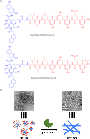
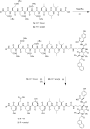
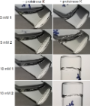
- allows the conjugation of the cleavable side chain, and tyrosine provides additional aromatic–aromatic interactions, as shown in a recent cryo-EM structure (PDB: 6X5I) [41]. Based on the above rationale, the DEDDDLLIG sequences attach to the ε-amine of the lysine residue of the tetrapeptide Nap-ffky to




Leveraging glycomics data in glycoprotein 3D structure validation with Privateer
Beilstein J. Org. Chem. 2020, 16, 2523–2533, doi:10.3762/bjoc.16.204
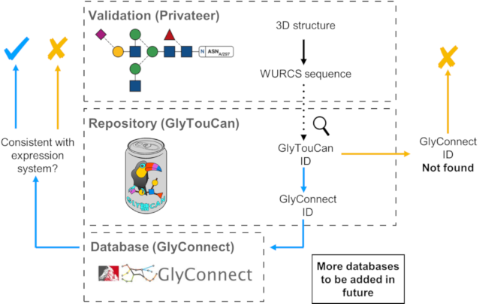
- glycoproteins Several experimental techniques can be used to obtain 3D structures of glycoproteins: X-ray crystallography (MX, which stands for macromolecular crystallography), nuclear magnetic resonance spectroscopy (NMR) and electron cryomicroscopy (cryo-EM). As of publication date, the overwhelming majority
- heterogeneous [22]. Moreover, oligosaccharides often significantly interfere with the formation of crystal contacts that allow the formation of well-diffracting crystals. Because of this, glycans are often truncated in MX samples to aid crystal formation [27]. In cryo-EM, samples of glycoproteins are vitrified
- crystallography [28]. Nevertheless, cryo-EM is still not an end-all solution to solving glycoprotein structures: the flexible and heterogeneous nature of glycans still has an adverse effect on the quality of the data, affecting the image reconstruction [29]. Moreover, due to the low signal-to-noise ratio, the



Other Beilstein-Institut Open Science Activities



