


Search results
Search for "diphosphate" in Full Text gives 91 result(s) in Beilstein Journal of Organic Chemistry.
Synthesis of depressin, cryptomeridiol and 4-epi-cryptomeridiol enabled by a terpenoid chiral pool-producing platform
Beilstein J. Org. Chem. 2026, 22, 683–690, doi:10.3762/bjoc.22.53
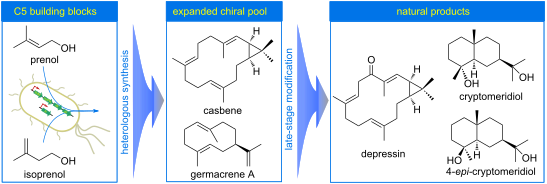
- Information File 1) [49]. Thus, four genes including EcthiM (coding for hydroxyethylthiazole kinase from Escherichia coli), Mjipk (coding for isopentenyl phosphate kinase from Mathanocaldococcus jannaschii), idi (coding for isopentenyl diphosphate isomerase from E. coli), and ispA (coding for farnesyl


Molecular tweezer–peptide conjugates disrupt the protein–protein interaction between survivin and histone H3 essential in mitosis
Beilstein J. Org. Chem. 2026, 22, 557–567, doi:10.3762/bjoc.22.41
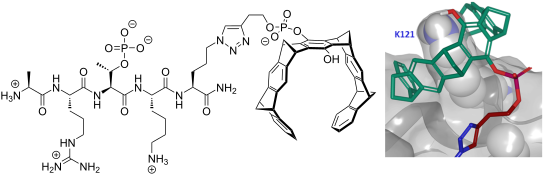
- phosphate ammonium ion pair. Interestingly, after 100 ns (Figure 6B) the tweezer cavity of 2b still firmly rests on Lys-121, while the peptide remains in its binding groove. This result may reflect the comparable lysine affinities of mono- and diphosphate tweezers [24], and the compact complex structure of
- -azidoornithine furnishes tweezers 2c and 2d as mono- and diphosphate. The small added glycine linker renders the peptide backbone more flexible, and allows the new tweezer to avoid clashes with crystal contacts. MD simulations also demonstrate that 2d may indeed reach and rest upon Lys-120 (Figure S14 in
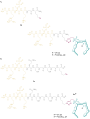
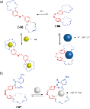
- red, tweezer green. A) Lewis structures of the new slightly extended binding peptide 3b and the respective click conjugates with butynyl tweezer, mono- and diphosphate 2c and 2d. B) Lewis structures of the new binding peptide 3c and the resulting mono- and diphosphate tweezer conjugates 2e and 2f




Ring contraction and ring expansion reactions in terpenoid biosynthesis and their application to total synthesis
Beilstein J. Org. Chem. 2026, 22, 289–343, doi:10.3762/bjoc.22.21
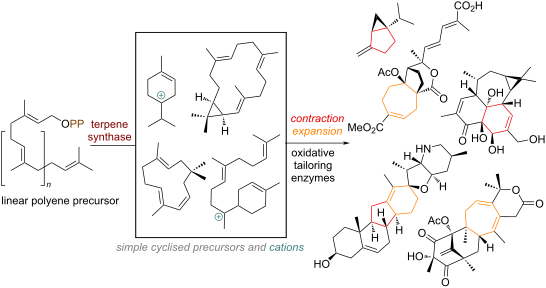
- the activation of the diphosphate group and ionisation) [25][37] and Class II (ionisation by olefin or epoxide protonation via a carboxylic acid in the active site) [26][38][39] and their reactions thus are mediated by carbocations and olefins, through careful preorganisation of the linear substrate
- elucidated by Dickschat and co-workers in 2023, describing the biosynthesis of the spirocyclic diterpene spiroluchuene A (20, see Scheme 5), catalysed by the synthase AlTS (Aspergillus luchuensis terpene synthase) [70]. Geranylgeranyl diphosphate (GGPP, 12) is initially cyclised through the well-known 1,10
- cyclase SrS (= Streptomyces subrutilus synthase) [71]. Geranylfarnesyl diphosphate (18) is first cyclised through 1,11- and 10,14-connections to the tertiary carbocation 22a, which undergoes ring expansion (22b) and a 14,18-cyclisation to 22c. A 1,5-hydride shift from the macrocycle generates cation 22d




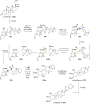


Recent advances in total synthesis of illisimonin A
Beilstein J. Org. Chem. 2025, 21, 2571–2583, doi:10.3762/bjoc.21.199
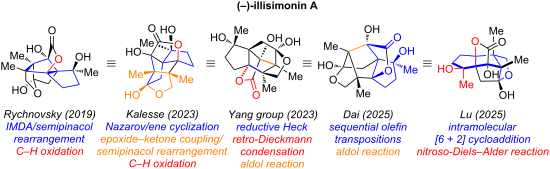
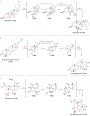
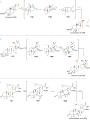
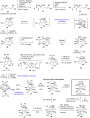
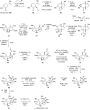
- proposed biosynthetic pathway clarifies the relationship between illisimonin A and other Illicium sesquiterpenes. Allo-cedrane-type, seco-prezizaane-type and illismonane-type Illicium sesquiterpenes are all biosynthesized from farnesyl diphosphate (2) through a series of cationic cyclizations and
- – particularly the critical reactions responsible for skeletal diversity – Yang and co-workers first introduced a comprehensive and detailed biosynthetic pathway for Illicium sesquiterpenes, with the route to illisimonin A depicted in Scheme 5. The transformations from farnesyl diphosphate to the allo-cedryl






Rapid access to the core of malayamycin A by intramolecular dipolar cycloaddition
Beilstein J. Org. Chem. 2025, 21, 2542–2547, doi:10.3762/bjoc.21.196
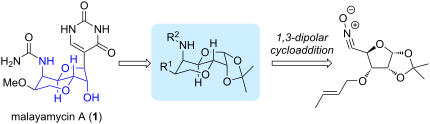
- action may not be consistent with those of known fungicide classes. This encouraging characteristic indicates its potential to overcome resistance to other fungicides [6][7][8]. Structurally, malayamycin A belongs to a class of modified nucleosides that mimic UDP (uridine 5′-diphosphate)-linked




Enantioselective radical chemistry: a bright future ahead
Beilstein J. Org. Chem. 2025, 21, 2283–2296, doi:10.3762/bjoc.21.174
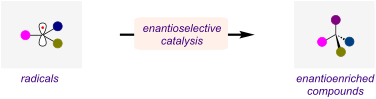
- engineered thiamine diphosphate-dependent lyase) working together with an organic dye (eosin Y) that served as a photoredox catalyst [77]. Highly diastereo- and enantioselective three-component couplings were catalyzed by an evolved pyridoxal decarboxylase and a small-molecule photoredox catalyst (rose


C2 to C6 biobased carbonyl platforms for fine chemistry
Beilstein J. Org. Chem. 2025, 21, 2103–2172, doi:10.3762/bjoc.21.165
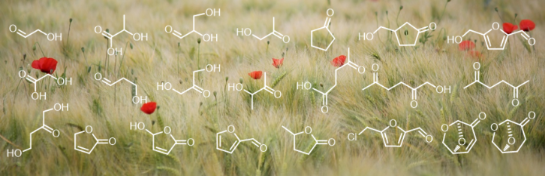
- groups through hydrogenolysis, neutralization with cyclohexylamine and treatment with ion-exchange resin led to dihydroxyacetone phosphate. This 4-step method was more efficient than the previously reported dismutation of fructose-1,6-diphosphate [84] and 3-chloro-1,3-propanediol [85] which required more
- biomass-based molecule and widely used building block in the food industry as flavoring compound. It can be synthesized from diacetyl by reduction using enzymes such as Aerobacter aerogenes [102] or thiamine diphosphate-dependent lyase (ThdP-lyase) [103]. The biotechnological production of chiral acetoin


Computation-guided scaffold exploration of 2E,6E-1,10-trans/cis-eunicellanes
Beilstein J. Org. Chem. 2024, 20, 1320–1326, doi:10.3762/bjoc.20.115

- ) of alkenes in the 10-membered ring (Figure 1A). During biosynthesis, the eunicellane skeleton is first constructed by terpene synthases that cyclize the diterpene precursor geranylgeranyl diphosphate (Figure 1B) [5][6][7][8][9]. The latter two structural elements, the configurations of the 6/10


Stability trends in carbocation intermediates stemming from germacrene A and hedycaryol
Beilstein J. Org. Chem. 2024, 20, 1189–1197, doi:10.3762/bjoc.20.101
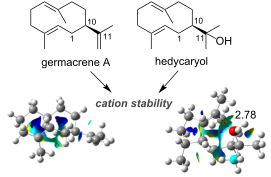
- monoterpenes (C10), sesquiterpenes (C15), and diterpenes (C20). Enzymes such as monoterpene, sesquiterpene, and diterpene synthases act on geranyl diphosphate (GPP), farnesyl diphosphate (FPP), and geranylgeranyl diphosphate (GGPP) to yield mono-, sesqui-, and diterpenes, respectively. These linear precursors
- (GPP, FPP, GGPP) undergo highly complex cyclisation cascades forming terpenes and terpenoids that often have great structural complexity. For class I terpene synthases this multistep process is initiated by a heterolytic C–O bond cleavage, separating the diphosphate and isoprenoid ion pairs [3][4]. The
- between the stability of hedycaryols (ΔΔEe) and C+···OH bond distances. Biosynthesis of (A) germacrene A and (B) hedycaryol from FPP. Here the abbreviations represent, FPP = farnesyl diphosphate, GAS = germacrene A synthase, OPP = diphosphate. O–C(cation) bond lengths (Å) in the hedycaryol cations


Enhancing structural diversity of terpenoids by multisubstrate terpene synthases
Beilstein J. Org. Chem. 2024, 20, 959–972, doi:10.3762/bjoc.20.86
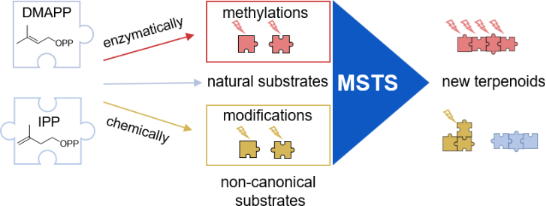
- broad range of bioactivities [2][3]. Despite their stunning diversity, all terpenes are biosynthetically derived from two general isomeric C5 building blocks, dimethylallyl diphosphate (DMAPP, 1) and isopentenyl diphosphate (IPP, 2), via the mevalonate (MVA) or methylerythritol 4-phosphate (MEP
- ) pathways. These two isomeric C5 precursors are further condensed by prenyltransferases (PTs) in successive elongation reactions, resulting in geranyl diphosphate (GPP, 3), farnesyl diphosphate (FPP, 4), geranylgeranyl diphosphate (GGPP, 5), and longer prenyl diphosphates. The acyclic precursors are then
- , that bind trinuclear magnesium clusters for diphosphate abstraction, whereas class II TSs have a DXDD motif that acts as the catalytic acid. Recently, several novel unconventional TSs that share low sequence and structural similarities with classical TSs have been discovered and comprehensively







Confirmation of the stereochemistry of spiroviolene
Beilstein J. Org. Chem. 2024, 20, 852–858, doi:10.3762/bjoc.20.77
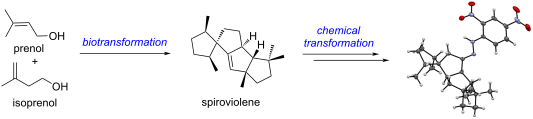
- jannaschii (MjIPK). Thus, we have cloned genes coding EcThiM, MjIPK, isopentenyl diphosphate isomerase of E. coli (IDI), farnesyl diphosphate synthase of E. coli (IspA) and geranylgeranyl diphosphate synthase of Pantoea agglomerans (CrtE) into the multiple cloning site-2 of pCDFDeut-1 to give pCDFDeut-TIIAE




Discovery and biosynthesis of bacterial drimane-type sesquiterpenoids from Streptomyces clavuligerus
Beilstein J. Org. Chem. 2024, 20, 815–822, doi:10.3762/bjoc.20.73
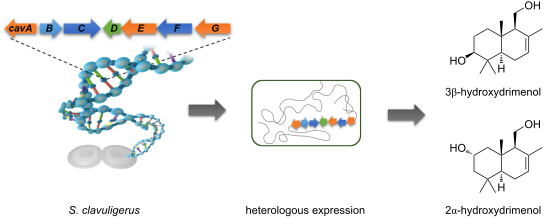
- Terpenoids, encompassing over 11,000 compounds (http://dnp.chemnbase.com), are the most diverse group of natural products found in nature [1]. All terpenoids are biosynthesized from C5 carbon units, which are sourced from the isoprenoid building blocks isopentenyl diphosphate (IPP) and dimethylallyl
- diphosphate (DMAPP) from the mevalonate (MVA) and 2-C-methyl-ᴅ-erythritol 4-phosphate (MEP) pathways [2][3]. Sesquiterpenoids, synthesized from farnesyl diphosphate (FPP) which is composed of three C5 units, hold significant biological and industrial value, particularly in the realm of perfumery [4]. Among
- calidoustene C, DrtB from Aspergillus calidoustus functions as a dual-functional enzyme, comprising two domains: a HAD-like hydrolase domain fused with a terpene cyclase domain. Initially, FPP is cyclized into the drimenyl diphosphate in a class II terpene cyclase manner, which is then processed by the


Research progress on the pharmacological activity, biosynthetic pathways, and biosynthesis of crocins
Beilstein J. Org. Chem. 2024, 20, 741–752, doi:10.3762/bjoc.20.68
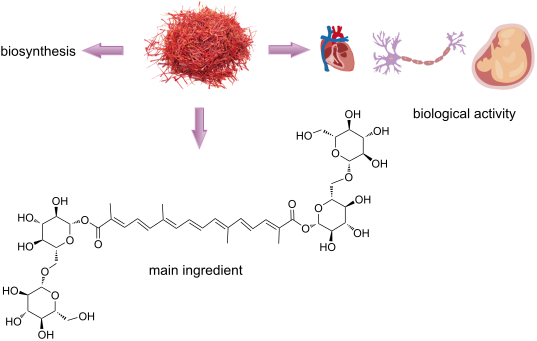
- (CCD), aldehyde dehydrogenase (ALDH), uridine diphosphate glucosyltransferase (UGT). Structure of crocin and crocetin derivatives. A, SG, G, GB, and GT represent the common substituents of the crocin skeleton shown in Figure 1. Heterologous production of crocetin (1) and crocins. Acknowledgments We


Genome mining of labdane-related diterpenoids: Discovery of the two-enzyme pathway leading to (−)-sandaracopimaradiene in the fungus Arthrinium sacchari
Beilstein J. Org. Chem. 2024, 20, 714–720, doi:10.3762/bjoc.20.65
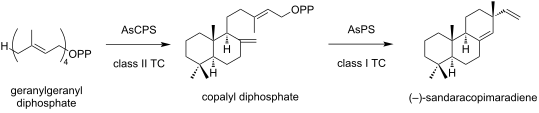
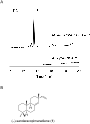
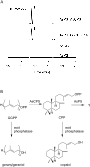
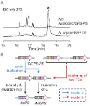
- AsCPS synthesized copalyl diphosphate and that AsPS then converted it to (−)-sandaracopimaradiene. Since AsPS and AsCPS have distinct domain organizations from those of known fungal TCs and are likely generated through fusion or loss of catalytic domains, our findings provide insight into the evolution
- complexity. TCs are generally classified into two main classes, class I and class II. Class I TCs initiate the cyclization by heterolytic cleavage of substrates to generate a diphosphate anion and an allylic carbocation, and class II enzymes start cyclization by protonating a double bond or an epoxide
- understand the evolutionary traits of TCs. Among terpenoids, labdane-related diterpenoids (LRDs) are an important class which includes biologically active molecules such as plant hormone gibberellins (Figure 1A). In their biosynthesis, class II TCs often synthesize copalyl diphosphate (CPP) or its


Switchable molecular tweezers: design and applications
Beilstein J. Org. Chem. 2024, 20, 504–539, doi:10.3762/bjoc.20.45
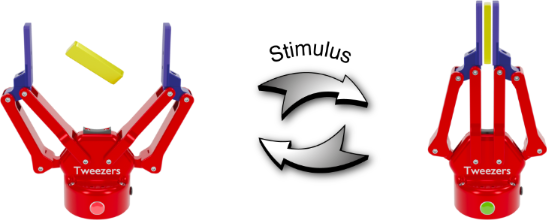
- substrate-dependent allosteric with potential applications for regulating cooperative catalytic reactions. Terpyridine-based tweezers have also been developed by Bencini, Lippolis, and co-workers for the selective recognition of diphosphate with [9]aneN3 unit 17 [48]. When closed with Zn(ClO4)2, the anion
- -binding moieties are preorganized for diphosphate binding, resulting in a 3-order of magnitude increase in affinity compared to the open form (log K = 6.9 vs 2.9). This positive allosteric response benefits from ion pairing with the metal cation in addition to the diphosphate interactions via hydrogen
- ). They developed tweezers with carboxamidoindole units connected in 4 and 4’ positions to a 2,2’-bipyridine unit for switchable anion recognition [62]. The uncomplexed open conformation displays a very low affinity for anions such as chloride, acetate, or diphosphate (log K < 2). The coordination of




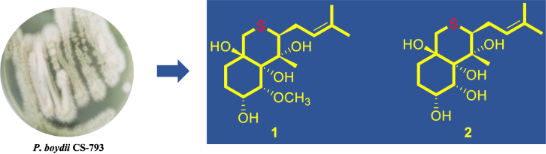
Pseudallenes A and B, new sulfur-containing ovalicin sesquiterpenoid derivatives with antimicrobial activity from the deep-sea cold seep sediment-derived fungus Pseudallescheria boydii CS-793
Beilstein J. Org. Chem. 2024, 20, 470–478, doi:10.3762/bjoc.20.42
- pathway, the bergamotene sesquiterpenoid (I) is presumed to be a key intermediate cyclized from farnesyl diphosphate (FPP) via nerolidyl diphosphate (NPP) followed by a bisabolyl cation [14]. Subsequent oxidation (bishydroxylation) catalyzed by some oxygenase such as P450 would afford the key intermediate


Optimizations of lipid II synthesis: an essential glycolipid precursor in bacterial cell wall synthesis and a validated antibiotic target
Beilstein J. Org. Chem. 2024, 20, 220–227, doi:10.3762/bjoc.20.22
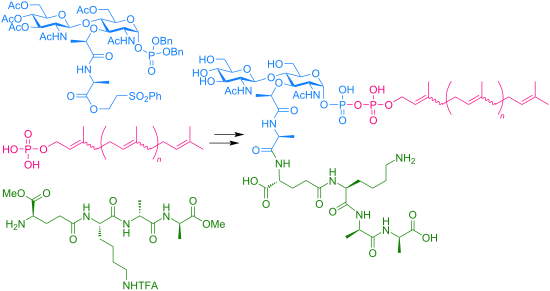
- . Finally, the benzyl-protecting groups in compound 7 were cleaved via hydrogenolysis, followed by co-evaporation of the resulting crude product in pyridine. This yielded a monopyridyl salt, setting the stage for the final lipid coupling and deprotection sequence. To establish the vital lipid diphosphate


Functions of enzyme domains in 2-methylisoborneol biosynthesis and enzymatic synthesis of non-natural analogs
Beilstein J. Org. Chem. 2023, 19, 1452–1459, doi:10.3762/bjoc.19.104
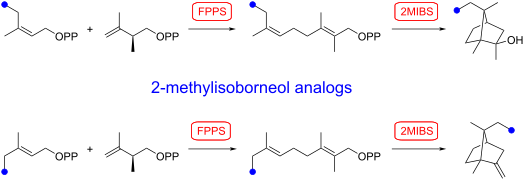
- model was proposed that proceeds through the S-adenosylmethionine (SAM) dependent methylation of geranyl diphosphate (GPP) to 2-methyl-GPP (2-Me-GPP), followed by a terpene cyclisation to 1 (Scheme 1A) [10]. The cyclisation cascade requires isomerisation to (R)-2-methyllinalyl diphosphate [22], followed
- , the pathway to 1 can be reconstituted in vitro using the methyltransferase humMT from Micromonospora humi for the methylation of dimethylallyl diphosphate (DMAPP) to 2-methylisopentenyl diphosphate (2-Me-IPP) [25], followed by coupling with DMAPP to 2-Me-GPP and terpene cyclisation using farnesyl
- diphosphate synthase (FPPS) and 2MIBS from Streptomyces coelicolor [26] (Scheme 1B). Crystal structures of both enzymes have been obtained [27][28] and allowed for a deep structure-based investigation of 2MIBS through site-directed mutagenesis [29]. The predicted amino acid sequences of 2MIBS homologs from


Functional characterisation of twelve terpene synthases from actinobacteria
Beilstein J. Org. Chem. 2023, 19, 1386–1398, doi:10.3762/bjoc.19.100
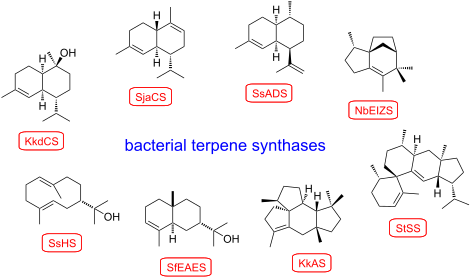
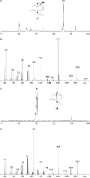
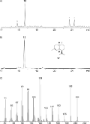
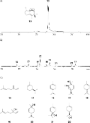
- either through diphosphate abstraction (for type I terpene synthases) or protonation of the substrate (type II terpene synthases). The resulting cationic species can then react in a cascade reaction via a series of cationic intermediates involving cyclisations, hydride or proton shifts, and skeletal




Synthesis of ether lipids: natural compounds and analogues
Beilstein J. Org. Chem. 2023, 19, 1299–1369, doi:10.3762/bjoc.19.96






Recommendations for performing measurements of apparent equilibrium constants of enzyme-catalyzed reactions and for reporting the results of these measurements
Beilstein J. Org. Chem. 2023, 19, 303–316, doi:10.3762/bjoc.19.26
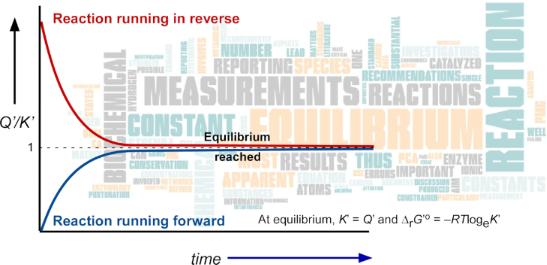
- biochemical reaction and the many chemical reactions that accompany it is the hydrolysis reaction of ATP (adenosine 5’-triphosphate) to {ADP (adenosine 5’-diphosphate) + phosphate}: The apparent reaction quotient for this reaction is And the apparent equilibrium constant is Here, (aq) denotes that the

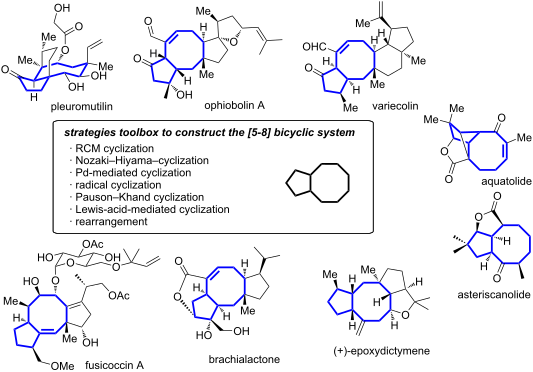
Strategies to access the [5-8] bicyclic core encountered in the sesquiterpene, diterpene and sesterterpene series
Beilstein J. Org. Chem. 2023, 19, 245–281, doi:10.3762/bjoc.19.23


Germacrene B – a central intermediate in sesquiterpene biosynthesis
Beilstein J. Org. Chem. 2023, 19, 186–203, doi:10.3762/bjoc.19.18

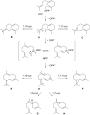
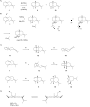
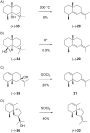
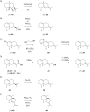
- initial formation from farnesyl diphosphate, these neutral intermediates can become reprotonated for a second cyclisation to reach the bicyclic eudesmane and guaiane skeletons. This review summarises the accumulated knowledge on eudesmane and guaiane sesquiterpene hydrocarbons and alcohols that
- , including the monoterpene precursor geranyl diphosphate (GPP) [1], the precursor for sesquiterpenes farnesyl diphosphate (FPP) [2], geranylgeranyl diphosphate (GGPP) towards diterpenes [3], and the sesterterpene precursor geranylfarnesyl diphosphate (GFPP) [4]. It has been demonstrated recently, that even
- farnesylfarnesyl diphosphate (FFPP) can serve as a precursor to triterpenes [5], a compound class that was believed to be solely derived from squalene. Terpene synthases convert these linear precursors through cationic cascade reactions into terpene hydrocarbons or alcohols [6][7][8]. For type I terpene synthases








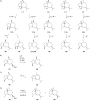
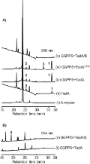
Characterization of a new fusicoccane-type diterpene synthase and an associated P450 enzyme
Beilstein J. Org. Chem. 2022, 18, 1396–1402, doi:10.3762/bjoc.18.144
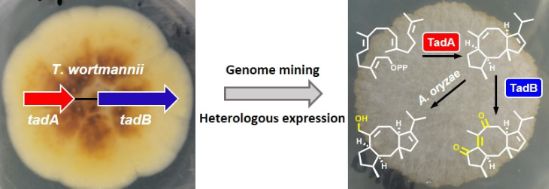
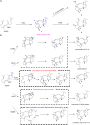
- synthases in pursuit of new terpenoids [15][16][17]. It is generally accepted that the FC-type diterpene skeleton is formed from geranylgeranyl diphosphate (GGPP) via a concerted C1,11–C10,14-bicyclization, followed by a C2,6-cyclization [18][19][20][21]. Theoretically, according to the configuration of


Make or break: the thermodynamic equilibrium of polyphosphate kinase-catalysed reactions
Beilstein J. Org. Chem. 2022, 18, 1278–1288, doi:10.3762/bjoc.18.134
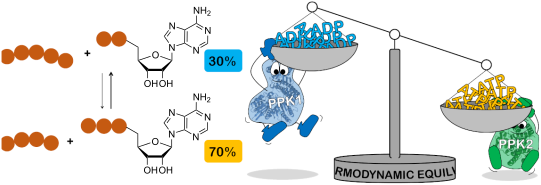
- ). As discussed before, the conversion of a nucleotide diphosphate to the corresponding triphosphate is normally the last step in the biomimetic synthesis of NTPs, and might have a substantial influence on the yield of the whole cascade. A biomimetic cascade published by Whitesides and co-workers for





