


Search results
Search for "post-synthesis modification" in Full Text gives 1 result(s) in Beilstein Journal of Organic Chemistry.
Systematic pore lipophilization to enhance the efficiency of an amine-based MOF catalyst in the solvent-free Knoevenagel reaction
Beilstein J. Org. Chem. 2025, 21, 1854–1863, doi:10.3762/bjoc.21.144
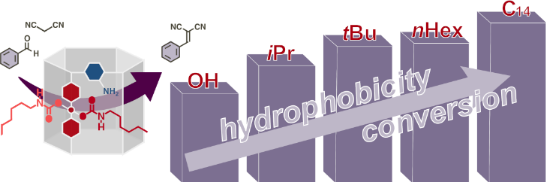
- efficiency. Keywords: metal-organic frameworks; post-synthesis modification; supramolecular catalysis; Introduction Most enzymatic reactions take place in multifunctional cavities in which multiple amino acid residues work cooperatively to orient and activate reactants [1][2][3]. These residues may also
- contrast to a previous reportthat observed an increase in the intermediate when a non-polar solvent is used in the grinding-assisted Knoevenagel reaction of the same reactants [56]. Conclusion By employing a covalent post synthesis modification strategy that selectively introduces lipophilic functionality
- -synthesis modification (PSM). A) Schematic representation of the reaction of KSU-1 with aliphatic isocyanates and the estimated conversions at –OH and –NH2. B) The corresponding 1H NMR spectra of the MOF reaction products digested in a solution of D2SO4 in DMSO-d6. A) Schematic representation of the


Other Beilstein-Institut Open Science Activities



