


Search results
Search for "synthetic photochemistry" in Full Text gives 5 result(s) in Beilstein Journal of Organic Chemistry.
Heterogeneous photocatalysis in flow chemical reactors
- Christopher G. Thomson,
- Ai-Lan Lee and
- Filipe Vilela
Beilstein J. Org. Chem. 2020, 16, 1495–1549, doi:10.3762/bjoc.16.125
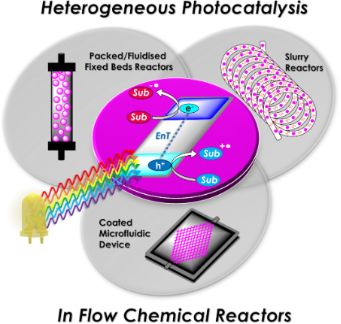
- photon and mass transport. Photocatalysis provides a unique route to carry out complex chemical transformations under mild conditions that are often impossible with “standard” organic synthetic procedures. The earliest report of synthetic photochemistry can be traced back to Trommsdorf in 1834, who

Graphical Abstract

Figure 1: A) Bar chart of the publications per year for the topics “Photocatalysis” (49,662 instances) and “P...

Figure 2: A) Professor Giacomo Ciamician and Dr. Paolo Silber on their roof laboratory at the University of B...

Scheme 1: PRC trifluoromethylation of N-methylpyrrole (1) using hazardous gaseous CF3I safely in a flow react...

Figure 3: A) Unit cells of the three most common crystal structures of TiO2: rutile, brookite, and anatase. R...

Figure 4: Illustration of the key semiconductor photocatalysis events: 1) A photon with a frequency exceeding...
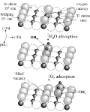
Figure 5: Photocatalytic splitting of water by oxygen vacancies on a TiO2(110) surface. Reprinted with permis...

Figure 6: Proposed adsorption modes of A) benzene, B) chlorobenzene, C) toluene, D) phenol, E) anisole, and F...

Figure 7: Structures of the sulfonate-containing organic dyes RB5 (3) and MX-5B (4) and the adsorption isothe...

Figure 8: Idealised triclinic unit cell of a g-C3N4 type polymer, displaying possible hopping transport scena...

Figure 9: Idealised structure of a perfect g-C3N4 sheet. The central unit highlighted in red represents one t...

Figure 10: Timeline of the key processes of charge transport following the photoexcitation of g-C3N4, leading ...

Scheme 2: Photocatalytic bifunctionalisation of heteroarenes using mpg-C3N4, with the selected examples 5 and ...

Figure 11: A) Structure of four linear conjugated polymer photocatalysts for hydrogen evolution, displaying th...

Figure 12: Graphical representation of the common methods used to immobilise molecular photocatalysts (PC) ont...

Figure 13: Wireless light emitter-supported TiO2 (TiO2@WLE) HPCat spheres powered by resonant inductive coupli...

Figure 14: Graphical representation of zinc–perylene diimide (Zn-PDI) supramolecular assembly photocatalysis v...

Scheme 3: Upconversion of NIR photons to the UV frequency by NaYF4:Yb,Tm nanocrystals sequentially coated wit...

Figure 15: Types of reactors employed in heterogeneous photocatalysis in flow. A) Fixed bed reactors and the s...

Figure 16: Electrochemical potential of common semiconductor, transition metal, and organic dye-based photocat...

Scheme 4: Possible mechanisms of an immobilised molecular photoredox catalyst by oxidative or reductive quenc...
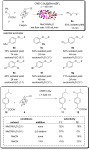
Scheme 5: Scheme of the CMB-C3N4 photocatalytic decarboxylative fluorination of aryloxyacetic acids, with the...

Scheme 6: Scheme of the g-C3N4 photocatalytic desilylative coupling reaction in flow and proposed mechanism [208].

Scheme 7: Proposed mechanism of the radical cyclisation of unsaturated alkyl 2-bromo-1,3-dicarbonyl compounds...

Scheme 8: N-alkylation of benzylamine and schematic of the TiO2-coated microfluidic device [213].

Scheme 9: Proposed mechanism of the Pt@TiO2 photocatalytic deaminitive cyclisation of ʟ-lysine (23) to ʟ-pipe...
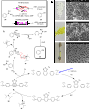
Scheme 10: A) Proposed mechanism for the photocatalytic oxidation of phenylboronic acid (24). B) Photos and SE...

Scheme 11: Proposed mechanism for the DA-CMP3 photocatalytic aza-Henry reaction performed in a continuous flow...

Scheme 12: Proposed mechanism for the formation of the cyclic product 32 by TiO2-NC HPCats in a slurry flow re...

Scheme 13: Reaction scheme for the photocatalytic synthesis of homo and hetero disulfides in flow and scope of...

Scheme 14: Reaction scheme for the MoOx/TiO2 HPCat oxidation of cyclohexane (34) to benzene. The graph shows t...

Scheme 15: Proposed mechanism of the TiO2 HPC heteroarene C–H functionalisation via aryl radicals generated fr...

Scheme 16: Scheme of the oxidative coupling of benzylamines with the HOTT-HATN HPCat and selected examples of ...
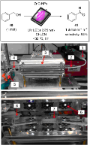
Scheme 17: Photocatalysis oxidation of benzyl alcohol (40) to benzaldehyde (41) in a microflow reactor coated ...

Figure 17: Mechanisms of Dexter and Forster energy transfer.
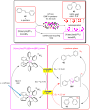
Scheme 18: Continuous flow process for the isomerisation of alkenes with an ionic liquid-immobilised photocata...

Scheme 19: Singlet oxygen synthetic step in the total synthesis of canataxpropellane [265].
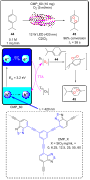
Scheme 20: Scheme and proposed mechanism of the singlet oxygen photosensitisation by CMP_X HPCats, with the st...

Scheme 21: Structures of CMP HPCat materials applied by Vilela and co-workers for the singlet oxygen photosens...
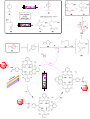
Scheme 22: Polyvinylchloride resin-supported TDCPP photosensitisers applied for singlet oxygen photosensitisat...

Scheme 23: Structure of the ionically immobilised TPP photosensitiser on amberlyst-15 ion exchange resins (TPP...

Scheme 24: Photosensitised singlet oxygen oxidation of citronellol (46) in scCO2, with automatic phase separat...

Scheme 25: Schematic of PS-Est-BDP-Cl2 being applied for singlet oxygen photosensitisation in flow. A) Pseudo-...

Scheme 26: Reaction scheme of the singlet oxygen oxidation of furoic acid (54) using a 3D-printed microfluidic...

Figure 18: A) Photocatalytic bactericidal mechanism by ROS oxidative cleavage of membrane lipids (R = H, amino...

Figure 19: A) Suggested mechanisms for the aqueous pollutant degradation by TiO2 in a slurry flow reactor [284-287]. B)...

Figure 20: Schematic of the flow system used for the degradation of aqueous oxytetracycline (56) solutions [215]. M...
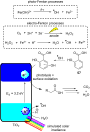
Scheme 27: Degradation of a salicylic acid (57) solution by a coupled solar photoelectro-Fenton (SPEF) process...

Figure 21: A) Schematic flow diagram using the TiO2-coated NETmix microfluidic device for an efficient mass tr...
Tandem copper and photoredox catalysis in photocatalytic alkene difunctionalization reactions
- Nicholas L. Reed,
- Madeline I. Herman,
- Vladimir P. Miltchev and
- Tehshik P. Yoon
Beilstein J. Org. Chem. 2019, 15, 351–356, doi:10.3762/bjoc.15.30
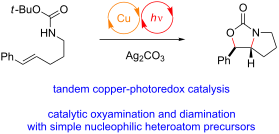
- renewed interest in synthetic photochemistry has resulted in the discovery of a broad range of powerful new bond-forming transformations [1][2][3][4]. Much of this work has been premised on the ability of visible light-activated photocatalysts to generate highly reactive odd-electron intermediates via

Graphical Abstract
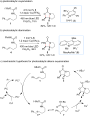
Figure 1: a) Photocatalytic oxyamination, b) photocatalytic diamination, and c) proposed mechanism for photoc...
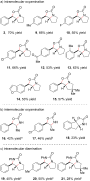
Figure 2: Scope studies for dual-catalytic alkene difunctionalization using 2.5 mol % 3, 30 mol % Cu(TFA)2, a...
Photocatalyic Appel reaction enabled by copper-based complexes in continuous flow
- Clémentine Minozzi,
- Jean-Christophe Grenier-Petel,
- Shawn Parisien-Collette and
- Shawn K. Collins
Beilstein J. Org. Chem. 2018, 14, 2730–2736, doi:10.3762/bjoc.14.251
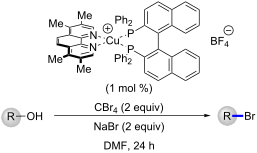
- anhydrides. The protocol was also amendable and optimized under continuous flow conditions. Keywords: Appel; continuous flow; copper; halides; photocatalysis; Introduction Synthetic photochemistry and photocatalysis continues to influence molecular synthesis [1][2][3][4]. In exploring photochemical

Graphical Abstract
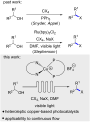
Figure 1: Alcohol→bromide functional group transformations.

Figure 2: Ligands used in the library generation of heteroleptic copper(I)-based complexes for photocatalysis....
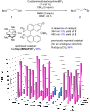
Figure 3: Evaluation of the library of copper-based complexes in photocatalytic alcohol→bromide conversion. R...

Figure 4: Experimental set-up for the photocatalytic conversion of alcohols to bromides. PFA tubing is wrappe...

Scheme 1: Copper-based photocatalysis for photocatalytic synthesis of an anhydride.
Microfluidic light-driven synthesis of tetracyclic molecular architectures
- Javier Mateos,
- Nicholas Meneghini,
- Marcella Bonchio,
- Nadia Marino,
- Tommaso Carofiglio,
- Xavier Companyó and
- Luca Dell’Amico
Beilstein J. Org. Chem. 2018, 14, 2418–2424, doi:10.3762/bjoc.14.219
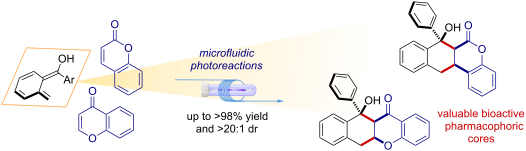
- molecules. Keywords: [4 + 2] photoenol; cycloaddition; flow chemistry; microfluidic photoreactor; photoredox catalysis; synthetic photochemistry; Introduction In recent years synthetic photochemistry has become highly sophisticated [1]. The opportunity of using renewable energy sources to transform and

Graphical Abstract

Figure 1: a) Light-driven reaction between 2-MBP A and maleimide B for the synthesis of C through a [4 + 2] c...

Figure 2: Generality and limits of the light-driven [4 + 2] cyclization reaction between 2-MBP 1a–g and couma...

Figure 3: Generality and limits of the light-driven [4 + 2] cyclization reaction between 2-MBP 1a–f and chrom...

Scheme 1: MFP parallel setup for higher scale production of 4a (top) and different molecular scaffolds 6a–9a ...
Flow photochemistry: Old light through new windows
- Jonathan P. Knowles,
- Luke D. Elliott and
- Kevin I. Booker-Milburn
Beilstein J. Org. Chem. 2012, 8, 2025–2052, doi:10.3762/bjoc.8.229
- Jonathan P. Knowles Luke D. Elliott Kevin I. Booker-Milburn School of Chemistry, University of Bristol, Cantock’s Close, Bristol, BS8 1TS, UK. 10.3762/bjoc.8.229 Abstract Synthetic photochemistry carried out in classic batch reactors has, for over half a century, proved to be a powerful but under
- santonin. It is generally regarded that the systematic and ground-breaking investigations of Ciamician and Silber [3] paved the way for modern synthetic photochemistry. At the turn of the 20th century they described the first examples of now common reactions such as intramolecular [2 + 2] cycloaddition
- is also amplified if the reaction solution is concentrated. When the scale of the reaction is increased with the same lamp it becomes increasingly more difficult to drive the reaction to completion. Attempts to do so often result in the “curse” of synthetic photochemistry, i.e., over-irradiation of

Graphical Abstract

Figure 1: An immersion-well batch reactor with 125 W medium pressure Hg lamp.

Figure 2: Transmission profile of a 0.05 M solution, ε = 200 M−1 cm−1.

Figure 3: Schematic of a typical microflow photochemical reactor (above) and detail of a triple-channel micro...

Figure 4: Schematic of a typical macroflow photochemical reactor (above) and images of the FEP photochemical ...

Scheme 1: [2 + 2] photocycloadditions of enones with enol derivatives.

Scheme 2: Competing reactions in an intramolecular [2 + 2] photocycloaddition.

Scheme 3: Diastereocontrolled cycloaddition of a cyclic enone with cyclopentene.

Scheme 4: Comparison of yields and reaction times for a batch reactor with a microflow system.

Scheme 5: Intramolecular [2 + 2] photocycloaddition.

Scheme 6: Paterno–Büchi reaction of benzophenone with an allylic alcohol.

Scheme 7: Photooxygenation of cyclopentadiene.

Scheme 8: Preparation of the anthelmintic ascaridole 23.

Scheme 9: Production of rose oxide 27 from (−)-β-citronellol (24).

Scheme 10: Photocatalytic alkylation of benzylamine.

Scheme 11: Photocatalytic reduction of 4-nitroacetophenone.

Scheme 12: Conversion of L-lysine to L-pipecolinic acid.

Scheme 13: Photocatalytic hydrodehalogenation.

Scheme 14: Photocatalytic aza-Henry reactions.

Scheme 15: Photocatalytic α-alkylation of aliphatic ketones.

Scheme 16: Decarboxylative photochemical additions.

Scheme 17: Photochemical addition of isopropanol to furanones.

Scheme 18: Photochemical addition of methanol to limonene.

Scheme 19: Light-promoted reduction of flavone.

Scheme 20: Photoreduction of benzophenone with benzhydrol.

Scheme 21: Barton reaction in a microflow system.

Scheme 22: Microflow synthesis of vitamin D3.

Scheme 23: photochemical chlorination of cyclohexane.

Scheme 24: photochemical cyanation of pyrene.

Scheme 25: Intermolecular [2 + 2] cycloaddition of maleimide (76) and intramolecular [2 + 2] cycloaddition of ...

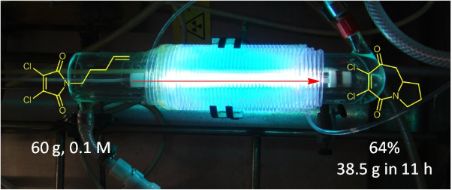
Scheme 26: Intramolecular [5 + 2] cycloaddition of maleimide under flow conditions.

Scheme 27: Intramolecular [5 + 2] cycloaddition as a key step in the synthesis of (±)-neostenine.

Scheme 28: In situ generation of a thioaldehyde by photolysis of a phenacyl sulfide.

Scheme 29: Photodimerisation of maleic anhydride.

Scheme 30: [2 + 2] cycloaddition of a chiral enone with ethylene.

Scheme 31: Intramolecular [2 + 2] cycloaddition of a cyclopentenone.

Scheme 32: Photochemical Wolff rearrangement and cyclisation to β-lactams.

Scheme 33: Photochemical rearrangement of aryl azides.

Scheme 34: Rearrangement of quinoline N-oxides to quinolones.

Scheme 35: Photochemical rearrangement of cyclobutenones.

Scheme 36: Photoisomerisation en route to a vitamin-D derivative.

Scheme 37: Schematic of the Seeberger photooxygenation apparatus and sensitised photooxygenation of citronello...

Scheme 38: Sensitised photooxygenation of dihydroartemisinic acid.

Scheme 39: Photochemical preparation of CpRu(MeCN)3PF6.

Scheme 40: In situ photochemical generation and reaction of a [CpRu]+ catalyst.

Scheme 41: Intermolecular alkene–alkyne coupling with photogenerated catalyst.

Scheme 42: PET deoxygenation of nucleosides.

Scheme 43: Photochemical defluorination of DABFT.

Scheme 44: Aromatic azide reduction by visible-light-mediated photocatalysis.

Scheme 45: Examples of visible-light-mediated reactions.

Scheme 46: Visible-light-mediated formation of iminium ions.

Scheme 47: Examples of visible-light-mediated photocatalytic reactions.

Scheme 48: Anhydride formation from a visible-light-mediated process.

Scheme 49: Light-mediated conjugate addition of glycosyl bromide 141 to acrolein.

Scheme 50: Visible-light-mediated photocyclisation to [5]helicene.



