Search results
Search for "absorption" in Full Text gives 1062 result(s) in Beilstein Journal of Nanotechnology. Showing first 200.
Facile synthesis of platinated DNA nanoparticles with radiosensitizing potential
Beilstein J. Nanotechnol. 2026, 17, 1117–1127, doi:10.3762/bjnano.17.76
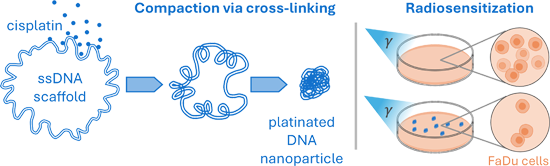
- addition, the measured variation in cisplatin content remained within the uncertainty of the Pt quantification derived from UV–vis absorption measurements, suggesting negligible loss of bound cisplatin over time (Figure 5B). Collectively, these findings demonstrate good long-term stability of the


Synthesis of carbon dot-mediated gold nanostructures: experimental and quantum chemical insights into turn-on fluorescence sensing of N-acetylcysteine
Beilstein J. Nanotechnol. 2026, 17, 1103–1116, doi:10.3762/bjnano.17.75
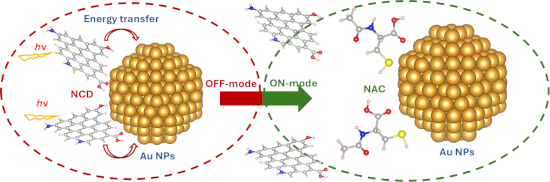
- solutions were prepared in double distilled water. Fluorescence measurements were carried out using a Jasco FP-6500 spectrofluorometer (Japan). Absorption spectra were collected on an Agilent 8453 UV–vis spectrophotometer (USA). Fourier-transform infrared (FTIR) spectra were recorded by a Nicolet iS50
- spectrum in Figure 2. Specifically, the broad absorption band in the 3000 to 3500 cm−1 region can be attributed to the stretching vibration of –NH/–OH group (υN–H/υO–H). Absorption peaks around 1635 cm−1 (shoulder) and 1569 cm−1 are assigned to υC=O, while peaks at 1390 cm−1 correspond to C–N stretching
- vibrations. Vibration of –CO/CN/CH groups are responsible for the absorption peaks around 1078 cm−1. The C–H stretching vibrations of benzene are represented by the peak at 786 cm−1. Figure 3 shows the Raman spectra of NCDs and Au@NCDs. The NCD spectrum lacked discernible peaks due to significant


Breaking barriers: nanosystems to overcome solubility and permeability challenges of second-generation tyrosine kinase inhibitors
Beilstein J. Nanotechnol. 2026, 17, 1063–1086, doi:10.3762/bjnano.17.73
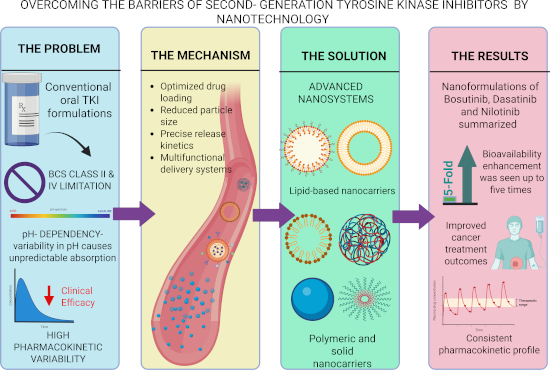
- ), posing challenges in formulation development and drug absorption [8]. Due to biopharmaceutical limitations, including poor aqueous solubility and low intestinal permeability, these drugs must be administered at high doses to achieve the desired therapeutic effect [9]. For example, the recommended daily
- nanotechnology-enabled formulation strategies that improve solubility at physiological pH, enhance drug absorption and permeation, and protect against an adverse microenvironment, thereby improving drug bioavailability and reducing the dose requirement. The fundamental differences in drug transport and
- absorption between conventional formulations and nanotechnology-enabled systems are illustrated in Figure 1. The second-generation TKIs are substrates for the P-glycoprotein (P-gp)/breast cancer resistance protein (BCRP) efflux transporter at the brush-border and basolateral membranes of the enterocytes


Nanoglasses: a trail towards uncharted regions of vitreous materials and their properties?
Beilstein J. Nanotechnol. 2026, 17, 1047–1062, doi:10.3762/bjnano.17.72


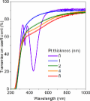
Synthesis and characterization of RF-sputtered ZnTe/Cu2−xTe thin films for solar cell applications
Beilstein J. Nanotechnol. 2026, 17, 1016–1027, doi:10.3762/bjnano.17.69
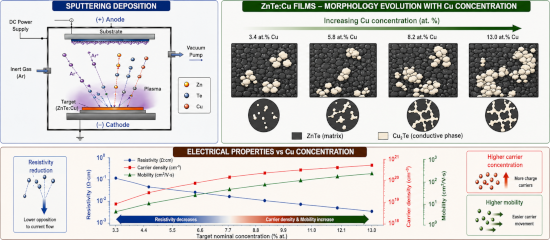
- transmittance with increasing Cu concentration, attributed to the metallic-like absorption of Cu2−xTe phases. Electrical characterization revealed a transition from semiconducting to highly conductive behavior with resistivity decreasing from approximately 102 to 10−2 Ω·cm for films grown at 300 °C and from 101
- : back contact materials; Cu2−xTe phases; phase segregation; RF magnetron sputtering; ZnTe thin films; Introduction CdTe solar cells remain one of the leading thin-film photovoltaic technologies due to the near-optimal direct bandgap of CdTe (≈1.45 eV) and its high absorption coefficient (>104 cm−1
- ), which allows for the absorption of nearly 99% of incident sunlight within a thickness of approximately 1 µm. These intrinsic optoelectronic properties enable efficient light harvesting while reducing material consumption compared to conventional crystalline silicon technologies [1][2]. As a result, CdTe



Ultrasonic irradiation in the synthesis of nanohydroxyapatite: a chemically friendly technique for improving hemocompatibility and antibiofilm applications
Beilstein J. Nanotechnol. 2026, 17, 991–1015, doi:10.3762/bjnano.17.68
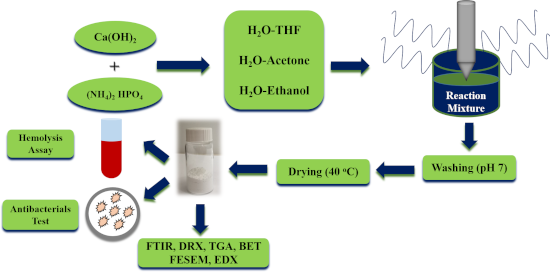
- –C show the characteristic absorption bands of the hydroxyapatite structure [35][36]: the presence of OH groups in the ranges of 3573–3558 and 633–628 cm−1 is verified, as are the vibrational modes of PO43− ions, that is, ν1 at 963–962 cm−1, ν2 at 476–471 cm−1, ν3 at 1097–1038 cm−1, and ν4 at 603–656
- wave number ranges of 875–873 cm−1 (ν2) and 1499–1420 cm−1 (ν3). This certifies that carbonated hydroxyapatite was obtained under all synthesis conditions [37]. Additional absorption bands observed in most of the spectra in Figure 3 correspond to carbonyl group vibrations between 1739 and 1701 cm−1 and
- absorption bands for the PO43− and OH− ions, as well as for the ν3 and ν2 vibrational modes of the CO32− ions. This is compared with a sample of non-carbonated commercial hydroxyapatite from Teknimed S.A. (France), which is used as a reference. The versatile structure of hydroxyapatite allows for the




Development of Protium heptaphyllum essential oil-loaded nanocapsules: experimental design and biological activity
Beilstein J. Nanotechnol. 2026, 17, 974–990, doi:10.3762/bjnano.17.67
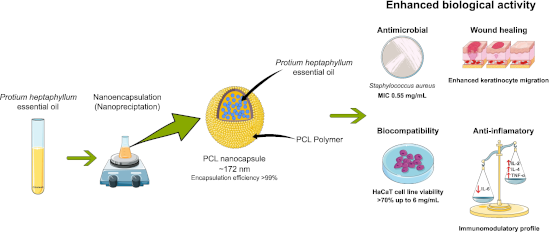
- spectrophotometry (Cary 5000, Agilent, Waterloo, Canada). A calibration curve of the EO was constructed using serial dilutions prepared in acetonitrile within the analytical concentration range. Absorbance values were measured at 259 nm, previously determined as the wavelength of maximum absorption (λmax) following




Nanocarrier strategies to overcome P-glycoprotein-mediated drug resistance in cancer therapy
Beilstein J. Nanotechnol. 2026, 17, 882–921, doi:10.3762/bjnano.17.64
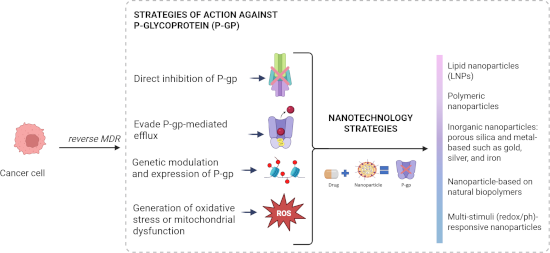
- strategy, the DOX/CEL-MTS-R8H3 system utilizes a hybrid peptide that facilitates cell penetration, lysosomal escape, and mitochondrial targeting. This leads to a 5.7-fold augmentation in intracellular drug absorption, improved ROS generation, and substantial suppression of P-gp efflux relative to non
- shell, membrane expansion, polymer degradation or erosion, or a combination of these methods [100]. This architecture facilitates regulated and prolonged release, enhanced absorption, and diminished adverse effects. Nanocapsules have been utilized in diverse domains, including medicine, cosmetics, and


Supramolecular one-dimensional conducting nanofibers from a C3-symmetric tetrathiafulvalene derivative
Beilstein J. Nanotechnol. 2026, 17, 872–881, doi:10.3762/bjnano.17.63
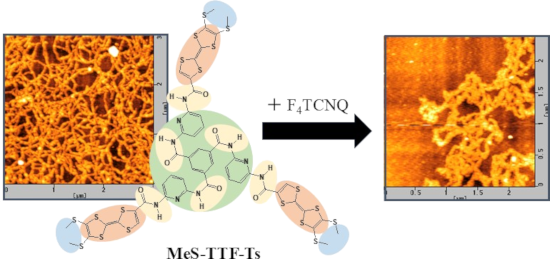
- measurements The structures formed on mica substrates were observed using an atomic force microscopy (AFM) system (Bruker Multi Mode 8). Measurements were performed in non-contact mode using a silicon cantilever with a spring constant of approximately 0.8 N·m−1. Optical spectra UV–vis absorption spectra were
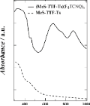
- . For the (MeS-TTF-Ts)(F4TCNQ)3 nanofibers, characteristic absorption bands were observed at 682 and 875 nm. These absorption bands are in good agreement with those previously reported for intramolecular transitions of the F4TCNQ radical anion (F4TCNQ−). In addition, the absorption bands observed at 462
- and 333 nm are assigned to intramolecular transitions of the TTF radical cation (TTF+) and F4TCNQ−, respectively [13][14][52][53][54][55]. The appearance of these absorption bands suggests the formation of a charge-transfer state through electron transfer from the donor MeS-TTF-Ts to the acceptor


Light-driven ammonia electrooxidation via carbon nitride–ruthenium molecular interfaces
Beilstein J. Nanotechnol. 2026, 17, 854–862, doi:10.3762/bjnano.17.61
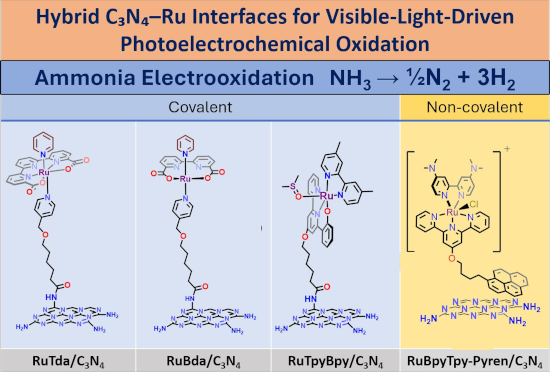
- design. First, the photosensitization principle: Light harvesting and catalytic chemistry are performed by distinct, spatially separated components that are electronically coupled at their interface. The antenna extends the absorption, the reaction centre does the chemistry. Second, the spatial
- “holy grail” of artificial photosynthesis. In artificial photoelectrocatalytic systems, light-driven reactions follow five sequential steps (Figure 2a): (1) Photon absorption by the semiconductor generates a bound electron–hole pair, or exciton; (2) the exciton undergoes dissociation into spatially
- material is a two-dimensional polymer composed of heptazine (tri-s-triazine) or s-triazine building block units linked by tertiary amines into extended graphitic sheets, with a bandgap of approximately 2.7 eV with optical absorption onset at 460 nm (Figure 2b), firmly within the visible range of the solar


Nanoparticle delivery systems for HIV pre-exposure prophylaxis (PrEP): advances and challenges
Beilstein J. Nanotechnol. 2026, 17, 839–853, doi:10.3762/bjnano.17.60
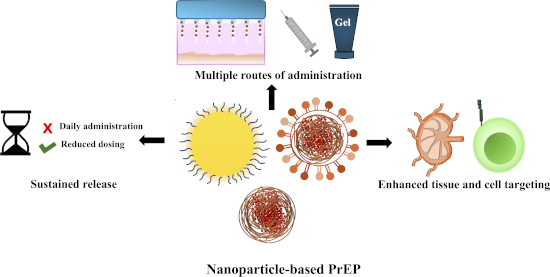
- nanoparticle containing gel could be a promising strategy for LA topical PrEP due to its ability to provide pH-responsive release of ARV drugs localized to the potential exposure site while minimizing systemic absorption of nanoparticles and drugs. In another recent approach to polymeric drug delivery, Zhang


Cross-scale design of chemosensor arrays: from molecular self-assembly in water to paper-based devices for metal ion detection
Beilstein J. Nanotechnol. 2026, 17, 828–838, doi:10.3762/bjnano.17.59
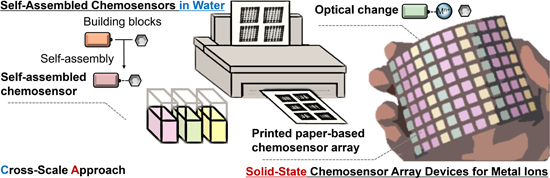
- , the catechol dye 1 showed blueshifts in the UV–vis absorption spectra with an increase in concentration of 5, which supported the spontaneous formation of a boronate ester (Figure 4A). The nitrophenyl moiety acting as an electron-withdrawing group of 5 increases the Lewis acidity of boronic acid and
- facilitates the formation of boronate esters [11]. Meanwhile, the colorimetric ensemble of 1 and 5 exhibited redshifts in the UV–vis absorption spectra in the presence of a target metal ion (Ni2+). The optical changes suggested the coordination between 1 and the metal ion, along with the release of 5
- ) (Figure 6B). In this assay, the input data for LDA were constructed using UV–vis absorption spectra of chemosensors upon analyte addition. The dimensionality of the input data depends on the number of chemosensors, analytes, and replicate measurements, which is decreased using LDA. Each axis (i.e., factor


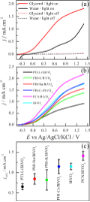
Glycerol photoelectrochemical oxidation reaction at carbon nitrides/BiVO4 materials
Beilstein J. Nanotechnol. 2026, 17, 806–817, doi:10.3762/bjnano.17.57
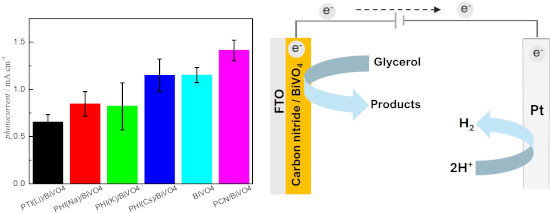
- been pointed out as a promising material, as it presents high chemical stability and a wide absorption range of solar radiation [8][9][10]. To overcome the limitations associated with the low electrical conductivity of BiVO4, sluggish surface kinetics and the recombination of electron–hole pairs [11
- lattice. Meanwhile, PTI consists of triazine units, forming a rigid and highly stable framework. This structural arrangement significantly improves charge mobility and light absorption, both of which are critical for catalytic activity [15]. Additionally, PHI and PTI possess an intrinsic ionic nature
- occurs by the following pathway: (i) Photon absorption by BiVO4, (ii) electron–hole (e-–h+) separation, (iii) electron(s) transfer from glycerol molecule to h+, and (iv) glycerol deprotonation yielding oxidized products as shown in Equation 1. The products usually described in the literature for this




Tuning the electronic properties of defect-rich MoS2
Beilstein J. Nanotechnol. 2026, 17, 796–805, doi:10.3762/bjnano.17.56
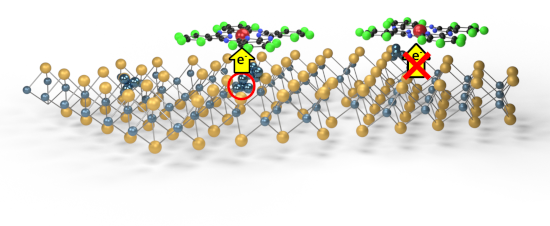
- . Keywords: angle-resolved photoelectron spectroscopy (ARPES); MoS2; phthalocyanine; X-ray absorption spectroscopy (XAS); X-ray photoelectron spectroscopy (XPS); Introduction In the pursuit for novel semiconducting materials, the group of transition metal dichalcogenides (TMDCs), including molybdenum
- fabrication of ultrafast photodetectors [4][5]. To tune their electronic structure for such applications, the adsorption of organic molecules is a versatile strategy [6][7], resulting, for example, in dipole-induced doping or (complex) charge transfer [8]. Photoelectron spectroscopy (PES), X-ray absorption


Tailoring Ag–Pt nanoalloys through solid-state dewetting: structural and optical insights
Beilstein J. Nanotechnol. 2026, 17, 748–759, doi:10.3762/bjnano.17.52

- to its high gas-absorption capacity, making it highly relevant for catalytic applications. According to phase diagrams, bulk Ag–Pt bimetallic systems exhibit a large miscibility gap at temperatures below approximately 1190 °C, allowing alloy formation only at very high atomic concentrations of either
- from the intrinsic electronic properties of platinum, whose Fermi level lies close to partially filled d-states. These d-electron transitions strongly enhance interband absorption, leading to damping of interband sp excitations and broadening of the resonance band. In consequence, it causes an increase
- macroscale. This is particularly important when considering potential applications of such nanoalloys, for instance, in catalysis or nanosensing. The Ag–Pt system is particularly noteworthy because of its high gas absorption capacity, making it highly relevant for catalytic applications. In this study, a




Environmental applications of silver nanoparticles: state-of-the-art review and emerging trends
Beilstein J. Nanotechnol. 2026, 17, 697–736, doi:10.3762/bjnano.17.49
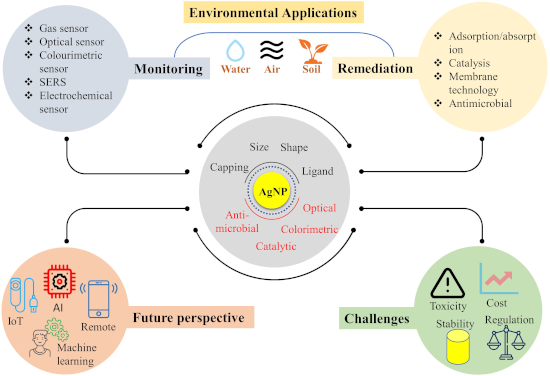
- convenient technique for monitoring the formation of AgNPs via size- and shape-dependent absorption bands arising from LSPR upon light excitation [50]. This study also highlighted that small spherical AgNPs were highly antibacterial against Pseudomonas aeruginosa and Escherichia coli compared to larger and
- surface functionalization with molecules of interest. However, two separate cuvettes were used for the measurement, and the absorption coefficient (k = 3.99) and refractive index (n = 0.135) of AgNPs need to be added. In addition, a similar principle was employed by the nanoparticle tracking analyser
- technique can detect environmental contaminants using AgNPs as the probe. The ICPMS (Inductively Coupled Plasma Mass Spectrometry) and AAS (Atomic Absorption Spectroscopy ) were used to measure unknown metal (Ag) content by plotting linear curves using the known Ag standard [49]. Electrochemical techniques


Molecular engineering of individual dye-based nanoparticle photostability for ultrabright two-photon fluorescence
Beilstein J. Nanotechnol. 2026, 17, 688–696, doi:10.3762/bjnano.17.48
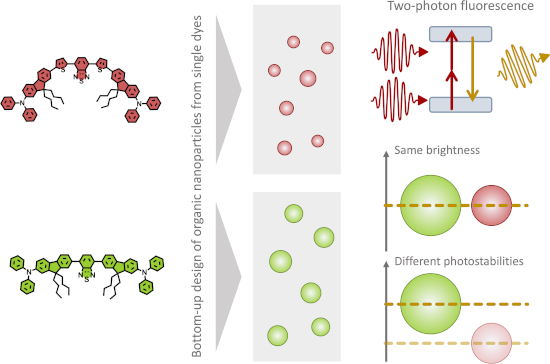
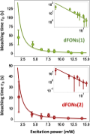
- nanoparticles allowed for an estimation of their two-photon absorption cross sections, which were found to be consistent with ensemble values when taking into account a local-field correction. Time-resolved experiments further revealed that nanoparticles with the highest absorption cross section photobleach
- significantly faster, confirming the trade-off between absorption efficiency and photostability. These results demonstrate that the photophysical behavior of dFONs can be rationally engineered at the molecular level and provide design principles for the development of optimized organic nanoparticles for
- hydrophobic dye molecules. Their most notable asset is their exceptional brightness, which is the product of their one- or two-photon absorption cross sections, their fluorescence quantum yield, and the number of dye molecules per nanoparticle [1]. Thanks to the ultimate confinement of a large number of dye


Decontamination from water pollutants and pathogens by electrospun nanofibers doped with heavy-atom-free borafluorene-BODIPY photosensitizers
Beilstein J. Nanotechnol. 2026, 17, 668–682, doi:10.3762/bjnano.17.46
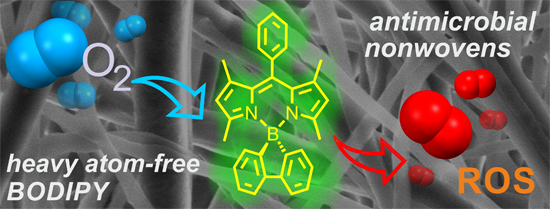
- -indacene and its derivatives) [7][8][9][10][11][12][13] have attracted considerable interest due to their advantageous properties, including strong light absorption, facile synthesis, and high structural tunability [14][15][16]. Yet, the main design strategy for photosensitizing BODIPYs is to incorporate
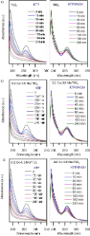
- , the absorbance spectra of all materials are relatively similar and closely align with the absorption maximum observed for the dilute solution in dichloromethane (DCM), but they display the band broadening characteristic of solid-state samples (Figure 4a). The emission spectra of the mats are slightly
- 1 in the mats. The absorbance spectra of the 1(0.15 wt %)@PCL and 1(0.50 wt %)@PCL are generally similar; however, for 1(1.00 wt %)@PCL, the absorption band is significantly broadened, accompanied by a pronounced intensity increase in the right-band shoulder (Figure 4c). This spectral change is also



Cellulose as a photocatalyst support material: extraction, structural features, and environmental applications
Beilstein J. Nanotechnol. 2026, 17, 635–652, doi:10.3762/bjnano.17.44
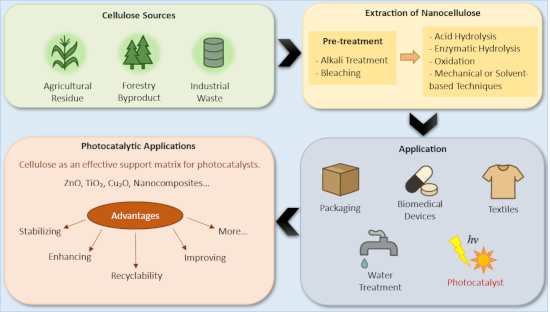
- quality and performance of the final product, making cellulose a critical factor in determining paper characteristics. More recently, bacterial cellulose has emerged as a natural material of particular interest due to its eco-friendly production process, low cost, strong water absorption, high
- enhancing photocatalytic performance by promoting charge separation, supporting surface functionalization, and improving light absorption, while one of its most valuable contributions lies in reducing the recombination of photogenerated electron–hole pairs. Its large surface area further helps stabilize
- significantly reduces its effectiveness under visible light, which represents nearly 45% of the solar spectrum. To address these challenges, researchers have developed a variety of modification strategies and hybrid approaches aimed at enhancing the visible light absorption of TiO2 and suppressing electron–hole


Two-step laser synthesis of Ag@TiO2 nanomaterials for the photocatalytic degradation of rhodamine B
Beilstein J. Nanotechnol. 2026, 17, 622–634, doi:10.3762/bjnano.17.43
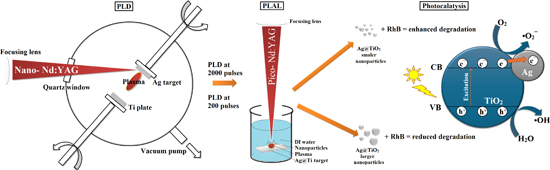
- resonance effects and facilitates the formation of Schottky barriers at the metal–semiconductor interface, both of which contribute to an extended light absorption range and enhanced charge carrier separation. The improved activity is primarily attributed to the narrowing of TiO2’s effective bandgap and the
- , extending light absorption toward the visible region [12] and enabling efficient activity under visible light. In sum, laser-synthesized Ag@TiO2 nanoparticles uniquely combine structural purity and optical enhancement, positioning them as superior candidates for solar-assisted photocatalytic applications
- a state of initial instability. Influence of Ag on the bandgap energy of TiO2 UV–vis spectroscopy was employed to investigate the effect of Ag doping on TiO2 and to determine the bandgaps of both TiO2 and Ag@TiO2 samples. Figure 7a displays the absorption spectra of TiO2 and Ag-modified TiO2 samples


Recent progress in enhancing built-in electric fields of perovskite solar cells via junction engineering
Beilstein J. Nanotechnol. 2026, 17, 602–621, doi:10.3762/bjnano.17.42
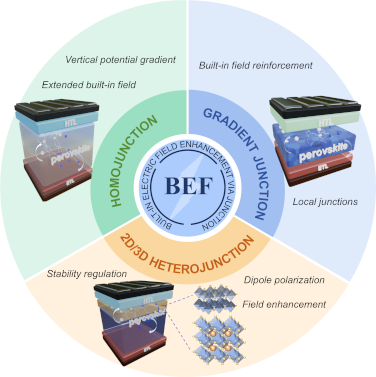
- ; junction; perovskite solar cells; Introduction Driven by the global push for carbon neutrality, next-generation high-efficiency and low-cost photovoltaic technologies have gained increasing attention. Due to their high absorption coefficients, long carrier diffusion lengths, tunable bandgaps, and solution
- interfacial compatibility are critical factors governing device performance [3][22][23]. Compared with organic hole transport layers (HTLs) such as Spiro-MeOTAD [24], PEDOT:PSS [25], and PTAA [26], which are prone to moisture absorption and exhibit poor thermal stability, inorganic materials such as CuO [27
- , establish or extend the BEF via interfacial defect passivation and energy-level cascading, and, on the other hand, retain the high carrier mobility and strong light absorption of the 3D bulk, which has made this approach a research focus in recent years [59][60]. However, the effectiveness of this strategy




Impacts of annealing on structural and photophysical properties of zinc phthalocyanine adsorbed on graphene
Beilstein J. Nanotechnol. 2026, 17, 576–585, doi:10.3762/bjnano.17.39
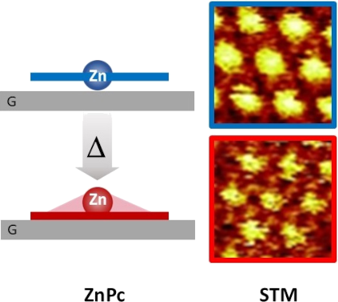
- ), a well-known family of organic semiconductors, have been the subject of intensive research [15]. This family of molecules offers many advantages for industrial applications such as nontoxicity, thermal and chemical stability, and strong optical absorption [16][17]. It has also become a paradigm in
- variations in phthalocyanine-based materials can strongly impact their absorption and luminescence spectra, in particular by allowing or not the formation of intermolecular Frenkel charge-transfer excitons [23]. 2D assemblies of self-organized adsorbed conjugated molecules on graphene has attracted
- particular interest since they permit to focus on the specific properties of the molecules that are in direct contact with graphene. These studies benefit from in-depth analysis offered by scanning probe techniques combined with measurements of optical absorption [24][25], photoluminescence [26], or graphene


Synthesis of Cu–Mo/TiO2 and Co–Mo/TiO2 photocatalysts for the efficient degradation of organic pollutants in water
Beilstein J. Nanotechnol. 2026, 17, 559–570, doi:10.3762/bjnano.17.37
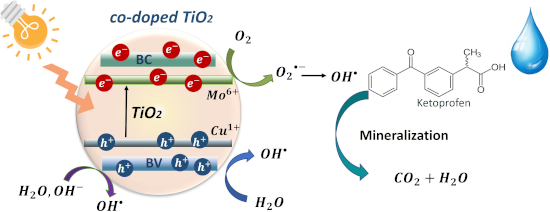
- the optical bandgap, broaden the light absorption range, and enhance the quantum efficiency [4]. However, the partially occupied impurity states generated can act as recombination centers for photoexcited carriers, leading to band-to-band recombination [3]. To prevent charge recombination effects, the
- into the semiconductor matrix. The incorporation of co-dopants results in the formation of heterostructures with different electronic structures compared to the TiO2 structure, which promotes charge separation and visible light absorption [6]. The incorporation of two types of cations into the TiO2
- can improve light absorption and photocatalytic activity of the material through the generation of oxygen vacancies, which act as electron traps [12]. The Mo6+ ion has a radius similar to that of Ti4+; thus, it is ideal for introduction into the TiO2 lattice without causing significant disturbances



Advances in nanotechnology applied to natural products
Beilstein J. Nanotechnol. 2026, 17, 555–558, doi:10.3762/bjnano.17.36
- physicochemical stability, increase apparent bioavailability, and modulate biological responses. In systemic delivery, microemulsions have been reported to enhance the absorption and therapeutic performance of natural compounds, with associated reductions in metabolic alterations and oxidative stress in
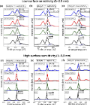
Probing internal continua and atomic ultrafast charge transfer within size-controlled nanoparticles by post-collision interaction in core-hole clock spectroscopy
Beilstein J. Nanotechnol. 2026, 17, 505–514, doi:10.3762/bjnano.17.33
- properties of QDs such as absorption wavelength are collective properties of the entire system and are primarily determined by the particle size [8]. Advances in synthesis techniques have allowed for precise control over QD size, making these properties reliably tunable [9]. Other properties, such as
- characterization of the QDs with UV–vis absorption spectroscopy, hard X-ray photoelectron spectroscopy (HAXPES), and near-edge X-ray absorption fine structure (NEXAFS) spectroscopy has been performed by us to verify the size-dependence of quantum confinement (see further details in Supporting Information File 1
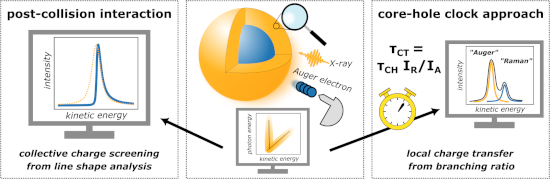
- materials [24][25][26], nanoparticles [27], and matrix-embedded polymers [28]. Results and Discussion Figure 1a shows S KL2,3L2,3 Auger electron spectra at different photon energies around the absorption edge of S 1s electrons as a color-coded map. The intensity ratio between the Raman and Auger channels is