
Search results
Search for "material" in Full Text gives 1946 result(s) in Beilstein Journal of Nanotechnology. Showing first 200.
Enhanced erosion resistance and radiation stability of WC–WO3 nanocomposite films under 100 keV Kr+ ion irradiation
Beilstein J. Nanotechnol. 2026, 17, 922–934, doi:10.3762/bjnano.17.65
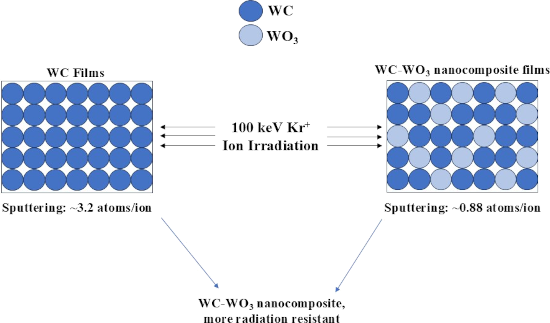
- /bjnano.17.65 Abstract Plasma-facing components (PFCs) in fusion reactors are exposed to extreme radiation and thermal environments, leading to material degradation processes such as sputtering erosion and amorphization. This study investigates and compares the erosion behaviour of tungsten (W) in
- experimental sputtering trends. Furthermore, preferential sputtering of lower-Z elements (C and O) was observed in both material systems. Glancing incidence X-ray diffraction analysis revealed post-irradiation grain growth in WC–WO3 films, while scanning electron microscopy results show morphological changes
- combination of hardness and resistance to wear, corrosion, and radiation makes WC a critical material for advanced structural and protective coating applications, including cutting tools, wear-resistant coatings, and plasma-facing components in fusion reactors [7][8][9]. It is being investigated for



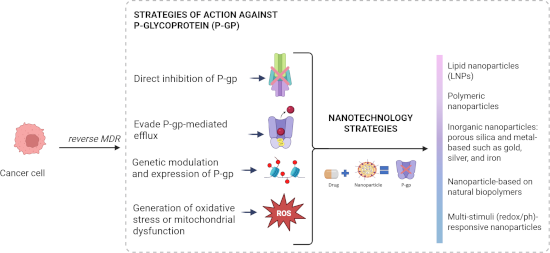
Nanocarrier strategies to overcome P-glycoprotein-mediated drug resistance in cancer therapy
Beilstein J. Nanotechnol. 2026, 17, 882–921, doi:10.3762/bjnano.17.64


He+ FIBID-fabricated 3D AFM tip architectures: an exploratory study of hollow pillars, helices, and spirals
Beilstein J. Nanotechnol. 2026, 17, 863–871, doi:10.3762/bjnano.17.62
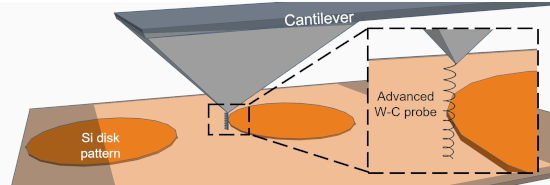
- , tip–sample convolution, mechanical stability, and, ultimately, the reliability of the measured signal. For this reason, the fabrication of non-conventional AFM probes has attracted increasing interest, particularly in the context of focused-beam nanomanufacturing, where the geometry and material
- ][16][17][18][19], or tungsten-based precursors [20][21]. The resulting probes can be attractive because they allow for site-specific growth directly on the cantilever and can, in principle, combine tailored geometry with functional material properties. For instance, cobalt- and iron-based deposits
- developed, including both in situ and ex situ approaches [22][24][26][27][28][29][30][31]. While these methods can significantly improve material purity and functional properties, their application to AFM tips requires particular consideration. In tip-based applications, post-deposition treatments may alter


Light-driven ammonia electrooxidation via carbon nitride–ruthenium molecular interfaces
Beilstein J. Nanotechnol. 2026, 17, 854–862, doi:10.3762/bjnano.17.61
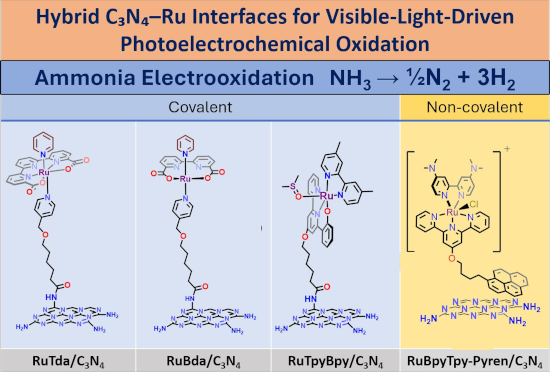
- , nanoparticles, and carbon supports) are manufactured into electrodes or serve as the electrode itself, industrially scalable, but with poorly understood active sites and inactive bulk material [1][2][3][4][5]. In practice, however, bridging these two families is not straightforward. A homogeneous catalyst
- organisation principle: Efficient photochemistry requires the light-generated charge carriers to be separated at an interface and driven to specific catalytic sites before they recombine. Achieving these two principles in a synthetic, scalable, and inexpensive material is the central aspiration, if not the
- material is a two-dimensional polymer composed of heptazine (tri-s-triazine) or s-triazine building block units linked by tertiary amines into extended graphitic sheets, with a bandgap of approximately 2.7 eV with optical absorption onset at 460 nm (Figure 2b), firmly within the visible range of the solar


Nanoparticle delivery systems for HIV pre-exposure prophylaxis (PrEP): advances and challenges
Beilstein J. Nanotechnol. 2026, 17, 839–853, doi:10.3762/bjnano.17.60
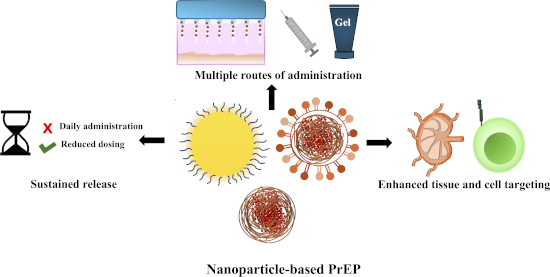
- , mechanical properties, and surface composition that need to be considered in the design of the nanoparticles. The choice of core material plays a pivotal role in defining the physicochemical properties, release behavior, biocompatibility, and clinical feasibility of nanoparticle formulations. Various
- material classes have been explored for HIV PrEP applications, each offering unique advantages and limitations depending on the route of administration, duration of action, and drug type. In this review, we focus on nanoparticle delivery platforms for PrEP. To better understand the landscape of
- nanoparticle-based HIV prophylaxis delivery strategies, we have broadly categorized existing platforms into four main categories based on their core material (Figure 1). (1) Polymeric nanoparticles: These nanoparticles are designed from biodegradable polymers such as poly(lactic-co-glycolic acid) (PLGA


Sustainable fabrication of 2D-based devices through reuse of substrates with microfabricated electrodes
Beilstein J. Nanotechnol. 2026, 17, 818–827, doi:10.3762/bjnano.17.58
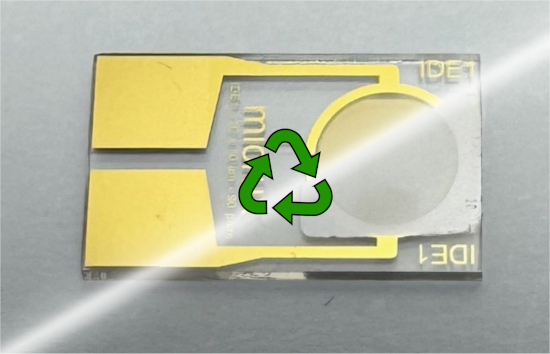
- signatures of the transferred 2D material, retain a largely homogeneous surface-potential distribution, and preserve comparable electrical performance after reuse. By extending the lifetime of pre-patterned chips, this approach can reduce substrate consumption and lower the cost of 2D device prototyping
- reliable method for cleaning and reusing these devices would be valuable for achieving more cost-effective 2D material-based device fabrication. Several recent studies have explored substrate reuse strategies to mitigate fabrication costs and improve sustainability in device prototyping [16][17][18]. For
- the substrate surface, allowing for their application in reusable biosensors [21]. A different approach to reuse the substrates was reported by Paupy et al. by developing wafer-scale detachable monocrystalline germanium nanomembranes for III–V material growth and substrate reuse, significantly


Glycerol photoelectrochemical oxidation reaction at carbon nitrides/BiVO4 materials
Beilstein J. Nanotechnol. 2026, 17, 806–817, doi:10.3762/bjnano.17.57
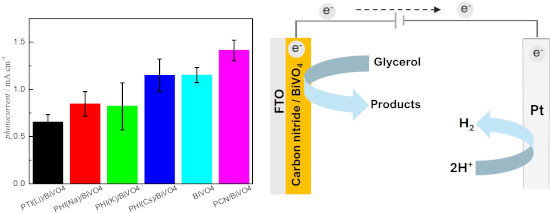
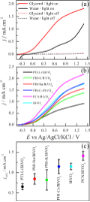
- hydrogen electrode (RHE) upon glycerol addition. Clearly, the type of nitride employed in the heterojunctions influences the activity of the material for glycerol oxidation, with the photocurrent at 1.23 V vs RHE following the order: PCN/BiVO4 > BiVO4 ≈ PHI-Cs/BiVO4 > PHI-K/BiVO4 ≈ PHI-Na/BiVO4 > PTI(Li
- water oxidation reaction, as well as the material stability at the anodes, must be overcome for this technology to be successfully transferred to end users [5]. To address these issues, several efforts have been made to develop efficient catalysts to improve the kinetics of the water oxidation reaction
- been pointed out as a promising material, as it presents high chemical stability and a wide absorption range of solar radiation [8][9][10]. To overcome the limitations associated with the low electrical conductivity of BiVO4, sluggish surface kinetics and the recombination of electron–hole pairs [11





Tuning the electronic properties of defect-rich MoS2
Beilstein J. Nanotechnol. 2026, 17, 796–805, doi:10.3762/bjnano.17.56
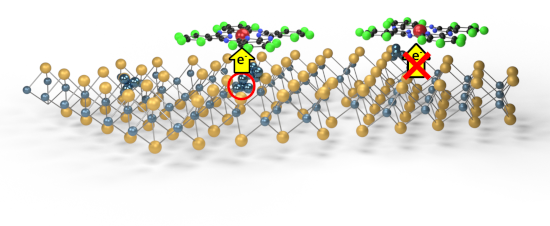
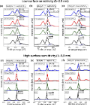
- structural defects significantly affect the electronic properties of the material. The present study utilizes angle-resolved photoelectron spectroscopy (ARPES) and surface-sensitive core-level spectroscopy (SXPS, XAS) with synchrotron radiation to investigate the interfaces between defect-rich MoS2 and


Substrate-dependent pore formation in molybdenum disulfide monolayers under ion irradiation
Beilstein J. Nanotechnol. 2026, 17, 769–780, doi:10.3762/bjnano.17.54
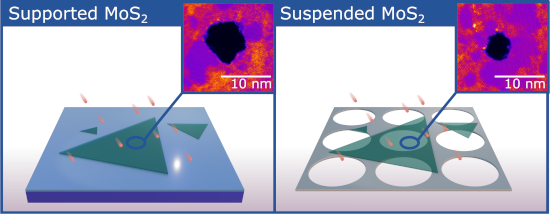
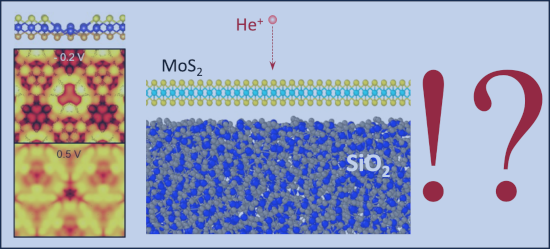
- formation have largely focused on suspended 2D materials [13][25][28][29], practical applications typically require the 2D material to be supported by a substrate. Direct investigation of ion-irradiated supported 2D materials, however, remains experimentally challenging for several reasons. For example
- supported samples that suggested pronounced topographic changes but could not resolve the defect structure [40][41], our STEM analysis shows that irradiation on SiO2 produces well-defined, pore-shaped defects with no obvious long-range lattice distortion of the surrounding material (see Supporting
- of the target 2D material, independent of the materials electronic properties. In the case of this study, we therefore expect to deliver potential energy in the range of ≈12–36 keV to the monolayer. Linking the charge exchange to pore formation, Grossek et al. [44] introduced a model for nanopore


Tailoring Ag–Pt nanoalloys through solid-state dewetting: structural and optical insights
Beilstein J. Nanotechnol. 2026, 17, 748–759, doi:10.3762/bjnano.17.52

- partial sublimation or evaporation of the material at 700 °C. Similar triangular flakes have been previously reported during the formation of, for example, Ag [48], MoS2 [49], or WS2 [50]. Additionally, the chemical composition of the nanostructures manufactured at 700 °C was measured by EDS. The spectrum
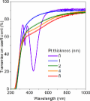
- systematically adjusting the elemental composition, we achieved controlled modulation of the plasmonic band position [25]. On the other hand, in the Ag–Cu system, the material behaved as a nanocomposite, with two clearly distinguishable resonance peaks attributable to the individual components [26]. From Figure




Environmental applications of silver nanoparticles: state-of-the-art review and emerging trends
Beilstein J. Nanotechnol. 2026, 17, 697–736, doi:10.3762/bjnano.17.49
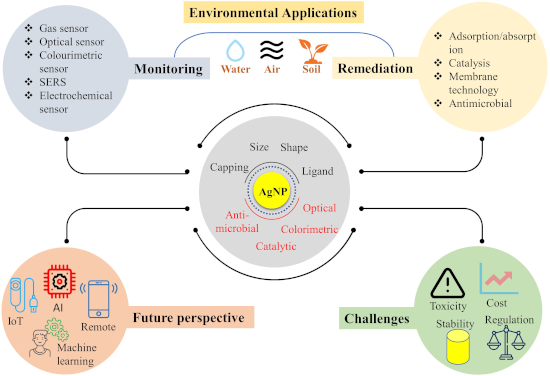
- used as an adsorbent material for removing Nile blue dye, with 94% of the dye being removed within 60 min [27]. Caravaca et al. used magnetic nanoparticles coated with AgNPs for amoxicillin removal from water, where 100% removal was achieved at different nanocomposite concentrations [28]. The removal
- . Nanosilver has emerged as a promising material for water treatment, offering efficient and cost-effective solutions for removing, monitoring, and disinfecting water sources [71]. Nanosilver’s catalytic and antimicrobial properties make it a highly efficient material in treating water pollutants. 3.1.1
- [146]. Nanosilver has emerged as a promising material for air purification and atmospheric remediation owing to its strong photocatalytic, antimicrobial and adsorbing properties. Nanosilver is often used in air filters and coatings to remove VOCs, PAHs, PM, and other contaminants. 3.2.1 Air


Protein-based custom-designed molecular nanotraps for biomedical applications
Beilstein J. Nanotechnol. 2026, 17, 683–687, doi:10.3762/bjnano.17.47
- polymer matrices that closely mimic natural recognition entities [2]. MIP technology is a strategy specifically designed to mold selective binding sites in a material through a template-assisted synthesis [3]. The specific recognition is achieved through a polymer synthesis that occurs in the presence of
- the desired molecule, which acts as a template. As a result, binding cavities with stereochemical complementarity to the molecular targets are formed in the nascent material. Particular interest was triggered by the possibility of preparing nanosized MIPs, such as MIP nanoparticles, abbreviated either
- building blocks, whereas structural organization emerges at the material level through entanglement and packing. The resulting constructs exhibit defined shapes and three-dimensional architectures, whose collective and emergent properties may be described within the framework of protein-based metamaterials

Decontamination from water pollutants and pathogens by electrospun nanofibers doped with heavy-atom-free borafluorene-BODIPY photosensitizers
Beilstein J. Nanotechnol. 2026, 17, 668–682, doi:10.3762/bjnano.17.46

- successfully incorporated into electrospun polymeric nanofibers. Optimization of the material composition revealed that polycaprolactone (PCL), an FDA- and EMA-approved, biodegradable, easily accessible, and cost-efficient polymer, doped with BODIPY at a concentration of only 0.15 wt %, is an efficient
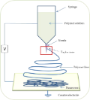
- -scale industrialized production of membrane filters [40][41][42][43][44][45][46][47][48][49]. We optimized electrospinning conditions and material composition using three different polymers, namely, poly(methyl methacrylate) (PMMA), polycaprolactone (PCL), and polystyrene (PS), doped with various
- Staphylococcus aureus. Experimental Materials BODIPY photocatalyst 1 was already available from our previous studies [34]. The purity of the material was confirmed by a repeated measurement of the 1H NMR spectrum (Figure S1, Supporting Information File 1). Cimetidine, ranitidine, and propranolol were purchased



Cellulose as a photocatalyst support material: extraction, structural features, and environmental applications
Beilstein J. Nanotechnol. 2026, 17, 635–652, doi:10.3762/bjnano.17.44
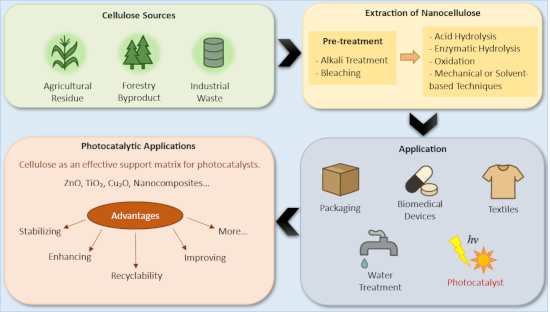
- promising candidate for sustainable material development across various industries. This review focuses on the extraction and isolation of cellulose from different types of biomass waste, including agricultural residues, forestry byproducts, and industrial waste. Several conventional and advanced methods
- cellulose’s structural properties and photocatalytic functionality offers a green and efficient solution to pressing environmental challenges. Overall, this review underscores the importance of cellulose not only as a raw material but also as an active component in next-generation, eco-friendly photocatalytic
- chemical properties [5]. Cellulose occurs naturally in cotton and wood, where it has long provided essential resources for clothing and shelter. Also, through chemical and mechanical processing, pulp fibers can be extracted from these sources to serve as the primary raw material for paper production. Pulp


Two-step laser synthesis of Ag@TiO2 nanomaterials for the photocatalytic degradation of rhodamine B
Beilstein J. Nanotechnol. 2026, 17, 622–634, doi:10.3762/bjnano.17.43
- the most extensively studied photocatalyst owing to its exceptional chemical stability, earth‐abundance, low cost, and benign (non‐toxic) nature [1][2][3]. These attributes, along with its strong oxidative power and high refractive index, make TiO2 an attractive and versatile material for UV–vis
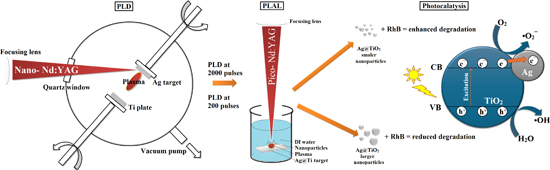
- ). The photocatalytic degradation of RhB without a photocatalyst was minimal after 300 min of exposure to UV irradiation using a 300 W Osram Ultra-Vitalux lamp. Similar results were obtained for PLAL TiO2 nanoparticles. These results are correlated to the amount of the ablated material in these three
- molecules. Together, these effects allow the 2000p material to use light more effectively and degrade RhB faster than the 200p sample. Furthermore, the difference in efficiency between the 200p and 2000p NPs samples confirms the importance of controlling the number of laser pulses to optimize the structure


Recent progress in enhancing built-in electric fields of perovskite solar cells via junction engineering
Beilstein J. Nanotechnol. 2026, 17, 602–621, doi:10.3762/bjnano.17.42
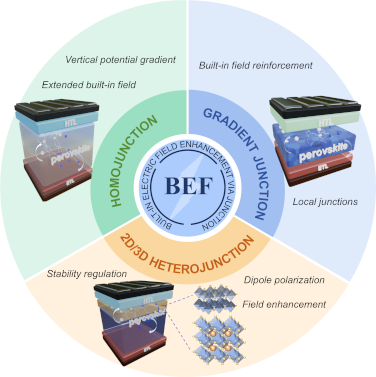
- groundwork for the present review. Homojunctions focus on constructing continuous band bending and Fermi level gradients within the same material system using methods such as doping, surface reconstruction, or orientation induction, thereby smoothly extending the BEF from the interface into the bulk. Their
- introduce additional internal potential gradients within the material, thereby increasing the driving force for charge carrier separation and transport [87]. They also help mitigate common failure mechanisms such as nonradiative recombination and ion migration. However, the practical impact of polarization




Towards targeted drugs and next generation of nanomedicines
Beilstein J. Nanotechnol. 2026, 17, 598–601, doi:10.3762/bjnano.17.41
- can be targeted to the area of interest, even if the material itself may also reach other areas. Endogenous stimuli are characteristics of the targeted site that distinguish it from the healthy tissue, such as the lower pH or lower oxygen content of certain tumor areas [15]. External stimuli include
Probing tribological evolution in atomically thin MoS2 at different scales
Beilstein J. Nanotechnol. 2026, 17, 586–597, doi:10.3762/bjnano.17.40
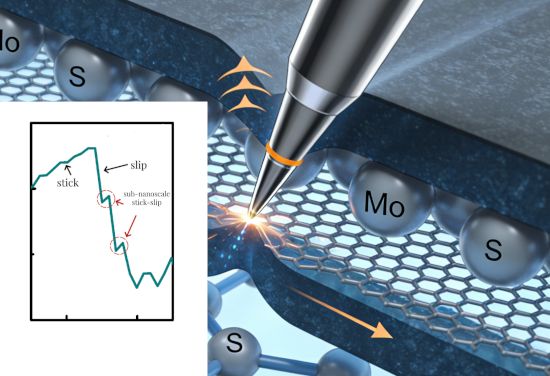
- -nanoscale stick–slip motion and reduces slip distance. Furthermore, the load-dependent sub-nanoscale stick–slip motion is closely correlated with changes in tip–MoS2 contact area and contact geometry, both modulated by load and MoS2 layer thickness. These findings advance 2D material tribology from the
- loads. We experimentally determined the sub-nanoscale stick–slip motion and quantified its dependence on load and layer thickness. The corresponding mechanisms were proposed to explain the friction behaviors. This work bridges the gap between MD simulations and experiments, advancing 2D material
- advance the understanding of 2D material tribology from the nanoscale to the sub-nanoscale, providing a framework for predicting and controlling friction in atomically thin materials. The load-layer thickness phase diagram for MoS2 friction behaviors offers critical guidance for the development of low


Impacts of annealing on structural and photophysical properties of zinc phthalocyanine adsorbed on graphene
Beilstein J. Nanotechnol. 2026, 17, 576–585, doi:10.3762/bjnano.17.39
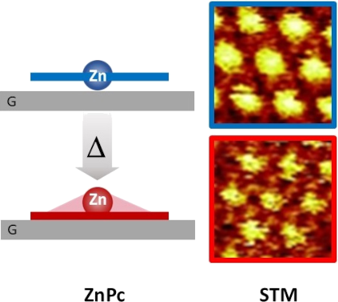
- formation towards 3D self-assembly. Keywords: graphene; optical spectroscopy; organic semiconductors; phthalocyanine; scanning tunneling microscopy; self-assembly; Introduction Combining the properties of graphene and molecular semiconductors in a given material organized at the molecular scale appears as


Laser–material interactions in liquids for the synthesis of nanomaterials: current status and perspectives
Beilstein J. Nanotechnol. 2026, 17, 571–575, doi:10.3762/bjnano.17.38
Synthesis of Cu–Mo/TiO2 and Co–Mo/TiO2 photocatalysts for the efficient degradation of organic pollutants in water
Beilstein J. Nanotechnol. 2026, 17, 559–570, doi:10.3762/bjnano.17.37
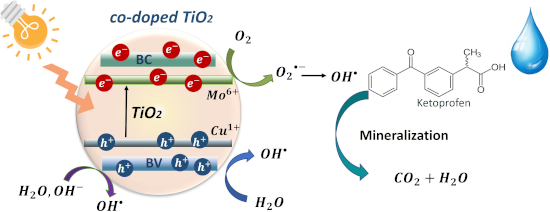
- lattice and the effects on photocatalytic performance have been reported in several studies [7][8][9][10]. Crucial factors for successfully co-doping a material are the selection of compatible co-dopants and the synthesis method to introduce the dopants [11]. The main objective of working with metal/metal
- can improve light absorption and photocatalytic activity of the material through the generation of oxygen vacancies, which act as electron traps [12]. The Mo6+ ion has a radius similar to that of Ti4+; thus, it is ideal for introduction into the TiO2 lattice without causing significant disturbances
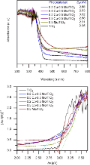
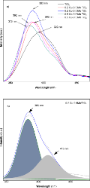
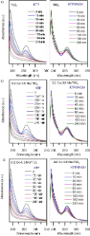
- , resulting in 53% and 47% for the anatase and rutile phases, respectively. Figure 1a also shows the diffraction pattern of the 0.5 Mo/TiO2 material, which revealed that the Mo in-situ incorporation into the TiO2 stabilizes the anatase phase. All co-doped TiO2 materials exhibit diffraction peaks corresponding



Advances in nanotechnology applied to natural products
Beilstein J. Nanotechnol. 2026, 17, 555–558, doi:10.3762/bjnano.17.36
- nanofibers, have been proposed for the simultaneous transport of hydrophilic and lipophilic bioactives, leveraging compartmentalization to combine material advantages and enable multifunctional controlled-release strategies [25]. Beyond organic nanocarriers, research has increasingly extended to inorganic
Electrochemical determination of ciprofloxacin using a MIL-101/reduced graphene oxide-modified electrode
Beilstein J. Nanotechnol. 2026, 17, 541–554, doi:10.3762/bjnano.17.35
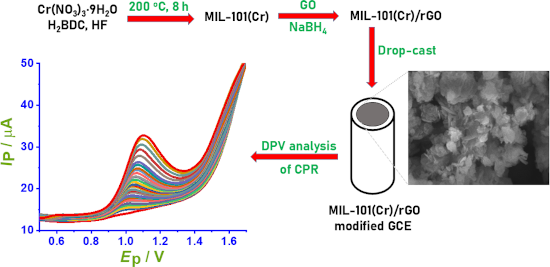
- electrochemical performance of the composite material. This combination can promote efficient analyte adsorption and fast charge transfer at the electrode interface. Consistent with this idea, Gu et al. reported that MIL-101/rGO composites exhibit enhanced electrocatalytic activity toward the reduction of
- morphology that offers a large surface area and a conductive substrate for material deposition. The pristine MIL-101 (Figure 4b) consists of irregular polyhedral particles that tend to aggregate, forming relatively compact clusters. In contrast, the MIL-101/rGO composite (Figure 4c) reveals that MIL-101
- composite material. Electrochemical determination of ciprofloxacin (CPR) at MIL-101/rGO/GCE Electrochemical behavior of CPR Figure 5a compares the cyclic voltammograms of CPR recorded at different electrodes in 0.1 M BR buffer (pH 4) (see Supporting Information File 1, Figure S2). A weak and poorly defined


Upcycling agroindustrial waste into graphene oxide supports for gold nanoparticles: toward sustainable nanomaterials
Beilstein J. Nanotechnol. 2026, 17, 489–504, doi:10.3762/bjnano.17.32
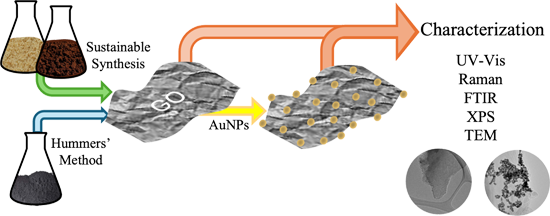
- heated in air to 300 °C at a heating rate of 10 °C·min−1, where it was held for 10 min. The resulting carbonaceous material was recovered and transferred into a 250 mL round-bottom flask containing 60 mL of 50% (v/v) nitric acid to remove residual ionic species introduced by ferrocene. The suspension was
- ) using a photoreduction method adapted from Hernández-Sánchez and coworkers [30]. 1 mg of the corresponding GO material was dispersed in 80 mL of a 1 M methanol–water solution by ultrasonication. Once the dispersion was stabilized, 58.4 mg of citric acid were added as both reducing and stabilizing agent
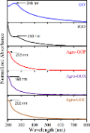
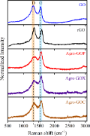
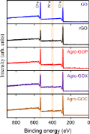
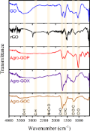
- material [39]. In the GO spectrum, the D and G bands are observed at 1320.4 and 1555.9 cm−1, respectively, with an ID/IG ratio of 1.07. This relatively high ratio indicates a high density of structural defects and a significant degree of oxidation. In contrast, the rGO sample shows a ratio of ID/IG = 1.10


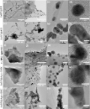

Defects and defect-mediated engineering of two-dimensional materials: challenges and open questions
Beilstein J. Nanotechnol. 2026, 17, 454–488, doi:10.3762/bjnano.17.31
- between different growth methods, for example, chemical vapor transport vs molecular beam epitaxy in terms of pressures and growth temperatures. Generally, the thermodynamic conditions are ill-defined during growth, especially the chemical potentials of the material constituents are not well known, making
- formation of metastable defect complexes with sub-stoichiometric compositions, namely, the post-synthesis reaction of the 2D material with an element that is desired to be incorporated. This may be accomplished by modifying 2D sheets with vapor-deposited atoms, for example, the reaction of MoSe2 with excess
- evaporation of the material at the surface is ignored. The situation is different in 2D materials [74] as the concentration of intrinsic defects or impurities (e.g., oxygen in MoS2) can decrease at moderate-temperature annealing [75], but ablation of atoms at high temperatures cannot be ignored, and more