


Search results
Search for "membrane" in Full Text gives 562 result(s) in Beilstein Journal of Nanotechnology. Showing first 200.
Nanocarrier strategies to overcome P-glycoprotein-mediated drug resistance in cancer therapy
Beilstein J. Nanotechnol. 2026, 17, 882–921, doi:10.3762/bjnano.17.64
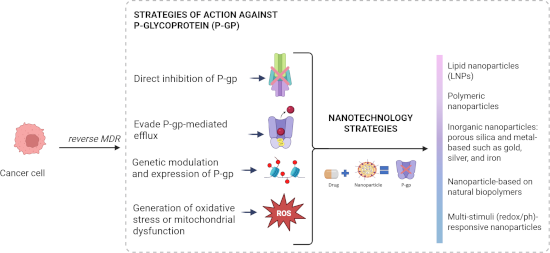
- inhibition of P-gp ATPase activity using small-molecule modulators such as quercetin, ᴅ-α-tocopheryl polyethylene glycol succinate, and tariquidar, (ii) circumvention of membrane efflux through receptor-mediated endocytosis, intracellular trafficking control, or tumor-responsive drug release, and (iii
- , drug detoxification, drug sequestration by lysosomes, overexpression of efflux transporters, and enhanced DNA repair, have become obstacles to cancer therapy [14][15][16]. Among these, elevated drug efflux via cell membrane transporters, particularly P-glycoprotein, has been extensively documented as
- reduces the cytosolic availability of chemotherapeutics independently of P-gp, but pH-responsive nanocarriers engineered for endosomal escape indirectly address this barrier. EMT-associated phenotypic shifts alter membrane composition and uptake pathways in ways that affect nanoparticle internalization


Light-driven ammonia electrooxidation via carbon nitride–ruthenium molecular interfaces
Beilstein J. Nanotechnol. 2026, 17, 854–862, doi:10.3762/bjnano.17.61
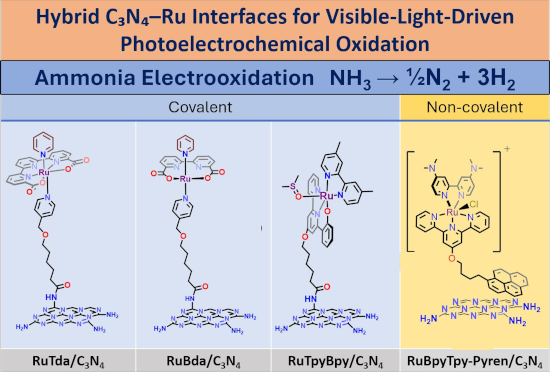
- architecture they arrived at contains design principles of elegance that chemists are only beginning to replicate [9]. In the thylakoid membrane of plant chloroplasts, light harvesting begins with antenna complexes, assemblies of pigment molecules, chlorophylls and carotenoids, arranged in a precisely ordered
- they reduce biological reductant NADP+ to NADPH, which powers carbon fixation. The protons liberated by water oxidation are used to drive ATP synthesis, and the oxygen released is the molecular oxygen that constitutes Earth’s atmosphere. The entire system is spatially organised within the membrane so


Nanoparticle delivery systems for HIV pre-exposure prophylaxis (PrEP): advances and challenges
Beilstein J. Nanotechnol. 2026, 17, 839–853, doi:10.3762/bjnano.17.60
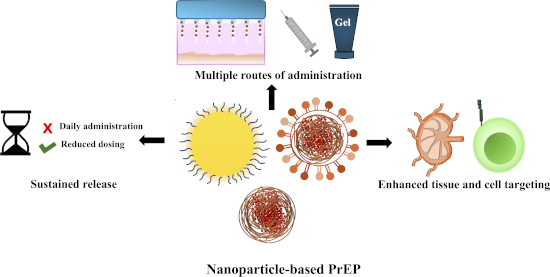
- systems, LBNPs in general allow for a higher flexibility in tuning surface charge and membrane composition to facilitate interactions with immune cells [56]. Both factors enhance the overall ability of targeted delivery. One example of surface functionalized LBNPs for targeted delivery are DRV-loaded SLNs
- were designed to improve delivery to HIV reservoirs [58]. In permeability studies, the nanoparticles showed a fourfold increase in transport across a Caco-2 cell membrane compared to plain drug solution. Furthermore, the peptide-grafted SLNs achieved enhanced cellular uptake in a CD4+ T cell model
- ’ intrinsic antiviral actions such as protease inhibition [72][73][74]. Some studies of the toxicity of MNPs have provided indications of mitochondrial dysfunction, increased membrane permeability, cellular damage, and oxidative stress in host cells in response to MNP exposure [75][76]. Silicon-based systems


Restorative potential of laser-synthesized silver nanoparticles with Salvia officinalis for periodontal disease treatment: an in vitro study
Beilstein J. Nanotechnol. 2026, 17, 781–795, doi:10.3762/bjnano.17.55
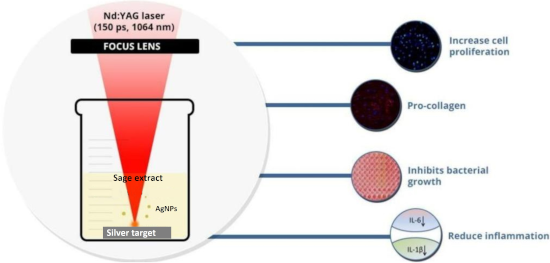
- AgNPs depends on their concentration but also on their size. Smaller nanoparticles exhibit a higher surface-area-to-volume ratio, which enhances their reactivity and interaction with bacterial cells. Moreover, reduced particle size enables more efficient penetration of the bacterial cell membrane
- nanoparticles. The superior antibacterial efficacy of SageAgNPs6mJ against the tested bacterial strains can be attributed to several mechanisms. Sage’s phenolic compounds, especially rosmarinic and caffeic acids, increase the antimicrobial activity through bacterial cell membrane damage and interaction with
- . Selective toxicity toward periodontal Gram-negative pathogens could originate from both structural and biochemical differences between prokaryotic and eukaryotic cells. Their negatively charged envelope enables electrostatic interaction with AgNPs, promoting membrane destabilization and their intake



Substrate-dependent pore formation in molybdenum disulfide monolayers under ion irradiation
Beilstein J. Nanotechnol. 2026, 17, 769–780, doi:10.3762/bjnano.17.54
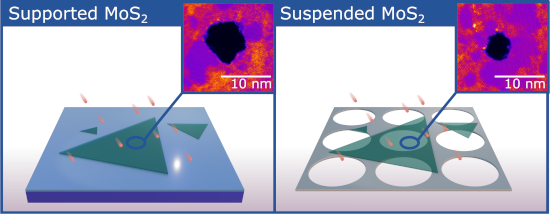
- deposition and subsequent dissipation are distributed across coupled layers. Moreover, we previously showed [13] that pore formation under SHI irradiation is strongly reduced in suspended membranes because part of the deposited energy is carried away by atoms and ions emitted from both sides of the membrane


Interface-engineered Caco-2 cell culture on a collagen-coated liquid–liquid interface in a microfluidic device
Beilstein J. Nanotechnol. 2026, 17, 760–768, doi:10.3762/bjnano.17.53
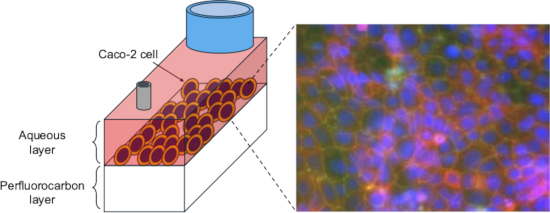
- relevant mechanical cues that are difficult to reproduce in conventional static culture systems [5][6][7]. Gut-on-a-chip platforms recapitulate the apical-basolateral compartmentalization of the human intestinal epithelium by dividing upper and lower microchannels with a solid porous membrane, upon which
- interfacial strategy into microfluidic cell culture systems may therefore offer an alternative to porous membrane-based designs and mitigate the inherent limitations of synthetic solid membranes in gut-on-a-chip platforms. Among candidate materials, perfluorocarbon liquids such as FC-43 are particularly


Environmental applications of silver nanoparticles: state-of-the-art review and emerging trends
Beilstein J. Nanotechnol. 2026, 17, 697–736, doi:10.3762/bjnano.17.49
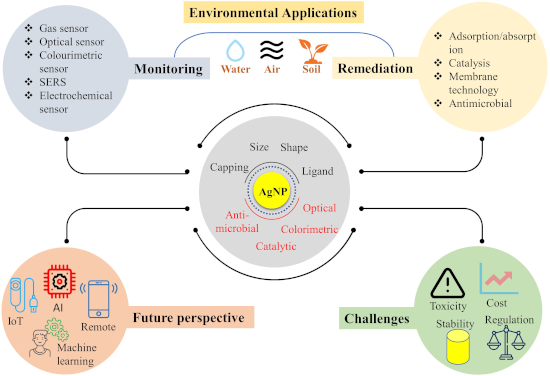
- ultrafiltration membrane technologies used for management of water pollutants. In addition, AgNPs-assisted nanosystems in fibrous filter membranes and photocatalytic composite coatings for the removal of volatile organic compounds, particulate matter, and gaseous pollutants are reviewed. Furthermore, AgNP
- , colourimetry, and fluorometry [18][19][20][21]. In addition, the enhanced antimicrobial activity of AgNPs can be used for water decontamination and is widely employed in membrane filtration technology [22]. AgNPs exhibited broad-spectrum antibacterial activity, encompassing both Gram-positive and Gram-negative
- , and photocatalytic degradation, in isolation. However, no single review has provided an integrated cross-domain treatment spanning sensing, photocatalysis, adsorption, membrane filtration, disinfection, and soil/agricultural applications within a unified mechanistic framework. The present review


Decontamination from water pollutants and pathogens by electrospun nanofibers doped with heavy-atom-free borafluorene-BODIPY photosensitizers
Beilstein J. Nanotechnol. 2026, 17, 668–682, doi:10.3762/bjnano.17.46
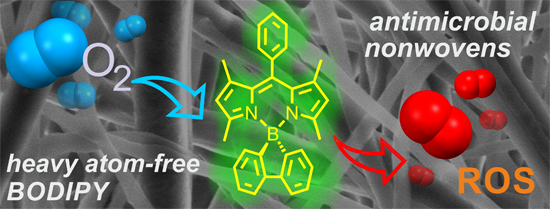
- -scale industrialized production of membrane filters [40][41][42][43][44][45][46][47][48][49]. We optimized electrospinning conditions and material composition using three different polymers, namely, poly(methyl methacrylate) (PMMA), polycaprolactone (PCL), and polystyrene (PS), doped with various



Cellulose as a photocatalyst support material: extraction, structural features, and environmental applications
Beilstein J. Nanotechnol. 2026, 17, 635–652, doi:10.3762/bjnano.17.44
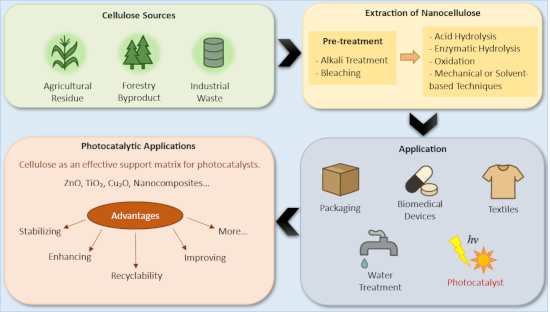
- immobilizing photocatalysts on membrane surfaces to create a polymer photocatalytic membrane matrix, which has shown strong effectiveness in degrading water contaminants [14]. They also prevent biofouling, a major problem in membrane separation. Scientists are increasingly combining cellulose with different
- through leaching while simultaneously expanding the range of practical applications. These combined benefits make photocatalytic polymer membranes highly promising, as they enhance both membrane filtration and photocatalytic degradation, creating a dual-action approach that significantly improves overall
- have become a central focus in advancing membrane technology for water treatment as conventional membranes, though vital for protecting aquatic life, often struggle to meet the rising environmental and social demands; one effective strategy to overcome these limitations is through membrane modification


Synthesis of Cu–Mo/TiO2 and Co–Mo/TiO2 photocatalysts for the efficient degradation of organic pollutants in water
Beilstein J. Nanotechnol. 2026, 17, 559–570, doi:10.3762/bjnano.17.37
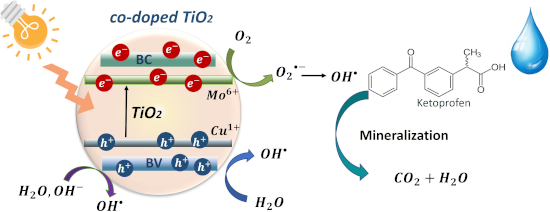
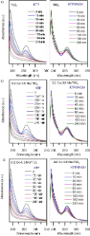
- , HPLC, and TOC measurements. Before analysis, all reaction samples were filtered through a 0.22 μm GV cellulose acetate membrane (Millipore Corp. Bedford, MA, USA). Chemical analysis of the reaction samples was carried out by UV–vis spectroscopy in a Shimadzu UV-2600 spectrophotometer. HPLC analysis of



Defects and defect-mediated engineering of two-dimensional materials: challenges and open questions
Beilstein J. Nanotechnol. 2026, 17, 454–488, doi:10.3762/bjnano.17.31
- 1200 K, vacancy clusters (dark spots of varying size) are found to be exclusively attached to the bright areas of the moiré. They form indeed a lattice with about 90% of the sites occupied. Transfer of such nanomeshes to a foreign substrate [157] makes it possible to explore their use in membrane





Nanocarrier-integrated multilayer films produced by 3D printing for improved skin adhesion and curcumin photostability
Beilstein J. Nanotechnol. 2026, 17, 440–453, doi:10.3762/bjnano.17.30
- hydrophilic membrane, Millipore®), corresponding to a 500-fold dilution, as shown in Equation 1. The zeta potential was determined by measuring electrophoretic mobility at 25 °C using the same instrument (Zetasizer® Nano ZS, ZEN 3600, Malvern Instruments, USA). Prior to analysis, the samples were diluted 500
- -fold in an aqueous 10 mmol/L NaCl solution and filtered through a 0.45 µm membrane (Millipore®). The pH of the formulations was measured without prior dilution at 25 °C using a calibrated potentiometer (VB-10, Denver Instrument, USA). where C2 is the concentration of the sample after dilution, C1 is
- extraction with acetonitrile for 20 min, followed by filtration through a 0.45 µm membrane (Millipore®) prior to HPLC analysis. All analytical procedures were performed under dark conditions to protect the samples from light. Encapsulation efficiency was determined using an ultrafiltration–centrifugation


Nanoinformatics: spanning scales, systems and solutions
Beilstein J. Nanotechnol. 2026, 17, 423–427, doi:10.3762/bjnano.17.28
- Roy constructed a quantitative structure–property relationship (QSPR) model with 132 metal oxide (MeOx) nanomaterials to understand the possible mechanisms of cell membrane damage and the role of zeta potential (a proxy for surface charge) in particular. The results showed that zeta potential, along
- with periodic-table-based descriptors such as an increase in oxygen count, electronegativity, and formation of a cationic charge, all influence cell membrane damage, and had the potential to influence oxidative damage through free radical accumulation, which could lead to changes in the survival rate

Biomimetic nanoparticles in cancer photodynamic therapy: a review of targeted delivery systems and therapeutic outcomes
Beilstein J. Nanotechnol. 2026, 17, 396–422, doi:10.3762/bjnano.17.27
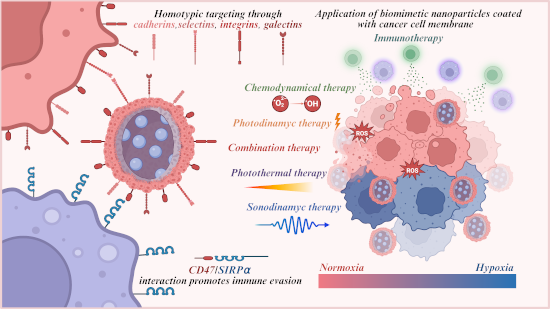
- body’s immune response [48]. BNPs utilizing a cell membrane to coat a synthetic core were reported in 2011. These nanoparticles consisted of a poly(lactic-co-glycolic) acid (PLGA) core coated with an outer layer derived from red blood cell (RBC) membranes [49]. It was demonstrated that the presence of
- lysis is essential for the extraction of biomimetic membranes; the membrane composition is directly influenced by the severity of the lysis method. Common techniques include (i) ultrasound, that is, membrane rupture via pressure waves (20–50 kHz), requiring precise control to prevent heat damage [54
- rupture [53]. Lysis buffer selection (containing membrane disruptors and protease inhibitors) depends on cell type and target protein localization. For example, cancer cells and macrophages respond better to hypotonic protocols [57], and harsh homogenization suits cytomembrane protein extraction (above 30


Eco-efficient materials for agricultural crops based on a mineral rich in MOR- and HEU-type zeolites
Beilstein J. Nanotechnol. 2026, 17, 381–395, doi:10.3762/bjnano.17.26
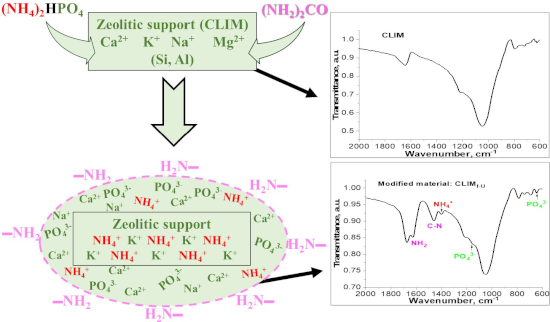
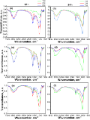
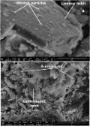
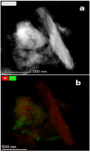
- electron microscope was used; prior to measurements, samples were adhered to supports to coat them with a gold layer. For TEM analysis, samples were deposited on a 200-mesh copper grid with carbon membrane. Images were observed on a Talos F200X ThermoScientific microscope at 44000× magnification in S-MET




Polycatecholamine nanocoatings on stainless steel: the effect on attachment of human fibroblasts and platelets
Beilstein J. Nanotechnol. 2026, 17, 365–380, doi:10.3762/bjnano.17.25
- very well with the surface area covered by fibroblasts. The dependence was directly proportional at the beginning of culture, and inversely proportional after 7 d. Figure 10b shows the schematic presentation of the different effects of high-Rku and low-Rku profiles on cell membrane stretching. In line
- cell membrane is strongly stretched, which deteriorates subsequent spreading and firm attachment [28] (Figure 10b). We speculate that this effect was responsible for the detachment of fibroblasts observed on the SS-PDA 4 h coating variant in our study (see Supporting Information File 1, Figure S3). The
- . (a) Graphical explanation of high-Rku and low-Rku profiles. (b) Cellular membrane stretching on high-Rku (top) and low-Rku (bottom) surfaces. Figure 10a was redrawn from [45]. Figure 10b was redrawn from [28]. Contact angle (CA) values measured for SS and each type of coating. SD – standard deviation




Beam shaping techniques for pulsed laser ablation in liquids: Unlocking tunable control of nanoparticle synthesis in liquids
Beilstein J. Nanotechnol. 2026, 17, 309–342, doi:10.3762/bjnano.17.22
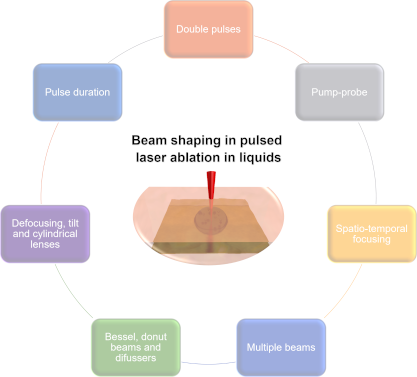
- microlens arrays, cylindrical lenses, diffractive lenses, and flat optics, which provide fixed spatial beam profiles [102]. For dynamic beam control, spatial light modulators (SLMs) are employed, with liquid crystal modulators, membrane mirrors, and digital micromirror devices (DMDs) being the most employed
- flexibility for some applications. Membrane mirrors, in contrast, allow for complete control of the beam including intensity and full surface actuation. Nevertheless, their low number of actuators restrict the precision of the modulation, making them primarily useful for correcting optical aberrations







Durable antimicrobial activity of fabrics functionalized with zeolite ion-exchanged nanomaterials against Staphylococcus aureus and Escherichia coli
Beilstein J. Nanotechnol. 2026, 17, 262–274, doi:10.3762/bjnano.17.18
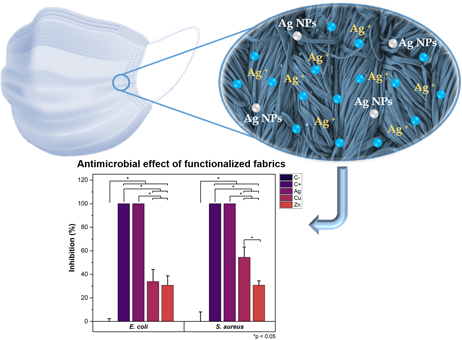
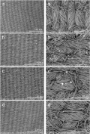
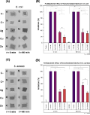
- example, CuO NPs with a size of 4.8 nm demonstrated better antibacterial activity than larger particles (7.8 nm) [16]. The small Cu NPs have a greater capacity to penetrate the cell membrane [17][18]. Zinc oxide NPs are well known for their photocatalytic properties. Also, recent studies have demonstrated




Comparative study on 3D morphologies of delignified, single tracheids and fibers of five wood species
Beilstein J. Nanotechnol. 2026, 17, 239–250, doi:10.3762/bjnano.17.16
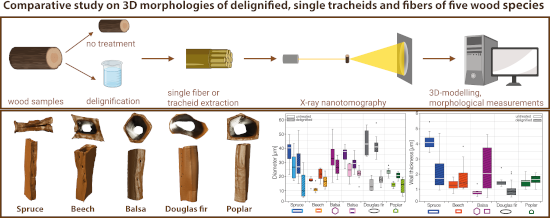
- part of the membrane (torus) that is slightly larger than the pit aperture [4][7]. Similar to other plant cells, fibers and tracheids have a primary wall (P) composed of cellulose, hemicelluloses, and pectin that are formed during cell growth [8][9]. Once fully grown, they develop two secondary walls


From shield to spear: Charge-reversible nanocarriers in overcoming cancer therapy barriers
Beilstein J. Nanotechnol. 2026, 17, 159–175, doi:10.3762/bjnano.17.10
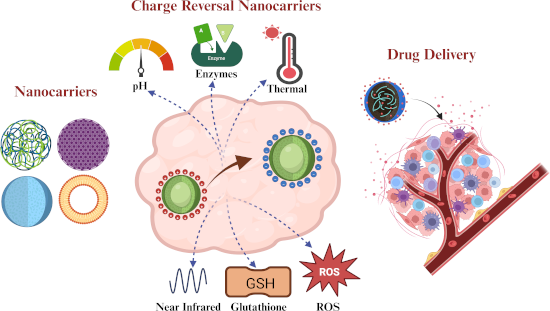
- enhances cellular uptake by facilitating better interaction with the negatively charged cell membrane, improving drug delivery efficiency [45]. For example, nanoparticles engineered with pH-responsive polymers facilitate the controlled release of therapeutic agents specifically within the acidic tumour


Influence of surface characteristics on the in vitro stability and cell uptake of nanoliposomes for brain delivery
Beilstein J. Nanotechnol. 2026, 17, 139–158, doi:10.3762/bjnano.17.9
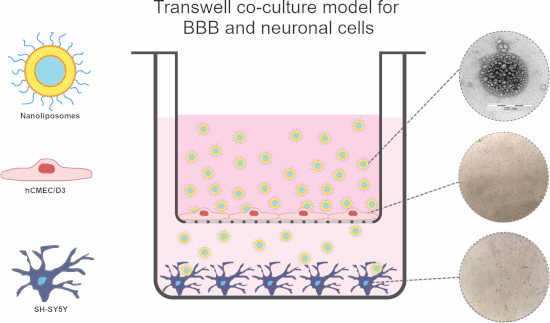
- (Merck Group, Germany). CellTiter 96 AQueous Non-Radioactive Cell Proliferation Assay (MTS) and CytoTox-ONETM Homogeneous Membrane Integrity Assay (CytoTox) were obtained from Promega (Wisconsin, USA). Alexa FluorTM Phalloidin 488, Hoechst fluorescent stain and Dil stain (1,1'-dioctadecyl-3,3,3',3
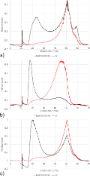
- parabolic flow profile within the channel. This profile induces smaller particles to elute more swiftly compared to larger particles, particularly in proximity to the semipermeable membrane [22]. In particular, AF4 is a precise method for separating liposomes based on their hydrodynamic size, with particle
- , focusing rate and duration, sample loading, and carrier conditions. The composition of the carrier buffer, as well as its ionic strength and pH are crucial considerations for stabilizing the structures, preventing agglomeration or sedimentation, and avoiding interference with analytes and the membrane [23




Development and in vitro evaluation of liposomes and immunoliposomes containing 5-fluorouracil and R-phycoerythrin as a potential phototheranostic system for colorectal cancer
Beilstein J. Nanotechnol. 2026, 17, 97–121, doi:10.3762/bjnano.17.7
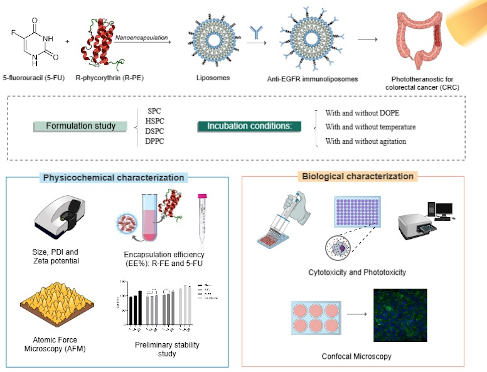
- . These systems are formed by monoclonal antibodies linked to the lipid bilayer, allowing the nanoparticle to recognize and specifically bind to receptors overexpressed in the membrane of tumor cells. This active functionalization expands the therapeutic potential of liposomes by promoting greater
- cancer, but there are cellular mechanisms of resistance, such as membrane transporters, which lower the therapeutic response rate. However, when the treatment with 5-FU was evaluated, associated with photodynamic therapy using Foslip® as a liposomal system, it was found that this treatment was effective
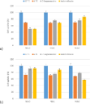
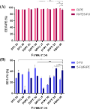
- extracted R-PE (0.73) suggests the presence of other biomolecules – such as polysaccharides and residual proteins – which may further contribute to membrane stabilization during liposome formation [15]. For 5-FU, no significant difference was observed between the HSPC 25 and HSPC 50 formulations, which may



Optical bio/chemical sensors for vitamin B12 analysis in food and pharmaceuticals: state of the art, challenges, and future outlooks
Beilstein J. Nanotechnol. 2025, 16, 2207–2244, doi:10.3762/bjnano.16.153
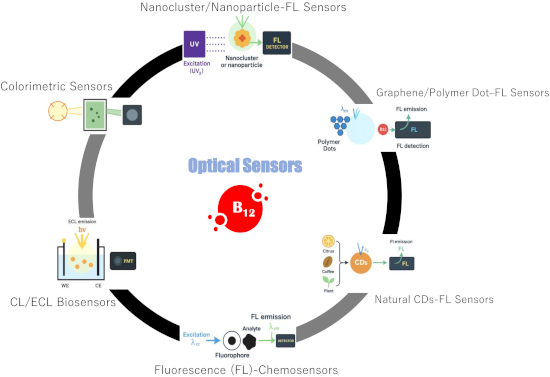
- location for its absorption. Here, it attaches to a specific receptor (Cubam) on the ileal enterocyte membrane and is internalized into the enterocytes via endocytosis. Meanwhile, lysosomes break down IF, freeing VB12. This allows VB12 to bind to TC-II (HoloTC), facilitating its transport in the
- against ICP-MS results [112]. The CL potential of luminol for the determination of Co2+adsorbed on a chitosan membrane was assessed based on the catalytic effect of these ions on the luminol–H2O2 CL reaction, where the chitosan membrane provided the recognition surface, luminol acted as the indicator, and
- the detected CL light emission was the sensing output. Linear range and LOD of Co2+ were found to be 0.4 pg/L to 40 μg/L and 4.0 fg/L, respectively. The membrane/liquid CL system demonstrated analytical performance comparable to the liquid-only CL system. The pre-concentration of Co2+ on chitosan


Microplastic pollution in Himalayan lakes: assessment, risks, and sustainable remediation strategies
Beilstein J. Nanotechnol. 2025, 16, 2144–2167, doi:10.3762/bjnano.16.148
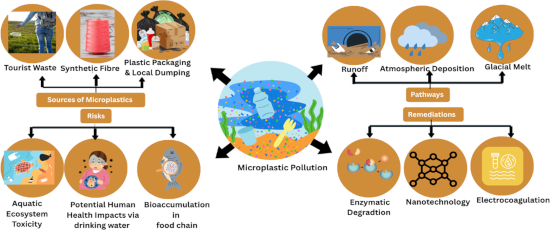
- water bodies. The simplest process to remove MPs from water supplies is by physical processes. Filtration processes, including sand filtration and membrane bioreactors (MBRs), utilize size exclusion to remove MPs [41]. Tiwari et al. established that specifically MBRs have been highly efficient, with
- them are new electrochemical technologies, membrane separation technologies, microbial technologies, and AOPs. The efficiency, mechanism, strengths, weaknesses, and applications of each technology are utilized to assess each technology. These technologies are indicative of the multidimensional
- treatment plants (WWTPs) are significant contributors to MP pollution, upgrading filtration technology is crucial. Germany and Switzerland have also enhanced their WWTPs to add more advanced membrane bioreactors and electrocoagulation systems to minimize MP discharge [136]. Implementation of microfiber


Quality by design optimization of microemulsions for topical delivery of Passiflora setacea seed oil
Beilstein J. Nanotechnol. 2025, 16, 2116–2131, doi:10.3762/bjnano.16.146
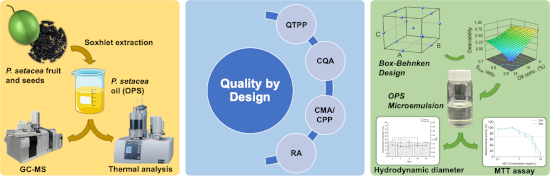
- Discussion Oil extraction and characterization OPS was extracted using the Soxhlet method with n-hexane as the solvent, yielding 30.5 ± 0.8% (w/w) relative to the initial seed mass. After extraction, the oil was dried using a rotary evaporator to remove residual solvent, filtered through a PTFE membrane
- 60 °C. Afterward, the solvent was removed using a rotary evaporator under reduced pressure at a water bath temperature of 40 °C. The obtained oil was then filtered through a 0.45 µm PTFE membrane and stored in amber glass bottles under refrigeration (4 °C) until use. The oil yield was calculated





