
Search results
Search for "nanomaterials" in Full Text gives 619 result(s) in Beilstein Journal of Nanotechnology. Showing first 200.
Room-temperature NO2 sensing performance of ZnO/Ti3C2Tx heterojunctions
Beilstein J. Nanotechnol. 2026, 17, 1159–1169, doi:10.3762/bjnano.17.79
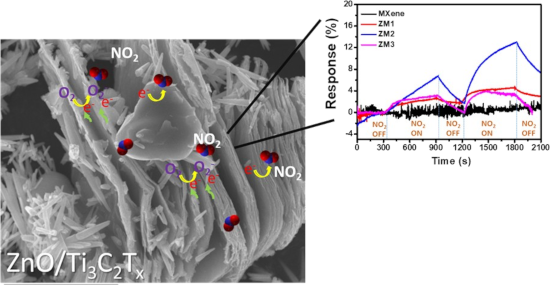
- underlying mechanisms are warranted to realize the full potential of these novel sensing architectures in real-world applications. Motivated by the promising outcomes observed with n-type ZnO nanomaterials, the integration of Ti3C2Tx MXene and ZnO offers a compelling avenue to capitalize on the synergistic

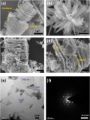




Biosynthesis, characterization, and biofunctional assessment of niobium oxide nanostructures obtained using lactic acid bacteria-derived supernatants
Beilstein J. Nanotechnol. 2026, 17, 1128–1141, doi:10.3762/bjnano.17.77
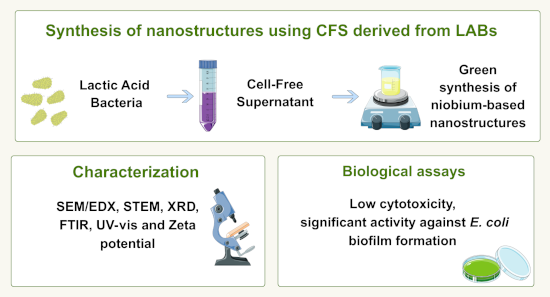
- activity; green synthesis; Lacticaseibacillus paracasei; Lacticaseibacillus rhamnosus; niobium oxide nanoparticles; Introduction Nanotechnology is a field focused on the study, development, and application of materials at the nanoscale [1][2]. Among the various types of nanomaterials, metallic and metal
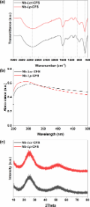
- -CFS and Lcr-CFS do not directly correspond to the particle dimensions observed by electron microscopy, but rather to the size of the aggregates formed in the aqueous medium. Zeta potential is widely recognized as an important parameter for evaluating the surface charge of nanomaterials and providing
- supernatants can influence the zeta potential of nanomaterials [2]. This behavior may be associated with the adsorption of biomolecules derived from metabolites of L. rhamnosus ATCC 9595 and L. paracasei UFTM 2.9, which can partially screen surface charges and modify the electrical environment at the


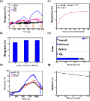
Facile synthesis of platinated DNA nanoparticles with radiosensitizing potential
Beilstein J. Nanotechnol. 2026, 17, 1117–1127, doi:10.3762/bjnano.17.76
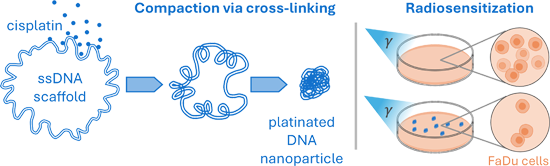
- ; Introduction DNA-based nanomaterials are widely investigated as drug delivery platforms [1][2][3][4] because of their inherent biocompatibility [5], low immunogenicity [6], high spatial addressability [7][8], and environmental responsiveness [9]. While DNA self-assembly techniques such as DNA origami allow for
- -linking provides a robust strategy for enhancing the structural stability of DNA-based nanomaterials without the need for complex DNA origami architectures. Finally, the platinated DNA nanoparticles exhibited some level of radiosensitizing activity in FaDu cells. Compared to untreated controls and free


Electrochemical sensing of sildenafil in pharmaceutical formulations using an (S,N)-doped reduced graphene oxide-modified electrode
Beilstein J. Nanotechnol. 2026, 17, 1087–1102, doi:10.3762/bjnano.17.74
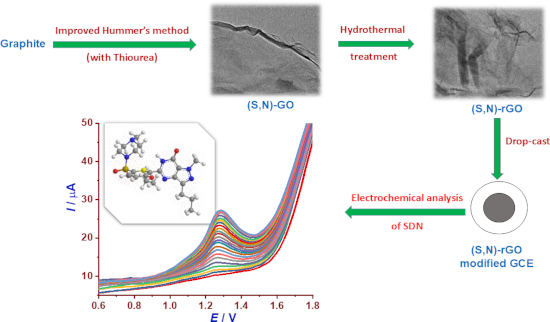
- particularly suitable for on-site monitoring and routine analysis [14][15]. Importantly, the electrochemical oxidation of SDN can be effectively enhanced by tailoring the electrode surface with functional nanomaterials, thereby improving both sensitivity and selectivity. Among various nanomaterials, graphene




Breaking barriers: nanosystems to overcome solubility and permeability challenges of second-generation tyrosine kinase inhibitors
Beilstein J. Nanotechnol. 2026, 17, 1063–1086, doi:10.3762/bjnano.17.73


Ultrasonic irradiation in the synthesis of nanohydroxyapatite: a chemically friendly technique for improving hemocompatibility and antibiofilm applications
Beilstein J. Nanotechnol. 2026, 17, 991–1015, doi:10.3762/bjnano.17.68
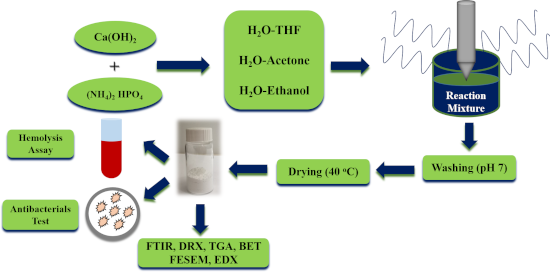
- and Nanotechnology, IVIC. Miranda State, Venezuela Laboratory of Hemostasis and Vascular Genetics, Center for Biophysics and Biochemistry, IVIC. Miranda State, Venezuela Nanomaterials Characterization Laboratory, Center for Materials Engineering and Nanotechnology, IVIC. Miranda State, Venezuela
- ). This apparent discrepancy, far from being contradictory, demonstrates a consistent correlation with the nature of the nanomaterials synthesized via sonochemistry. Such differences are typical for this synthesis method, where high surface roughness and internal porosity detected through gas adsorption




Materials challenges in solid-state sensors for continuous monitoring of ions in water
Beilstein J. Nanotechnol. 2026, 17, 935–973, doi:10.3762/bjnano.17.66
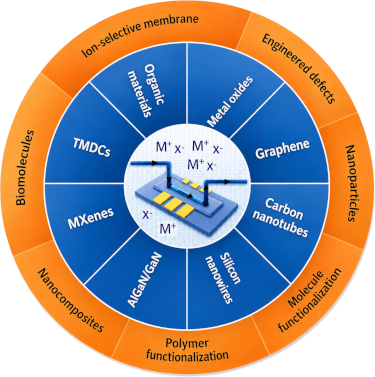
- active and sensing materials for designing electrochemical and electrical devices capable of reliable, real-time ion monitoring in water. Keywords: aqueous ion sensors; biosensors; chemical sensors; nanomaterials; water quality monitoring; Introduction Access to clean water is critical for public
- to be covered in this review. This review aims to critically assess the diverse classes of nanomaterials as active layer for electrodes, FETs, and chemiresistors, and as sensing element for these solid-state electronic sensors; this is to understand how different materials influence performance



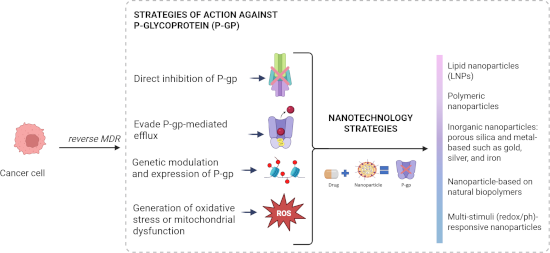
Nanocarrier strategies to overcome P-glycoprotein-mediated drug resistance in cancer therapy
Beilstein J. Nanotechnol. 2026, 17, 882–921, doi:10.3762/bjnano.17.64


Supramolecular one-dimensional conducting nanofibers from a C3-symmetric tetrathiafulvalene derivative
Beilstein J. Nanotechnol. 2026, 17, 872–881, doi:10.3762/bjnano.17.63
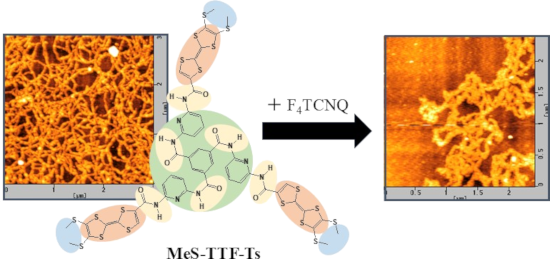
- promising platforms for the development of functional nanomaterials [9][10]. In particular, when electroactive molecules are employed, one-dimensional structures formed through self-assembly are expected to be applicable as nanowire materials in molecular electronic devices. Among them, tetrathiafulvalene
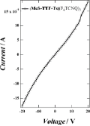
- transport, and offer a useful design strategy for the development of organic conductive nanomaterials based on self-assembly. AFM images of nanorods composed of C3-symmetric MeS-TTF-Ts deposited from DMF on a mica substrate. (a) 10 μm × 10 μm; (b) 5 μm × 5 μm. AFM images of nanofibers composed of C3


Nanoparticle delivery systems for HIV pre-exposure prophylaxis (PrEP): advances and challenges
Beilstein J. Nanotechnol. 2026, 17, 839–853, doi:10.3762/bjnano.17.60
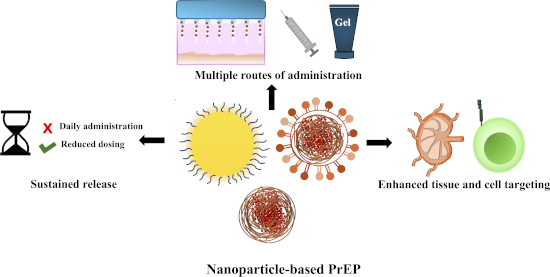
- classes of nanomaterials, namely, polymeric nanoparticles, lipid-based nanoparticles, inorganic nanoparticles, and hybrid nanoparticles. Nanoparticle design considerations and targeting strategies for the individual classes are examined, and the opportunities and challenges for the different nanomaterials
- examined design criteria for four classes of nanomaterials, namely, polymeric nanoparticles, lipid-based nanoparticles, inorganic nanoparticles, and hybrid nanoparticles. Although inorganic nanoparticles can offer stability and relative ease of functionalization, they face challenges regarding


Sustainable fabrication of 2D-based devices through reuse of substrates with microfabricated electrodes
Beilstein J. Nanotechnol. 2026, 17, 818–827, doi:10.3762/bjnano.17.58
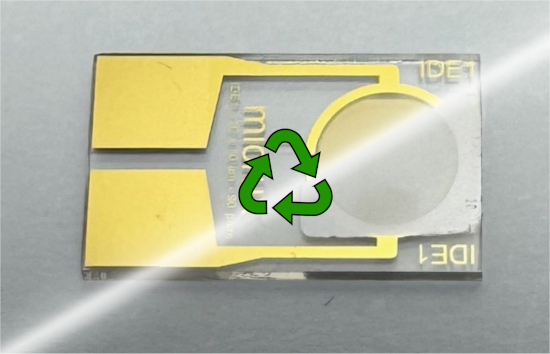
- . Keywords: 2D device fabrication; microfabricated electrode; N-methyl-2-pyrrolidone; substrate reuse; ultrasonic cleaning; Introduction Nanoscience research often needs the fabrication of proof-of-concept devices to demonstrate applications of novel nanomaterials or to study their fundamental properties [1
- ][2][3][4]. Creating these microelectronic devices requires access to highly specialized infrastructure like cleanrooms and trained personnel [5][6][7]. Consequently, research groups focused on nanomaterials synthesis may lack the resources to integrate their novel nanomaterials into microelectronic


Tailoring Ag–Pt nanoalloys through solid-state dewetting: structural and optical insights
Beilstein J. Nanotechnol. 2026, 17, 748–759, doi:10.3762/bjnano.17.52

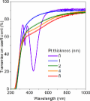
- ]. The formation of nanoalloys was verified using UV–vis spectroscopy. This technique is rapid and straightforward, yet sufficiently sensitive to confirm whether alloying at the nanoscale has occurred. In nanomaterials, distinguishing between a nanoalloy and a nanocomposite is often not trivial, as the
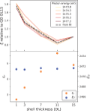
- of conventional alloying techniques and opens new pathways for designing functional nanomaterials. Annealing the Pt on Ag bilayers (with a total thickness of 8 nm) at a temperature of 650 °C for 15 min resulted in the formation of well-defined, nearly spherical, isolated nanoislands. Chemical




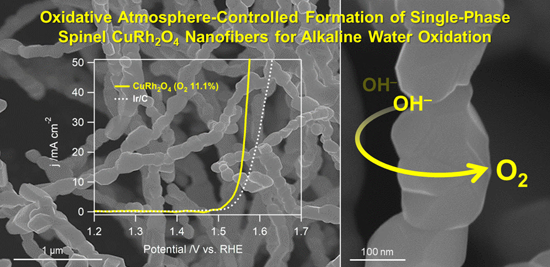
Oxidative atmosphere-driven formation of single-phase spinel CuRh2O4 nanofibers for alkaline water oxidation
Beilstein J. Nanotechnol. 2026, 17, 737–743, doi:10.3762/bjnano.17.50
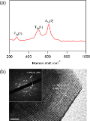
- spectroscopy was conducted to further examine the local bonding environments and short-range structural order of the phase-pure CuRh2O4 nanomaterials synthesized under the optimized condition (i.e., 11.1% O2). The spectrum exhibits characteristic vibrational modes at 277.6 cm−1 (F2g), 501.3 cm−1 (T2g) and
- characterization Morphology and elemental composition of the synthesized nanomaterials were examined using field-emission scanning electron microscopy (FE-SEM; JEOL JSM-6700F) and high-resolution transmission electron microscopy (HRTEM; JEOL JEM-2100F). Surface chemical states and crystallographic structures were
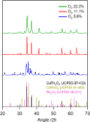
- as-prepared nanomaterials synthesized under different O2 concentrations. Peaks marked with • indicate the presence of secondary copper oxide phases (Cu2O). Deconvoluted AR-XPS spectra of Cu–Rh bimetallic oxides in the (a) Cu 2p and (b) Rh 3d regions. (a) Raman characterization and (b) HRTEM image of




Environmental applications of silver nanoparticles: state-of-the-art review and emerging trends
Beilstein J. Nanotechnol. 2026, 17, 697–736, doi:10.3762/bjnano.17.49
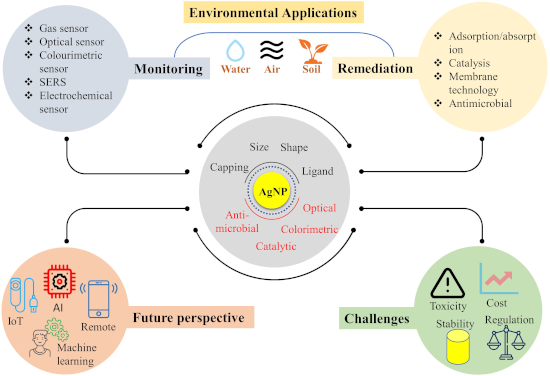
- of the environment (i.e., water, air, and soil). Among the broad family of engineered nanomaterials evaluated for environmental applications, silver nanoparticles (AgNPs) have attracted exceptional attention owing to their unique combination of properties that directly address the requirements of


Protein-based custom-designed molecular nanotraps for biomedical applications
Beilstein J. Nanotechnol. 2026, 17, 683–687, doi:10.3762/bjnano.17.47
- encoding biological functions (e.g., cell adhesion sequences such as RGD), which could lead to unintended biological interactions and off-target effects. Resulting from these considerations, the route to turn the first evidences on the potential of bioMIPs into consolidated nanomaterials for biomedical

Cellulose as a photocatalyst support material: extraction, structural features, and environmental applications
Beilstein J. Nanotechnol. 2026, 17, 635–652, doi:10.3762/bjnano.17.44
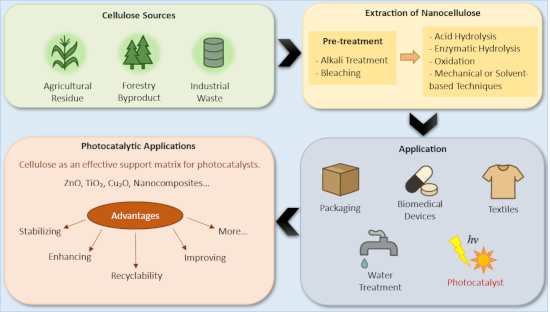
- photoactive nanomaterials, including metal oxides and nonmetallic semiconductors, to remediate and purify water, and the use of these hybrid systems is growing steadily in water treatment applications [15]. Photocatalyst immobilization on membranes addresses key challenges by preventing photocatalyst loss
- applications [67]. At the same time, advances in synthetic methods now allow for precise control over the size, shape, and aspect ratio of metal nanomaterials, parameters that directly determine their catalytic properties. Yet, a major challenge persists because INPs are kinetically unstable and their
- with conductive polymers, depositing metallic layers on them, converting them through carbonization, and integrating them with carbon nanotubes (CNTs), each approach offering unique pathways to tailor the performance of CNCs-based conductive nanomaterials [87]. Cellulose-based nanostructured


Two-step laser synthesis of Ag@TiO2 nanomaterials for the photocatalytic degradation of rhodamine B
Beilstein J. Nanotechnol. 2026, 17, 622–634, doi:10.3762/bjnano.17.43
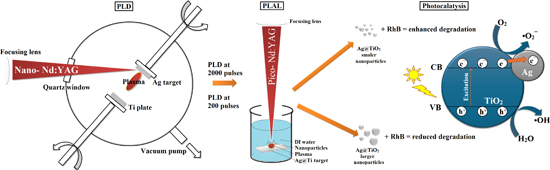
- pulsed laser ablation in liquids (PLAL). Initially, silver was ablated using 200 and 2000 pulses and deposited onto titanium targets via PLD. Subsequently, these modified targets were submerged in water and processed using PLAL to generate the final nanomaterials. Characterization through HRTEM, EDS, and
- provides an efficient and environmentally friendly route for the fabrication of Ag@TiO2 photocatalysts. Keywords: Ag@TiO2 nanomaterials; photocatalytic degradation; pulsed laser ablation in liquids; pulsed laser deposition; rhodamine B; Introduction Titanium dioxide has long been recognized as perhaps
- nanomaterials. These physical processes enable the direct formation of highly pure and well-dispersed nanoparticles from bulk targets without the need for chemical precursors or stabilizing agents. By fine-tuning laser parameters such as wavelength, pulse energy, and ambient conditions, researchers can tailor


Towards targeted drugs and next generation of nanomedicines
Beilstein J. Nanotechnol. 2026, 17, 598–601, doi:10.3762/bjnano.17.41
- target, hence improving drug efficacy while minimizing unwanted side effects. At the same time, some nanomaterials can provide new therapeutic modalities themselves and could also be used for diagnosis and imaging. Multiple drugs and therapies can be combined within the same carrier particle to
- controls available, which were decisive for the development towards clinical use. Last but not least, the field of nanosafety/nanotoxicology has set focus on the importance of counterbalancing the benefits and risks of the use of nanomaterials for potential clinical applications. Hence, while the first
- conventional drugs, one factor which is still limiting nanomedicine efficacy is their targeting capacity, especially in applications requiring extra-hepatic delivery. In fact, upon administration, most nanomaterials are sequestered by the liver, and only a small fraction of the injected nanoparticles reaches
Laser–material interactions in liquids for the synthesis of nanomaterials: current status and perspectives
Beilstein J. Nanotechnol. 2026, 17, 571–575, doi:10.3762/bjnano.17.38
- materials, including metals [2][3], oxides [4][5], semiconductors [6][7], and organics [8][9]. In addition, LSPC enables the synthesis of multicomponent nanomaterials, such as binary [10][11], ternary [12][13], and compositionally complex alloys [14][15], with a high degree of control over their composition
- development of cost-effective, high-throughput technologies. Laser processing in liquids is not merely a synthesis technique – it is an enabling platform for innovation in the development of next-generation nanomaterials, and its full potential is only beginning to be realized. Carlos Doñate Buendia, Bilal
Advances in nanotechnology applied to natural products
Beilstein J. Nanotechnol. 2026, 17, 555–558, doi:10.3762/bjnano.17.36
- , Brazil Laboratory of Micro and Nanostructured Systems (LASMINano), Federal University of Mato Grosso do Sul (UFMS), 79070-900, Campo Grande, MS, Brazil Université de Lorraine, CITHEFOR EA3452 - Nancy, France 10.3762/bjnano.17.36 Keywords: drug delivery; nanomaterials; nanomedicine; natural compounds
- nanomaterials, particularly metallic nanoparticles. Metallic nanoparticles, typically defined as structures with diameters between 1 and 100 nm, exhibit distinctive electrical, optical, and magnetic properties that support a broad range of applications [26]. They can be obtained via green synthesis using
Probing internal continua and atomic ultrafast charge transfer within size-controlled nanoparticles by post-collision interaction in core-hole clock spectroscopy
Beilstein J. Nanotechnol. 2026, 17, 505–514, doi:10.3762/bjnano.17.33
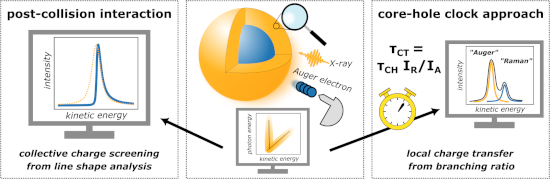
- times are drastically reduced and converge to values below 10 as for the smallest quantum dots and to approximately 30 as for the largest quantum dots. These values are comparable to charge transfer times observed in PbS quantum dots [27] and other sulfur-containing nanomaterials [29][24]. The size
- and the absolute εr values align with theoretical predictions for nanoparticles in general and observations on ZnS nanomaterials [43][44][45]. By combining all previously discussed results in Figure 5, a comprehensive understanding of the electronic processes following resonant excitation in quantum



Upcycling agroindustrial waste into graphene oxide supports for gold nanoparticles: toward sustainable nanomaterials
Beilstein J. Nanotechnol. 2026, 17, 489–504, doi:10.3762/bjnano.17.32
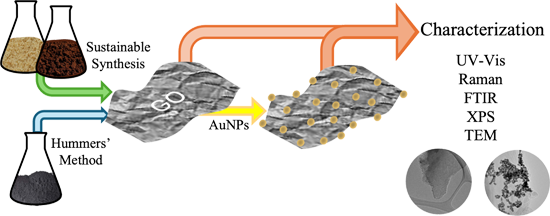
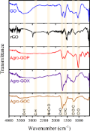
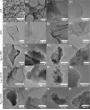
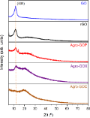
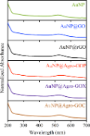
- of transforming agroindustrial waste into high-value graphene-based nanomaterials and highlight the potential of sustainable synthesis routes for advancing environmentally responsible carbon-based technologies. Keywords: agroindustrial waste; gold nanoparticles; graphene oxide; green synthesis
- ; hybrid nanocomposites; plasmonic nanomaterials; surface functionalization; Introduction Graphene oxide (GO), due to its unique physicochemical properties, is widely explored regarding a range of applications, including sensors, water purification, and energy storage and conversion [1][2][3][4][5]. GO is



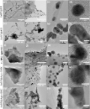

Defects and defect-mediated engineering of two-dimensional materials: challenges and open questions
Beilstein J. Nanotechnol. 2026, 17, 454–488, doi:10.3762/bjnano.17.31
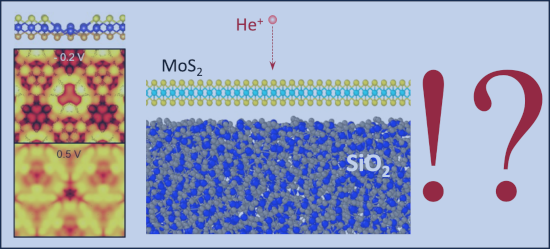
- -mediated engineering of nanomaterials for energy and quantum applications” organized by the Beilstein-Institut. Following the discussions at the symposium, here, we present the challenges and open questions in our understanding of the behavior of defective 2D materials, interaction of energetic particles
- engineering of nanomaterials for energy and quantum applications”, organized in Rüdesheim, Germany, by the Beilstein-Institut [38]. Following the symposium, in this article, we discuss the challenges and open questions, in our understanding, of the behavior of defective 2D materials, interaction of energetic





Nanoinformatics: spanning scales, systems and solutions
Beilstein J. Nanotechnol. 2026, 17, 423–427, doi:10.3762/bjnano.17.28
- : artificial intelligence; in silico approaches; machine learning; nanoinformatics; nanomaterials functionality; nanotoxicity; sustainability; Nanoinformatics (as an offshoot of chemoinformatics) refers to the combination of physical chemistry and materials theory with in silico approaches to address key
- questions including the prediction of (nano)materials (NM) functionality, nanomaterials fate in the environment, toxicity or therapeutic ability, and recyclability. As the properties of nanomaterials themselves span several scales, from electronic, atomistic, mesoscopic to continuum, and are highly dynamic
- emergence of artificial intelligence and machine learning approaches, both causal and generative, are opening up new opportunities for exploring the materials and chemical space to develop new as yet undiscovered nanomaterials, for optimising in parallel the functionality, safety and sustainability of

Beam shaping techniques for pulsed laser ablation in liquids: Unlocking tunable control of nanoparticle synthesis in liquids
Beilstein J. Nanotechnol. 2026, 17, 309–342, doi:10.3762/bjnano.17.22
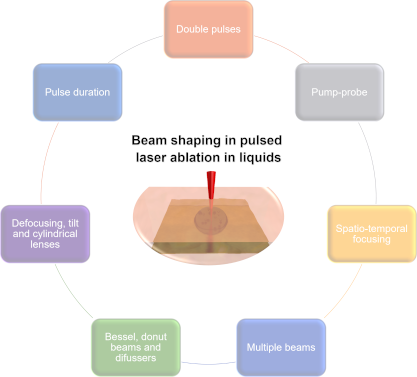
- ). Additional NPs are formed within this bubble until it collapses, releasing and ejecting the remaining NPs into the liquid [9][10][11]. Although nanomaterials can be produced by alternative physical, chemical, or biological methods [12], PLAL offers several advantages [13]. Chemical methods are effective at
- controlling NP size and shape but often require reducing agents and stabilising or capping agents to ensure colloidal stability, which may introduce impurities and raise environmental concerns. Biological routes for synthesising nanomaterials, such as those based on plant extracts, bacteria, or fungi, are
- ], core–shell structures [29][30], heterostructures [31], nanoalloys [32][33], hybrid materials [34][35], and complex multielement nanomaterials such as high-entropy alloys [36][37][38]. This method enables the synthesis of nanomaterials with exceptional purity from virtually any solid target [39