Search results
Search for "nanoscale" in Full Text gives 924 result(s) in Beilstein Journal of Nanotechnology. Showing first 200.
Nanocarrier strategies to overcome P-glycoprotein-mediated drug resistance in cancer therapy
Beilstein J. Nanotechnol. 2026, 17, 882–921, doi:10.3762/bjnano.17.64
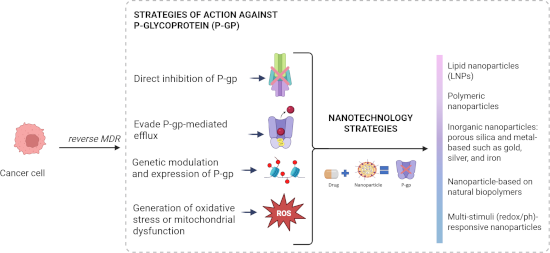
- stable nanoscale assemblies co-loaded with siRNA to silence the expression of the ABCB1 (MDR1) gene, which encodes P-gp, is a promising option for overcoming MDR. Whang et al. designed nanosystems coated with hyaluronic acid (HA) and co-administered paclitaxel (PTX)/siRNA, aiming to inhibit P-gp levels
- . Lipid nanoparticles (LNPs) are nanoscale drug delivery systems composed of lipids that enable the encapsulation and transport of active substances such as drugs, nucleic acids, proteins, and other therapeutic compounds [43]. These structures reduce systemic toxicity and improve therapeutic efficacy and
- resensitization in clinical trials. 3.2.1.2 Solid lipid nanoparticles. Solid lipid nanoparticles (SLNs) are nanoscale structures composed of solid lipids and stabilizing agents. They provide superior biocompatibility and facilitate prolonged drug release [62]. Nonetheless, their utilization is constrained by a


Supramolecular one-dimensional conducting nanofibers from a C3-symmetric tetrathiafulvalene derivative
Beilstein J. Nanotechnol. 2026, 17, 872–881, doi:10.3762/bjnano.17.63
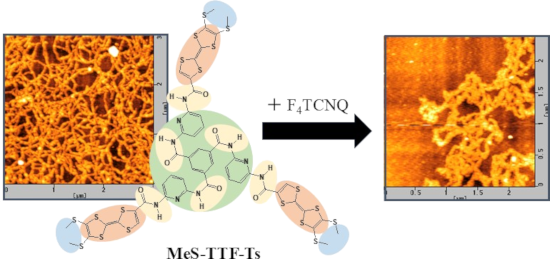
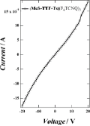
- nanoscale conductive structures requires precise control of intermolecular interactions and rational molecular design capable of directing the spontaneous formation of one-dimensional stacked assemblies [25][26][27][28]. In particular, for molecules incorporating redox-active units, it has been reported


He+ FIBID-fabricated 3D AFM tip architectures: an exploratory study of hollow pillars, helices, and spirals
Beilstein J. Nanotechnol. 2026, 17, 863–871, doi:10.3762/bjnano.17.62
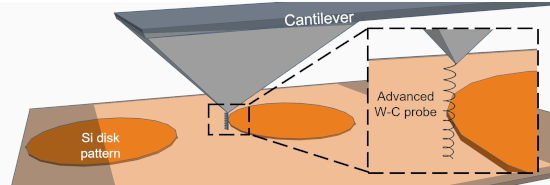
- versatile technique for nanoscale surface characterisation that enables topographic measurements with sub-nanometre resolution by means of a sharp tip mounted at the end of a flexible cantilever [1]. During operation, the tip scans across the sample surface and responds to local interactions such as van der
- nanostructures, their implementation in AFM tips must balance improvements in material properties with the preservation of the original nanoscale geometry. For high-aspect-ratio AFM imaging, carbon nanotube (CNT) tips remain an important benchmark because of their small effective radii, flexibility, and long


Cross-scale design of chemosensor arrays: from molecular self-assembly in water to paper-based devices for metal ion detection
Beilstein J. Nanotechnol. 2026, 17, 828–838, doi:10.3762/bjnano.17.59
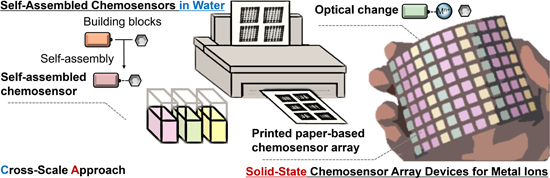
- nanoscale architectures for environmental monitoring of metal ions. This perspective introduces the principles of metal ion detection using chemosensors and the design strategy based on molecular self-assemblies for sensing multiple analytes based on pattern recognition [13][15]. After the discussion of the
- strategy presented here may provide a general framework for bridging molecular recognition systems into practical sensing technologies that operate across molecular, nanoscale, and device levels. Conceptual figure showing this perspective on simultaneous metal ion detection based on self-assembled


Tailoring Ag–Pt nanoalloys through solid-state dewetting: structural and optical insights
Beilstein J. Nanotechnol. 2026, 17, 748–759, doi:10.3762/bjnano.17.52

- -electron contribution of platinum, which suppresses plasmonic oscillations. The obtained results demonstrate that thermally activated dewetting enables the synthesis of homogeneous Ag–Pt nanoalloys at the nanoscale, both in volume and on the surface of nanostructures, overcoming miscibility limitations of
- nanoscale thickness can be metastable or even intrinsically unstable. This instability leads to the gradual disintegration of the continuous film, and, consequently, the formation of isolated nanoscale islands [13][14][15][16]. This process occurs at temperatures lower than the melting point of the thin
- postulated a mechanism based on the dewetting phenomenon. According to their model, the disintegration of the film initiates at pre-existing discontinuities or voids, which can be associated with nanoscale irregularities at intergranular boundaries. A key factor governing the disintegration process of thin


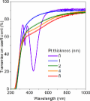


Molecular engineering of individual dye-based nanoparticle photostability for ultrabright two-photon fluorescence
Beilstein J. Nanotechnol. 2026, 17, 688–696, doi:10.3762/bjnano.17.48
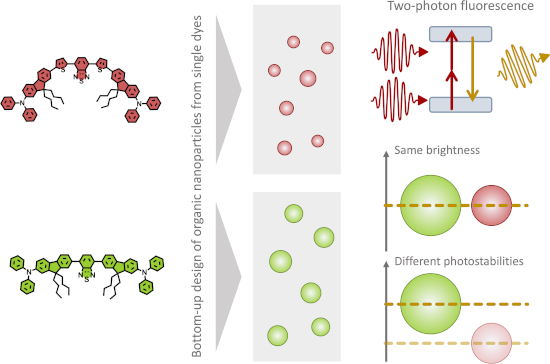
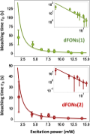
- molecules. This improvement arises both from the large number of dye molecules incorporated within the nanoparticles [19] and from the protection offered to the interior dye against water, as similarly observed in other dye-doped nanoscale systems [31]. However, such ensemble measurements fail to reveal the


Protein-based custom-designed molecular nanotraps for biomedical applications
Beilstein J. Nanotechnol. 2026, 17, 683–687, doi:10.3762/bjnano.17.47
- superstructures in the presence of the designed molecular target, so as to enable the imprinting process and form the specific binding sites [5][6]. Under highly diluted conditions, the process was observed to produce nanoscale aggregates of dimensions ranging from a few tens to a few hundreds of nanometers, and
- the secondary structure of these protein-based bioMIPs by circular dichroism showed non-ordered protein assemblies. It is worth considering that the selective ability of the bioMIPs is acquired upon the nanoscale aggregation of the protein building blocks around the target; hence, it is an emerging

Cellulose as a photocatalyst support material: extraction, structural features, and environmental applications
Beilstein J. Nanotechnol. 2026, 17, 635–652, doi:10.3762/bjnano.17.44
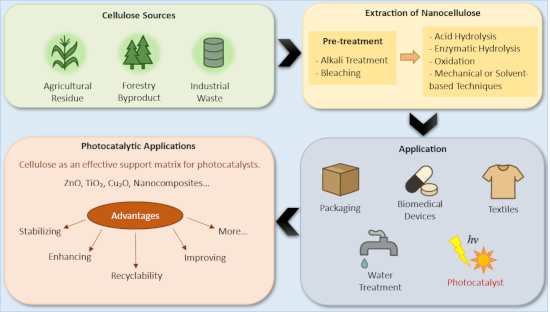
- ). Manufacturers produce cellulose at both the microscale and the nanoscale, where materials such as MCC consist of microscopic particles up to 1 µm in length and over 1 µm in width; MFC is typically obtained through mechanical or chemical treatment of wood, and microfibrils appear as individual fibers measuring
- more than 10 µm long and 2–20 µm wide [22]. At the nanoscale, cellulose is transformed into nanocellulose, which includes CNCs produced by acid hydrolysis and typically measuring 50–500 nm in length and 2–20 nm in width, as well as BC, which forms through bacterial synthesis and shows high
- crystallinity, excellent elasticity, and mechanical strength, with fibers ranging from 200 to 3000 nm long and 10–75 nm wide [23]. Extraction at the nanoscale not only reduces structural defects within cellulose’s hierarchy but also introduces new characteristics such as increased surface area, thereby


Probing tribological evolution in atomically thin MoS2 at different scales
Beilstein J. Nanotechnol. 2026, 17, 586–597, doi:10.3762/bjnano.17.40
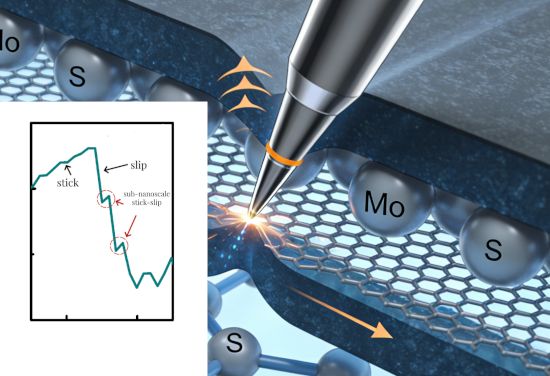
- Xingzhong Zeng Miao Zhang School of Intelligent Manufacturing, Hunan First Normal University, Changsha 410205, China Changsha Denghua Off-Campus Custodial Service Co., Ltd., Changsha, China 10.3762/bjnano.17.40 Abstract Atomic-scale stick–slip motion and the nanoscale strengthening effect are
- foundational phenomena in the nanotribology of atomically thin two-dimensional (2D) materials, yet their sub-nanoscale origins and load-dependent evolution remain insufficiently characterized. Herein, we systematically investigate the sub-nanoscale friction behaviors of atomically thin molybdenum disulfide
- (MoS2) under controlled loads using a calibrated atomic force microscope (AFM), with a focus on quantifying the strengthening effect and sub-nanoscale stick–slip motion. Our results reveal that the nanoscale strengthening effect intensifies with increasing applied load but weakens as the number of MoS2


Laser–material interactions in liquids for the synthesis of nanomaterials: current status and perspectives
Beilstein J. Nanotechnol. 2026, 17, 571–575, doi:10.3762/bjnano.17.38
- ]), generation of soft magnets for magnetocaloric applications [58], fabrication of photodetectors [59], nanoscale agents for photodynamic [60] and neutron capture therapy [61], incorporation of nanoparticles into solar cells [62], light-harvesting nanofluids [63], and materials with enhanced mechanical [64] or
Advances in nanotechnology applied to natural products
Beilstein J. Nanotechnol. 2026, 17, 555–558, doi:10.3762/bjnano.17.36
- , and liposomes, are prominent across both experimental investigations and comprehensive reviews. Nanoemulsions are kinetically stable nanoscale systems (typically ≈20–200 nm, sometimes extending into the submicron range) formed by two immiscible liquids and stabilized by surfactants; they can be
Probing internal continua and atomic ultrafast charge transfer within size-controlled nanoparticles by post-collision interaction in core-hole clock spectroscopy
Beilstein J. Nanotechnol. 2026, 17, 505–514, doi:10.3762/bjnano.17.33
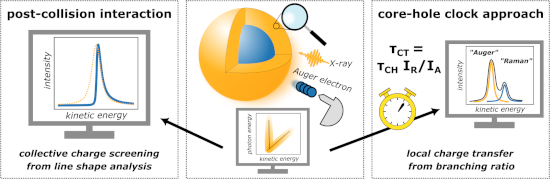
- -collision-interaction; quantum dots; resonant Auger spectroscopy; Introduction The interplay of electron localization, itinerance, and charge transfer is essential to functional nanoparticles and quantum dots (QDs) [1][2][3][4][5][6]. In terms of electronic structure properties, materials on the nanoscale



Defects and defect-mediated engineering of two-dimensional materials: challenges and open questions
Beilstein J. Nanotechnol. 2026, 17, 454–488, doi:10.3762/bjnano.17.31
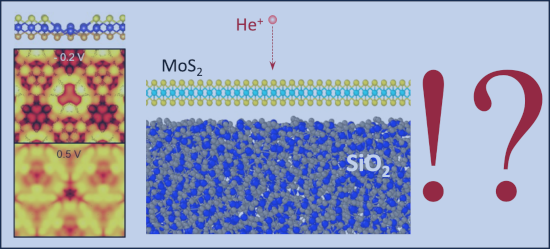
- sub-nanometer precision, while also probing vibronic structure and photon statistics in situ. Complementary approaches, such as tip-enhanced photoluminescence, extend this toolbox by enabling nanoscale hyperspectral mapping and photon correlation without charge injection. Together, these techniques
- energy shifts and peak shapes [179][180][181][182][183][184][185][186][187]. Complementing XPS, scanning X-ray photoelectron microscopy (SPEM) provides spatially resolved chemical information at the nanoscale, and near-ambient pressure XPS enables real-time monitoring of the chemical reactivity of





Nanoinformatics: spanning scales, systems and solutions
Beilstein J. Nanotechnol. 2026, 17, 423–427, doi:10.3762/bjnano.17.28
- nanoscale and advanced materials (so-called multi-criteria optimisation), and as a key driver of the knowledge and digital transitions that will underpin the next decade of industrial innovation as shown schematically in Figure 1. This thematic issue includes 13 articles (10 original research papers, two

Biomimetic nanoparticles in cancer photodynamic therapy: a review of targeted delivery systems and therapeutic outcomes
Beilstein J. Nanotechnol. 2026, 17, 396–422, doi:10.3762/bjnano.17.27
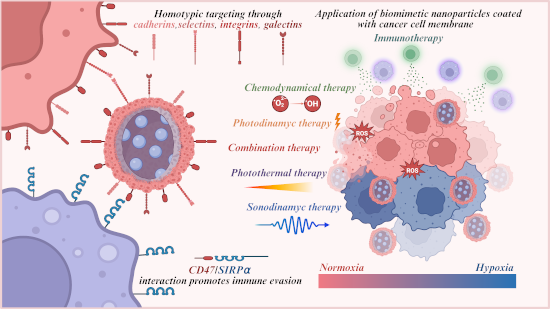
- activated by light to generate ROS. BNPs, by virtue of their biological surface functionalities and synthetic nanoscale architecture, offer sophisticated platforms that maximize these criteria. However, the process of loading PS into such carriers must be carefully optimized to maintain the delicate balance


Polycatecholamine nanocoatings on stainless steel: the effect on attachment of human fibroblasts and platelets
Beilstein J. Nanotechnol. 2026, 17, 365–380, doi:10.3762/bjnano.17.25
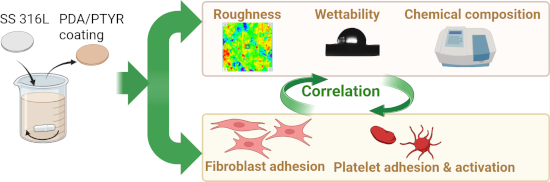
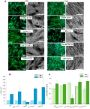
- many nanoscale peaks and depths. The 3D graphs of surface profiles generated by the profilometer software are provided in Figure 4. Sterilization effectiveness of the materials Both tested sterilization methods for steel discs with PDA and PTYR coatings were effective. The exact method description and
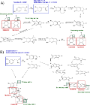
- used atmospheric oxidation (because the amount of oxidant in the solution is not limited by its dissolution) and allows for precise control over coating uniformity and thickness at the nanoscale. Also, for the synthesis of PTYR coatings, there is a limitation in the substrate availability for the
- -toxic, and highly hydrophilic. The observed decrease in CA with the coating time could be explained by the progressive filling of micro- and nanoscale surface irregularities, leading to increased homogeneity. SEM was the only feasible technique enabling the measurement of the thickness of these coatings




Ferroelectric nanodot reservoir for neuromorphic computing
Beilstein J. Nanotechnol. 2026, 17, 352–364, doi:10.3762/bjnano.17.24
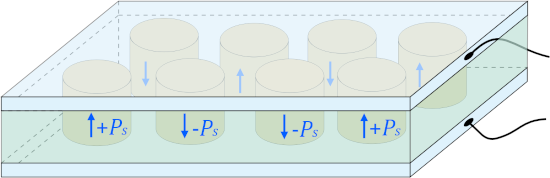
- ]. Ferroelectrics also host a wide variety of nonuniform topological soliton-like polarization states, especially at the nanoscale [26][27][28][29][30][31][32][33]. The presence of such topological states provides not only robust multistability but also new functional degrees of freedom, including topologically
- , arises from the energy-lowering feedback between polarization and internal electric field. Negative capacitance not only enhances the effective electrostatic tunability of the system but also provides a potential route to voltage amplification and energy-efficient signal processing at the nanoscale [40
- , enabling rich dynamic response to time-varying inputs, as required for real-time neuromorphic tasks. Notably, our approach leverages the electrostatic physics of nanoscale ferroelectrics to implement a scalable, low-power analog computing substrate. The described system relies solely on dielectric


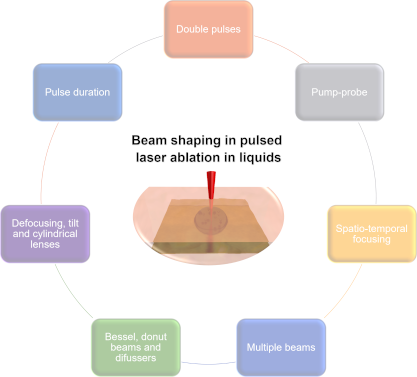
Beam shaping techniques for pulsed laser ablation in liquids: Unlocking tunable control of nanoparticle synthesis in liquids
Beilstein J. Nanotechnol. 2026, 17, 309–342, doi:10.3762/bjnano.17.22
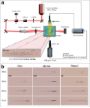
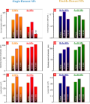
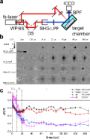
- -amplitude oscillations and only external shock waves are emitted [156]. The evolution of CBs induced by DS beams in liquids can influence NP formation in PLAL by acting as nanoscale reactors. Modifying CB dynamics directly affects nucleation, offering new ways to tailor NP properties [157]. Despite the







Advancing nanolithography: a comprehensive review of materials for local anodic oxidation with AFM
Beilstein J. Nanotechnol. 2026, 17, 275–291, doi:10.3762/bjnano.17.19
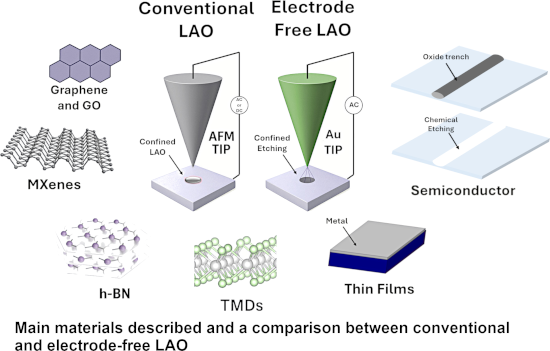
- technique for nanoscale patterning, leveraging the precision of scanning probe microscopy, relying specifically on atomic force microscopy. This review explores the materials utilized in LAO experiments, including semiconductors, metals, insulators, two-dimensional (2D) materials, and emerging
- provide a comprehensive understanding of material selection in LAO and its implications for advancing nanotechnology. Keywords: local anodic oxidation; nanofabrication; scanning probe lithography; Review 1 Introduction Advancements in nanotechnology have led to the development of numerous nanoscale
- maskless patterning under ambient conditions with sub-10 nm lateral resolution, enabling direct oxide formation or material removal with nanoscale precision, capabilities not readily achievable with conventional lithographic approaches. AFM-based LAO originated from earlier STM local oxidation studies [10


Durable antimicrobial activity of fabrics functionalized with zeolite ion-exchanged nanomaterials against Staphylococcus aureus and Escherichia coli
Beilstein J. Nanotechnol. 2026, 17, 262–274, doi:10.3762/bjnano.17.18
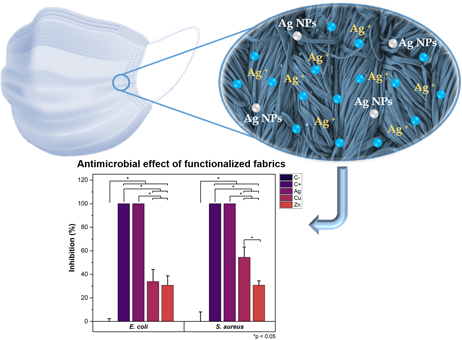
- different components, fiber material composites, nanoscale fibers, and immersion in NPs solutions with a binder. Nanoparticles such as Ag, Au, TiO2, ZnO, Se, SiO2, CuO, and Pt are widely used for textile functionalization [25]. Common methods for incorporating Ag and Cu NPs into cotton textiles involve




Gold nanoparticle-decorated reduced graphene oxide as a highly effective catalyst for the selective α,β-dehydrogenation of N-alkyl-4-piperidones
Beilstein J. Nanotechnol. 2026, 17, 218–238, doi:10.3762/bjnano.17.15
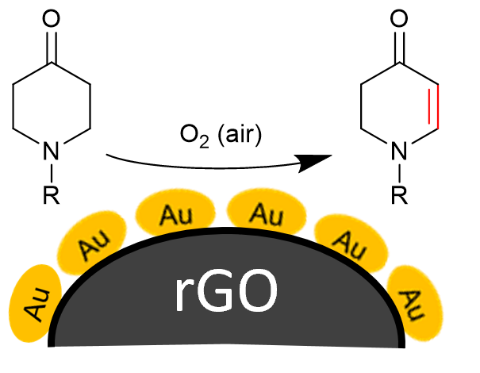
- catalytic properties of AuNPs stem from their nanoscale size, which increases the surface-to-volume ratio, exposes a higher density of active sites, and induces quantum size effects that modulate the electronic structure [5]. These characteristics collectively enhance their reactivity, selectivity, and


Micro- and nanoscale effects in biological and bioinspired materials and surfaces
Beilstein J. Nanotechnol. 2026, 17, 214–217, doi:10.3762/bjnano.17.14
- generalizing nanoscale properties and processes in biology to engineer functional surfaces and interfaces across different scales. In May 2023, the Beilstein Nanotechnology Symposium titled “Functional Micro- and Nanostructured Surfaces: from Biology to Biomimetics” brought together a diverse group of
- a follow-up with an extended scope to continue representation of nano- and microstructure effects in biological and bioinspired systems in the Beilstein Journal of Nanotechnology. The present thematic issue entitled “Micro- and Nanoscale Effects in Biological and Bioinspired Materials and Surfaces
- sources for bioinspiration based on the understanding of micro- and nanoscale effects in biological systems (“biology push”), numerous advances were achieved on replication of biological principles into artificial replicas [21], as well as studies on bioinspired materials and fabrication methods [22][23
Safe and sustainable by design with ML/AI: A transformative approach to advancing nanotechnology
Beilstein J. Nanotechnol. 2026, 17, 176–185, doi:10.3762/bjnano.17.11
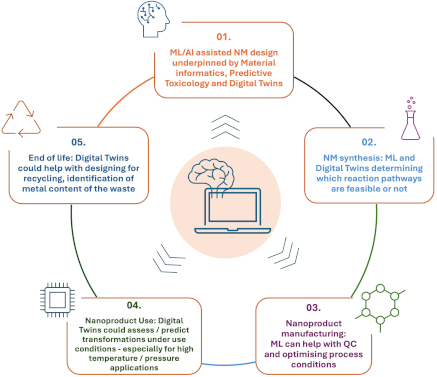
- efficiency. From advanced drug delivery systems to clean energy solutions, the applications of nanotechnology are diverse and transformative. However, these innovations are accompanied by complex challenges regarding safety and sustainability for both the nanoscale materials themselves and for the products
- valuable, are resource intensive and inadequate to fully address the dynamic risks associated with ENMs and their myriad nanoscale forms (i.e., different sizes, geometries, coatings) [11]. The need for more proactive and efficient methodologies has led to the emergence of the Safe and Sustainable by Design
- powerful aspects of materials informatics lies in its ability to integrate machine learning with multiscale simulation tools – ranging from molecular dynamics to density functional theory – which helps researchers correlate nanoscale features such as particle size, shape, and surface functionalization with


From shield to spear: Charge-reversible nanocarriers in overcoming cancer therapy barriers
Beilstein J. Nanotechnol. 2026, 17, 159–175, doi:10.3762/bjnano.17.10
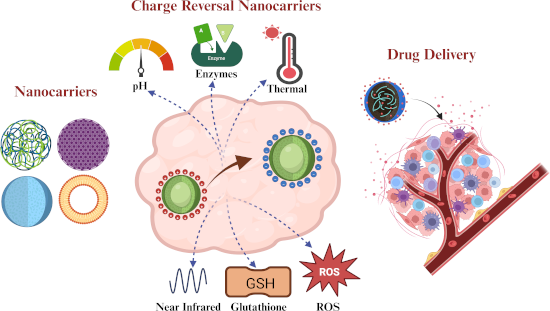
- advancements in nanocarrier-based cancer therapy, recent research has increasingly emphasised refining their physicochemical traits, especially surface charge, to boost therapeutic outcomes. A notable development in this context is the emergence of charge-reversible nanoscale drug delivery systems (CR-NDDSs
- nitrogen species, thereby improving treatment outcomes [60]. Additionally, an X-ray-activated nanoscale platform can produce significant quantities of ROS-enhancing PDT effects in cancer treatment by conjugating photosensitizers to these nanoparticles; the efficiency of ROS generation increases under X-ray
- radiation compared to that under conventional methods. These dual-functionality CRNs improved drug delivery precision and enhanced the overall effectiveness of radiotherapy [61]. A study by Liu et al. developed the nanoscale coordination polymer Hf-nIm@PEG (HNP), which integrates hafnium ions (Hf4+) with 2


Development and in vitro evaluation of liposomes and immunoliposomes containing 5-fluorouracil and R-phycoerythrin as a potential phototheranostic system for colorectal cancer
Beilstein J. Nanotechnol. 2026, 17, 97–121, doi:10.3762/bjnano.17.7
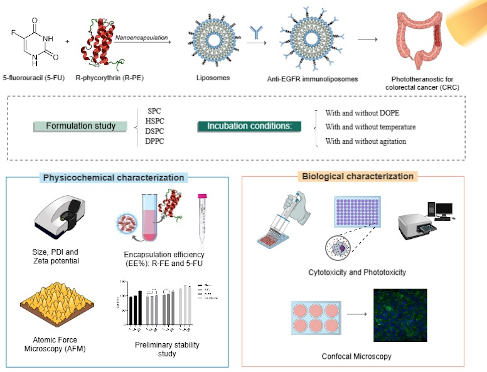
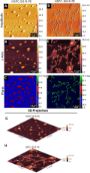
- HSPC IM 07 formulation exhibits the most favorable characteristics for application in delivery systems, balancing nanoscale size, acceptable PDI, and high conjugation efficiency. 3.3 Atomic force microscopy assays Atomic force microscopy assays were used to characterize the surface topography of