


Search results
Search for "particle size" in Full Text gives 590 result(s) in Beilstein Journal of Nanotechnology. Showing first 200.
Restorative potential of laser-synthesized silver nanoparticles with Salvia officinalis for periodontal disease treatment: an in vitro study
Beilstein J. Nanotechnol. 2026, 17, 781–795, doi:10.3762/bjnano.17.55
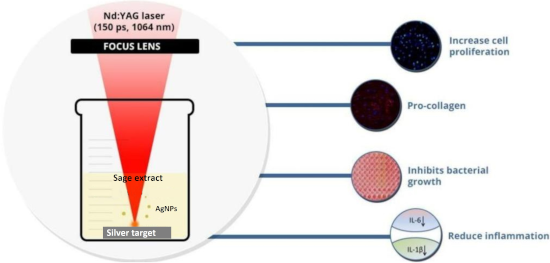
- sage extract using two different laser pulse energies (2 and 6 mJ) (Table 1). The reported values represent the total silver concentration in the colloidal solution and do not directly reflect nanoparticle number concentration due to differences in particle size distribution. Although the applied pulse
- diameters (dH). The smallest nanoparticles with the highest concentration were produced by applying a laser energy of 6 mJ in the sage solution (SageAgNPs6mJ). The two AgNP types with the higher concentration and the smaller particle size, with and without sage extract, that is SageAgNPs6mJ and dwAgNPs6mJ
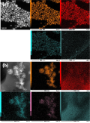
- , respectively, underwent TEM analysis. SageAgNPs6mJ were well dispersed, spherical, and in the narrow size range from 2.1 to 16.3 nm, with an average particle size of 7.98 ± 2.90 nm. Minor agglomeration after one month was observed, suggesting high stability of the nanoparticles (Figure 1a,b). dwAgNPs6mJ were



Tailoring Ag–Pt nanoalloys through solid-state dewetting: structural and optical insights
Beilstein J. Nanotechnol. 2026, 17, 748–759, doi:10.3762/bjnano.17.52

- . Observations of alloy formation at the nanoscale confirm that the miscibility between different metals can significantly increase as particle size decreases [3][4][5][6][33]. Nevertheless, in the case of nanoalloy formation induced by thermal dewetting of alternately deposited thin metallic layers, it is




Environmental applications of silver nanoparticles: state-of-the-art review and emerging trends
Beilstein J. Nanotechnol. 2026, 17, 697–736, doi:10.3762/bjnano.17.49
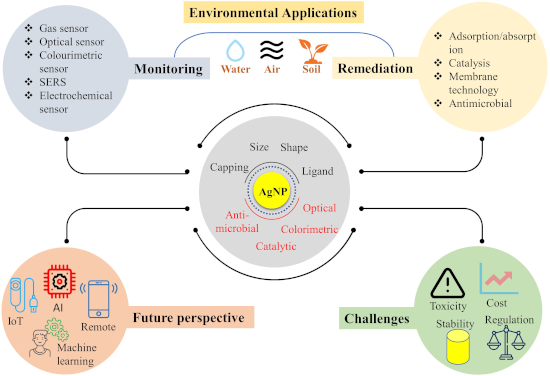
- particle size, surface composition, state stability, and organic matter, which ultimately generate bioavailability and toxicity concerns [34]. The regulatory framework governing AgNP environmental applications remains fragmented across jurisdictions; while OECD, ISO, EU, and US EPA guidelines address
- through various synthetic approaches, including physical, chemical, and biological methods [35]. Each offers distinct advantages and limitations regarding particle size control, morphology, stability, and cost-effectiveness [35]. Chemical methods are commonly employed to synthesise AgNPs due to their


Two-step laser synthesis of Ag@TiO2 nanomaterials for the photocatalytic degradation of rhodamine B
Beilstein J. Nanotechnol. 2026, 17, 622–634, doi:10.3762/bjnano.17.43
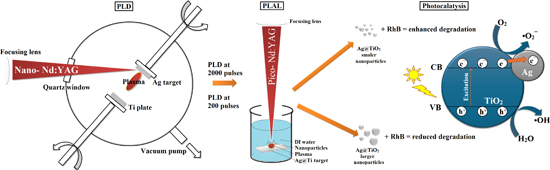
- capacity of the photocatalyst and the concentration of active site. This is in line with the correlation between particle size and silver content, where smaller particles provide a higher surface-to-volume ratio, making surface effects more dominant. In contrast, Ag@TiO2 2000p NPs followed the pseudo-first
- -order model, which is more typical when the main process is controlled by light absorption and charge carrier transfer rather than surface adsorption. The smaller particle size and higher silver content in the 2000p sample improved electron–hole separation; hence, the reaction was mainly driven by
- species [28]. These combined effects lead to faster degradation of rhodamine B compared to pure TiO2. The different kinetic behavior of the samples reflects differences in particle size and Ag surface modification. The kinetic models are used as empirical descriptions of the overall process rather than


Laser–material interactions in liquids for the synthesis of nanomaterials: current status and perspectives
Beilstein J. Nanotechnol. 2026, 17, 571–575, doi:10.3762/bjnano.17.38
- photothermal mechanisms [17]. Laser melting in liquids (LML) employs lower pulse intensities to increase particle size [18] and/or modify crystallinity and morphology through melting and resolidification [19]. At moderate laser fluences, close to or even below the melting threshold, irradiation can induce
Synthesis of Cu–Mo/TiO2 and Co–Mo/TiO2 photocatalysts for the efficient degradation of organic pollutants in water
Beilstein J. Nanotechnol. 2026, 17, 559–570, doi:10.3762/bjnano.17.37
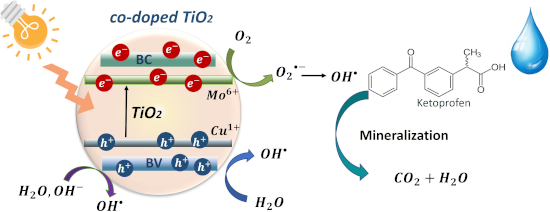
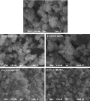
- increase in copper concentration (0.5 wt %) resulted in a decrease in particle size and their agglomeration, leading to particles of undefined shape. In contrast, the incorporation of 0.2 wt % of cobalt resulted in smaller particles forming agglomerations. When the cobalt content is increased, particles
- previously reported [17][32]. In contrast, with the addition of 0.5 wt % Mo and 0.2 wt % Co into TiO2, the area increases to 80.9 m2/g. These results are consistent with the morphological characterization, which showed a decrease in particle size in the cobalt-containing materials, which may have influenced
- phase and distorts the TiO2 lattice structure. The introduction of the metallic ions Cu and Co was confirmed. Cu–Mo/TiO2 materials exhibited higher crystallinity, larger particle size, and lower surface area. However, the material 0.2 Cu–0.5 Mo/TiO2 was the most efficient in the photocatalytic oxidation



Probing internal continua and atomic ultrafast charge transfer within size-controlled nanoparticles by post-collision interaction in core-hole clock spectroscopy
Beilstein J. Nanotechnol. 2026, 17, 505–514, doi:10.3762/bjnano.17.33
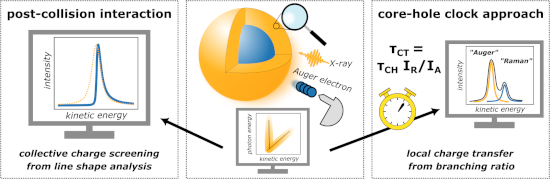
- properties of QDs such as absorption wavelength are collective properties of the entire system and are primarily determined by the particle size [8]. Advances in synthesis techniques have allowed for precise control over QD size, making these properties reliably tunable [9]. Other properties, such as
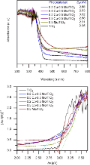
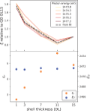
- ultimately governed by the asymmetry parameter ξ, shown normalized to the asymmetry parameter of the DL15 sample in Figure 4 (top panel) at various photon energies as a function of particle size. It is clear that the asymmetry parameters increase for smaller QDs. The consistency of this trend across
- different photon energies strongly suggests that the observed variations are indeed the result of a size-dependent process. To gain further insight into the PCI effect, we modeled the observed evolution of the asymmetry parameter as a function of the particle size. As previously discussed, the strength of



Upcycling agroindustrial waste into graphene oxide supports for gold nanoparticles: toward sustainable nanomaterials
Beilstein J. Nanotechnol. 2026, 17, 489–504, doi:10.3762/bjnano.17.32
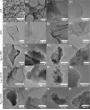
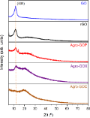
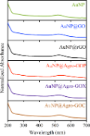
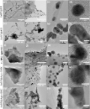
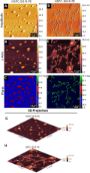
- sites, resulting in the sparse, agglomerated AuNPs observed in Agro-GOC. The final panel of each row shows high-magnification views of spherical AuNPs with diameters ranging from 6.9 to 10.9 nm, consistent with the particle-size distribution analysis. The average particle sizes were 6.9 ± 2.2 nm (AuNP
- -based materials. Each row represents a hybrid: (a–d) AuNPs@GO, (e–h) AuNPs@rGO, (i–l) AuNPs@Agro-GOP, (m–p) AuNPs@Agro-GOX, and (q–t) AuNPs@Agro-GOC. Columns show increasing magnifications of each sample. Particle size distribution histograms of AuNPs deposited on GO platforms. Relative atomic



Nanocarrier-integrated multilayer films produced by 3D printing for improved skin adhesion and curcumin photostability
Beilstein J. Nanotechnol. 2026, 17, 440–453, doi:10.3762/bjnano.17.30
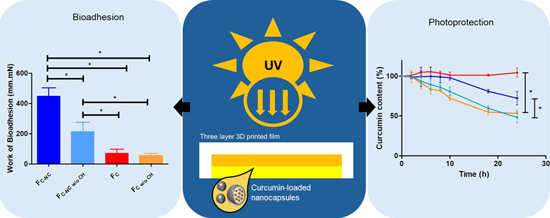
- produced by SSE could address these limitations. To overcome its poor solubility and enhance bioadhesion, curcumin was encapsulated in polymeric nanocapsules (C-NCs), yielding a mean particle size of 218 ± 5 nm, a polydispersity index of 0.10 ± 0.02, a zeta potential of −11 ± 4 mV, and 100% encapsulation
- concentrated to 10 mL. The experiment was carried out in a dark environment, protected from light. Blank formulations (B-NC) were prepared under the same conditions, without addition of curcumin in the organic phases. All formulations were prepared and characterised in triplicate. Particle size, pH and zeta
- potential The z-average particle size and the polydispersity index were measured by dynamic light scattering using a Zetasizer® Nano ZS (ZEN 3600, Malvern Instruments, USA). For this analysis, 10 µL of the C-NC formulation was diluted in 5 mL of ultrapure water (previously filtered through a 0.45 µm


Eco-efficient materials for agricultural crops based on a mineral rich in MOR- and HEU-type zeolites
Beilstein J. Nanotechnol. 2026, 17, 381–395, doi:10.3762/bjnano.17.26
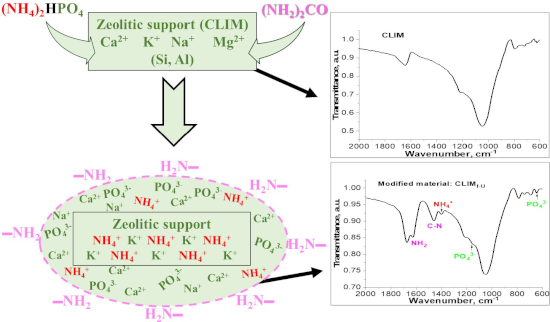
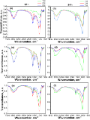
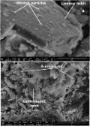
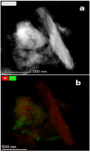
- zeolitic minerals in agriculture allows one to obtain low-cost, eco-efficient materials for massive application, with rational use of nutrients and agroecological benefits. Experimental Materials and methods In this work, a zeolitic mineral from the San Andrés deposit in Holguín, Cuba, with a particle size




Beam shaping techniques for pulsed laser ablation in liquids: Unlocking tunable control of nanoparticle synthesis in liquids
Beilstein J. Nanotechnol. 2026, 17, 309–342, doi:10.3762/bjnano.17.22
- Al2O3 NPs by nanosecond laser ablation in water [141]. Tilting the target results in smaller particles with a narrower distribution due to the larger spot and lower fluence [141]. Morphology and shape of the ablated NPs remain constant. The produced NPs were spherical with an average particle size







Gold nanoparticle-decorated reduced graphene oxide as a highly effective catalyst for the selective α,β-dehydrogenation of N-alkyl-4-piperidones
Beilstein J. Nanotechnol. 2026, 17, 218–238, doi:10.3762/bjnano.17.15
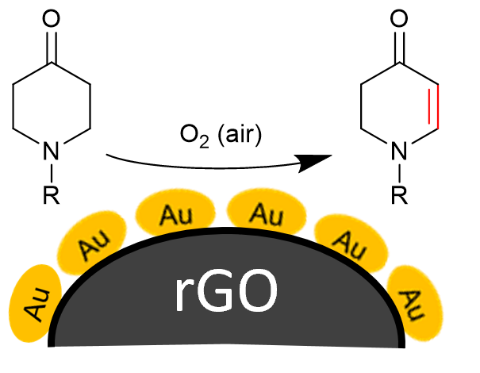
- tunability, making AuNPs highly versatile in catalytic applications [5][6]. Traditional ligands such as thiols and citrates are commonly used in the synthesis of AuNPs due to their ability to control particle size, prevent aggregation, and enhance stability in solution [7]. Also, polyoxometalates (POMs) have
- scattering (DLS) measurements was 12 nm (Figure 4b). Transmission electron microscopy (TEM) analysis showed spherical and well-dispersed nanoparticles and their particle size distribution (Figure 4c), based on the measurements of approximately 200 nanoparticles, yielded an average diameter of 12 nm with a
- synthesized composites, Au-SiW9/AC (Figure 7a), Au-SiW9/rGO (Figure 7b), and Au-SiW9/CB (Figure 7c), revealed small, spherical, and well-dispersed particles. The particle size was between 2 and 8 nm with an average of 5–6 nm and a standard deviation of ±1 nm, as determined from their corresponding


Safe and sustainable by design with ML/AI: A transformative approach to advancing nanotechnology
Beilstein J. Nanotechnol. 2026, 17, 176–185, doi:10.3762/bjnano.17.11

- powerful aspects of materials informatics lies in its ability to integrate machine learning with multiscale simulation tools – ranging from molecular dynamics to density functional theory – which helps researchers correlate nanoscale features such as particle size, shape, and surface functionalization with
- interpolation from limited experimental datasets [57]. Given that protein corona formation [58] can drastically alter the biodistribution and immunological profile of a nanoparticle, digital twins help pinpoint safer design parameters – such as surface coatings or particle size modifications – which improve


Influence of surface characteristics on the in vitro stability and cell uptake of nanoliposomes for brain delivery
Beilstein J. Nanotechnol. 2026, 17, 139–158, doi:10.3762/bjnano.17.9
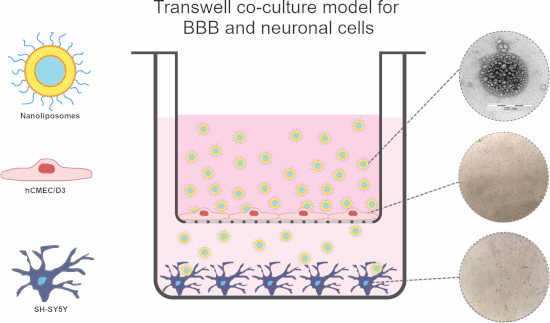
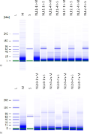
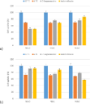
- qualitatively confirmed by spectrophotometry (e.g., by the absence of fluorescence in the supernatant obtained in the last washing cycle), ensuring that the fluorescence signal in subsequent experiments originates exclusively from liposome-associated dye. Particle size, particle size distribution and z
- highlight the dominant independent variables that have a significant effect in the model, the VIP score was used. Results and Discussion Particle size, particle size distribution and z-potential of the nanoliposomes Several studies have reported that despite the composition and the other surface properties
- nanoliposomes in cell culture medium In order to provide a more detailed examination of the influence of serum components present in the cell culture medium on the average NLs size, AF4–MALS/DLS analysis was performed. For this purpose, the particle size of the native formulations (NLb0, NLb1, and NLb2) was




Development and in vitro evaluation of liposomes and immunoliposomes containing 5-fluorouracil and R-phycoerythrin as a potential phototheranostic system for colorectal cancer
Beilstein J. Nanotechnol. 2026, 17, 97–121, doi:10.3762/bjnano.17.7
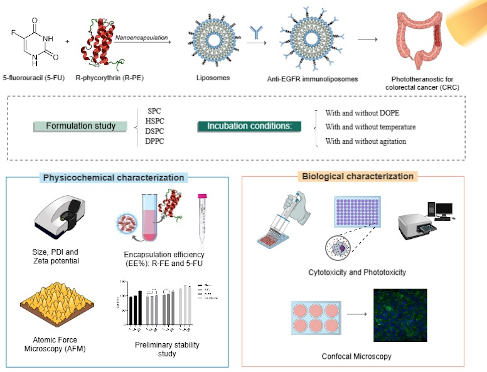
- Sepharose CL-4B column eluted with PBS (pH 7.4) [19]. 2.3 Sample characterization 2.3.1 Particle size, polydispersity and zeta potential The hydrodynamic vesicle size and polydispersity index (PDI) were performed by dynamic light scattering (DLS), and the zeta potential by electrophoretic light scattering



Improving magnetic properties of Mn- and Zn-doped core–shell iron oxide nanoparticles by tuning their size
Beilstein J. Nanotechnol. 2025, 16, 2285–2295, doi:10.3762/bjnano.16.157
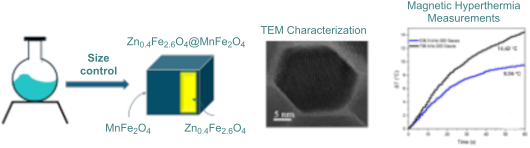
- material to eliminate the cytotoxicity concerns associated with cobalt. Furthermore, we demonstrate size control through synthesis by varying the concentration of oleic acid, a surfactant that influences particle size and morphology. This approach enables the synthesis of NPs with sizes ranging from 5 to
- -capping agents, such as oleic acid, which is commonly used during synthesis to control particle size and prevent aggregation. The broad peak observed at ≈3400 cm−1 is linked to the O–H stretching vibrations of adsorbed water or hydroxy groups on the particle surface, which is a common feature for
- moments [18][19][20]. For instance, Wang et al. observed that ZnFe2O4 NPs with sizes ranging from 5 nm to 50 nm displayed Ms values increasing from 1.5 to 30 A·m2·kg−1, highlighting the critical role of particle size in magnetic properties [21]. The role of the core–shell structure in enhancing the



Optical bio/chemical sensors for vitamin B12 analysis in food and pharmaceuticals: state of the art, challenges, and future outlooks
Beilstein J. Nanotechnol. 2025, 16, 2207–2244, doi:10.3762/bjnano.16.153
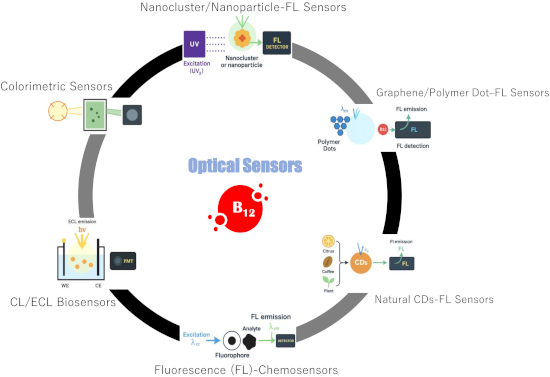
- AuNP suspensions is substantially influenced by their particle size and dispersion speed. 10–20 nm AuNPs with a narrow size distribution tend to absorb light from the blue-green spectrum and reflect red light. In contrast, their aggregation leads to a light absorption shift to longer wavelengths


Ultrathin water layers on mannosylated gold nanoparticles
Beilstein J. Nanotechnol. 2025, 16, 2183–2198, doi:10.3762/bjnano.16.151
- properties on particle size and shape has been demonstrated for particle sizes in the 1–100 nm range and on biological interfaces [7]. Limited biocompatibility and high tendency to aggregate in solution inspired new mechanisms of particle biofunctionalization with proteins, lipids, or carbohydrates. Coupling
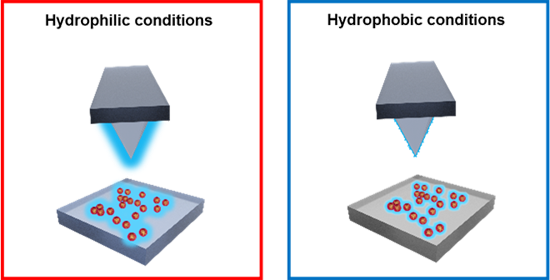
- inorganic surfaces, usually modified with organic layers, and probed by Fourier-transform infrared spectroscopy (FTIR), vibrational sum frequency generation (VSFG), and atomic force microscopy (AFM). For VSFG and AFM, we systematically varied the relative air humidity (RH). DLS and ZP yield particle size
- of dimannoside and PEGylated ligands. The PEG AuNPs were functionalized only with the PEGylated component; they can be seen as a precursor, and we used them as negative controls. Particle size and shape Particle size and stability in an aqueous solution were characterized by DLS and ZP measurements



Missing links in nanomaterials research impacting productivity and perceptions
Beilstein J. Nanotechnol. 2025, 16, 2168–2176, doi:10.3762/bjnano.16.149

- equipment, especially characterization tools used for nanosystems, are unavoidable challenges. Another critical challenge is the precision required to produce nanomaterials. The unique properties of nanomaterials arise from controlled particle size, but achieving the desired size and uniformity is extremely
- aggregate, agglomerate, and self-assemble according to their morphology. These issues cannot be fully eliminated without external stabilization and suggestively impact their performance in real-world applications. Furthermore, such an instability becomes more pronounced as the particle size decreases. For
Quality by design optimization of microemulsions for topical delivery of Passiflora setacea seed oil
Beilstein J. Nanotechnol. 2025, 16, 2116–2131, doi:10.3762/bjnano.16.146
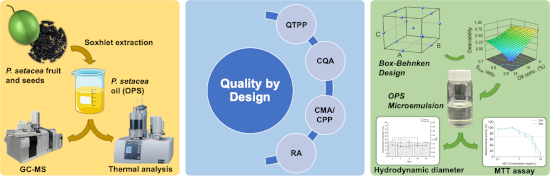
- evaluated over a 60 day period (Figure 7A). Throughout this time, no significant changes were detected in particle size, with the hydrodynamic diameter consistently remaining below 100 nm, and the PdI remaining below 0.20, confirming the physical stability of the base microemulsion and its preservation of


Rapid synthesis of highly monodisperse AgSbS2 nanocrystals: unveiling multifaceted activities in cancer therapy, antibacterial strategies, and antioxidant defense
Beilstein J. Nanotechnol. 2025, 16, 2105–2115, doi:10.3762/bjnano.16.145
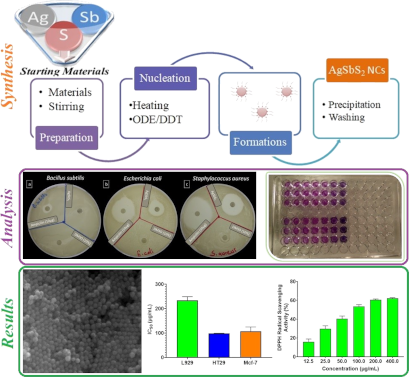
- , indicating robust crystallization. Moreover, the presence of prominent peaks aligning with (220), (311), (420), and (511) planes confirmed alignment with XRD results. Furthermore, utilizing particle size distribution analysis, the crystallite size of average particles was estimated, as illustrated in the
- inset in Figure 2c. The particle size distribution graphs in this image unequivocally affirmed the successful attainment of the desired homogeneity. Biological applications Antibacterial activity of AgSbS2 NCs Disc diffusion. The antimicrobial activity of AgSbS2 NCs at a concentration of 10 mg/mL
- infections dominated by this pathogen. However, their relatively weaker activity against E. coli and B. subtilis suggests that optimization may be necessary to broaden their spectrum through surface modification, particle size reduction, or combination with other antibacterial agents. Cytotoxicity of AgSbS2


Toward clinical translation of carbon nanomaterials in anticancer drug delivery: the need for standardisation
Beilstein J. Nanotechnol. 2025, 16, 2092–2104, doi:10.3762/bjnano.16.144
- safety. Insights from these studies guide further optimisation of the delivery system, which may involve adjusting particle size, surface chemistry, or drug-loading strategies. Once optimised and evaluated, the system enters regulatory review, requiring preclinical safety and efficacy data to meet
- tend to evade renal filtration due to the formation of a protein corona that effectively increases their hydrodynamic size [38]. Beyond renal clearance, particle size also critically influences toxicity, metabolic fate, tumour targeting, protein interactions, and hepatic processing. Additional




PEGylated lipids in lipid nanoparticle delivery dynamics and therapeutic innovation
Beilstein J. Nanotechnol. 2025, 16, 1914–1930, doi:10.3762/bjnano.16.133
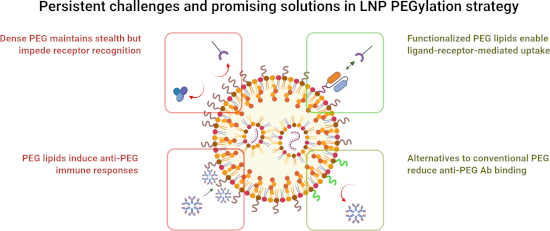
- properties of LNPs including particle size, surface charge, and encapsulation efficiency. Subsequent sections explore the roles of PEG lipids in modulating protein corona formation and cellular uptake. The latter parts highlight the potential of functionalized PEG lipids for targeted delivery and the
- particle size decreasing from 173.9 nm at 1 mol % to 109.1 nm at 5 mol %. Meanwhile, the PDI increased modestly from 0.060 to 0.146 with the increase of PEG density from 1 to 5 mol %, indicating a slight broadening in size distribution and less LNP homogeneity at higher PEG levels. The surface charge on
- fraction of PEG lipids can affect LNP characterizations. In DMPE-PEG5k LNPs, increasing the PEG lipid fraction from 1.5 mol % to 5 mol % resulted in no significant change in particle size but led to a substantial encapsulation efficiency drop from over 90% to below 80%. While in LNPs incorporating Chol-PEG



On the road to sustainability – application of metallic nanoparticles obtained by green synthesis in dentistry: a scoping review
Beilstein J. Nanotechnol. 2025, 16, 1851–1862, doi:10.3762/bjnano.16.128
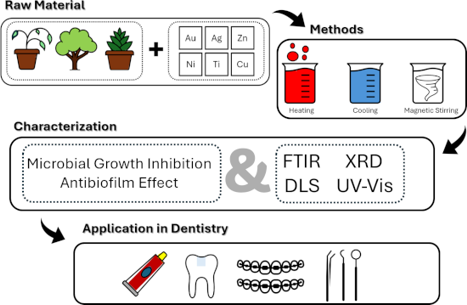
- between them and results in more uniform nucleation and better control over particle size and morphology. Moreover, continuous stirring prevents aggregation of the nanoparticles, contributing to their colloidal stability. Studies have shown that variations in stirring speed can significantly impact the
- nanoparticle formation in real time by detecting surface plasmon resonance bands, which provide insight into particle size and distribution [57]. XRD offers detailed information on the crystalline structure and phase composition of the nanoparticles, confirming successful synthesis and purity [53]. Together


Current status of using adsorbent nanomaterials for removing microplastics from water supply systems: a mini review
Beilstein J. Nanotechnol. 2025, 16, 1837–1850, doi:10.3762/bjnano.16.127
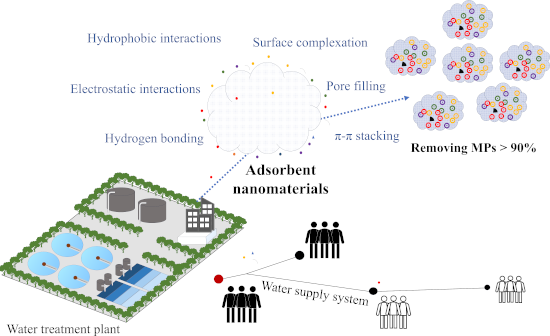
- depends on polymer type and particle size. In contrast, nanomaterials show higher and more significant removal efficiency, in some cases exceeding 99%. Particularly, multifunctional materials (e.g., Fe3O4@PDA-lipase nanoparticles or MOFs) combine adsorption, magnetic recovery, and even catalytic
- particles·L−1, in which the bulk of the data is approximately 569–751 particles·kg−1 [38][39]. In the study of Chu et al., MP concentrations in the water and pipe scale samples ranged from 13.2 to 134.7 particles·L−1 and from 569.9 to 751.7 particles·kg−1, respectively, with a significantly smaller particle
- size in the pipe scales (50–100 μm) than in the water samples (>200 μm) [40]. In Eastern China, the level of MPs in raw water was recorded at 4960 particles·L−1. After being treated by various processes, the MPs concentration significantly reduced from 4712 ± 95 particles·L−1 to 1012 ± 78 particles·L−1





