


Search results
Search for "spectroscopy" in Full Text gives 1440 result(s) in Beilstein Journal of Nanotechnology. Showing first 200.
Sustainable fabrication of 2D-based devices through reuse of substrates with microfabricated electrodes
Beilstein J. Nanotechnol. 2026, 17, 818–827, doi:10.3762/bjnano.17.58
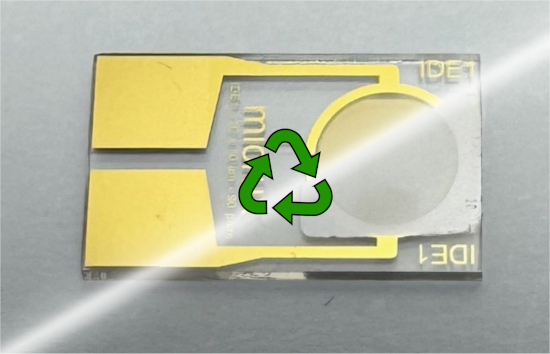
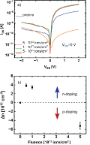
- confirmed via differential reflectance spectroscopy [38][39][40]. A selected flake was then transferred using an all-dry deterministic method to bridge a pair of gold electrodes (Figure 5a, top) [41]. After high-vacuum annealing, the device was electrically characterized in a custom high-vacuum probe
- identified by transmission optical microscopy and then confirmed by differential reflectance spectroscopy [38][39][40]. Monolayer CVD-MoS2 flakes were grown by chemical vapor deposition using a NaCl-assisted ambient-pressure CVD approach, following established procedures reported in the literature [35][36


Glycerol photoelectrochemical oxidation reaction at carbon nitrides/BiVO4 materials
Beilstein J. Nanotechnol. 2026, 17, 806–817, doi:10.3762/bjnano.17.57
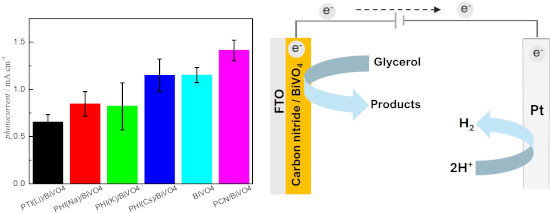
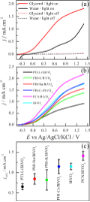
- spectroscopy (SEM-EDS) revealed regions rich in Bi and V, and others rich in C and N, suggesting the formation of heterojunctions. Photoelectrochemical studies demonstrated that BiVO4 is active for both water and glycerol (1.0 mol·L−1) oxidation, with a fourfold increase in photocurrent at 1.23 V vs reversible
- acquired from 10° to 80° at a rate of 2°·min−1 with a step size of 0.02°. Morphological features and elemental composition were determined by field-emission scanning electron microscopy (FEG-SEM; Zeiss Supra35) coupled with energy-dispersive X-ray spectroscopy (EDS), operating at 15 kV. Optical properties
- were investigated using ultraviolet–visible spectroscopy in the diffuse reflectance mode (Agilent-Cary Series UV–vis–NIR) in the wavelength range from 800 to 300 nm at 600 nm·min−1. The optical energy band gap (Eg) values were estimated using the Kubelka–Munk function applied the Tauc equation




Tuning the electronic properties of defect-rich MoS2
Beilstein J. Nanotechnol. 2026, 17, 796–805, doi:10.3762/bjnano.17.56
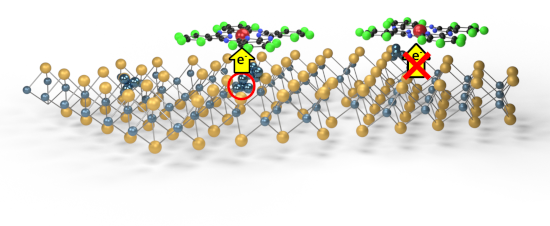
- structural defects significantly affect the electronic properties of the material. The present study utilizes angle-resolved photoelectron spectroscopy (ARPES) and surface-sensitive core-level spectroscopy (SXPS, XAS) with synchrotron radiation to investigate the interfaces between defect-rich MoS2 and
- . Keywords: angle-resolved photoelectron spectroscopy (ARPES); MoS2; phthalocyanine; X-ray absorption spectroscopy (XAS); X-ray photoelectron spectroscopy (XPS); Introduction In the pursuit for novel semiconducting materials, the group of transition metal dichalcogenides (TMDCs), including molybdenum
- fabrication of ultrafast photodetectors [4][5]. To tune their electronic structure for such applications, the adsorption of organic molecules is a versatile strategy [6][7], resulting, for example, in dipole-induced doping or (complex) charge transfer [8]. Photoelectron spectroscopy (PES), X-ray absorption


Restorative potential of laser-synthesized silver nanoparticles with Salvia officinalis for periodontal disease treatment: an in vitro study
Beilstein J. Nanotechnol. 2026, 17, 781–795, doi:10.3762/bjnano.17.55
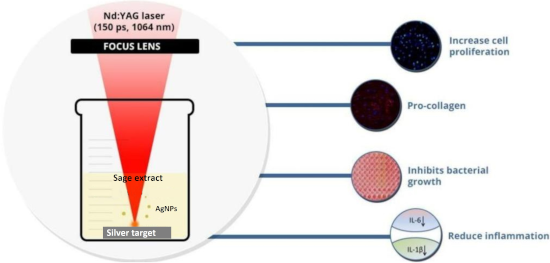
- . AgNPs were synthesized at two laser pulse energies (2 and 6 mJ), in sage extract and deionized water, and characterized by dynamic light scattering, transmission electron microscopy, and inductively coupled plasma optical emission spectroscopy. Synthesis at 6 mJ in sage extract (SageAgNPs6mJ) yielded
- conditions. After synthesis, characterization of the AgNP samples was performed. AgNP characterization The total concentration of silver in obtained colloidal solutions was determined using inductively coupled plasma optical emission spectroscopy (ICP-OES, iCap7400 DUO, Thermo Fisher, USA) and expressed as



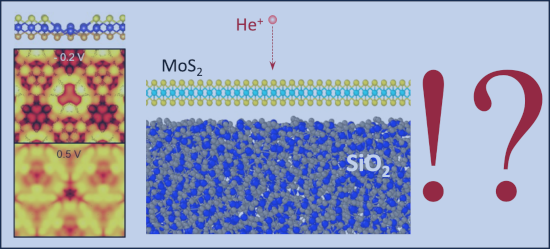
Substrate-dependent pore formation in molybdenum disulfide monolayers under ion irradiation
Beilstein J. Nanotechnol. 2026, 17, 769–780, doi:10.3762/bjnano.17.54
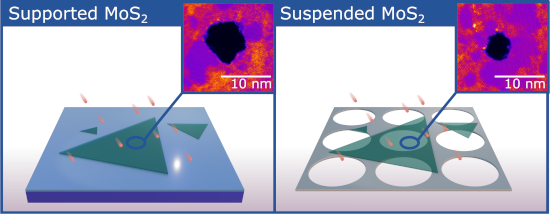
- since both topographic and electronic contrast may contain contributions from the substrate as well as from the 2D layer [30][31][32][33]. As a result, many studies of supported systems rely on Raman and photoluminescence (PL) spectroscopy, or electrical measurements, which are sensitive to electronic
- variations can make purely threshold-based edge detection unreliable. To ensure comparability with the suspended-layer reference data, which originate from our previous work, the same general procedure regarding sample preparation, STEM imaging, and image analysis was applied. Raman and PL spectroscopy Raman
- and PL spectroscopy were performed using a WITec alpha300 RA confocal Raman spectrometer. In all instances, a green laser (λ = 532 nm) with a maximum power of 1 mW was used. For Raman spectra, a 1800 L·mm−1 grating was used, while a 300 L·mm−1 grating was used for PL recording. (a–d) False-color STEM


Tailoring Ag–Pt nanoalloys through solid-state dewetting: structural and optical insights
Beilstein J. Nanotechnol. 2026, 17, 748–759, doi:10.3762/bjnano.17.52

- homogeneous elemental distribution, as measured by energy dispersive spectroscopy. Additionally, X-ray photoelectron spectroscopy measurements confirmed the coexistence of both metals in metallic states, with a slight Ag deficiency attributed to its higher instability and desorption during the annealing
- decomposition of the thin Ag/Pt bilayer into isolated homogenous nanoislands. The chemical composition of the nanostructures was examined using energy dispersive spectroscopy (EDS) in point analysis mode. The example spectrum, shown in Figure 2b, confirms the coexistence of Ag and Pt in the analyzed
- selection of a series with a total bilayer thickness of 8 nm, fabricated at 650 °C, for further investigations. A detailed chemical composition analysis of pure Ag and Pt nanostructures, as well as those synthesized with various Ag–Pt ratios, was performed using X-ray photoelectron spectroscopy (XPS) and is




Oxidative atmosphere-driven formation of single-phase spinel CuRh2O4 nanofibers for alkaline water oxidation
Beilstein J. Nanotechnol. 2026, 17, 737–743, doi:10.3762/bjnano.17.50
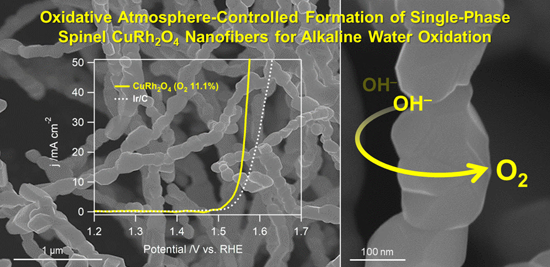
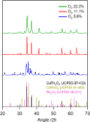
- oxygen-atmosphere engineering during annealing is critical for suppressing undesired phase segregation and achieving phase-pure CuRh2O4 nanofibers. Angle-resolved X-ray photoelectron spectroscopy (AR-XPS) was performed to clarify the surface chemical states of Cu and Rh in Cu–Rh bimetallic oxides
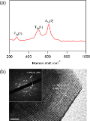
- spectroscopy was conducted to further examine the local bonding environments and short-range structural order of the phase-pure CuRh2O4 nanomaterials synthesized under the optimized condition (i.e., 11.1% O2). The spectrum exhibits characteristic vibrational modes at 277.6 cm−1 (F2g), 501.3 cm−1 (T2g) and
- analyzed by X-ray diffraction (MP-XRD; Malvern Panalytical X-ray diffractometer using Cu Kα radiation), Raman spectroscopy (HORIBA, LabRAM HR Evo 800), and angle-resolved X-ray photoelectron spectroscopy (AR-XPS; Thermo Fisher Scientific K-ALPHA XPS, Al Kα radiation at 12 kV). Electrochemical measurements




Environmental applications of silver nanoparticles: state-of-the-art review and emerging trends
Beilstein J. Nanotechnol. 2026, 17, 697–736, doi:10.3762/bjnano.17.49
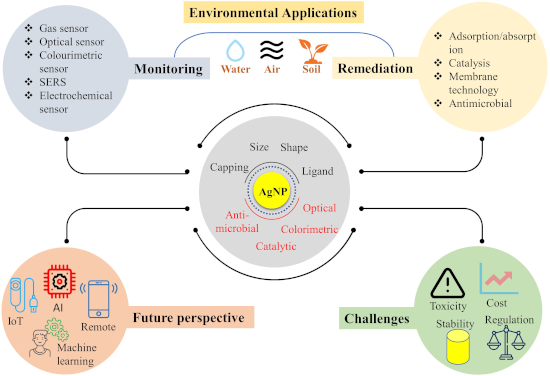
- polyfluoroalkyl substances (PFASs), and polycyclic aromatic hydrocarbons (PAHs) in environmental samples [10][11][12][13][14][15][16][17]. This indicates that nanosilver acts as a potent nanosensor for detecting various contaminants via different approaches, namely Raman spectroscopy, electrochemistry
- needed before engineering AgNPs for particular applications. AgNPs are characterised using optical spectroscopy, electron microscopy, X-ray diffraction, and dynamic light scattering (DLS) to measure plasmonic absorbance, size, shape, structure, and stability [49]. Optical spectroscopy is a rapid and
- °, respectively [54]. Using the Scherrer equation, these 2θ values yield the nanoparticle’s crystallite size [54]. Furthermore, Fourier-transform infrared (FTIR) spectroscopy provides evidence of successful surface capping or functionalization of the desired molecules on nanoparticles [49]. Surface-enhanced Raman


Decontamination from water pollutants and pathogens by electrospun nanofibers doped with heavy-atom-free borafluorene-BODIPY photosensitizers
Beilstein J. Nanotechnol. 2026, 17, 668–682, doi:10.3762/bjnano.17.46
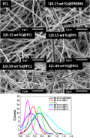
- , and p indicates the porosity. Photocatalyst distribution in the mats The presence of BODIPY in the PCL, PMMA, and PS matrices was verified using energy-dispersive X-ray spectroscopy (EDS) as well as time-of-flight secondary ion mass spectrometry (ToF SIMS) measurements performed on a Helios 5 Dual
- measurements, the samples were sputtered with 10 nm of gold using a CCU-010 Compact Coating Unit (Safematic). The ToF SIMS maps were acquired in the positive ion mode spectrum using 8 kV accelerating voltage and 10 nA beam current. X-ray photoelectron spectroscopy X-ray photoelectron spectroscopy (XPS
- of 1 photocatalyst per one equivalent of cimetidine. The reaction mixtures were vigorously stirred and irradiated with neutral-white LED light (26 W) at T = 25 °C in a photoreactor (irradiance of 40 mW·cm−2). The progress of the photocatalytic reaction was monitored using 1H NMR spectroscopy. The 1H



afspm: A framework for manufacturer-agnostic automation in scanning probe microscopy
Beilstein J. Nanotechnol. 2026, 17, 653–667, doi:10.3762/bjnano.17.45
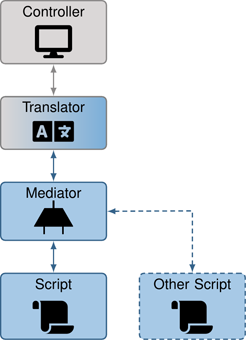
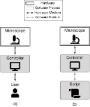
- during the experiment, has been used in SPM for 2D scan efficiency [10] as well as in SPM spectroscopy [11]. Furthermore, investigators have used hypothesis learning, where a model chooses between a number of hypotheses by testing them during the experiment [12]. As an example of a complete autonomous
- 2D scans collected during a single scanning event, where each scan corresponds to a channel saved. The 1D spectroscopy structure holds a one-dimensional array of values collected at a single xy position within the scan region. Both the scan and spectroscopy data structures are expected to be read
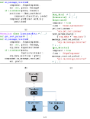
- (AM-AFM) or frequency-modulated atomic force microscopy (FM-AFM)) and spectroscopic mode (e.g., IV curves or force spectroscopy), which we believe is justifiable as part of the experimental setup. This base set of operations gives the user a reasonable degree of flexibility: One could design an image




Two-step laser synthesis of Ag@TiO2 nanomaterials for the photocatalytic degradation of rhodamine B
Beilstein J. Nanotechnol. 2026, 17, 622–634, doi:10.3762/bjnano.17.43
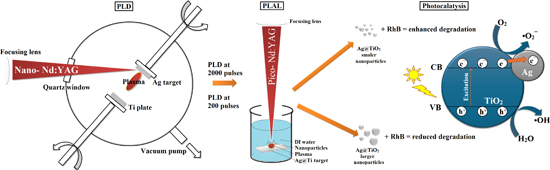
- UV–vis spectroscopy confirmed the formation of nanoparticles with a predominantly anatase TiO2 phase. The synthesized particles exhibited spherical morphology, with average diameters ranging from 97–331 nm for the 200p sample and 86–144 nm for the 2000p sample. The photocatalytic efficiency was
- characterization was performed using scanning electron microscopy (SEM) and transmission electron microscopy (TEM) with energy-dispersive spectroscopy (EDS), aiming to establish a clear correlation between synthesis parameters, nanostructure features, and photocatalytic activity. In our previous studies [6][7][21
- a state of initial instability. Influence of Ag on the bandgap energy of TiO2 UV–vis spectroscopy was employed to investigate the effect of Ag doping on TiO2 and to determine the bandgaps of both TiO2 and Ag@TiO2 samples. Figure 7a displays the absorption spectra of TiO2 and Ag-modified TiO2 samples


Recent progress in enhancing built-in electric fields of perovskite solar cells via junction engineering
Beilstein J. Nanotechnol. 2026, 17, 602–621, doi:10.3762/bjnano.17.42
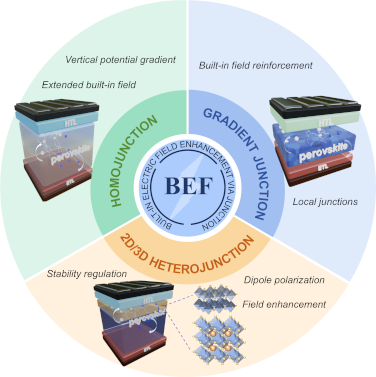
- to p-type, and thus induced a vertical p–n homojunction in the lower bulk region of the film. This band restructuring significantly amplified and extended the BEF, thereby facilitating directional charge separation and transport. Ultraviolet photoelectron spectroscopy (UPS) revealed an increase in
- –p homojunction strategy, which approximately doubled carrier lifetime and mobility (about 17.2 cm2·V−1·s−1), and reduced the trap density by half, using transient photocurrent and transient photovoltage spectroscopy, and TRPL. BEF enhances directional transport through the n–p homojunction and




Probing tribological evolution in atomically thin MoS2 at different scales
Beilstein J. Nanotechnol. 2026, 17, 586–597, doi:10.3762/bjnano.17.40
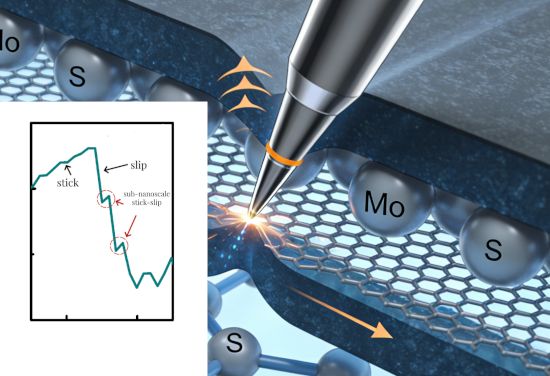
- sequentially in acetone, ethanol, and deionized water via ultrasonic cleaning and then dried with high-purity nitrogen. Sample characterization MoS2 layer thickness was determined via AFM (MFP-3D, Asylum Research) and Raman spectroscopy (inVia Reflex, Renishaw). AFM topographic images were acquired in tapping


Impacts of annealing on structural and photophysical properties of zinc phthalocyanine adsorbed on graphene
Beilstein J. Nanotechnol. 2026, 17, 576–585, doi:10.3762/bjnano.17.39
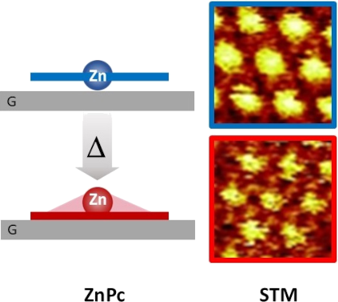
- formation towards 3D self-assembly. Keywords: graphene; optical spectroscopy; organic semiconductors; phthalocyanine; scanning tunneling microscopy; self-assembly; Introduction Combining the properties of graphene and molecular semiconductors in a given material organized at the molecular scale appears as
- compared with results of scanning tunneling microscopy (STM) and scanning tunneling spectroscopy (STS) [29]. Similarly to their thicker 3D counterparts, 2D metal-free Pc [30] or metalated Pc [31] assemblies adsorbed on various substrates have shown important phase changes induced by thermal treatments. In
- the dried samples both before and after annealing at 80 °C for 30 or 180 min. Optical absorption micro-spectroscopy Optical absorption was measured by transmission micro-spectroscopy for ZnPc:TSB35-C12 grown on a highly transparent CVD graphene monolayer transferred to a microscope glass cover plate


Laser–material interactions in liquids for the synthesis of nanomaterials: current status and perspectives
Beilstein J. Nanotechnol. 2026, 17, 571–575, doi:10.3762/bjnano.17.38
- processing parameters has enabled a wide range of applications [53]. These include catalysis [54] (e.g., for oxygen [55] and hydrogen evolution reactions [56] in hydrogen production), sensing (e.g., surface-enhanced Raman spectroscopy [51] for detection of pollutants and optical sensing of glucose [57
Synthesis of Cu–Mo/TiO2 and Co–Mo/TiO2 photocatalysts for the efficient degradation of organic pollutants in water
Beilstein J. Nanotechnol. 2026, 17, 559–570, doi:10.3762/bjnano.17.37
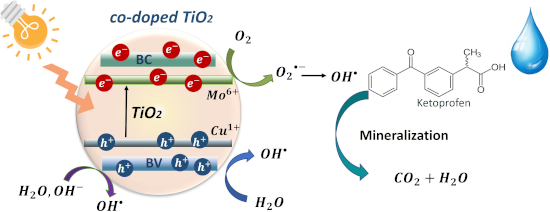
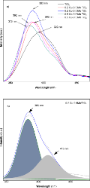
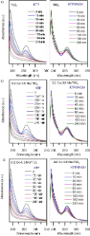
- , copper and cobalt, were added at 0.2–0.5 wt %. The co-doped TiO2 photocatalysts were characterized by XRD, SEM, N2 physisorption, UV–vis diffuse reflectance spectroscopy, and photoluminescence spectroscopy. The structural characterization showed stabilization of the anatase phase, and lattice distortion
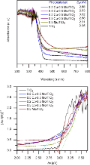
- the increase in specific surface area in these materials. Optical characterization The photocatalysts’ bandgap energy (Eg) was measured by UV–vis diffuse reflectance spectroscopy. Figure 3 shows the absorption spectra of all the materials. Pure TiO2 absorbs light in the UV range. With the
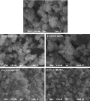
- microscope JEOL 6490LV equipped with an energy dispersive X-ray (EDX) spectroscopy analyzer for chemical microanalysis using 20 kV of voltage. The samples were placed on a carbon slab and covered with gold to improve the conductivity. The surface area was measured by N2 physisorption through the BET method



Electrochemical determination of ciprofloxacin using a MIL-101/reduced graphene oxide-modified electrode
Beilstein J. Nanotechnol. 2026, 17, 541–554, doi:10.3762/bjnano.17.35
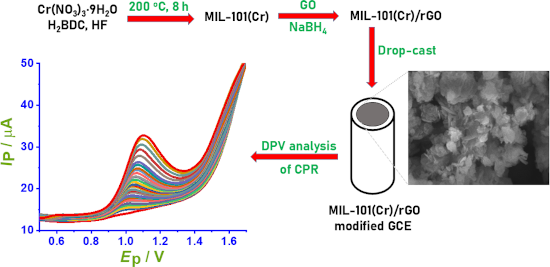
- ) equipped with an energy-dispersive X-ray (EDX) system. Raman spectroscopy was performed on an Xplora Plus instrument (Horiba, Japan) with a stimulating light wavelength of 785 nm. Electrochemical impedance spectra (EIS) were recorded using an Autolab PGSTAT302N system. Electrochemical experiments were
- by X-ray photoelectron spectroscopy (XPS). The survey spectrum (Figure 3a) confirms the presence of Cr, C, and O, which is consistent with the expected composition of MIL-101(Cr) integrated with reduced graphene oxide (rGO). No obvious extraneous elemental signals were observed in the survey spectrum


Fractional shot noise of an SU(N) Kondo system
Beilstein J. Nanotechnol. 2026, 17, 515–540, doi:10.3762/bjnano.17.34


![[Graphic 127]](/bjnano/content/inline/2190-4286-17-34-i187.svg?max-width=637&scale=1.18182)

Probing internal continua and atomic ultrafast charge transfer within size-controlled nanoparticles by post-collision interaction in core-hole clock spectroscopy
Beilstein J. Nanotechnol. 2026, 17, 505–514, doi:10.3762/bjnano.17.33
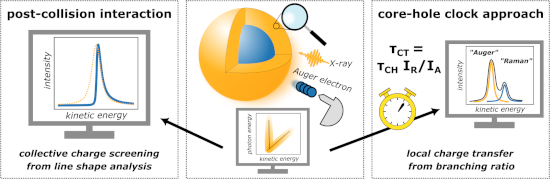
- -Liebknecht-Straße 24/25, 14476 Potsdam-Golm, Germany 10.3762/bjnano.17.33 Abstract This study investigates size-controlled, quantum-confined CdSe/ZnS core–shell quantum dots using core-hole clock spectroscopy in combination with post-collision interaction (PCI) line shape analysis, providing insights into
- -collision-interaction; quantum dots; resonant Auger spectroscopy; Introduction The interplay of electron localization, itinerance, and charge transfer is essential to functional nanoparticles and quantum dots (QDs) [1][2][3][4][5][6]. In terms of electronic structure properties, materials on the nanoscale
- surface ligands [14]. In this work, we obtain charge transfer on the atomic scale for size-dependent quantum-confined systems using core-hole clock (CHC) spectroscopy. We further expand the well-established CHC approach by the aspect of detecting the internal continuum states within the size-controlled



Upcycling agroindustrial waste into graphene oxide supports for gold nanoparticles: toward sustainable nanomaterials
Beilstein J. Nanotechnol. 2026, 17, 489–504, doi:10.3762/bjnano.17.32
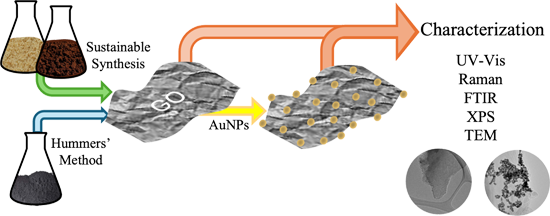
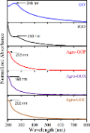
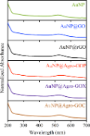
- , ozone-free emission in the 310–450 nm range, λmax = 360 nm) for 60 min under continuous stirring. A purple dispersion was obtained, confirming the formation of AuNPs. Characterization techniques The optical properties of the samples were analyzed by ultraviolet–visible (UV–vis) spectroscopy with a Cary
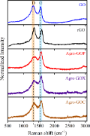
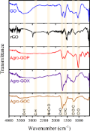
- , with an acquisition time of 30 s and two accumulations, yielding a spectral resolution of 0.8 cm−1 per pixel. Attenuated total reflectance Fourier transform infrared (ATR-FTIR) spectroscopy was performed using a Nicolet Nexus 470 FTIR spectrometer (Nicolet, Madison, WI, USA). Spectra were collected at
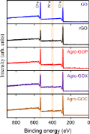
- room temperature in the 4000–540 cm−1 range with a spectral resolution of 4 cm−1, averaging 80 scans per sample. The surface chemical composition was assessed by X-ray photoelectron spectroscopy (XPS) using a SPECS spectrometer equipped with a PHOIBOS 100 energy analyzer and an Al Kα X-ray source (hν



Defects and defect-mediated engineering of two-dimensional materials: challenges and open questions
Beilstein J. Nanotechnol. 2026, 17, 454–488, doi:10.3762/bjnano.17.31
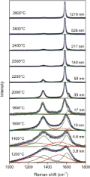
- spectroscopy has led to metrological procedures to access defect concentration in graphene. Well-established formulae are available to determine defect quantity based on the D/G ratio and the linewidth of the G band (see Figure 2) [86][87][88][89]. In a wider context, while Raman-active local vibrational modes
- been computationally prohibitively costly, but modern machine learning models have enabled such simulations for non-resonant Raman experiments. Therefore, the great challenge is the development of higher-precision measurements utilizing nano-Raman spectroscopy (see Figure 3). When nano-Raman is
- implemented in the tip-enhanced Raman spectroscopy (TERS) configuration, the well-established D/G ratio depends on the TERS tip enhancement [95] and whether the distance among defects is larger or smaller than the tip apex size [96][97]. As shown in Figure 3, the D/G ratio exhibits three different tendencies





Eco-efficient materials for agricultural crops based on a mineral rich in MOR- and HEU-type zeolites
Beilstein J. Nanotechnol. 2026, 17, 381–395, doi:10.3762/bjnano.17.26
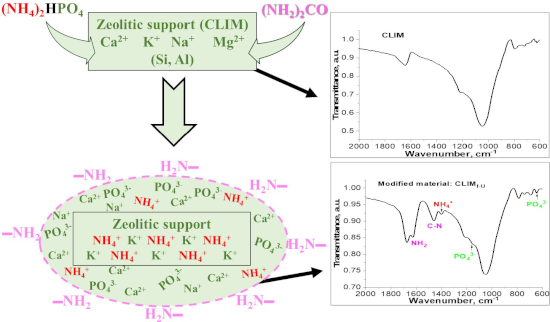
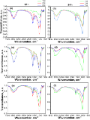
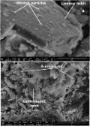
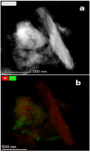
- urea arranged on the surface so that it covers the material and interacts with the zeolitic frameworks, was evidenced by Fourier-transform IR spectroscopy, adsorption measurements, scanning electron microscopy, scanning transmission electron microscopy, and other methods, as well as through culture
- ) and other elements (Si) important for agricultural crops. Particular attention was paid to the analysis of the interaction of nitrogen and phosphorus species on this complex multiphase zeolitic carrier, applying Fourier-transform infrared spectroscopy (FTIR), X-ray diffraction (XRD), scanning electron
- exchanged in both zeolite phases, and urea arranged as a layer that covers the material and interacts with the zeolitic frameworks were confirmed by using FTIR spectroscopy, XRD, nitrogen adsorption measurements, SEM, STEM and other research methods, as well as culture tests. The complexity of the zeolitic




Interconnection morphology effects on the radio frequency response of carbon nanotube sponges
Beilstein J. Nanotechnol. 2026, 17, 343–351, doi:10.3762/bjnano.17.23
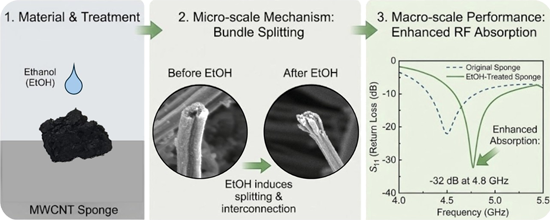
- . In particular, we observed that the response of S11 = −22.6 dB around 4.8 GHz from the CNS antenna improved after a mild treatment with ethanol, reaching S11 = −32.6 dB measured after 10 min of waiting. This observed effect is studied in detail with scanning electron microscopy and Raman spectroscopy
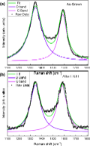
- treatment. We also investigated the chemical state of the carbon atoms by acquiring X-ray photoelectron spectroscopy (XPS) spectra from the as-grown and ethanol-treated CNS samples. The survey spectra are reported in Supporting Information File 1 (Figure S2). Figure 5 shows that the C1 s spectra are



Beam shaping techniques for pulsed laser ablation in liquids: Unlocking tunable control of nanoparticle synthesis in liquids
Beilstein J. Nanotechnol. 2026, 17, 309–342, doi:10.3762/bjnano.17.22
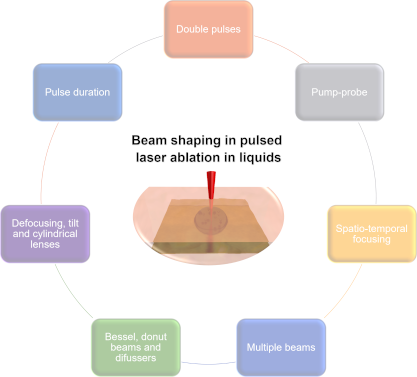
- controllability. The latter refers to the ability to fully automate and operate the process under closed-loop control. PLAL lends itself naturally to remote monitoring and automation through computer-controlled lasers, scanning systems, and online spectroscopy [15], although similar automation can also be
- ][77] and colorimetric sensors [78][79], surface-enhanced Raman spectroscopy detection [71][80][81], nanofluids for thermal applications [82][83][84], additive manufacturing [85][86][87], or catalysis [88][89]. The previously mentioned applications of PLAL-derived NPs can be grouped into four major
- inductively coupled plasma-based (ICP) techniques (ICP mass spectrometry or ICP optical emission spectroscopy) and atomic absorption spectroscopy, particularly for metallic targets, as they determine the concentration in a representative colloidal aliquot. Complementary methods include UV–vis spectroscopy







Advancing nanolithography: a comprehensive review of materials for local anodic oxidation with AFM
Beilstein J. Nanotechnol. 2026, 17, 275–291, doi:10.3762/bjnano.17.19
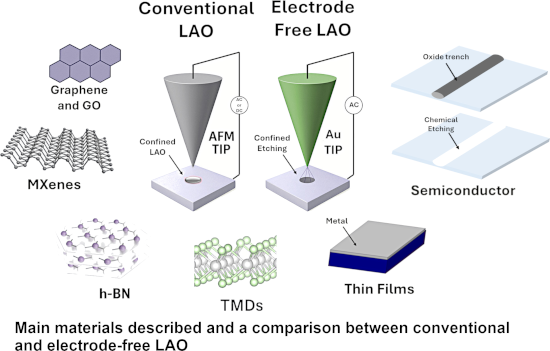
- due to reduced electronic interactions between layers. Raman spectroscopy and micro-XPS studies confirm these effects, revealing oxygen incorporation patterns and changes in chemical composition. In summary, the versatility in achieving selective oxidation or ablation expands the potential for device





