


Search results
Search for "strain" in Full Text gives 403 result(s) in Beilstein Journal of Nanotechnology. Showing first 200.
Substrate-dependent pore formation in molybdenum disulfide monolayers under ion irradiation
Beilstein J. Nanotechnol. 2026, 17, 769–780, doi:10.3762/bjnano.17.54
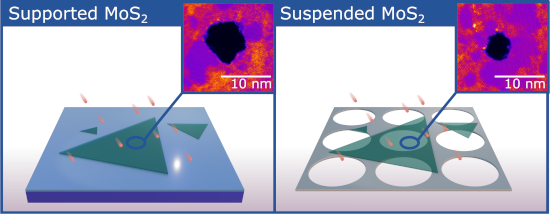
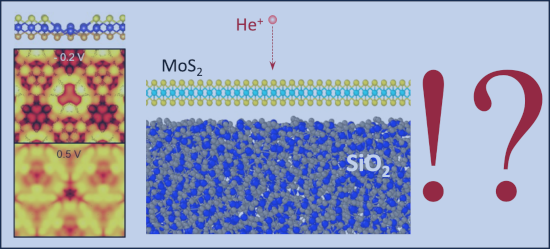
- and strain-related changes but do not directly resolve the atomic structure [34][35]. This leaves a gap in our understanding of how ion-induced defect formation differs between suspended and substrate-supported 2D materials. We address this gap by directly measuring substrate effects on defect


Environmental applications of silver nanoparticles: state-of-the-art review and emerging trends
Beilstein J. Nanotechnol. 2026, 17, 697–736, doi:10.3762/bjnano.17.49
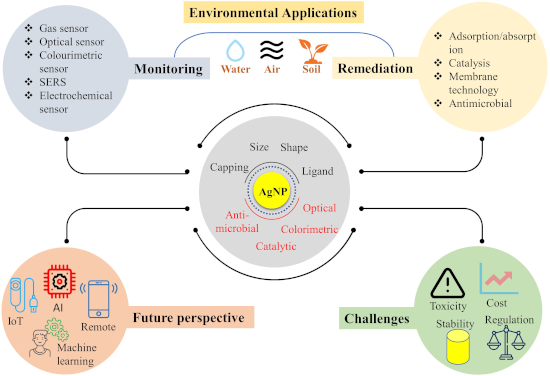
- citrate as a capping agent to assess the impact of nanoparticle size on bacterial strain [62]. The study found that 5 nm AgNPs have a greater effect on killing bacterial strains compared to other sizes [62]. Collectively, these studies indicate that morphology and size significantly influence AgNP


Recent progress in enhancing built-in electric fields of perovskite solar cells via junction engineering
Beilstein J. Nanotechnol. 2026, 17, 602–621, doi:10.3762/bjnano.17.42
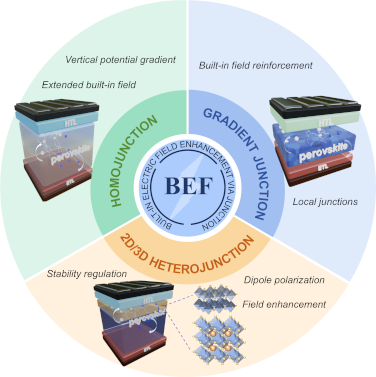
- aligning energy levels [16]. These advantages have established heterojunctions as a major research hotspot, with current efforts shifting from simple passivation to deliberate interfacial potential design [17]. Nevertheless, the impact of phase penetration depth, residual strain, and bulk inhomogeneity on
- mainly due to the electronic compensation effect of the vertical Ge2+ gradient on Sn vacancies, which prevents the oxidation of Sn2+ to Sn4+ and minimizes deep-level defects. Additionally, the GE-I framework prevents ion migration and strain accumulation, suppressing failure from Sn vacancy diffusion and
- % efficiency at 85 °C for 300 h, 88% after 30 days in nitrogen, and 80.8% under 400 h of continuous illumination, with enhanced stability attributed to hydrophobic fluorinated chains, –SF3 defect passivation, and lattice strain release. In graded junctions, BEF degradation arises directly from the collapse of



Probing tribological evolution in atomically thin MoS2 at different scales
Beilstein J. Nanotechnol. 2026, 17, 586–597, doi:10.3762/bjnano.17.40
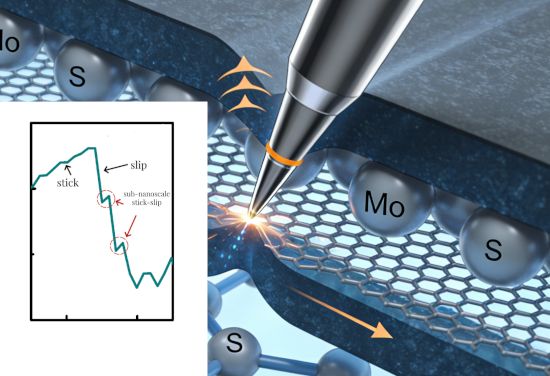
- roughness induces slight strain and wrinkle deformation of MoS2 films, which slightly expands the stick–slip period. However, this modulation is a systematic effect for both 1L and 4L MoS2 under all load conditions, and it does not change the relative variation trend of the strengthening effect and sub
- attributed to strain induced by the rough substrate, which distorts the MoS2 lattice and increases the tip’s slip distance between stable sites. A key finding is the observation of sub-nanoscale stick–slip motion during the slip phase (Figure 2c,d). In classical models, slip is instantaneous, because the tip


Upcycling agroindustrial waste into graphene oxide supports for gold nanoparticles: toward sustainable nanomaterials
Beilstein J. Nanotechnol. 2026, 17, 489–504, doi:10.3762/bjnano.17.32
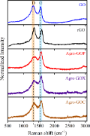
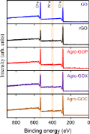
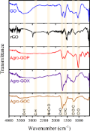
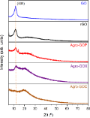
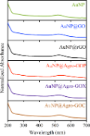
- , rGO and Agro-GO present a blueshift in the G band. This may be related to phonon stiffening caused by lattice strain and p-type doping; in rGO, this arises from reduction-induced defect restructuring, while, in Agro-GO, it originates from extensive oxidation and the strong confinement of small sp2



Defects and defect-mediated engineering of two-dimensional materials: challenges and open questions
Beilstein J. Nanotechnol. 2026, 17, 454–488, doi:10.3762/bjnano.17.31
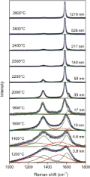
- -active modes of the host material regarding peak position, lineshape, and the relative intensities of peaks. The position and relative intensities are affected by strain and doping induced by defects. In addition, relaxation of the translation symmetry leads to activation of modes that would otherwise be
- among defects as several defects can yield similar strain, doping, or mode activation. In principle, defects might be separated by comparing the effects on all observed peaks [94]. Unfortunately, many common 2D materials only show a few Raman-active peaks under non-resonant conditions; this problem can
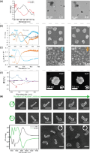
- energies, linewidths, and photon correlations, underscoring the importance of local strain, dielectric fluctuations, moiré potentials, and defect proximity. However, the mismatch between atomic-scale lattice-resolving techniques and micrometer-scale far-field optical spectroscopy has long obstructed





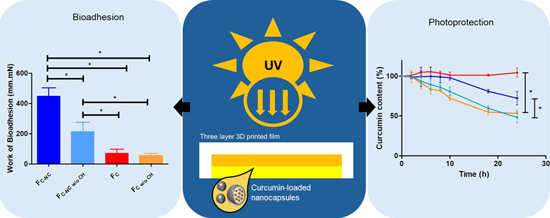
Nanocarrier-integrated multilayer films produced by 3D printing for improved skin adhesion and curcumin photostability
Beilstein J. Nanotechnol. 2026, 17, 440–453, doi:10.3762/bjnano.17.30
- tangent (tan δ), were measured using an oscillatory frequency sweep over an angular frequency range of 1–600 rad/s at a constant strain of 0.5%. Flow behaviour was assessed using a shear rate ramp from 0.1 to 1.0 s−1 and subsequently from 1.0 to 0.1 s−1, in order to determine the best-fit flow model for
- the hydrogels. An oscillatory amplitude sweep was performed over a strain range of 0.1–500% at a constant frequency of 1 Hz to determine the linear viscoelastic region and to estimate the yield stress. Thixotropic behaviour was evaluated using a three-interval thixotropy test (3ITT), conducted as
- follows: the first interval was performed at 1.0% strain for 100 s, the second interval at 100% strain for 100 s, and the third interval at 1.0% strain for 100 s. All measurements were performed in triplicate. Topical skin films 3D printing Three-layer films containing curcumin-loaded polymeric


First-principles study on elastic properties of Cu, (Cu1−x,Nix)3Sn and interfacial mechanical properties of (Cu1−x,Nix)3Sn/Cu in the lead-free solder joint
Beilstein J. Nanotechnol. 2026, 17, 428–439, doi:10.3762/bjnano.17.29
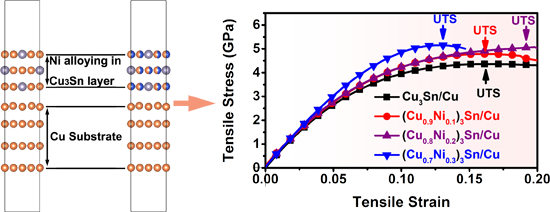
- strain methods, where three and nine deformations were built for Cu and (CuxNi1−x)3Sn, respectively, related to the three and nine independent elastic constants corresponding to cubic and orthorhombic crystals, respectively [23]. Strain magnitudes of −0.02, −0.01, 0.0, 0.01, and 0.02 were used to
- , the strain along the z-axis was fixed; at the same time, the stresses along the x-axis and the y-axis were relaxed to less than 0.5 GPa. For the calculations on the interface structure, a kinetic energy cutoff of 30 Hartree, a k-point mesh of 4 × 4 × 1 and a potential residual V(r) of less than 10−8
- and (CuxNi1−x)3Sn were evaluated using the parameters ν and B/G. Poisson’s ratio ν is defined as the ratio of the transverse strain to the longitudinal strain, and it characterizes the resistance of materials to distortion under mechanical load [31]. The boundary of the ductile-to-brittle transition


Calculation of the dynamic stiffness of a cantilever under torsional oscillation
Beilstein J. Nanotechnol. 2026, 17, 303–308, doi:10.3762/bjnano.17.21
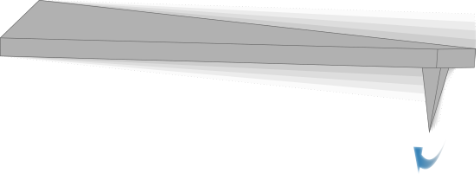
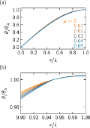
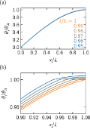
- strain energy. Without tips, the torsional dynamic stiffness is approximately 23% larger than the static stiffness. The modification decreases to 21–23% with tips. Applying the present correction is essential for achieving quantitatively accurate stiffness values in dynamic measurements. Keywords
- -moment of inertia model and derive the formula for the dynamic stiffness by assuming that the kinetic energy and the strain energy of the cantilever are equivalent to those of the model [22][30]. Specifically, for the kinetic energy , and for the strain energy , where is the dynamic stiffness for the n
- of the deformation become smaller for l < x ≤ L. The dynamic stiffness and the effective moment of inertia with a tip are also calculated. The kinetic energy is now modified to be , while the strain energy remains the same [22][30]. The dynamic stiffness and the effective moment of inertia are

Durable antimicrobial activity of fabrics functionalized with zeolite ion-exchanged nanomaterials against Staphylococcus aureus and Escherichia coli
Beilstein J. Nanotechnol. 2026, 17, 262–274, doi:10.3762/bjnano.17.18
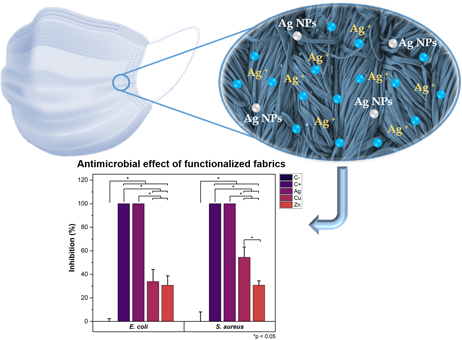
- ]. The susceptibility of bacteria to antimicrobial materials may depend on several factors, such as dose, humidity, and strain specificity [42][43]. Silver has been shown to exert a biocidal effect similar to that of copper against several E. coli and S. aureus strains using lower doses [43]. Likewise




Micro- and nanoscale effects in biological and bioinspired materials and surfaces
Beilstein J. Nanotechnol. 2026, 17, 214–217, doi:10.3762/bjnano.17.14
- were mechanically characterized, and the derived principles were transferred to metamaterials that present promising advances for programmable local strain and failure behavior. A strength of such a technology-pull approach for problem solving is that principles extracted from different biological
From shield to spear: Charge-reversible nanocarriers in overcoming cancer therapy barriers
Beilstein J. Nanotechnol. 2026, 17, 159–175, doi:10.3762/bjnano.17.10
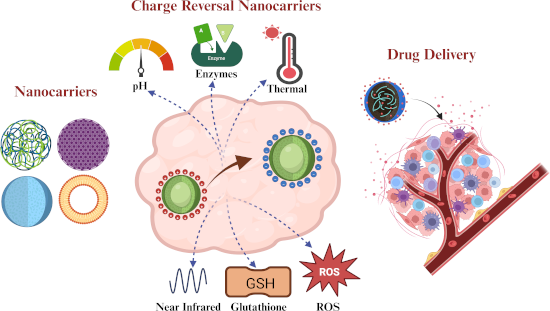
- therapeutics [8]. Despite their efficacy, conventional therapies often cause severe side effects. Chemotherapy induces anaemia and immunosuppression, radiation triggers fatigue and psychological strain, surgery carries risks of organ damage, and hormone therapy disrupts endocrine balance, highlighting the


Functional surface engineering for cultural heritage protection: the role of superhydrophobic and superoleophobic coatings – a comprehensive review
Beilstein J. Nanotechnol. 2026, 17, 63–96, doi:10.3762/bjnano.17.6

- . The tested microorganisms were three bacterial strains, that is, Staphylococcus aureus, Bacillus cereus, and Pseudomonas aeruginosa, one fungus strain (Penicillium chrysogenum) and one yeast strain (Rhodotorula spp.). Specifically, the microbial activity was reduced by 100% for Staphylococcus aureus




Improving magnetic properties of Mn- and Zn-doped core–shell iron oxide nanoparticles by tuning their size
Beilstein J. Nanotechnol. 2025, 16, 2285–2295, doi:10.3762/bjnano.16.157
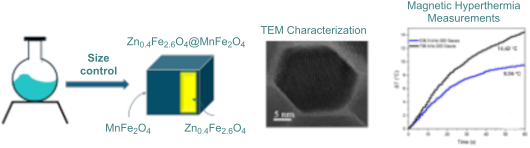
- Zn2+ into tetrahedral sites, which strengthens the Fe3+–O bond through enhanced covalency and changes in cation distribution, leading to shorter and stiffer bonds. The additional upward shift to 730 cm−1 in the core–shell structure reflects interfacial strain and electronic interactions between the
- Zn0.4Fe2.6O4 core and the MnFe2O shell. This strain distorts the tetrahedral FeO4 units, further stiffening the Fe–O bonds, while electronic coupling and potential cation redistribution at the interface increase the vibrational frequency. These structural and electronic effects collectively explain the



Chiral plasmonic nanostructures fabricated with circularly polarized light
Beilstein J. Nanotechnol. 2025, 16, 2245–2264, doi:10.3762/bjnano.16.154
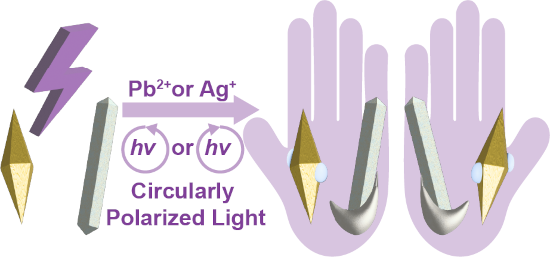
- the fabrication details and morphology of the CPL-enabled cPNSs in Section 2. In recent years, chiral assemblies of PNSs from mechanical forces via magnetic fields [60][61] or strain [62][63] have also been demonstrated. Although the cPNSs prepared via mechanical forces are relatively scarce, they





Electron transport through nanoscale multilayer graphene and hexagonal boron nitride junctions
Beilstein J. Nanotechnol. 2025, 16, 2132–2143, doi:10.3762/bjnano.16.147
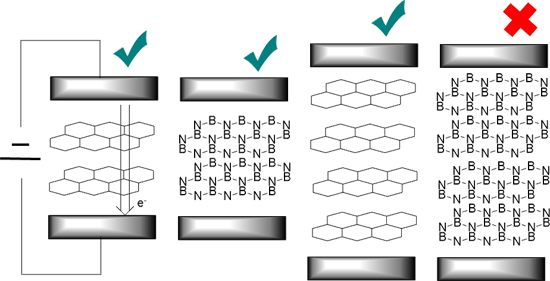
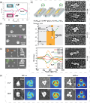
- Pt(111) surface, graphene, and h-BH using the QuantumWise ATK interface builder. The process involves strain minimization in the lattice mismatch by symmetry multiplication of the unit cells. The junctions shown in Figure 4 and Figure 5 have 1.06% distributed strain over Pt and graphene or h-BN. The


Quality by design optimization of microemulsions for topical delivery of Passiflora setacea seed oil
Beilstein J. Nanotechnol. 2025, 16, 2116–2131, doi:10.3762/bjnano.16.146

- strain, offering critical information about viscosity, flow characteristics, and structural stability. According to the proposed QTPP, a higher viscosity with pseudoplastic (shear-thinning) behavior is preferred for topical formulations, as it ensures ease application and good retention on the skin


Molecular and mechanical insights into gecko seta adhesion: multiscale simulations combining molecular dynamics and the finite element method
Beilstein J. Nanotechnol. 2025, 16, 2055–2076, doi:10.3762/bjnano.16.141
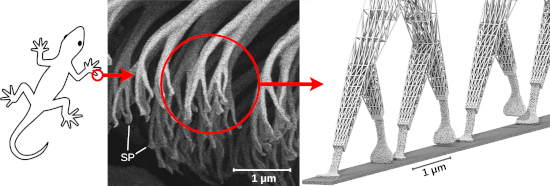
- mesh at the end of the spatulae were also removed to be replaced by molecular spatulae models. Table 1 lists the parameters and values used to construct the continuum part of the model. The finite element mesh response was governed by linear isotropic elasticity, with the stress–strain relationship
- given by Hooke’s law [36][37]: where σ is the Cauchy stress tensor, ε is the infinitesimal strain tensor, tr(ε) denotes the trace of the strain tensor, I is the second-order identity tensor, and λ and μ are the Lamé parameters defined as: with E being Young’s modulus and ν Poisson’s ratio. The real seta
- step, ΔtMD, the number of MD steps per iteration, nMD, and the number of iterations per load step, niter: Using this time and the imposed strain per load step εls, the pull-off velocity is set as In our previous work [46][47][48][49][50] on bulk polymer models, we found that prescribing a displacement






PEGylated lipids in lipid nanoparticle delivery dynamics and therapeutic innovation
Beilstein J. Nanotechnol. 2025, 16, 1914–1930, doi:10.3762/bjnano.16.133
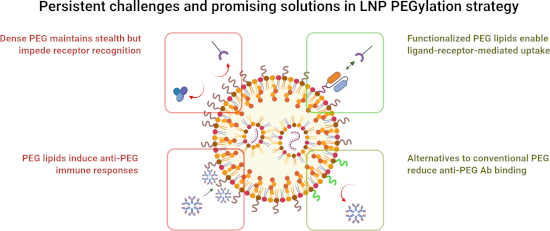
- conjugation to cysteine residues on antibodies or peptides, enabling site-specific and stable coupling [35]. PEG lipids modified with dibenzocyclooctyne (DBCO) or azide groups can undergo strain-promoted azide-alkyne cycloaddition. This click chemistry is advantageous when conjugating sensitive targeting



Low-temperature AFM with a microwave cavity optomechanical transducer
Beilstein J. Nanotechnol. 2025, 16, 1873–1882, doi:10.3762/bjnano.16.130
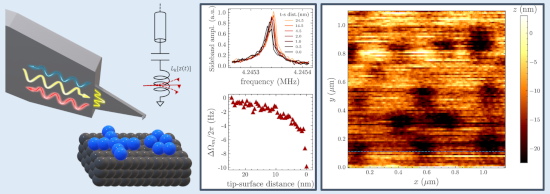
- edge of the plate, giving rise to a modulation of its kinetic inductance due to surface strain generated by cantilever bending. A Pt–C tip with curvature radius below 10 nm at its apex is formed at the free end of the cantilever through a series of electron-beam-assisted depositions. Figure 1d shows a


Further insights into the thermodynamics of linear carbon chains for temperatures ranging from 13 to 300 K
Beilstein J. Nanotechnol. 2025, 16, 1818–1825, doi:10.3762/bjnano.16.125
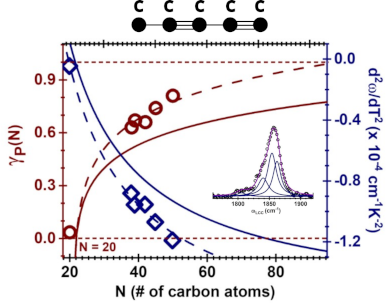
- , coefficient of linear thermal expansion, specific heat, thermal strain, and Grüneisen parameter at constant pressure) were empirically determined for the first time in the range of temperatures 70 < T < 293 K. These observables were all correlated with the C-band frequency (ωLCC) dependence on the temperature
- linear thermal expansion (α), thermal strain (εT), and Grüneisen parameter at constant pressure (γp). The present work is intended to explore some important points that were left open by Costa and collaborators [30]. These points mainly regard the influence of the number of CNT walls in the LCC
- is the thermal strain between T and T + dT, and γP is the T-independent Grüneisen parameter at constant P. Equation 1 in turn is expected to follow the empirical relation: where the second derivative magnitude is N-dependent (see Figure 3). Figure 2a confirms that this is the case: the solid lines


![[Graphic 23]](/bjnano/content/inline/2190-4286-16-125-i25.svg?max-width=637&scale=1.18182)
Beyond the bilayer: multilayered hygroscopic actuation in pine cone scales
Beilstein J. Nanotechnol. 2025, 16, 1695–1710, doi:10.3762/bjnano.16.119
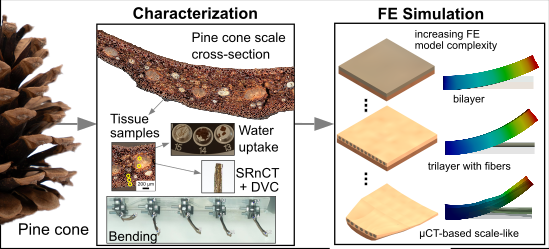
- representing the deformation from one state to the other. Using this displacement field allows for the calculation of a strain tensor field, which describes the axis-dependent hygroscopic expansion [29]. Incorporating the anisotropic swelling and shrinkage behavior into in silico models of the pine cone scale
- abstraction levels of a pine cone scale cross-sectional geometry incorporating the DVC-estimated hygroscopic expansion coefficients. This will answer the questions of (1) whether an intra-tissue gradient of the hygroscopic strain can be observed, (2) whether this measured hygroscopic strain can be used in a
- , “Affine_parameters.txt” and “BSpline_parameters.txt” can be found in Supporting Information File 1. Based on the resulting displacement field, the Green–Lagrangian strain was calculated using the Insight Toolkit strain filter extension (ITK: ver. 5.3.0, itk-strain: ver. 0.4.0) [40] in Python (ver. 3.11.9) [41]. Finally


Prospects of nanotechnology and natural products for cancer and immunotherapy
Beilstein J. Nanotechnol. 2025, 16, 1644–1667, doi:10.3762/bjnano.16.116
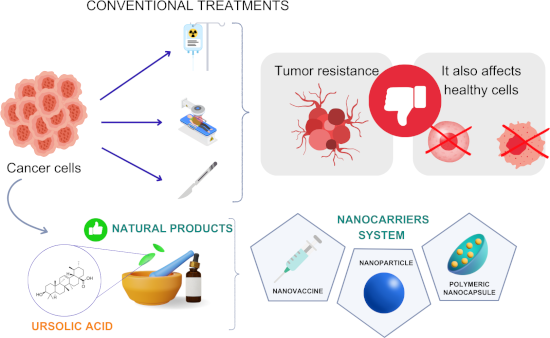
- were developed using membrane vesicles from a Curtobacterium proimmune K3 strain, isolated from ginseng, and black cumin seed extract, which are presented in the formulation in the form of stabilizing adjuvants. The use of ginseng is based on the fact that its components may have anticancer effects



Bioinspired polypropylene-based functionally graded materials and metamaterials modeling the mistletoe–host interface
Beilstein J. Nanotechnol. 2025, 16, 1592–1606, doi:10.3762/bjnano.16.113
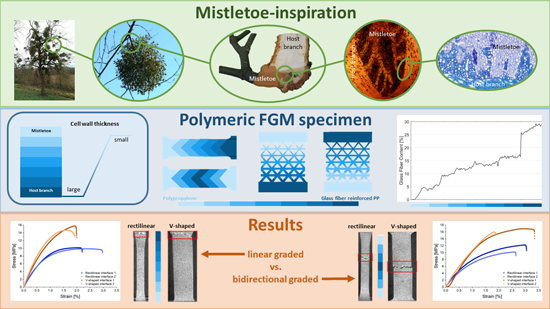
- local strain behavior and the failure point. Moreover, this phenomenon was transferred to metamaterial structures where the material gradient counteracts the geometric gradient (beam thickness). The results highlight the effective anchoring method of mistletoe through graded structuring of the interface
- with the host branch and provide a framework for creating bioinspired functionally graded material systems with programmable local strain and failure behavior. Keywords: bioinspiration; digital image correlation; fiber-reinforced polypropylene; materials interface; programmable failure; Introduction
- η = 6.145. The mean value of the linearly graded materials, obtained experimentally from the stress–strain slopes of the elastic region, was used as the Es value. In order to achieve a homogeneous strain distribution along the inversely graded metamaterial geometry, the beams of the two graded


Transient electronics for sustainability: Emerging technologies and future directions
Beilstein J. Nanotechnol. 2025, 16, 1545–1556, doi:10.3762/bjnano.16.109
- materials exhibit strong potential for the use in implantable medical devices. For instance, Ge nanomembranes have been employed in fully biodegradable strain and temperature sensors, demonstrating proven biocompatibility and gas-free dissolution. In addition, IGZO has been utilized to fabricate transient
- large elastic strain ranges, enhancing stretchability and enabling integration with soft electronics. The Mg–Zn–Ca metallic glass, for example, has shown up to 2.46-fold improved yield strain compared to conventional Mg alloys (Figure 2b) [62]. Enhancing the diversity of metal materials is crucial to
- , and high-throughput manufacturing of bioresorbable electronics, supporting both scalability and device integration. Early demonstrations have successfully produced temperature [6][14][27][75][76], strain [6][14][27][77][78], and pH sensors [6][27][75][79] based on silicon and bioresorbable metals





