


Search results
Search for "MTS" in Full Text gives 27 result(s) in Beilstein Journal of Nanotechnology.
Optimizing the synthesis of CdS/ZnS core/shell semiconductor nanocrystals for bioimaging applications
Beilstein J. Nanotechnol. 2014, 5, 919–926, doi:10.3762/bjnano.5.105

- studies, a cell viability (MTS) assay was carried out for F127-CdS/ZnS QDs. As shown in Figure 10, we tested the cell viability of Panc-1 cells, treating them with various concentrations of ternary nanocrystal formulations for 48 h. The cell viability remained at 84% even at a concentration as high as 500


Synthesis and catalytic applications of combined zeolitic/mesoporous materials
Beilstein J. Nanotechnol. 2011, 2, 785–801, doi:10.3762/bjnano.2.87

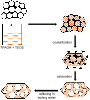
- coordinated Ti [35][43]. Therefore, in the last decade, research has been focused on the combination of mesoporosity and zeolitic features [20][44][45][46][47][48][49][50]. Many promising materials, such as MTS-9 [51] and Ti-MMM-1 [52] have already been developed. The ultimate goal is to develop a “true
- that give rise to an enhanced catalytic performance in comparison with their purely zeolitic and/or mesoporous counterparts [51][52][57][58][59]. MTS-9 for example [51], gives rise to a higher catalytic activity in the epoxidation of styrene than Ti-MCM-41 and shows a selectivity and activity similar
- to TS-1 zeolite. In the hydroxylation of 2,3,6-trimethylphenol, MTS-9 is more active than both Ti-MCM-41 and TS-1. However, there are also examples of combined zeolitic/mesoporous materials, wherein there is no significant improvement when a comparison is drawn with standard zeolites or mesoporous




Other Beilstein-Institut Open Science Activities



