

Search results
Search for "active targeting" in Full Text gives 31 result(s) in Beilstein Journal of Nanotechnology.
The impact of molecular tumor profiling on the design strategies for targeting myeloid leukemia and EGFR/CD44-positive solid tumors
Beilstein J. Nanotechnol. 2021, 12, 375–401, doi:10.3762/bjnano.12.31

- transcription factors, but also as roadmaps for active targeting using novel nanoparticles (NPs). Furthermore, the use of nanotechnology for the delivery of cytotoxic drugs can also be valuable in facilitating cell-specific administration of drugs, improving their bioavailability, reducing side effects, and
- the BM within 6 h after administration [28]. The addition of larger quantities of surface-oriented DSPE-PEG resulted in a reduction of BM uptake, probably due to steric hindrance of the anionic amphiphile, which is considered as the active targeting moiety. In their further research, the authors
- a general strategy of active targeting. It could be essential in leukemia treatment, especially in the cases where a persistent clone dominates the leukemia cell population. Taking into account the molecular profile of the disease, there are a plethora of overexpressed molecules in leukemia cancer


Interactions at the cell membrane and pathways of internalization of nano-sized materials for nanomedicine
Beilstein J. Nanotechnol. 2020, 11, 338–353, doi:10.3762/bjnano.11.25
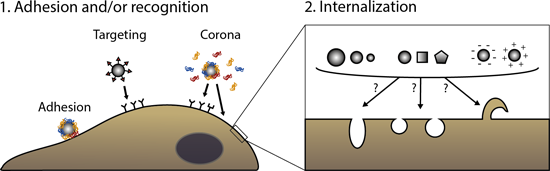
- system, blood circulation time, biodistribution, and cellular recognition and internalization can be tailored [1][2][3][7][8]. Moreover, the surface of nanomedicines can be engineered by introducing functional groups to reduce clearance and increase biodistribution, as well as for active targeting
- purposes [1][2][9][10]. In fact, nanomedicines can be engineered to interact with specific cell receptors, opening up new strategies for targeting specific cell types and organs [9][10][11][12]. Despite this high engineering potential, active targeting remains one of the major challenges for nanomedicine
- description of the known endocytic pathways in cells. Review 1 Interactions of nano-sized materials at the cell surface and recognition by cell receptors 1.1 Active targeting The first steps in nanoparticle–cell interactions are those happening at the cell surface, including the adhesion of nanoparticles to


Rational design of block copolymer self-assemblies in photodynamic therapy
Beilstein J. Nanotechnol. 2020, 11, 180–212, doi:10.3762/bjnano.11.15
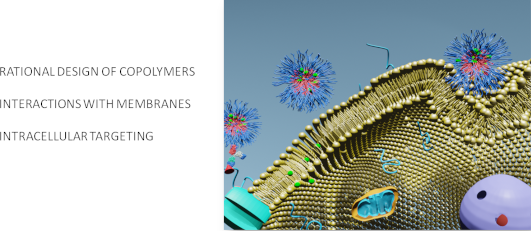
- hydrophilic block, effectively rendering the self-assemblies highly negatively charged at physiological pH values. Indeed, negatively charged nanoparticles are known to be capable of evading the mononuclear phagocyte system and enjoy prolonged blood circulation [58][110]. Active targeting through hydrophilic
- . When targeting cell surface receptors, two strategies can be distinguished using antibodies directed against a chosen receptor, or using the ligand of the receptor itself. The group of Torchilin pioneered the use of antibody-based active targeting by copolymer self-assemblies [119], and applied it to






Bombesin receptor-targeted liposomes for enhanced delivery to lung cancer cells
Beilstein J. Nanotechnol. 2019, 10, 2553–2562, doi:10.3762/bjnano.10.246

- solutions are used in combination [13]. In preclinical studies, improved therapeutic responses have been achieved by adopting an active targeting approach. Typically, this involves the incorporation of a surface-bound moiety that selectively binds to a cognate receptor/protein on the tumour cell surface

Targeting strategies for improving the efficacy of nanomedicine in oncology
Beilstein J. Nanotechnol. 2019, 10, 168–181, doi:10.3762/bjnano.10.16
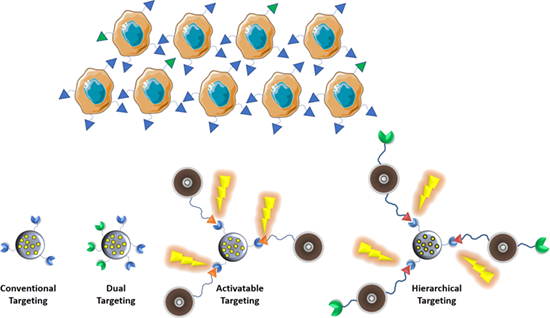
- ]. Active targeting: from cellular to organelle vectorization Once the nanoparticle reaches the tumoral area, it faces a complex scenario. Tumoral masses are not composed by an homogeneous tumoral cell distribution but they are formed by a myriad of different cell populations, from tumoral cells to immune
- solutions, a real alternative? Active targeting is already one of the most used strategies for bringing nanoformulations into tumoral cells. Although usually great results were achieved in vitro, the in vivo assays have shown smaller effects regarding cell internalization. There has been no real enhancement
- diagnosis in early stages of the disease. Thus, active targeting is still widely studied not only for nanomedicine but also for conjugate drugs [58][59]. As was mentioned above, there are three levels of active targeting: tissular targeting, cellular targeting and intracellular or organelle targeting. A


PLGA nanoparticles as a platform for vitamin D-based cancer therapy
Beilstein J. Nanotechnol. 2015, 6, 1306–1318, doi:10.3762/bjnano.6.135

- active targeting, using functionalized NPs [21]. Thus, the drug toxicity on healthy cells could be reduced, increasing NPs accumulation in the target tissues [19]. Although several studies on vitamin D3 encapsulation for food fortification have been conducted, very few works reported the use of


Other Beilstein-Institut Open Science Activities