


Search results
Search for "adhesive" in Full Text gives 246 result(s) in Beilstein Journal of Nanotechnology. Showing first 200.
Biomimetics and bioinspired surfaces: from nature to theory and applications
Beilstein J. Nanotechnol. 2025, 16, 418–421, doi:10.3762/bjnano.16.32
- technology and new insights into the future of this field of research. Striking advance has been made regarding the study of surfaces on biological models, especially insects. For instance, insect attachment devices and adhesive secretions were thoroughly studied regarding the impact of contamination [2] and
- ageing [3]. Gorb and Gorb [2] experimentally investigated how different plant waxes affect the attachment performance of leaf beetles and how the adhesive system of these beetles are vulnerable to the shape and dimensions of wax contaminations. A study on larger insects (stick insects) with a
- considerable long-life expectancy by Grote et al. [3] focused on the structure and performance changes of the adhesive system during aging. The attachment performance of these insects decreases with increasing age, and was shown to be related to changes of the attachment pads regarding their elasticity

Pulsed laser in liquid grafting of gold nanoparticle–carbon support composites
Beilstein J. Nanotechnol. 2025, 16, 349–361, doi:10.3762/bjnano.16.26
- 200 W and 15 kV. Samples were washed with water, dried, and affixed to double-sided adhesive copper tape. Survey scans were averaged over five scans and spanned 0–1200 eV with a 1 eV step size, 200 ms dwell time, and 160 eV pass energy. High-resolution core level scans were averaged over five scans


Biomimetic nanocarriers: integrating natural functions for advanced therapeutic applications
Beilstein J. Nanotechnol. 2024, 15, 1619–1626, doi:10.3762/bjnano.15.127
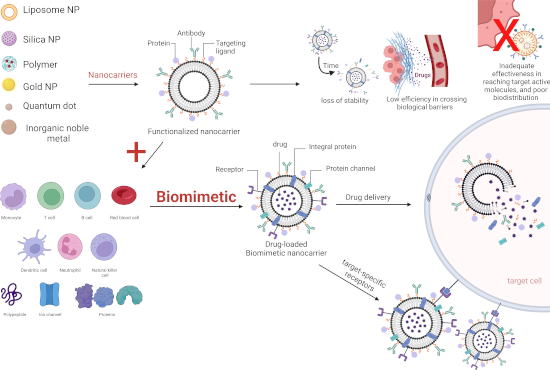
- homotypic adhesive interactions through selectins, E-cadherins, Thomsen–Friedenreich (TF) antigens, the immunoglobulin superfamily (Ig-SF), and the interaction of SIRP-α with CD47 inhibit the phagocytosis of these cells, thus preventing their capture by dendritic cells [62][65][66]. Nanocarriers associated


Natural nanofibers embedded in the seed mucilage envelope: composite hydrogels with specific adhesive and frictional properties
Beilstein J. Nanotechnol. 2024, 15, 1603–1618, doi:10.3762/bjnano.15.126
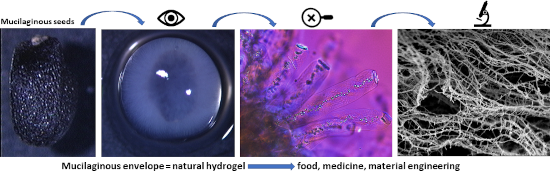
- adhesive properties, and ecological aspects associated with these properties. We also summarise and discuss the results of our studies from the last few years conducted on mucilage envelopes and summarise them to demonstrate the current state of knowledge on this topic (Figure 2). Review Spatial structure
- friction of mucilage just after hydration. In time series of measurements, the friction increased. The water loss from the mucilage caused an increase of its stiffness and adhesive properties [26]. The decreasing hydration level and the increasing viscosity of flax mucilage play an important role in the
- ]. Adhesive properties Seed dispersal is a crucial factor for many plants, allowing for the genetic continuity as well as for occupying new habitats. Through diverse mechanisms developed by the plants, seeds can be dispersed at a local scale (in the vicinity of mother plant) or transported over longer


Hymenoptera and biomimetic surfaces: insights and innovations
Beilstein J. Nanotechnol. 2024, 15, 1333–1352, doi:10.3762/bjnano.15.107
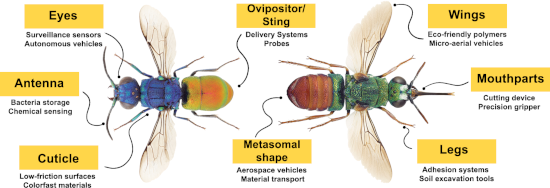
- [78][80]. Additionally, the interaction between bee mandibles and propolis highlights the potential for developing anti-adhesive surfaces [81]. Bioinspired surfaces based on honeybee mandibles have been shown to reduce propolis adhesion by over 40% compared to control surfaces, demonstrating
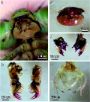
- development of self-cleaning surfaces and materials resistant to biofouling in marine environments. Legs Adhesive pads: The adhesive organ in Hymenoptera consists of a flexible cuticle pad (i.e., arolium) situated between the pretarsal claws, capable of unfolding and retracting with each step [125] (Figure 6A
- ). The arolium may be structured in lines perpendicular to the longitudinal axis of the pretarsus [126]. When extended (actively or passively) [127], the arolium comes into contact with the surface, thereby enhancing its adhesive contact area. Hymenopteran species serve as valuable sources of inspiration



Functional morphology of cleaning devices in the damselfly Ischnura elegans (Odonata, Coenagrionidae)
Beilstein J. Nanotechnol. 2024, 15, 1260–1272, doi:10.3762/bjnano.15.102
- on the grooming structures. The specimens were deposited on aluminum stubs using double-sided adhesive tape. Before the analysis, the samples were sputter-coated with a thin layer of gold (8 nm) using a Q150 T ES (Quorum, Laughton, UK) for 30 s. The samples were then analyzed in a field-emission
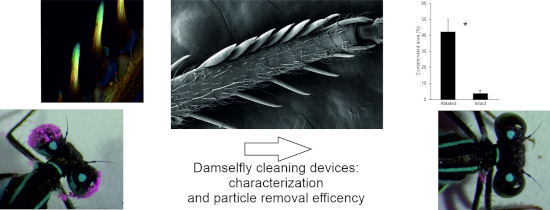
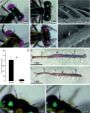
- in a hard base of sclerotized chitin, and ends in a soft tip, either rich in resilin or of unsclerotized chitin. A material gradient from stiff bases to soft tips has also been found in the adhesive hairs of insect leg attachment systems [38][39][54]. This gradient prevents the clustering of adhesive


Unveiling the potential of alginate-based nanomaterials in sensing technology and smart delivery applications
Beilstein J. Nanotechnol. 2024, 15, 1077–1104, doi:10.3762/bjnano.15.88
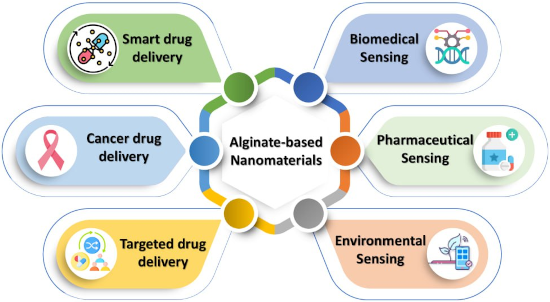
- imine bonds with proteins prevalent in many tissues. The controlled release and bioavailability of DOX encapsulated in the alginate matrix enabled the creation of drug-eluting adhesive patches, which were successful in reducing human lung cancer cell (A549) survival [92]. Another research studied


Effect of wavelength and liquid on formation of Ag, Au, Ag/Au nanoparticles via picosecond laser ablation and SERS-based detection of DMMP
Beilstein J. Nanotechnol. 2024, 15, 1054–1069, doi:10.3762/bjnano.15.86
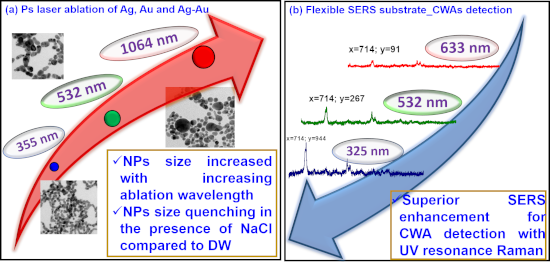
- affordable and accessible fabrication methods which guarantee stability and reproducibility along with accessible sample collection of SERS substrates. There has been significant interest in utilizing flexible materials such as paper, nitrocellulose, polymer film, cotton fabrics, adhesive tape, glass fibers


Beyond biomimicry – next generation applications of bioinspired adhesives from microfluidics to composites
Beilstein J. Nanotechnol. 2024, 15, 965–976, doi:10.3762/bjnano.15.79
- ], Gottlieb Binder [17], and a few others, have largely addressed these requirements for artificial biomimetic adhesives in the last decade, but the price per area is still far higher than that of competing adhesive solutions. At the time of writing, Setex has sold their industrial adhesive work to Shin-Etsu
- in Japan, and the Setex adhesive sheets are sold out on their website at a price of approximately $0.5/in2. A similar area of Velcro is closer to $0.1 (when including both halves), and strong industrial tapes like duct tape are closer to $0.02/in2, but can be as little as a fraction of a cent per
- common structural material for biomimetic adhesives in academic literature and our previous publications), the list price is close to $400 CDN/kg at the time of writing (≈$300 USD). For an adhesive sample with an average thickness of 0.1 mm, this would represent approximately $0.19 of material alone and


The effect of age on the attachment ability of stick insects (Phasmatodea)
Beilstein J. Nanotechnol. 2024, 15, 867–883, doi:10.3762/bjnano.15.72
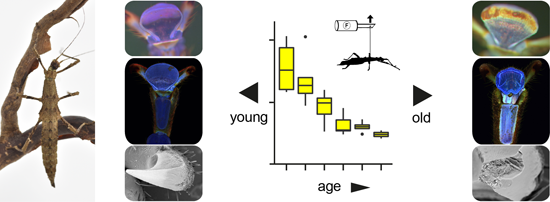
- , adhesive microstructures covering those pads support attachment. Stick insects do not molt again after reaching the imaginal stage; hence, the cuticle of their pads is subject to continuous ageing. This study aims to quantify how attachment ability changes with age in the stick insect Sungaya aeta
- observations in locusts walking on abrasive sandpaper, leading to the formation of scars in older animals. Scars and stiffened cuticle likely conflict with the functionality of soft adhesive pads as the contact formation of the cuticle is hampered by the reduced material compliance. Phasmatodea, also known as
- attachment pads is assumed to result from adaptations towards these plant surfaces [23][29]. Phasmids possess smooth adhesive pads on their tarsomeres, the euplantulae, and one larger pad at the pretarsus, the arolium [30]. Investigations of the specific functionality of both euplantulae and the arolium by


Functional fibrillar interfaces: Biological hair as inspiration across scales
Beilstein J. Nanotechnol. 2024, 15, 664–677, doi:10.3762/bjnano.15.55
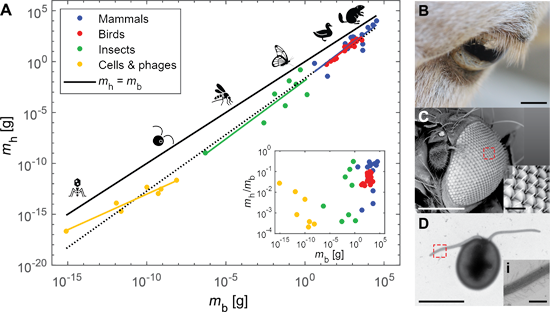
- the fact that, with respect to certain characteristics, organisms are scaled copies of each other [6]. For example, as expected from isometry, the total surface area of a salamander was found to scale with [7], and the same scaling was found for the total area of adhesive pads of animals within the
- providing low adhesion. Such structures are typically found on body parts where contamination is common, such as adhesive pads [40], or where cleanliness is crucial for survival, such as insect wings [41]. Hairs provide more ways to prevent or clean contamination. For a dedicated review on the topic, please
- spider (Argyroneta aquatica), and insects, such as aquatic bugs and beetles, use hydrophobic hairs to trap air and form an air bubble that encompasses their body [49][50]. Insects, such as the green dock beetle (Gastrophysa viridula), trap air between the adhesive fibers on their footpads when walking


Comparative analysis of the ultrastructure and adhesive secretion pathways of different smooth attachment pads of the stick insect Medauroidea extradentata (Phasmatodea)
Beilstein J. Nanotechnol. 2024, 15, 612–630, doi:10.3762/bjnano.15.52
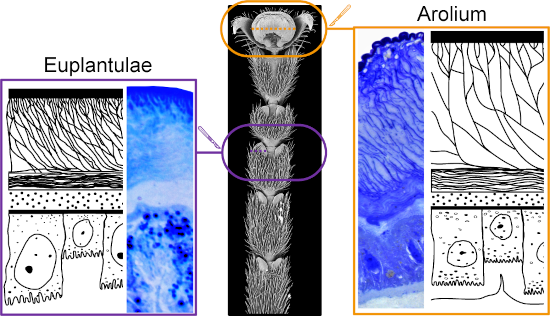
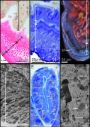
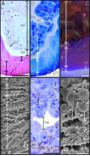
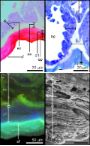
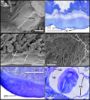
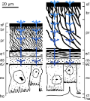
- euplantulae. They are both supported by an adhesive secretion delivered into the interspace between the attachment pads and the substrate. In this study, we analysed and compared internal morphology, material composition and ultrastructure, as well as the transportation pathways in both adhesive organs in the
- delineate a potential pathway for adhesive secretions, originating from exocrine epidermal cells and traversing various layers before reaching the surface. Within the attachment pad, the fluid may influence the viscoelastic properties of the pad and control the attachment/detachment process. Understanding
- the material composition of attachment pads and the distribution process of the adhesive secretion can potentially aid in the development of more effective artificial attachment systems. Keywords: adhesion; arolium; biomechanics; euplantulae; friction; functional morphology; tarsal secretion



Insect attachment on waxy plant surfaces: the effect of pad contamination by different waxes
Beilstein J. Nanotechnol. 2024, 15, 385–395, doi:10.3762/bjnano.15.35
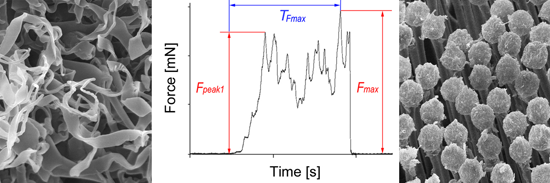
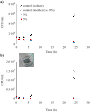
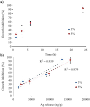
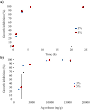
- contamination of insect adhesive pads with three-dimensional epicuticular waxes of different plant species contributes to the reduction of insect attachment. We measured traction forces of tethered Chrysolina fastuosa male beetles having hairy adhesive pads on nine wax-bearing plant surfaces differing in both
- shape and dimensions of the wax structures and examined insect adhesive organs after they have contacted waxy substrates. For comparison, we performed the experiments with the same beetle individuals on a clean glass sample just before (gl1) and immediately after (gl2) the test on a plant surface. The
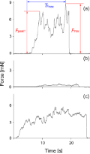
- tested insects showed a strong reduction of the maximum traction force on all waxy plant surfaces compared to the reference experiment on glass (gl1). After beetles have walked on waxy plant substrates, their adhesive pads were contaminated with wax material, however, to different extents depending on




Ultrasensitive and ultrastretchable metal crack strain sensor based on helical polydimethylsiloxane
Beilstein J. Nanotechnol. 2024, 15, 270–278, doi:10.3762/bjnano.15.25
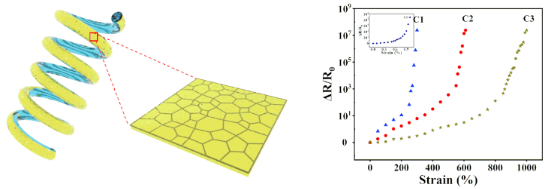
- ion beam sputtering was obtained from Fuzhou Yingfei Xun Photoelectric Tech Co., Ltd, China; it possessed a density of 19.3 g·cm−3 and a conductivity of 4.52 × 10⁷ S·m−1. Silver conductive adhesive, which was procured from Shenzhen Ausbond Co., LTD. (Guangdong, China), was employed to affix copper


TEM sample preparation of lithographically patterned permalloy nanostructures on silicon nitride membranes
Beilstein J. Nanotechnol. 2024, 15, 1–12, doi:10.3762/bjnano.15.1

- . Substrate and mask were fixed using Kapton® foil with an adhesive layer. After deposition, the foil can be removed and the mask can be detached. The mask can still be used, but the resulting nanodots will be smaller than those obtained from the previous deposition because the aperture size on the mask is


Exploring internal structures and properties of terpolymer fibers via real-space characterizations
Beilstein J. Nanotechnol. 2023, 14, 1004–1017, doi:10.3762/bjnano.14.83

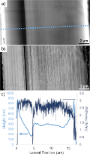
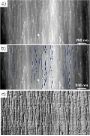
- extracted from a 65 decitex yarn. Fibers were mounted onto cardstock specimen holders, fixed with adhesive at two points approximately 15 mm apart from one another, and conductively coated with a gold–palladium mixture to mitigate sample drift, for example, due to sample charging effects inside the FIB





Biomimetics on the micro- and nanoscale – The 25th anniversary of the lotus effect
Beilstein J. Nanotechnol. 2023, 14, 850–856, doi:10.3762/bjnano.14.69
- bees to seal their hive and protect the colony against pathogens. Since propolis is quite a sticky substance, the authors analysed whether the mandibles of the bees show specific anti-adhesive properties, enabling them to manipulate the propolis. Adhesion experiments with propolis and bee mandibles
- also reflected in the adhesive forces the animals are able to produce on surfaces of varying roughness. These observations make specific predictions about the behavioural ecology of this species in the wild. They also remind us to keep looking at the archetypes and closely related species for further
- properties: an adhesive elastomeric film with mushroom-shaped surface microstructures that mimic the adhesion system of animals. They show that this elastomer foil provides good air retention capabilities and is a promising material for the development of an economically and efficient biomimetic air


Suspension feeding in Copepoda (Crustacea) – a numerical model of setae acting in concert
Beilstein J. Nanotechnol. 2023, 14, 603–615, doi:10.3762/bjnano.14.50

- adhesive forces to retain particles. In contrast to organisms, which collect particles at the nano- to millimeter scale, most industrial cross-flow filtration systems can capture material only in more limited size ranges, highlighting the necessity to investigate particle retention in biological systems
- numerical simulations, one can integrate an angle to which every seta can rotate toward the mouth, ϕmin. For the first simulations with ϕmin, we excluded the long setae and only simulated the system with short setae (with the optimal configuration, i.e., with soft adhesive tips). The results of this
- system or different food items. It also could serve as an inspiration to develop new filtering techniques with adhesive elements retaining particles on the micro- to millimeter scale. Experimental Specimens studied As a model organism, we chose Centropages hamatus (Crustacea, Copepoda, Calanoida). The


The origin of black and white coloration of the Asian tiger mosquito Aedes albopictus (Diptera: Culicidae)
Beilstein J. Nanotechnol. 2023, 14, 496–508, doi:10.3762/bjnano.14.41
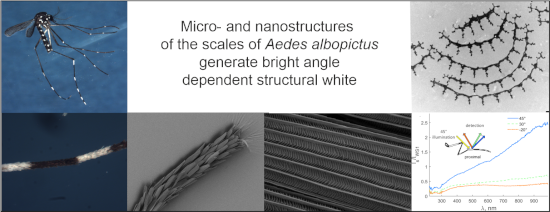
- spot was one millimetre in diameter. The illuminated area was calculated based on the microscopy image of the leg (similar to Figure 1f). The mosquito hind leg was fixed using double-sided adhesive tape (Tesa®, Hamburg, Germany) so that the tarsus was parallel to the horizontal plane with the dorsal



Conjugated photothermal materials and structure design for solar steam generation
Beilstein J. Nanotechnol. 2023, 14, 454–466, doi:10.3762/bjnano.14.36
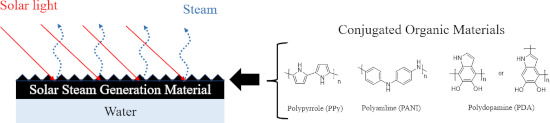
- : Polyaniline (PANI) has proven to be an efficient water evaporation material because it is inexpensive, easy to synthesize, flexible, chemically stable, light absorbing, and adhesive [34][35][36][37][38][39][40][41]. PANI cross-linked to hydrophilic soft polymers makes the material as tough and flexible as an


Antimicrobial and mechanical properties of functionalized textile by nanoarchitectured photoinduced Ag@polymer coating
Beilstein J. Nanotechnol. 2023, 14, 95–109, doi:10.3762/bjnano.14.11

- and varnishes, a scratch test was performed by first creating a grid (1 mm evenly spaced incisions) in the surface of the coating. Then a standard-approved 8.75 N adhesive tape was applied and taken off. Depending on the amount of coating remaining after the scratch test, a value of 0 to 5 is
- KinexusUltra rheometer (Malvern, Great Britain) was used to perform rheometry measurements in dry conditions (25 °C). A plate-plate geometry (20 mm parallel plates) was set up. PEG600DA and Ag@PEG600DA disks of 20 mm in diameter were compressed under 20 N, after being fixed with double-sided adhesive tape on



Gap-directed chemical lift-off lithographic nanoarchitectonics for arbitrary sub-micrometer patterning
Beilstein J. Nanotechnol. 2023, 14, 34–44, doi:10.3762/bjnano.14.4
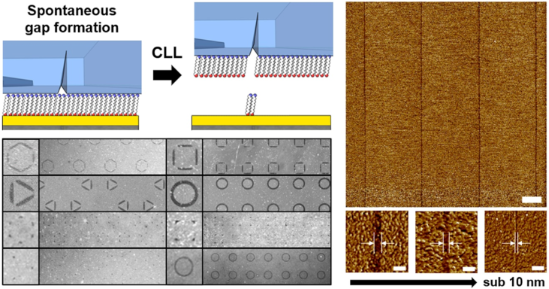
- ) was obtained from the ELGA PURELAB classic system (Taipei, Taiwan). CLL operation processes and bioactive substrates preparation In a manner similar to a previous study [26], silicon substrates with 100 nm thick Au and 5 nm Cr adhesive layers were prepared by thermal evaporation. To prepare a SAM


Frequency-dependent nanomechanical profiling for medical diagnosis
Beilstein J. Nanotechnol. 2022, 13, 1483–1489, doi:10.3762/bjnano.13.122
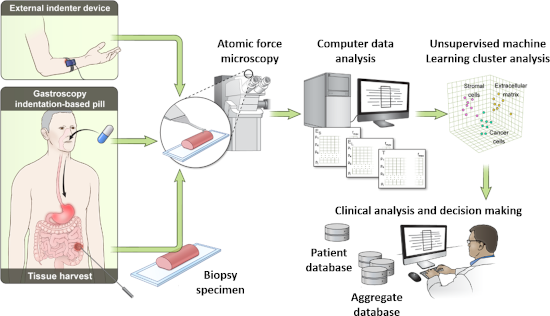
- property approximations, for example in the study of arterial degeneration [34][35]. Besides the above frequency-dependent representation, other important measurements can be recorded, such as general topography and morphology, cell or tissue adhesive properties, internal hydrostatic pressure, and surface


Double-layer symmetric gratings with bound states in the continuum for dual-band high-Q optical sensing
Beilstein J. Nanotechnol. 2022, 13, 1408–1417, doi:10.3762/bjnano.13.116
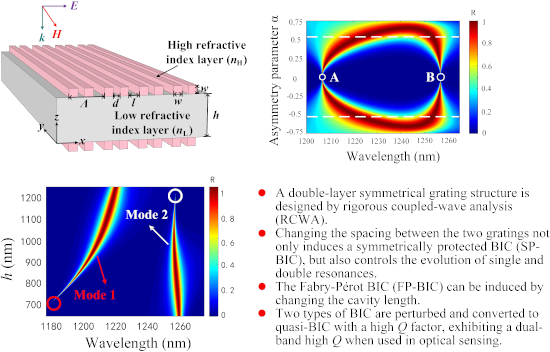
- substrate in an adhesive bonding process. Next, another bare SOI chip was bonded to the previously fabricated recipient substrate as a donor substrate, which is spin-coated using SU-8 on both the recipient and donor substrates. The silicon handle of the donor substrate is then removed by mechanical


Dry under water: air retaining properties of large-scale elastomer foils covered with mushroom-shaped surface microstructures
Beilstein J. Nanotechnol. 2022, 13, 1370–1379, doi:10.3762/bjnano.13.113

- effective large scale production. Meanwhile, a novel biomimetic surface is commercially available and produced on a large scale: an adhesive elastomeric film with mushroom-shaped surface microstructures that mimic the adhesion system of animals. In this study, we show that these films, which have been
- and that the biomimetic elastomer foil is a promising base for the development of an economically and efficient biomimetic air retaining surface for a broad range of technical applications. Keywords: adhesive tape; air layer; air retention; bionics; fouling; gecko tape; mushroom structures; passive





