


Search results
Search for "cell uptake" in Full Text gives 33 result(s) in Beilstein Journal of Nanotechnology.
From iron coordination compounds to metal oxide nanoparticles
Beilstein J. Nanotechnol. 2016, 7, 2074–2087, doi:10.3762/bjnano.7.198

- surfaces are often used for biomedical applications (e.g., biosensing, hyperthermia and MRI) [10]. In biomedical applications, the morphology of the nanoparticle significantly influences both pharmacokinetics and cell uptake [11]. Nanoparticles are also preferred as fillers for polymers to induce certain


On the pathway of cellular uptake: new insight into the interaction between the cell membrane and very small nanoparticles
Beilstein J. Nanotechnol. 2016, 7, 1296–1311, doi:10.3762/bjnano.7.121

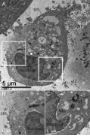
- finally lead to a complete cellular breakdown after 5 h. Conclusion In our present studies we examined the ultrastructural cell uptake morphologies of rather small particles in a size range between 10 and 25 nm in diameter. Surprisingly, already in this narrow size range clearly differentiated modes of




Improved biocompatibility and efficient labeling of neural stem cells with poly(L-lysine)-coated maghemite nanoparticles
Beilstein J. Nanotechnol. 2016, 7, 926–936, doi:10.3762/bjnano.7.84

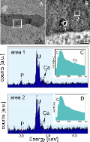
- using PLL-γ-Fe2O3 nanoparticles for cell labeling [22], the detailed analysis on biocompatibility of PLL-γ-Fe2O3 nanoparticles was not described, neither the method of nanoparticle cell uptake defined. Better cellular uptake of PLL-γ-Fe2O3 nanoparticles, when compared to nanomag®-D-spio was similar to




The eNanoMapper database for nanomaterial safety information
Beilstein J. Nanotechnol. 2015, 6, 1609–1634, doi:10.3762/bjnano.6.165
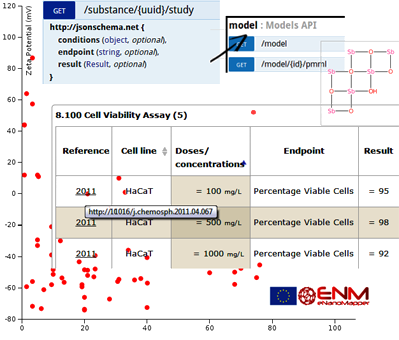
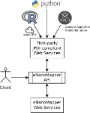
- proposed to extend the list of endpoints for hazard identification to include cell uptake, cell viability, oxidative stress, inflammation, fibrosis, immunotoxicity, cardiovascular toxicity, ventilation rate, gill pathologies, mucus secretion and brain pathology. The EU guidance document lists the main







Silica micro/nanospheres for theranostics: from bimodal MRI and fluorescent imaging probes to cancer therapy
Beilstein J. Nanotechnol. 2015, 6, 546–558, doi:10.3762/bjnano.6.57
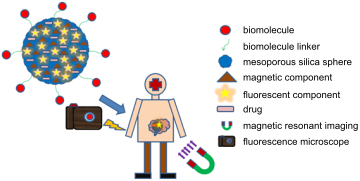
- found that the NPs emitted green light at 510 nm. The magnetic studies suggested that the nanocomposites exhibited typical property of superparamagnetic iron oxide by shortening the relaxation time T2. The cell uptake experiment of these nanocomposites was performed with human mesenchymal stem cells


The distribution and degradation of radiolabeled superparamagnetic iron oxide nanoparticles and quantum dots in mice
Beilstein J. Nanotechnol. 2015, 6, 111–123, doi:10.3762/bjnano.6.11

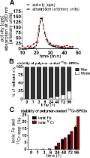
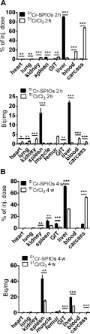
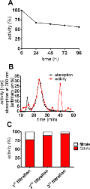
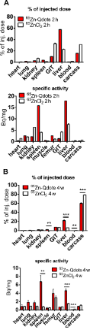
- term, a 2-compartment model was used for fitting which resulted in a relatively short half-life of 12 d, and very long half-life of ≈1000 d, which cannot be derived precisely from the fit. As a result, the 51Cr label seems adequate for labeling the nanoparticles during blood passage and cell uptake





Precise quantification of silica and ceria nanoparticle uptake revealed by 3D fluorescence microscopy
Beilstein J. Nanotechnol. 2014, 5, 1616–1624, doi:10.3762/bjnano.5.173
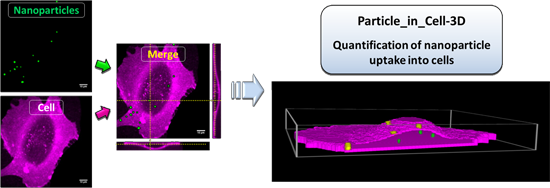
- plays an important role in our findings. Cell division is probably among the dominant causes for the observed dilution of nanoparticles. Yet, other time-dependent parameters may also influence the uptake dynamics. For example, degradation of intracellular particles, exocytosis, cell uptake behavior (e.g


In vitro interaction of colloidal nanoparticles with mammalian cells: What have we learned thus far?
Beilstein J. Nanotechnol. 2014, 5, 1477–1490, doi:10.3762/bjnano.5.161
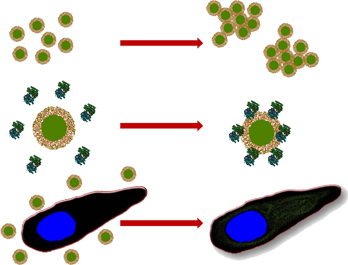
- kinetics [103]. Larger NPs (smaller than 60–70 nm) are internalized with lower kinetics to the extent that they are largely associated to the cell membrane over the time courses that see an intake of smaller NPS [62]. This has also been shown in fixed, permeabilized cells (to eliminate cell uptake


Other Beilstein-Institut Open Science Activities



