

Search results
Search for "colloid" in Full Text gives 119 result(s) in Beilstein Journal of Nanotechnology.
The impact of molecular tumor profiling on the design strategies for targeting myeloid leukemia and EGFR/CD44-positive solid tumors
Beilstein J. Nanotechnol. 2021, 12, 375–401, doi:10.3762/bjnano.12.31

- endothelial cells, and the present fenestrae, to remove colloid particles from the bloodstream nurtures the possibility of targeting the leukemia stem cells with NDDSs. In order to reach the BM vasculature, it is of utmost importance that the NDDSs do not interact with the elements of the reticuloendothelial


Transient coating of γ-Fe2O3 nanoparticles with glutamate for its delivery to and removal from brain nerve terminals
Beilstein J. Nanotechnol. 2020, 11, 1381–1393, doi:10.3762/bjnano.11.122

- achieved. In the next step, the magnetite colloid was stabilized with 0.1 M sodium citrate solution under sonication. The formation of maghemite was completed by oxidation of the magnetite colloid with 5% sodium hypochlorite solution and a subsequent sonication for 5 min. The final washing of the maghemite
- particles was performed as described above and was also finished with 5 min of sonification. The resulting maghemite colloid of was filtered through sterile Millex syringe filters. Particle characterization by transmission electron microscopy Morphology and size distribution of the particles were


Influence of the magnetic nanoparticle coating on the magnetic relaxation time
Beilstein J. Nanotechnol. 2020, 11, 1207–1216, doi:10.3762/bjnano.11.105
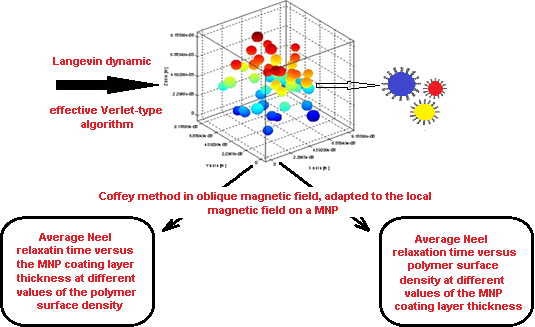
- Abstract Colloidal systems consisting of monodomain superparamagnetic nanoparticles have been used in biomedical applications, such as the hyperthermia treatment for cancer. In this type of colloid, called a nanofluid, the nanoparticles tend to agglomeration. It has been shown experimentally that the
- , we considered the case in which a colloid is electrostatically stabilised. The system is composed of water-dispersed spherical magnetite nanoparticles whose sizes follow a lognormal distribution. The Hamaker constant for magnetite in water is given as a reference value [20]. The system parameter


Applications of superparamagnetic iron oxide nanoparticles in drug and therapeutic delivery, and biotechnological advancements
Beilstein J. Nanotechnol. 2020, 11, 1092–1109, doi:10.3762/bjnano.11.94
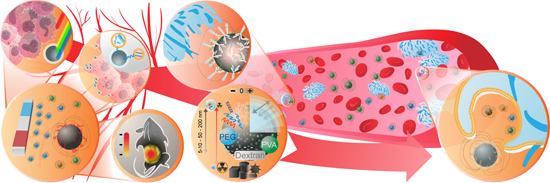
- interaction with cells depend on surface charge and zeta potential. A higher zeta potential (positive or negative) leads to more stable and dispersed particles in the colloid [76][91]. Positively charged particles tend to stick to the cell surfaces (which have a negatively charged outer layer in general) and


Using gold nanoparticles to detect single-nucleotide polymorphisms: toward liquid biopsy
Beilstein J. Nanotechnol. 2020, 11, 263–284, doi:10.3762/bjnano.11.20

- ]. Several limitations need to be addressed as well. One of the known issues in colloidal biosensing is the spontaneous formation of a protein corona on the surface of the particles in physiological media [146], inhibiting the interaction of the biomarkers with the colloid, thereby altering the sensitivity




The different ways to chitosan/hyaluronic acid nanoparticles: templated vs direct complexation. Influence of particle preparation on morphology, cell uptake and silencing efficiency
Beilstein J. Nanotechnol. 2019, 10, 2594–2608, doi:10.3762/bjnano.10.250
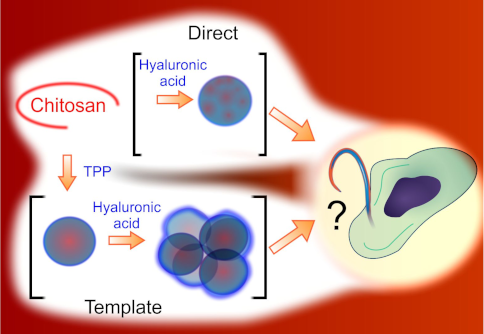
- . DLS data were analysed using the Zetasizer Nano software (Malvern). The data were also used to calculate: ρ = Rg/Rh (shape factor). This parameter defines key geometrical characteristics of a colloid. ρ values are given in literature [23] for a variety of particle morphologies. For example, ρ = 0.775
- provides also information about the colloid compactness through parameters such as their average radius of gyration Rg (it depends on the mass distribution), the shape factor ρ defined as the Rg/RH ratio, and the mass fractal dimension Dm defined as the exponent in the relation between mass of a colloidal
- the scaling between the mass of a colloid and its dimension, therefore is a direct measure of its compactness; for example, for a “dense solid” colloid, its value will approach 3, while its values decrease for aggregates, and therefore this parameter has been used for aggregation studies of, e.g



Polyvinylpyrrolidone as additive for perovskite solar cells with water and isopropanol as solvents
Beilstein J. Nanotechnol. 2019, 10, 2374–2382, doi:10.3762/bjnano.10.228

- solar cells, and the preparation method is relatively simple. Overall, it is a low-cost, low-toxicity preparation method to commercialize perovskite solar cells. Experimental Materials Lead nitrate, polyvinylpyrrolidone, chlorobenzene and isopropanol were purchased from Aladdin. SnO2 colloid was




The role of Ag+, Ca2+, Pb2+ and Al3+ adions in the SERS turn-on effect of anionic analytes
Beilstein J. Nanotechnol. 2019, 10, 2338–2345, doi:10.3762/bjnano.10.224
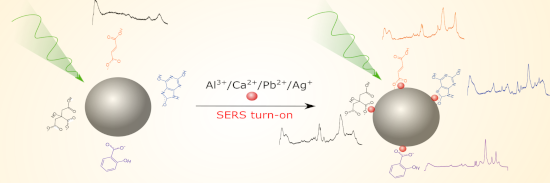
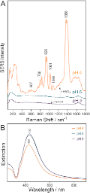
- solution. The Raman enhancement is not a result of the colloid aggregation since no broadening of the SPR band was observed in the colloid extinction spectra after the SERS activation of the cit-AgNPs/organic acid mixtures with cations. A weak damping of the SPR band is observed only after the addition of
- -AgNP solution, but not at basic pH values. In this study, this pH limitation is overcome. By activating the colloid with 50 µM Al3+ the SERS spectra of salicylic acid could be obtained in the pH 6–9 range, as shown in Supporting Information File 1, Figure S4. In the case of fumaric acid, the
- boil for another 30 min. A pH 6 was measured after the colloid synthesis. SERS measurements. For the SERS measurements, the cit-AgNPs were activated with Ca2+, Pb2+ or Al3+ cations at a final concentration of 50 µM, which were added to the colloidal solution in the form of nitrate or sulfate salts: Ca


Microfluidics as tool to prepare size-tunable PLGA nanoparticles with high curcumin encapsulation for efficient mucus penetration
Beilstein J. Nanotechnol. 2019, 10, 2280–2293, doi:10.3762/bjnano.10.220

- nanoprecipitation in order to have better control over the kinetics of the colloid formation. To the best of our knowledge, no comprehensive study has presented relevant experimental evidence enabling more insight into the nanoprecipitation mechanism. Our microfluidic system has a unique feature allowing us to


Mannosylated brush copolymers based on poly(ethylene glycol) and poly(ε-caprolactone) as multivalent lectin-binding nanomaterials
Beilstein J. Nanotechnol. 2019, 10, 2192–2206, doi:10.3762/bjnano.10.212
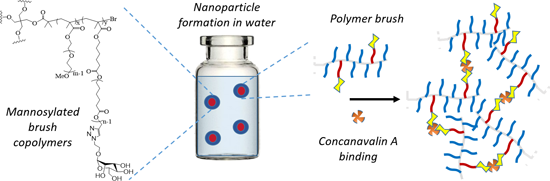
- multivalent fashion, leading to an increase of turbidity. Interestingly, turbidity was not observed with the monovalent compound PEG9-PCL1-Man1, suggesting that the polymer and the resulting nanosized colloid in water do not have a suitable valency for the formation of Con A clusters. We assumed that the



Pulsed laser synthesis of highly active Ag–Rh and Ag–Pt antenna–reactor-type plasmonic catalysts
Beilstein J. Nanotechnol. 2019, 10, 1958–1963, doi:10.3762/bjnano.10.192

- [1]. Plasmonic coupling results in an increase in the magnitude of the LSPR-induced electric fields. The selective adsorption of NP groupings to the Ag nanostructure concavities may be a result of LSPR-induced electric fields, which are largest in these highly angular regions. The mixed Ag–Pt colloid
- , comprising Ag–Pt heterostructures, was found to exhibit a slight blue-shift of the LSPR, while the mixed Ag–Rh colloid showed a more pronounced red-shift. Pt and Ag are known to possess lower catalytic activity in the reduction of 4-nitrophenol than Rh [21][22]. Accordingly, Pt and Ag exhibited a lower


Nanoarchitectonics meets cell surface engineering: shape recognition of human cells by halloysite-doped silica cell imprints
Beilstein J. Nanotechnol. 2019, 10, 1818–1825, doi:10.3762/bjnano.10.176
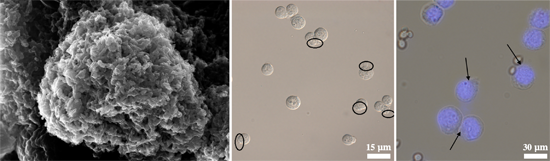
- cells templates offer other fascinating opportunities due to their cell-mimicking geometries, for example, a novel class of bioinspired colloid particles was fabricated recently. Colloid antibodies were produced via the formation of solid silica shells doped with gold nanoparticles on bacterial cells
- , only HeLa cells were recognised by the imprints, while yeast cells were ignored. Although this does not guarantee an equally effective recognition of other mammalian cells (i.e., in a mixture with HeLa cells), our results open new avenues for the fabrication of colloid particles capable of shape-based


Chiral nanostructures self-assembled from nitrocinnamic amide amphiphiles: substituent and solvent effects
Beilstein J. Nanotechnol. 2019, 10, 1608–1617, doi:10.3762/bjnano.10.156

- Hejin Jiang Huahua Fan Yuqian Jiang Li Zhang Minghua Liu Beijing National Laboratory for Molecular Science (BNLMS), CAS Laboratory of Colloid, Interface and Chemical Thermodynamics, Institute of Chemistry, Chinese Academy of Sciences, Beijing 100190, China University of Chinese Academy of Sciences




BiOCl/TiO2/diatomite composites with enhanced visible-light photocatalytic activity for the degradation of rhodamine B
Beilstein J. Nanotechnol. 2019, 10, 1412–1422, doi:10.3762/bjnano.10.139

- solution A. Solution B was obtained by mixing 4 g of diatomite, 20 mL of ethanol, 0.5 mL of glacial acetic acid and 1.5 mL of 0.1 mol/L nitric acid under stirring. In order to obtain the precursor colloid, solution B was dripped into solution A under stirring. After that, the precursor was dried at 60 °C


Gas sensing properties of individual SnO2 nanowires and SnO2 sol–gel nanocomposites
Beilstein J. Nanotechnol. 2019, 10, 1380–1390, doi:10.3762/bjnano.10.136

- glacial acetic acid. A surplus of hydrogen peroxide was added to the solution: where NH3·H2O was added dropwise to cause hydrolytic precipitation of tin oxide as follows: The obtained colloid was precipitated by centrifugation, dried and annealed. Tin dioxide nanopowder was formed as a result of tin acid




A biomimetic nanofluidic diode based on surface-modified polymeric carbon nitride nanotubes
Beilstein J. Nanotechnol. 2019, 10, 1316–1323, doi:10.3762/bjnano.10.130

- Kai Xiao Baris Kumru Lu Chen Lei Jiang Bernhard V. K. J. Schmidt Markus Antonietti Max Planck Institute of Colloids and Interfaces, Department of Colloid Chemistry, 14476 Potsdam, Germany Key Laboratory of Bio-inspired Smart Interfacial Science and Technology of Ministry of Education, School of


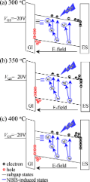
Quantitative analysis of annealing-induced instabilities of photo-leakage current and negative-bias-illumination-stress in a-InGaZnO thin-film transistors
Beilstein J. Nanotechnol. 2019, 10, 1125–1130, doi:10.3762/bjnano.10.112

- Dapeng Wang Mamoru Furuta Key Laboratory of Applied Surface and Colloid Chemistry, Ministry of Education; Shaanxi Key Laboratory for AdvancedEnergy Devices; Shaanxi Engineering Lab for Advanced Energy Technology, School of Materials Science and Engineering, Shaanxi Normal University, Xi’an 710119


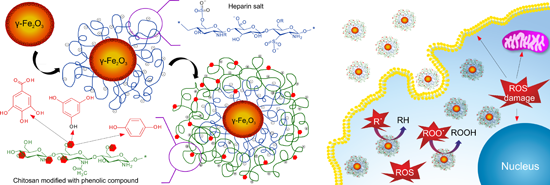
Scavenging of reactive oxygen species by phenolic compound-modified maghemite nanoparticles
Beilstein J. Nanotechnol. 2019, 10, 1073–1088, doi:10.3762/bjnano.10.108
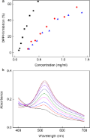
- . The superparamagnetism of the γ-Fe2O3 colloid was confirmed by SQUID magnetometry through the absence of remanence and coercivity in the magnetic hysteresis curve (Figure 3c,d). The saturation magnetization of the γ-Fe2O3 colloid (4.4 mg/mL was 0.307 A·m2·kg−1 at 260 K. The critical parameter for the
- magnetization of the γ-Fe2O3@Hep colloid (by 2%) at 260 K was observed compared to the saturation magnetization of γ-Fe2O3 at the same particle concentration (inset in Figure 3c). This decrease was caused by the increased content of the nonmagnetic fraction in the particles. The TGA result of the γ-Fe2O3@Hep
- compared to that of the γ-Fe2O3 colloid. As expected, the magnetic saturation decreased with increasing content of the nonmagnetic organic phase at the nanoparticle surface, which was previously verified for the γ-Fe2O3@Hep colloid. At the same concentration, the saturation magnetization values of the





Mechanism of silica–lysozyme composite formation unravelled by in situ fast SAXS
Beilstein J. Nanotechnol. 2019, 10, 182–197, doi:10.3762/bjnano.10.17
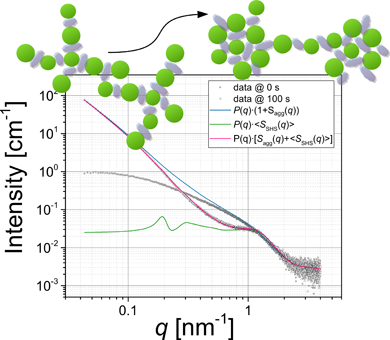
- inorganic nanoparticles (NPs) and proteins in aqueous media is of paramount interest for colloid chemistry. In particular, the interactions between silica (SiO2) NPs and lysozyme (LZM) have attracted attention, because LZM is well-known to adsorb strongly to silica NPs, while at the same time preserving its
- : composite; lysozyme; scattering; silica; small-angle X-ray scattering (SAXS); Introduction A mechanistic understanding of aggregation in aqueous media leading to the formation of composites of inorganic nanoparticles and proteins is of paramount interest for colloid chemistry, Earth sciences, or the design



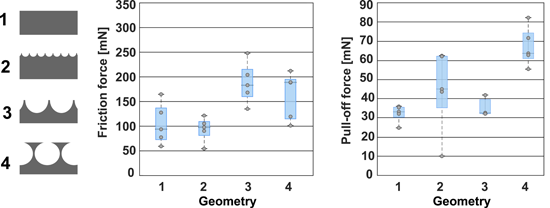
Pull-off and friction forces of micropatterned elastomers on soft substrates: the effects of pattern length scale and stiffness
Beilstein J. Nanotechnol. 2019, 10, 79–94, doi:10.3762/bjnano.10.8





Hybrid Au@alendronate nanoparticles as dual chemo-photothermal agent for combined cancer treatment
Beilstein J. Nanotechnol. 2018, 9, 2947–2952, doi:10.3762/bjnano.9.273

- negative zeta potential, equal to −37.5 ± 9.1 mV confirms the presence of alendronate on the surface providing negative charges, which allow colloid stabilization despite the presence of ammonium cations. Au@alendronate NPs as NIR photothermal nano-heater Since gold NPs bring their own therapeutic asset


Enhancement of X-ray emission from nanocolloidal gold suspensions under double-pulse excitation
Beilstein J. Nanotechnol. 2018, 9, 2609–2617, doi:10.3762/bjnano.9.242

- in time and space. Results and Discussion Two-pulse excitation for X-ray emission Figure 2 shows the X-ray generation as a function of the time between the pre-pulse of 80 μJ and the main pulse of 700 μJ. Strong X-ray generation was observed at a delay of 1 ns in the case of the gold colloid. For the


Exploring the photoleakage current and photoinduced negative bias instability in amorphous InGaZnO thin-film transistors with various active layer thicknesses
Beilstein J. Nanotechnol. 2018, 9, 2573–2580, doi:10.3762/bjnano.9.239
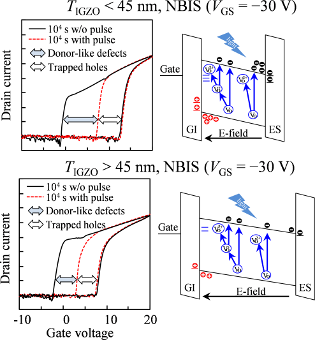
- Dapeng Wang Mamoru Furuta Key Laboratory of Applied Surface and Colloid Chemistry, Ministry of Education; Shaanxi Key Laboratory for Advanced Energy Devices; Shaanxi Engineering Lab for Advanced Energy Technology, School of Materials Science and Engineering, Shaanxi Normal University, Xi’an 710119


Cytotoxicity of doxorubicin-conjugated poly[N-(2-hydroxypropyl)methacrylamide]-modified γ-Fe2O3 nanoparticles towards human tumor cells
Beilstein J. Nanotechnol. 2018, 9, 2533–2545, doi:10.3762/bjnano.9.236

- Ar atmosphere and the polymerization proceeded at 60 °C for 16 h. The resulting PHPMA was washed with ethyl acetate and separated by filtration yielding 1.92 g of the polymer (Mn = 177 kDa). Aqueous solution of PHPMA (2 mL; 0.1 g PHPMA/mL) was then added to the γ-Fe2O3 colloid (2 mL; 0.1 g of γ-Fe2O3
- /mL) to obtain γ-Fe2O3@PHPMA. Second, P(HPMA-MMAA)-Dox (0.1–13.0 µg) was dissolved in aqueous γ-Fe2O3@PHPMA colloid (2–260 µg; 50 mg γ-Fe2O3/mL) to get γ-Fe2O3@P(HPMA-MMAA)-Dox before use in the cell experiments. Characterization methods 1H NMR (in CDCl3) and FTIR spectra of MMAA were recorded on a
- , clustering of the γ-Fe2O3@PHPMA particles also contributes to increased values of Dh. The ζ-potential of γ-Fe2O3@PHPMA substantially differed from that of γ-Fe2O3, reaching +38 mV and indicating the presence of coating. After mixing γ-Fe2O3@PHPMA nanoparticle colloid with P(HPMA-MMAA)-Dox, its chains readily




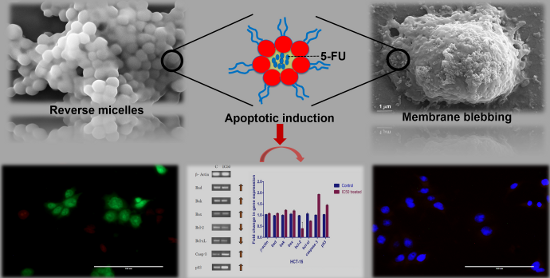
Enhanced antineoplastic/therapeutic efficacy using 5-fluorouracil-loaded calcium phosphate nanoparticles
Beilstein J. Nanotechnol. 2018, 9, 2499–2515, doi:10.3762/bjnano.9.233
- colloid (data not shown). Fourier-transform infrared spectroscopy analysis The vibrational spectrum in the infrared region of synthesized CaP@5-FU NPs and CaP NPs with the drug 5-FU was observed to establish the chemical confirmation of the synthesized material with respect to the functional group. The