
Search results
Search for "development" in Full Text gives 1371 result(s) in Beilstein Journal of Nanotechnology. Showing first 200.
Laser–material interactions in liquids for the synthesis of nanomaterials: current status and perspectives
Beilstein J. Nanotechnol. 2026, 17, 571–575, doi:10.3762/bjnano.17.38
- development of cost-effective, high-throughput technologies. Laser processing in liquids is not merely a synthesis technique – it is an enabling platform for innovation in the development of next-generation nanomaterials, and its full potential is only beginning to be realized. Carlos Doñate Buendia, Bilal
Advances in nanotechnology applied to natural products
Beilstein J. Nanotechnol. 2026, 17, 555–558, doi:10.3762/bjnano.17.36
- this thematic issue, we bring together advances from original full research, letter, and review articles examining how nanostructured systems can enable the development of safer, more stable, and more effective formulations containing natural products. The collection spans lipid-based, polymeric
- experimental models [13]. In topical applications, they can promote skin permeation, and controlled release and support formulation robustness, including those intended for transdermal and ocular administration, thereby consolidating microemulsions as versatile and practical platforms for the development of
- therapeutic agents has enabled the development of multifunctional platforms, which can improve cellular uptake, enhance tumor penetration, reduce systemic side effects, and integrate therapeutic and diagnostic functions [19]. Beyond lipid-based systems, polymeric nanosystems have emerged as versatile
Electrochemical determination of ciprofloxacin using a MIL-101/reduced graphene oxide-modified electrode
Beilstein J. Nanotechnol. 2026, 17, 541–554, doi:10.3762/bjnano.17.35
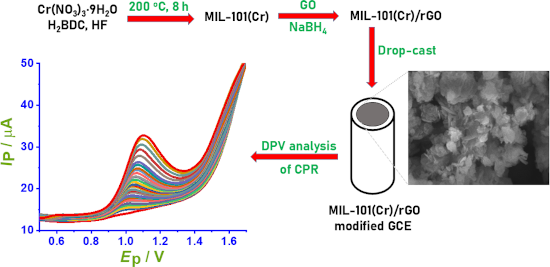
- fluids, and aquatic environments [2][3]. The uncontrolled presence of ciprofloxacin not only poses risks to human health but also promotes the development of antibiotic-resistant bacteria, raising significant environmental and public health concerns [4]. Therefore, developing sensitive, selective, and


Defects and defect-mediated engineering of two-dimensional materials: challenges and open questions
Beilstein J. Nanotechnol. 2026, 17, 454–488, doi:10.3762/bjnano.17.31
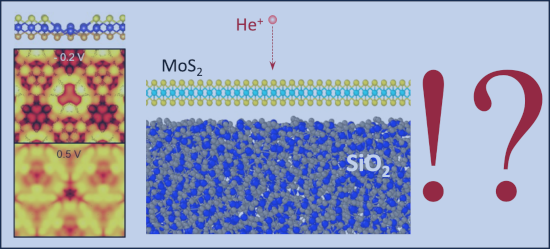
- been computationally prohibitively costly, but modern machine learning models have enabled such simulations for non-resonant Raman experiments. Therefore, the great challenge is the development of higher-precision measurements utilizing nano-Raman spectroscopy (see Figure 3). When nano-Raman is
- , promise to further enhance defect characterization and accelerate the development of high-performance materials for various applications. The fundamental principle of XPS lies in its ability to probe the binding energies of core electrons, which are influenced by the local electronic environment





Nanocarrier-integrated multilayer films produced by 3D printing for improved skin adhesion and curcumin photostability
Beilstein J. Nanotechnol. 2026, 17, 440–453, doi:10.3762/bjnano.17.30
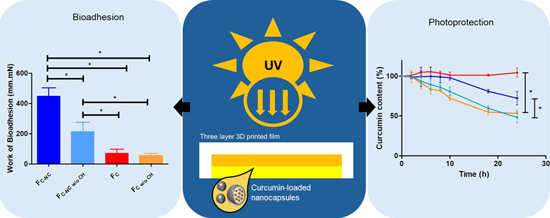
- antioxidant compound. The development of topical films for cutaneous delivery faces several challenges, including the need for strong skin adhesion and the protection of photolabile actives from light exposure. We hypothesized that multilayered films designed for the cutaneous delivery of curcumin and
- formulations, drug combinations, and release profiles can be developed in the form of either immediate-release or extended-release options [1][2]. Several 3D printing techniques can be applied to pharmaceutical development, including material jetting, fused deposition modelling, stereolithography, selective
- the development of specialised dressings using materials such as alginate and carboxymethylcellulose as alternatives to traditional gauze [13][14]. Bioactive molecules such as curcumin have shown promise for use in the promotion of skin repair and wound healing. Curcumin is a photosensitive polyphenol


Nanoinformatics: spanning scales, systems and solutions
Beilstein J. Nanotechnol. 2026, 17, 423–427, doi:10.3762/bjnano.17.28
- nanomaterials physicochemical properties, structural features, and biomolecule interactions using both physics-based and machine-learning (ML) approaches; (ii) prediction of nanomaterials toxicity including development of novel toxicity-related descriptors; (iii) solution-focussed approaches applying advanced
- nanomaterials, thus helping to fill the current gap in the toxicity data for zebrafish [8]. A major driver of the development of nanomaterials, nanoinformatics and ML/AI is the potential for solutions to real-world issues, whether in nanomedicine, nano-enabled agriculture, or environmental remediation
- approaches to establish a framework for representing materials-related information and facilitate interoperability across diverse tools. The approach highlights the role of digital twins in nanomaterials development and examines the impact of knowledge engineering in establishing data and information

Biomimetic nanoparticles in cancer photodynamic therapy: a review of targeted delivery systems and therapeutic outcomes
Beilstein J. Nanotechnol. 2026, 17, 396–422, doi:10.3762/bjnano.17.27
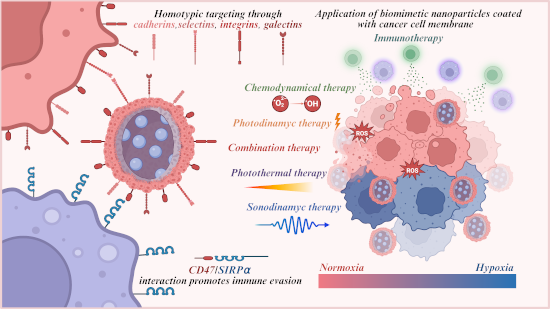
- examines recent progress in the development of BNPs for cancer photodynamic therapy, with particular attention to their ability to target tumors, counteract hypoxia, and stimulate the immune system. We also explore their use in treating different types of cancer, the emergence of multifunctional platforms
- and active targeting mechanisms, (iii) controlled and stimuli-responsive release profiles, (iv) overcoming of tumor hypoxia, (v) efficient light conversion, and (vi) the development of multifunctional platforms by combining PDT with other therapeutic modalities [38]. Additionally, nanoparticles enable
- theranostic applications [39] by facilitating tumor visualization through various imaging techniques [40], including fluorescence imaging [41], computed tomography [42], and magnetic resonance imaging (MRI) [43]. The development of nanobiotechnology in PDT opens new horizons for creating more effective and


Eco-efficient materials for agricultural crops based on a mineral rich in MOR- and HEU-type zeolites
Beilstein J. Nanotechnol. 2026, 17, 381–395, doi:10.3762/bjnano.17.26
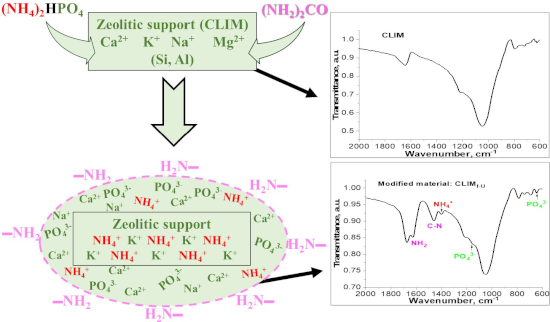
- development of plants, as evidenced in the cultivation tests. Keywords: adsorption; agroecological fertilizer; ion exchange; MOR–HEU zeolite mixture; natural zeolite; Introduction Traditional chemical fertilizers, widely used in agriculture, undergo significant nutrient losses resulting from dissolution and
- natural zeolites are a viable alternative for the development of efficient, agroecologically sustainable, and low-cost fertilizer materials for massive applications [3][4]. Natural zeolites are porous crystalline hydrated aluminosilicates. They have a three-dimensional, rigid, negatively charged structure
- losses during dissolution [6][7][8][9]; also, more than 30% of their total weight is water, which provides additional moisture during hot and dry periods. These characteristics make zeolites potentially applicable in agriculture for the development of modern fertilizers with controlled release and




Polycatecholamine nanocoatings on stainless steel: the effect on attachment of human fibroblasts and platelets
Beilstein J. Nanotechnol. 2026, 17, 365–380, doi:10.3762/bjnano.17.25
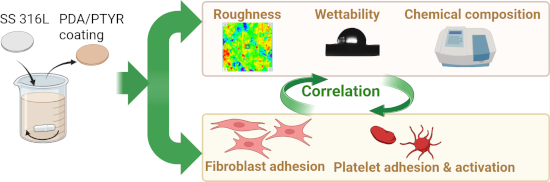
- controlled nanoscale surface features in the development of next-generation bioactive coatings for medical implants and blood-contacting devices. Experimental Materials and methods Stainless steel samples Stainless steel 316L discs (14 mm in diameter, 0.8 mm in thickness) were laser-cut by STOMILEX (Poland




Ferroelectric nanodot reservoir for neuromorphic computing
Beilstein J. Nanotechnol. 2026, 17, 352–364, doi:10.3762/bjnano.17.24
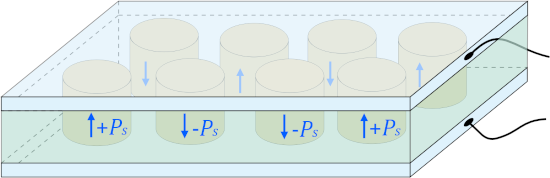
- implementations. Contactless interfaces Contactless input and output methods of data integration between the reservoir and external neuromorphic interfaces are of particular importance for the development of scalable, high-resolution, ultrafast, and non-invasive neuromorphic systems. They enable direct


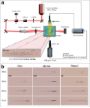
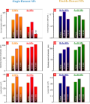
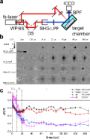
Beam shaping techniques for pulsed laser ablation in liquids: Unlocking tunable control of nanoparticle synthesis in liquids
Beilstein J. Nanotechnol. 2026, 17, 309–342, doi:10.3762/bjnano.17.22







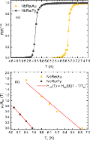
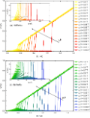
Fast vortex dynamics and relaxation times in NbRe-based heterostructures
Beilstein J. Nanotechnol. 2026, 17, 292–302, doi:10.3762/bjnano.17.20
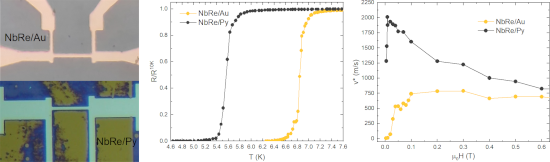
- optimization of superconducting quantum technologies, including superconducting detectors [10][11][12], superconducting qubits [13][14], and superconducting nano- and microstrips used in high-speed electronics [15], as well as for the development of hybrid architectures enabling magnon–fluxon interactions [16


Advancing nanolithography: a comprehensive review of materials for local anodic oxidation with AFM
Beilstein J. Nanotechnol. 2026, 17, 275–291, doi:10.3762/bjnano.17.19
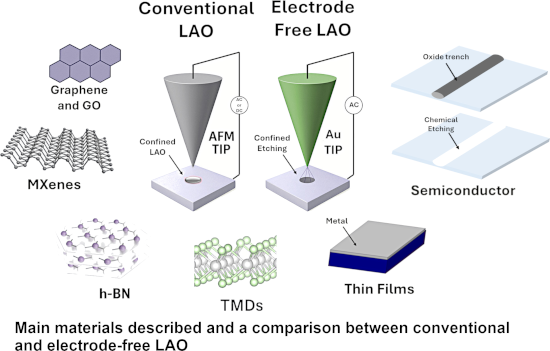
- provide a comprehensive understanding of material selection in LAO and its implications for advancing nanotechnology. Keywords: local anodic oxidation; nanofabrication; scanning probe lithography; Review 1 Introduction Advancements in nanotechnology have led to the development of numerous nanoscale
- positive and negative tone as well as self-development reactions within ultrathin molecular resist layers [56][65][66], with resolutions reaching sub-10 nm scales [67]. As demonstrated by Prof. Ivo W. Rangelov and colleagues, FEL relies on the high-intensity electric fields generated at the sharp AFM tip
- potential for advancing protein patterning, tissue engineering, biomedical implants, and biosensor development. LAO offers a promising route for fabricating superconducting quantum devices by enabling direct, nanoscale patterning of Josephson junctions without conventional lithography. Using a biased AFM


Durable antimicrobial activity of fabrics functionalized with zeolite ion-exchanged nanomaterials against Staphylococcus aureus and Escherichia coli
Beilstein J. Nanotechnol. 2026, 17, 262–274, doi:10.3762/bjnano.17.18
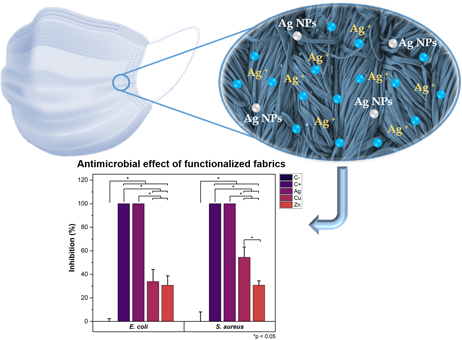
- functionalization. This method demonstrates a simple and industry-compatible approach for producing durable antimicrobial cotton fabrics. Keywords: antimicrobial activity; Escherichia coli; fabrics functionalization; ion exchange; nanomaterial; Staphylococcus aureus; zeolite; Introduction The development of




Comparative study on 3D morphologies of delignified, single tracheids and fibers of five wood species
Beilstein J. Nanotechnol. 2026, 17, 239–250, doi:10.3762/bjnano.17.16
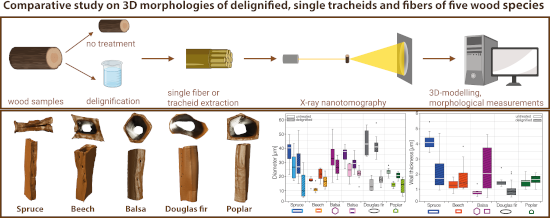
- a key role in preventing cell collapse under high tensile stress or/and inner pressure exerted by the water column during transpiration [8]. Wood delignification is a crucial process in various industries, particularly pulp and paper production, biofuel generation, and the development of advanced
- insights for applications in computer modelling of mechanical properties of fibers and tracheids and for development of novel bio-inspired materials for the industry. Material and Methods Wood samples Wood samples of five different species were used in this study, namely, spruce (Picea abies (L.) H.Karst
- fibers, in general, show wider lumina than softwood tracheids. Environmental factors, such as higher environmental temperatures and less compact, well-aerated soils also promote the development of fibers and tracheids with larger lumina [37][38], which very likely result from high evaporation, as well as


Gold nanoparticle-decorated reduced graphene oxide as a highly effective catalyst for the selective α,β-dehydrogenation of N-alkyl-4-piperidones
Beilstein J. Nanotechnol. 2026, 17, 218–238, doi:10.3762/bjnano.17.15
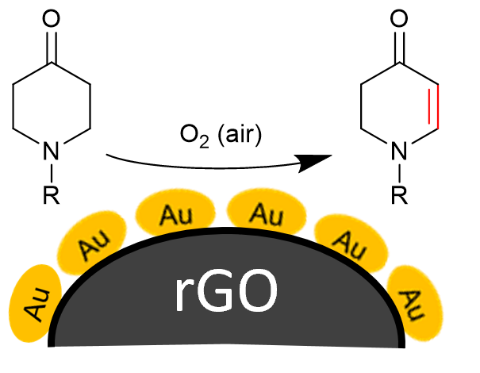
- development of highly efficient catalysts is of constant interest for advancements in organic chemistry, particularly in oxidation, hydrogenation, and coupling reactions. Gold nanoparticles (AuNPs) have emerged as exceptionally effective catalysts for facilitating these types of reactions [3][4]. The unique


Micro- and nanoscale effects in biological and bioinspired materials and surfaces
Beilstein J. Nanotechnol. 2026, 17, 214–217, doi:10.3762/bjnano.17.14
- materials research and technology development. Thies H. Büscher, Rhainer Guillermo Ferreira, Manuela Rebora, and Stanislav N. Gorb Kiel, Uberaba, and Perugia, January 2026
Time of flight secondary ion mass spectrometry imaging of contaminant species in chemical vapour deposited graphene on copper
Beilstein J. Nanotechnol. 2026, 17, 200–213, doi:10.3762/bjnano.17.13
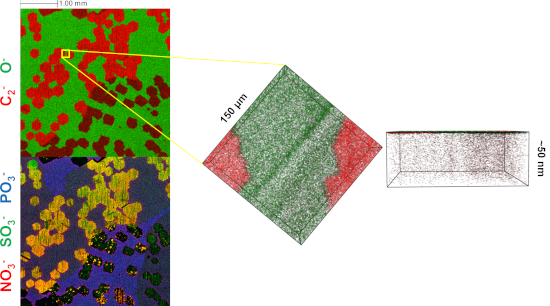
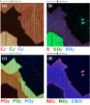
- ; Introduction The development of high quality, high throughput, and highly consistent chemical vapour deposition (CVD) processes for the growth of graphene is one of the major milestones that need to be overcome before the potential properties of graphene can be fully realised for device purposes [1][2][3][4





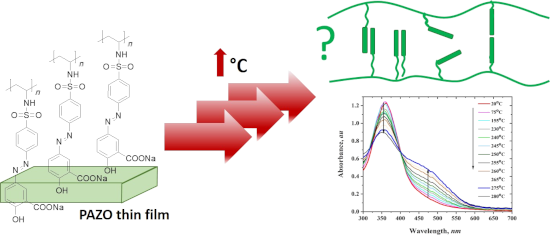
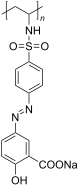
Structure-dependent thermochromism of PAZO thin films: theory and experiment
Beilstein J. Nanotechnol. 2026, 17, 186–199, doi:10.3762/bjnano.17.12
- -00001, Development of Holo-TV Core Technologies for Hologram Media Services). The financial support by the Bulgarian National Science Fund (BNSF) under contract КП-06-Н88/2 is gratefully acknowledged. The computational studies performed by N.K., T.D., and S.A. were funded by the Bulgarian National


Safe and sustainable by design with ML/AI: A transformative approach to advancing nanotechnology
Beilstein J. Nanotechnol. 2026, 17, 176–185, doi:10.3762/bjnano.17.11
- Georgia Melagraki Hellenic Military Academy, Vari, Greece 10.3762/bjnano.17.11 Abstract Nanotechnology is revolutionizing different sectors such as medicine, energy, defence, and environmental science by enabling the development of materials and technologies with exceptional precision and
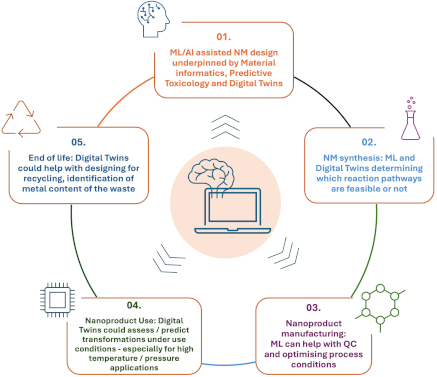
- considerations into the earliest stages of material development. Advances in machine learning (ML) and artificial intelligence (AI) have further enhanced the effectiveness of SSbD by providing predictive modelling, risk assessment, decision-making tools, and the ability to computationally screen candidate
- , engineered nanomaterials (ENMs) have been employed for environmental applications, such as water purification and pollutant removal, addressing some of the most pressing ecological challenges [4][5]. Nanotechnology has significant applications in defence [6], particularly in the development of lightweight


From shield to spear: Charge-reversible nanocarriers in overcoming cancer therapy barriers
Beilstein J. Nanotechnol. 2026, 17, 159–175, doi:10.3762/bjnano.17.10
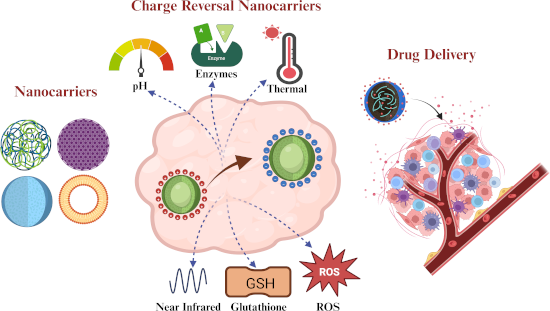
- advancements in nanocarrier-based cancer therapy, recent research has increasingly emphasised refining their physicochemical traits, especially surface charge, to boost therapeutic outcomes. A notable development in this context is the emergence of charge-reversible nanoscale drug delivery systems (CR-NDDSs
- development. Xia et al. developed redox/pH dual-responsive nanoparticles with reversible surface charge which were prepared using HA-SH and CS for the controlled release of the anticancer drug DOX [77]. Zhou et al. developed a pH-responsive charge-reversal polyelectrolyte, and an integrin αVβ3 antibody
- groups and the need for precise control over physicochemical characteristics further increase manufacturing costs and delay clinical development. Maintaining stability during storage is another critical concern, as environmental factors such as temperature fluctuations and light exposure may induce


Capabilities of the 3D-MLSI software tool in superconducting neuron design
Beilstein J. Nanotechnol. 2026, 17, 122–138, doi:10.3762/bjnano.17.8
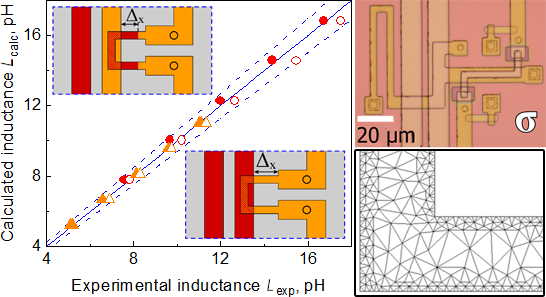
- inductances has not yet been obtained, and the optimal parameter values are selected numerically [1][31][39][40][41][42]. A generalized theory of the Gauss neuron, accounting for the interaction of all five elements of the experimental device, is currently under development by our group. The necessity of



Development and in vitro evaluation of liposomes and immunoliposomes containing 5-fluorouracil and R-phycoerythrin as a potential phototheranostic system for colorectal cancer
Beilstein J. Nanotechnol. 2026, 17, 97–121, doi:10.3762/bjnano.17.7
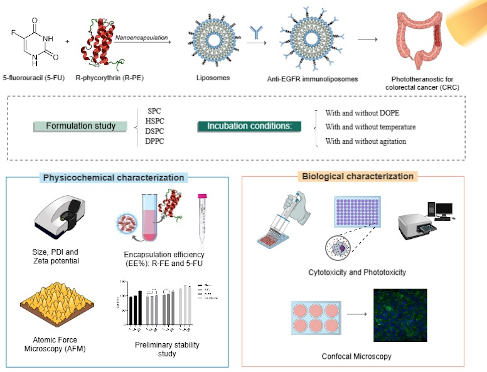
- -positive CRC. To the best of our knowledge, this is the first study to report the development and in vitro evaluation of liposomes and immunoliposomes co-encapsulating 5-FU and R-PE. Thus, liposomes containing 25 mg or 50 mg of soybean phosphatidylcholine (SPC), diesterolphosphatidylcholine (DSPC
- , the HSPC 50 formulation containing R-PE and 5-FU, functionalized with cetuximab, is a promising alternative for the development of co-encapsulation delivery systems as a phototheranostic nanocarriers. Keywords: colorectal cancer; immunoliposomes; photodynamic therapy; R-phycoerythrin; 5-fluorouracil
- by the National Cancer Institute (USA). 2.2 Formulation development 2.2.1 Liposomes Liposomes were prepared by the lipid film hydration method as previously described [18], based on phospholipid/Chol/DSPE–PEG 2000 (70:20:5) with eight different compositions varying the lipid type (HSPC, DSPC, DPPC



Functional surface engineering for cultural heritage protection: the role of superhydrophobic and superoleophobic coatings – a comprehensive review
Beilstein J. Nanotechnol. 2026, 17, 63–96, doi:10.3762/bjnano.17.6
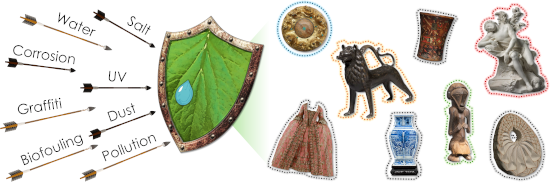
- explores recent advancements in protective strategies for heritage materials including stone, concrete, ceramic, glass, metal, wood, and textiles. Special attention is given to the development and application of superhydrophobic and superoleophobic coatings, which offer promising defense against moisture
- , the actual focus of the modern conservators and researchers in the field is on the design and the development of innovative materials and techniques to guarantee the safety and the preservation of the selected artwork, preventing possible damages and considering all the potential threats [17]. One of




Subdigital integumentary microstructure in Cyrtodactylus (Squamata: Gekkota): do those lineages with incipiently expressed toepads exclusively exhibit adhesive setae?
Beilstein J. Nanotechnol. 2026, 17, 38–56, doi:10.3762/bjnano.17.4
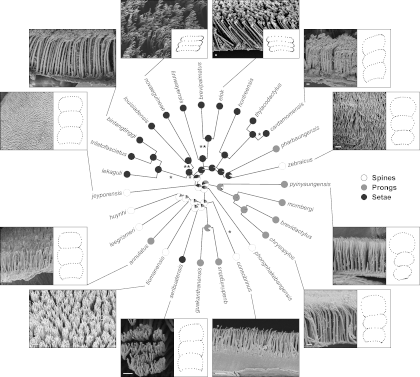
- early-stage development of macroscopically visible incipient toepads. Using SEM and phylogenetic comparative analyses, our objectives were to (a) clarify how integumentary microstructural traits relate to the presence of incipient toepads and (b) identify potential adaptations linked to specific habitat
- types. We hypothesized that (1) species showing incipient toepad development will possess setae, while those lacking obvious macrostructural modifications should exhibit only spines, prongs, or spinules. Additionally, we hypothesized that either (2) the presence of setae is associated with arboreal
- active distoproximal hyperextension of the digits [46][47][48]. In anoles, the pattern of setal length change and the direction of digit detachment from the substratum is reversed [47], and this is also the case in lineages of geckos that exhibit the most basic expression of toepad development [36]. In