


Search results
Search for "ethylenediamine" in Full Text gives 32 result(s) in Beilstein Journal of Nanotechnology.
Heterometal nanoparticles from Ru-based molecular clusters covalently anchored onto functionalized carbon nanotubes and nanofibers
Beilstein J. Nanotechnol. 2015, 6, 1287–1297, doi:10.3762/bjnano.6.133

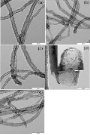
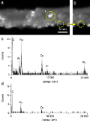
- [51]. Briefly, the number of oxygenated surface functional groups is increased first by HNO3 oxidation and quantified by XPS and elemental analysis. Then, the carboxylic acid groups are reacted with SOCl2, before coupling with ethylenediamine. Finally, the pendant amine functions are transformed into




A simple approach to the synthesis of Cu1.8S dendrites with thiamine hydrochloride as a sulfur source and structure-directing agent
Beilstein J. Nanotechnol. 2015, 6, 881–885, doi:10.3762/bjnano.6.90

- shapes from sulfur powder [6]. Lim et al. found that copper sulfide dendritic structures could be obtained at high ethylenediamine and low tributylphosphite concentrations by using a copper(I) thiobenzoate (CuTB) precursor [7]. In general, sulfur, Na2S2O3, mercaptan and thiourea are used as sulfur



Protein corona – from molecular adsorption to physiological complexity
Beilstein J. Nanotechnol. 2015, 6, 857–873, doi:10.3762/bjnano.6.88

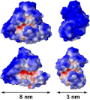
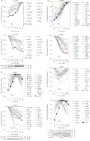
- the HSA molecule from (−10.5 ± 1.3) mV for native HSA to (−19 ± 4) mV for HSAsuc (both in PBS at pH 7.4). For comparison, they also altered the carboxyl groups of the native HSA molecule by reacting them with ethylenediamine, thus, converting them into positively charged amino groups, creating an



Tailoring the ligand shell for the control of cellular uptake and optical properties of nanocrystals
Beilstein J. Nanotechnol. 2015, 6, 232–242, doi:10.3762/bjnano.6.22

- -bromopropyl)-2,2,5,5-tetramethyl-1-aza-2,5-disilacyclopentane, THF; (d) 1 M HCl, THF; (e) HCl, THF; (f) propargyl bromide, THF; (g) epibromohydrin, THF; (h) methyl iodide, THF; (i) CH3COOH, THF; (j) CDI, DABCO, CH2Cl2; (k) ethylenediamine, DABCO, CHCl3; (l) tris(2-aminoethyl)amine, CHCl3; (m) propargylamine






Biopolymer colloids for controlling and templating inorganic synthesis
Beilstein J. Nanotechnol. 2014, 5, 2129–2138, doi:10.3762/bjnano.5.222
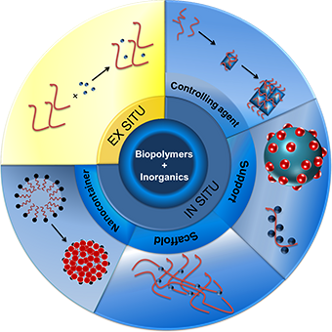
- when gold(III) is reduced in the presence of DNA toroids formed with bis(ethylenediamine)gold(III). Reprinted with permission from [66]. Copyright 2010 American Chemical Society. Dark-field TEM micrograph (a) and corresponding electron diffraction pattern (b) of hydroxyapatite/gelatin particles


Effects of surface functionalization on the adsorption of human serum albumin onto nanoparticles – a fluorescence correlation spectroscopy study
Beilstein J. Nanotechnol. 2014, 5, 2036–2047, doi:10.3762/bjnano.5.212

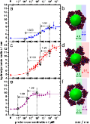
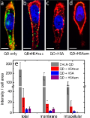
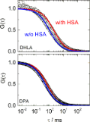
- interesting case is the adsorption of aminated HSA (HSAam) on DHLA–QDs, for which the overall corona is slightly thicker (ΔRH = 4.0 nm, Table 2, Figure 3e) than for the native protein. Random amination of a fraction of the side chains of the acidic residues (aspartate and glutamate) on HSA by ethylenediamine




Electrostatic interplay: The interaction triangle of polyamines, silicic acid, and phosphate studied through turbidity measurements, silicomolybdic acid test, and 29Si NMR spectroscopy
Beilstein J. Nanotechnol. 2014, 5, 2026–2035, doi:10.3762/bjnano.5.211

- ), ethylenediamine dihydrochloride (EN; C2H8N2·2HCl; M = 133.02 g/mol), N,N-dimethylethylenediamine (MEEN; C4H12N2; M = 88.15 g/mol), (2-aminoethyl)trimethylammonium chloride hydrochloride (ENQ; C5H15N2Cl·HCl; M = 175.10 g/mol), N,N,N′,N′-tetramethylethylenediamine (TMEDA; C6H16N2; M = 116.20 g/mol), sodium


Other Beilstein-Institut Open Science Activities



