Search results
Search for "immunogenicity" in Full Text gives 39 result(s) in Beilstein Journal of Nanotechnology.
Wet-spinning of magneto-responsive helical chitosan microfibers
Beilstein J. Nanotechnol. 2020, 11, 991–999, doi:10.3762/bjnano.11.83

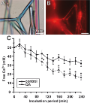
- immunogenicity [17] and, therefore, has become highly used in tissue regeneration [18][19]. Chitosan fibers are particularly well-suited for tissue engineering due to their highly porous scaffold architecture [20]. Using electrospinning, chitosan fibers can be produced with a diameter ranging from several tens


Key for crossing the BBB with nanoparticles: the rational design
Beilstein J. Nanotechnol. 2020, 11, 866–883, doi:10.3762/bjnano.11.72
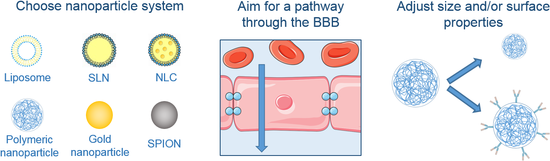
- interesting properties. They can be easily synthetized and coated or conjugated to carry various cargos, from small molecules to proteins and nucleic acids [174]. Furthermore, AuNPs show low immunogenicity and toxicity due to their inert core [78]. Finally, AuNPs could be used as X-ray contrast agent if their


Preparation and in vivo evaluation of glyco-gold nanoparticles carrying synthetic mycobacterial hexaarabinofuranoside
Beilstein J. Nanotechnol. 2020, 11, 480–493, doi:10.3762/bjnano.11.39

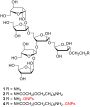
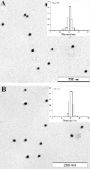
- shown to influence the immunogenicity of conjugates with haptens. Large spherical GNPs (d = 15 and 50 nm) are the optimal antigen carriers and adjuvants for immunization [96]. Nature and length of the spacers (linkers) have been selected to modulate the stability of the Ara6-GNPs, as well as to control
- the presentation of the Ara6 hexasaccharide epitope on the surface of the GNPs in order to explore the effect of a linker on the immunogenicity. The very short C2 linker (only two aliphatic carbon atoms) of glycoside 1 was chosen to allow the Ara6 hexasaccharide moiety to protrude just a little above
- noted above; see also the subsequent discussion on the putative mechanism of immunogenicity of glyco-GNPs). This also suggests that the increased stability of glyco-GNPs does not necessarily mean better immunization. Although one can argue that amine-linked carbohydrate ligands present in Ara6-GNPs 3


Brome mosaic virus-like particles as siRNA nanocarriers for biomedical purposes
Beilstein J. Nanotechnol. 2020, 11, 372–382, doi:10.3762/bjnano.11.28
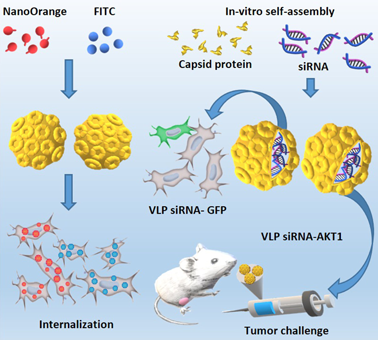
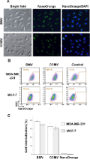
- degree of biocompatibility make plant viruses capsids suitable candidates as carriers to deliver therapeutic drugs or siRNA molecules. Immunogenicity of CCMV and BMV The RAW 264.7-blue macrophage cell line was used to determine the potential immune response in vitro of both BMV and CCMV viruses
- been reported using papaya mosaic virus [45]. Both capsids of CCMV and BMV were covered with polyethylene glycol (PEG) to decrease their surface charge and mask the domains of the capsid proteins that could be recognized by the macrophages (Figure 3C,D). PEG is widely used to reduce the immunogenicity
- protein immunogenicity [46]. Although the PEGylation of CCMV capsids (CCMV-PEG) greatly reduced the immunogenic response, BMV seems to be a better nanocarrier candidate due to its low immunological response. On the other hand, and despite of the immunogenicity of CCMV, which can limit its use for certain


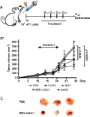
Poly(1-vinylimidazole) polyplexes as novel therapeutic gene carriers for lung cancer therapy
Beilstein J. Nanotechnol. 2020, 11, 354–369, doi:10.3762/bjnano.11.26
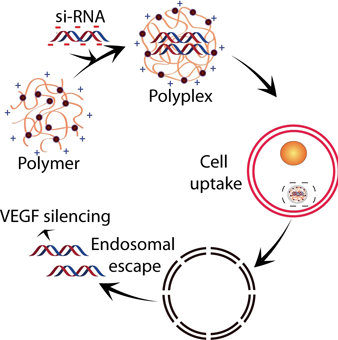
- context, non-viral vectors have garnered interest in recent years as gene delivery vehicles. But the highly cationic nature of the employed carriers is associated with immunogenicity and toxicity. Further, the ability of these carriers to escape the acidic endosomes in the cells limit their transfection


Molecular architectonics of DNA for functional nanoarchitectures
Beilstein J. Nanotechnol. 2020, 11, 124–140, doi:10.3762/bjnano.11.11
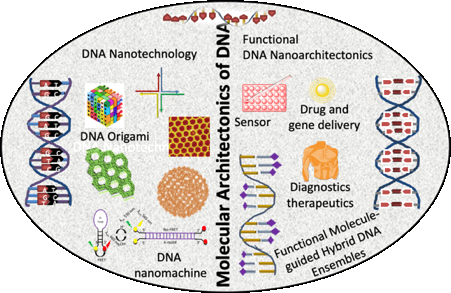
- DNA tetrahedron system exhibited enhanced cellular uptake and outflanked the drug efflux process in multidrug-resistant cancer cells. The biocompatible features, natural degradability, and low immunogenicity made the DNA tetrahedron a potential carrier platform for the delivery of drug cargos. Lee and


Internalization mechanisms of cell-penetrating peptides
Beilstein J. Nanotechnol. 2020, 11, 101–123, doi:10.3762/bjnano.11.10


Fully amino acid-based hydrogel as potential scaffold for cell culturing and drug delivery
Beilstein J. Nanotechnol. 2019, 10, 2579–2593, doi:10.3762/bjnano.10.249
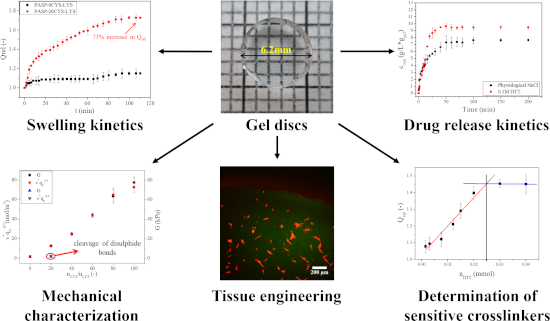
- mainly built from only one or two types of amino acids, are biocompatible nutrients. In addition, poly(amino acid)s have enormous structural diversity and they supposedly lack immunogenicity [24][25]. In summary, the use of poly(amino acid)s has practically only one disadvantage: their synthesis is


Gold-coated plant virus as computed tomography imaging contrast agent
Beilstein J. Nanotechnol. 2019, 10, 1983–1993, doi:10.3762/bjnano.10.195
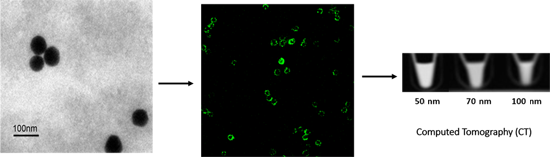
- toxicity, biocompatibility, immunogenicity, distribution and the payload being carried. Modified protein cages are robust systems that combine imaging capabilities and target selectivity on the same platform. One application is the development of magnetic resonance imaging (MRI) contrast agents. Current




High-tolerance crystalline hydrogels formed from self-assembling cyclic dipeptide
Beilstein J. Nanotechnol. 2019, 10, 1894–1901, doi:10.3762/bjnano.10.184

- materials have shown outstanding characteristics, such as excellent biocompatibility, structural flexibility, versatile functionality, and low immunogenicity [11][12][13][14][15][16][17][18][19][20][21][22][23][24][25][26][27][28]. Peptides can be deliberately engineered to self-assemble into well-ordered


Targeting strategies for improving the efficacy of nanomedicine in oncology
Beilstein J. Nanotechnol. 2019, 10, 168–181, doi:10.3762/bjnano.10.16
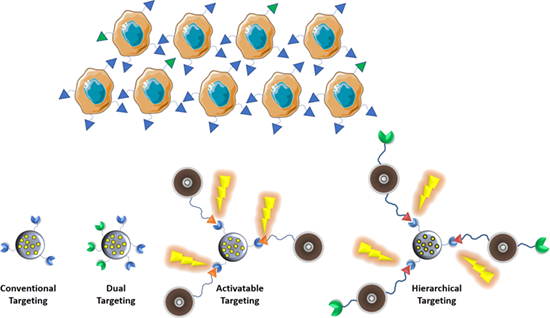
- copies of them on the nanoparticle surface which enhances the uptake, iv) possibility to use non-natural aminoacids improving the versatility and v) low immunogenicity [31]. The tripeptide Arg–Gly–Asp (RGD) is probably one of the most employed peptide in the targeting design of nanoparticles. RGD binds


Cytotoxicity of doxorubicin-conjugated poly[N-(2-hydroxypropyl)methacrylamide]-modified γ-Fe2O3 nanoparticles towards human tumor cells
Beilstein J. Nanotechnol. 2018, 9, 2533–2545, doi:10.3762/bjnano.9.236

- , biocompatibility, absence of toxicity, minimal immunogenicity, and enhanced permeability and retention to cancer cells [18]. Moreover, PHPMA, which has a long history of biomedical applications as a drug-delivery vehicle, enables the control of biodistribution and accumulation via molecular weight limitations [19
- using a magnetic field allowing for easy separation and/or targeted delivery in the organism [26]. In this report, citrate-treated maghemite nanoparticles and a novel PHPMA-based surface coating were used to ensure biocompatibility, minimal immunogenicity and to provide reactive functional groups for
- , however, still under study. It can be concluded that the newly designed γ-Fe2O3@P(HPMA-MMAA)-Dox nanoparticles are highly promising for the delivery of cancer medications into tumors, offering enhanced cell adhesion, increased apoptosis, minimal immunogenicity, lipid peroxidation, DNA damage, and reduced




Straightforward and robust synthesis of monodisperse surface-functionalized gold nanoclusters
Beilstein J. Nanotechnol. 2016, 7, 1278–1283, doi:10.3762/bjnano.7.118

- immunogenicity [7], their inherent optoelectronic properties [8] and high transmission electron microscopy (TEM) contrast. They are relatively easy to synthesize, functionalize, are biocompatible and have controllable optical properties [3][9][10][11][12]. Therefore, gold nanoparticles functionalized with


Biocalcite, a multifunctional inorganic polymer: Building block for calcareous sponge spicules and bioseed for the synthesis of calcium phosphate-based bone
Beilstein J. Nanotechnol. 2014, 5, 610–621, doi:10.3762/bjnano.5.72

- , such as immunogenicity and risk of infection. Synthetic bone scaffolds can provide several advantages if they meet the following conditions: (i) similar physiochemical characteristics as the natural bone, and (ii) ability to attract the bone forming cells (the progenitor cells or the functionally