


Search results
Search for "microporosity" in Full Text gives 26 result(s) in Beilstein Journal of Nanotechnology.
Nanoporous composites prepared by a combination of SBA-15 with Mg–Al mixed oxides. Water vapor sorption properties
Beilstein J. Nanotechnol. 2014, 5, 1226–1234, doi:10.3762/bjnano.5.136

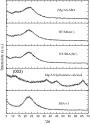
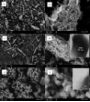
- porous composite, which displays a cauliflower morphology. This is an important microporosity contribution and micro and mesoporous surfaces coexist in almost the same proportion. Furthermore, the nanostructured mesoporous composites present an extraordinary water vapor sorption capacity. Such composites
- increases from 5.3 to 7.0 nm [HT/SBA(NC)] or 6.2 nm [HT/SBA(C)]. In HT/SBA composites, both microporous and mesoporous coexistence follows a similar trend to the SBA-15, with a predominant mesoporous surface. The diminution of microporosity from 74 m2/g in SBA-15 to 37 m2/g (or 31 m2/g) may be due to the
- wall thickness (AWT) are smaller than those of SBA-15. Even though both materials are texturally different, as they were prepared by distinct methods, it is interesting to observe how the microporosity and mesoporosity are exalted in the in situ prepared composite. This remark is in agreement with the



Other Beilstein-Institut Open Science Activities



