


Search results
Search for "nanoformulations" in Full Text gives 31 result(s) in Beilstein Journal of Nanotechnology.
Use of nanosystems to improve the anticancer effects of curcumin
Beilstein J. Nanotechnol. 2021, 12, 1047–1062, doi:10.3762/bjnano.12.78

- materials for nanomedical applications. Imaging-guided drug delivery of CUR-based nanosystems may also directly target specific cells, thereby increasing the therapeutic and chemopreventive efficacy of this versatile compound. Keywords: nanocarrier; nanoformulations; nanosized delivery systems; phenolic
- internalization, as compared to conventional therapies, potentially increasing therapeutic efficacy and minimizing side effects [4]. Nanosystems can be referred to as nanocarriers, nanoformulations, nanosized-delivery systems, and other similar terms. They have been utilized in the design of cellular and


Identification of physicochemical properties that modulate nanoparticle aggregation in blood
Beilstein J. Nanotechnol. 2020, 11, 550–567, doi:10.3762/bjnano.11.44
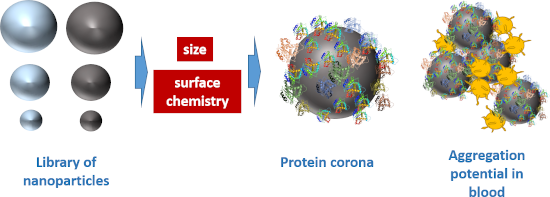
- the bloodstream is particularly relevant not only for nanoformulations administered by intravenous injection, but also for any material that is introduced into the body by other routes as they have the potential to cross biological barriers and subsequently enter into the bloodstream. Previous studies




Targeted therapeutic effect against the breast cancer cell line MCF-7 with a CuFe2O4/silica/cisplatin nanocomposite formulation
Beilstein J. Nanotechnol. 2019, 10, 2217–2228, doi:10.3762/bjnano.10.214
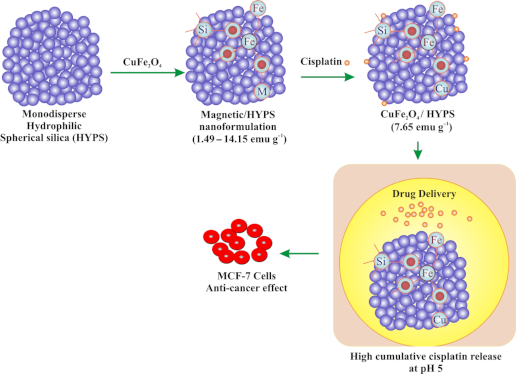
- . Copper ferrite and cisplatin functional groups were identified using FTIR using ATR technology (Perkin Elmer, USA). The morphological features of the nanoformulations were identified by SEM and TEM. The elemental distribution in the samples was investigated using SEM-EDS. SEM was performed using a JSM
- /HYPS, CuFe2O4/AlMSU-F and CuFe2O4/silicalite nanoformulations. The cellulose membrane dialysis tubing was activated, and drug delivery was performed by immersing the bag containing 30 mg of drug formulations in 50 mL of phosphate buffered saline (PBS) at pH 5.6. The release was performed under constant
- particular, CuFe2O4/HYPS showed a high adsorption of about 88.6%. On the other hand, CuFe2O4/Al-MSU-F and CuFe2O4/silicalite showed an adsorption of up to 87.2% and 85.3%, respectively. Among the different nanoformulations, the order of cisplatin drug release was as follows: CuFe2O4/HYPS > CuFe2O4/Al-MSU-F


Targeting strategies for improving the efficacy of nanomedicine in oncology
Beilstein J. Nanotechnol. 2019, 10, 168–181, doi:10.3762/bjnano.10.16
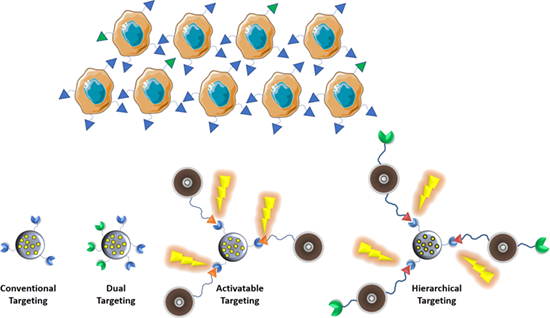
- solutions, a real alternative? Active targeting is already one of the most used strategies for bringing nanoformulations into tumoral cells. Although usually great results were achieved in vitro, the in vivo assays have shown smaller effects regarding cell internalization. There has been no real enhancement


Enhanced antineoplastic/therapeutic efficacy using 5-fluorouracil-loaded calcium phosphate nanoparticles
Beilstein J. Nanotechnol. 2018, 9, 2499–2515, doi:10.3762/bjnano.9.233
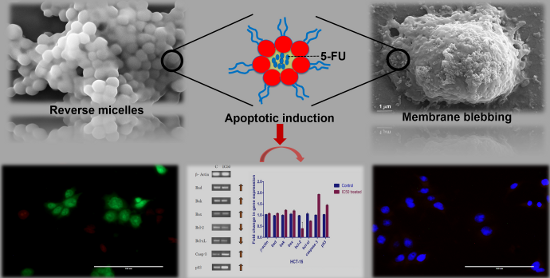
- immediately on improving the efficacy. This need could possibly be met by a nanoscale-carrier-facilitated drug delivery system. This rapidly growing field of research has gained interest all over the world with its effective and targeted drug delivery application [3]. Polymer-based nanoformulations have
- nanomaterial was found to be toxic in some metal-based NPs (e.g., gold, silver, iron, and copper), while the bulk counterparts showed less toxicity [9]. The metal ions present at the surface of the particles were found to interact with biomolecules at a comparatively higher rate in nanoformulations compared to


Near-infrared dye loaded polymeric nanoparticles for cancer imaging and therapy and cellular response after laser-induced heating
Beilstein J. Nanotechnol. 2014, 5, 313–322, doi:10.3762/bjnano.5.35
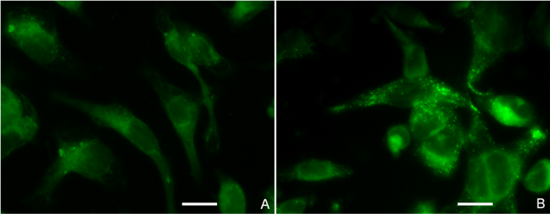
- NPs do not have any cytotoxicity effect at this concentration. Optical imaging of cancer cells and mice showed that the use of the NP formulation resulted in a stronger fluorescence signal 24 h after injection. This is consistent with the literature reporting that nanoformulations can result in


Other Beilstein-Institut Open Science Activities



