
Search results
Search for "organic pollutants" in Full Text gives 73 result(s) in Beilstein Journal of Nanotechnology.
Green synthesis of zinc oxide nanoparticles toward highly efficient photocatalysis and antibacterial application
Beilstein J. Nanotechnol. 2022, 13, 1108–1119, doi:10.3762/bjnano.13.94

- technologies have been proposed to remove organic pollutants from water, including coagulation coupled with sedimentation, biological processes, membrane filtration, adsorption, advanced oxidation, catalysis, and photocatalysis [1][2][3]. Using semiconductors as photocatalysts has been a widely studied
- approach for the complete removal of organic pollutants due to their advantages. Semiconductors can act as catalysts for the complete degradation of organic substances when excited by light with an energy value higher than their bandgap. Among many semiconductors, TiO2 and ZnO are widely used as





Solar-light-driven LaFexNi1−xO3 perovskite oxides for photocatalytic Fenton-like reaction to degrade organic pollutants
Beilstein J. Nanotechnol. 2022, 13, 882–895, doi:10.3762/bjnano.13.79
- related industries that consume water [4]. However, it leads to a severe environmental issue due to a large amount of discharged wastewater. For example, domestic wastewater mainly includes organic pollutants from excrement, clothing, cleaning lotion, etc. On the other hand, wastewater discharged from the
- [7]. On the other hand, pharmaceuticals' personal care products (PPCPs) are also sources of organic pollutants in wastewaters. PPCPs cover prescription drugs, nutritious foods, and personal health products that may cause environmental impacts. Among the medicines, tetracycline is antibiotics, which
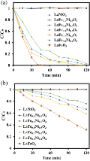
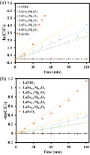
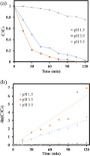
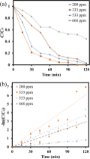
- Fenton method exhibits high oxidation capability and low selectivity for removing most organic substances. It can decompose organic pollutants into smaller organic molecules and generate carbon dioxide, water, and inorganic ions [17]. Generally, the ferrous ion employed in the Fenton reaction is from



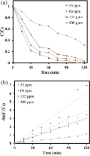
Hierarchical Bi2WO6/TiO2-nanotube composites derived from natural cellulose for visible-light photocatalytic treatment of pollutants
Beilstein J. Nanotechnol. 2022, 13, 745–762, doi:10.3762/bjnano.13.66
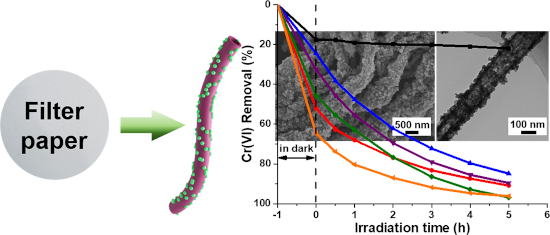
- some Bi2WO6/TiO2 composites, which were employed in various photocatalytic applications, such as degradation of organic pollutants [25], oxidation of methane [24], and production of hydrogen by water splitting [26]. According to these reports, Bi2WO6/TiO2 composites have better photocatalytic


Zinc oxide nanostructures for fluorescence and Raman signal enhancement: a review
Beilstein J. Nanotechnol. 2022, 13, 472–490, doi:10.3762/bjnano.13.40
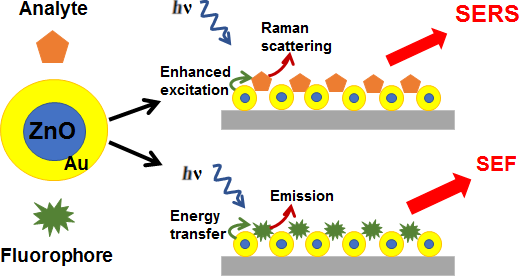
- HAuCl4 to controllably grow Au NPs on the ZnO nanorods and obtained effective substrates for the ultrasensitive detection of organic pollutants in water, which could be recycled multiple times [45]. Powdered ZnO–Au nanocomposites were synthesized via hydrothermal reactions, a simple, facile, and


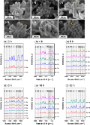


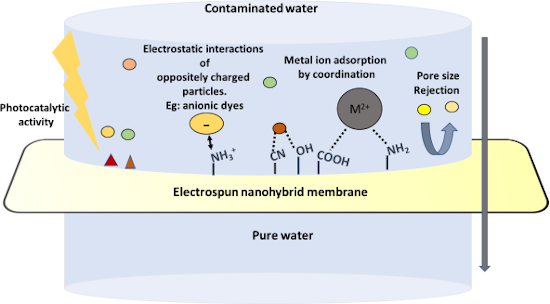
A comprehensive review on electrospun nanohybrid membranes for wastewater treatment
Beilstein J. Nanotechnol. 2022, 13, 137–159, doi:10.3762/bjnano.13.10





Boosting of photocatalytic hydrogen evolution via chlorine doping of polymeric carbon nitride
Beilstein J. Nanotechnol. 2021, 12, 473–484, doi:10.3762/bjnano.12.38
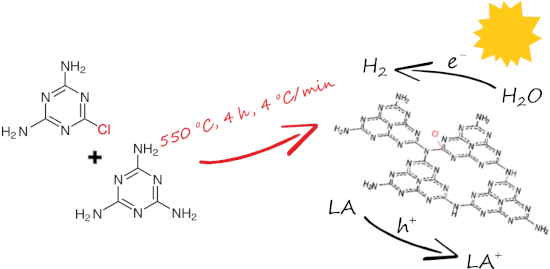
- hydrogen [1][2][3][4], environmental remediation [5][6], decomposition of organic pollutants [7], CO2 reduction into hydrocarbon fuels [8][9][10], disinfection [11][12], and selective organic transformations [13][14]. One of the most studied catalysts is polymeric carbon nitride (PCN). This graphite-like


Self-assembly and spectroscopic fingerprints of photoactive pyrenyl tectons on hBN/Cu(111)
Beilstein J. Nanotechnol. 2020, 11, 1470–1483, doi:10.3762/bjnano.11.130
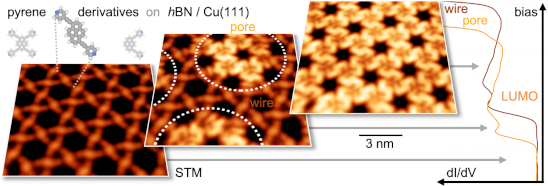
- anchor for noncovalent functionalization, e.g., to develop graphene platforms to be used in sensing applications [65][66][67] and to employ hBN monolayers for capturing aromatic organic pollutants [68]. On bulk insulators, it was, for instance, demonstrated how the optical properties of an adsorbed






Preparation, characterization and photocatalytic performance of heterostructured CuO–ZnO-loaded composite nanofiber membranes
Beilstein J. Nanotechnol. 2020, 11, 631–650, doi:10.3762/bjnano.11.50

- flocculation, have attracted much attention recently [1][2][3]. The photocatalytic purification of water has the advantages of high efficiency, thoroughness, and no secondary pollution. Various refractory organic pollutants in water are thoroughly oxidized to non-toxic and less harmful substances. Thus
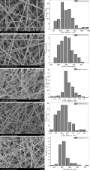
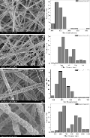
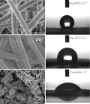
- in the photocatalytic degradation of organic pollutants were performed [46][47][48]. In this study, the photocatalytic degradation experiments under UV irradiation were carried out using the four prepared CNFMs in order to degrade a methyl orange solution with a concentration of 10 mg/L. The four













Adsorptive removal of bulky dye molecules from water with mesoporous polyaniline-derived carbon
Beilstein J. Nanotechnol. 2020, 11, 597–605, doi:10.3762/bjnano.11.47
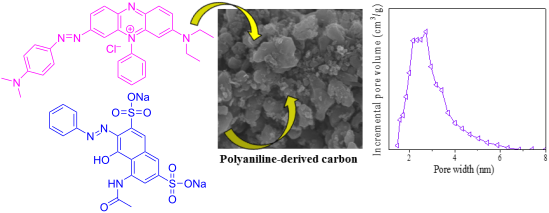
- removal of contaminants of emerging concern, hazardous organics and persistent organic pollutants. Carbonaceous materials have been particularly attractive in the purification of contaminated water via adsorption because of the easy preparation of carbon materials [26], especially from waste materials [28


Synthesis and enhanced photocatalytic performance of 0D/2D CuO/tourmaline composite photocatalysts
Beilstein J. Nanotechnol. 2020, 11, 407–416, doi:10.3762/bjnano.11.31
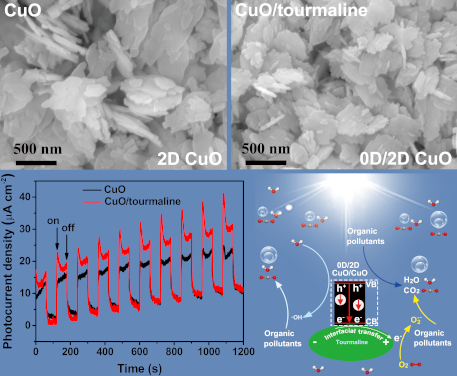
- File 1, Figure S3). The results implied that the as-synthesized CuO/tourmaline composite was durable and stable toward the photocatalytic decomposition of organic pollutants, which might be because tourmaline protected CuO from photocorrosion by facilitating the fast transfer of the photogenerated e
- for the oxidation of organic pollutants. (a) XRD spectra of the CuO, tourmaline, and CuO/tourmaline composite. (b) High-resolution Cu 2p XPS spectra of the CuO and CuO/tourmaline composite. FTIR spectra of the CuO, tourmaline, and CuO/tourmaline composite. SEM images of (a) tourmaline, (b) CuO, and (c


Improved adsorption and degradation performance by S-doping of (001)-TiO2
Beilstein J. Nanotechnol. 2019, 10, 2116–2127, doi:10.3762/bjnano.10.206

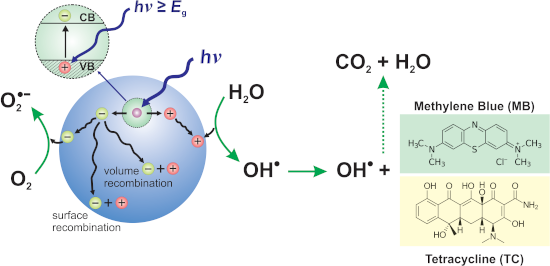
- -S2 sample has the highest •OH and •O2− signal intensity. This indicates that the sample has the highest number of •OH and •O2− radicals. Therefore, it shows the best pollutant degradation performance. •OH and •O2− radicals can degrade organic pollutants (MB) into nontoxic CO2 and water. Furthermore
- increase in the amount of •OH and •O2− radicals. Keywords: anatase; chemical state; degradation; photocatalytic properties; S-doping; thermal chemical vapor deposition; titanium dioxide (TiO2); Introduction Anatase TiO2 with a tetragonal symmetry has widely been used for the degradation of organic
- pollutants, as well as in electrocatalysis, solar cells and self-cleaning applications. Its wide use is based on its physicochemical properties, abundance, nontoxicity, environment-friendliness and low cost [1][2][3][4][5][6][7]. The photocatalytic properties of anatase TiO2 crystals are anisotropic since






BiOCl/TiO2/diatomite composites with enhanced visible-light photocatalytic activity for the degradation of rhodamine B
Beilstein J. Nanotechnol. 2019, 10, 1412–1422, doi:10.3762/bjnano.10.139

- Abstract A BiOCl/TiO2/diatomite (BTD) composite was synthesized via a modified sol–gel method and precipitation/calcination method for application as a photocatalyst and shows promise for degradation of organic pollutants in wastewater upon visible-light irradiation. In the composite, diatomite was used as


Construction of a 0D/1D composite based on Au nanoparticles/CuBi2O4 microrods for efficient visible-light-driven photocatalytic activity
Beilstein J. Nanotechnol. 2019, 10, 1360–1367, doi:10.3762/bjnano.10.134
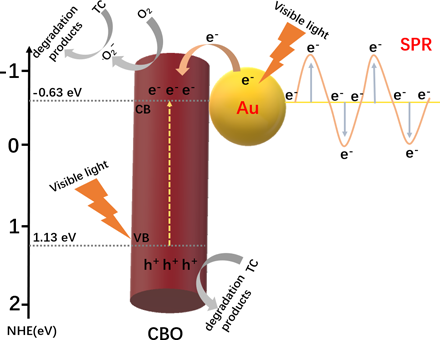
- , Zhenjiang, Jiangsu 212018, PR China School of Energy and Power, Jiangsu University of Science and Technology, Zhenjiang, Jiangsu 212003, PR China 10.3762/bjnano.10.134 Abstract Photocatalysis is considered to be a promising technique for the degradation of organic pollutants. Herein, a 0D/1D composite
- photocatalysis as an advanced green technology has been widely studied and applied for the removal of organic pollutants from water [1][2][3]. The catalytic activity of many wide-bandgap (Eg) semiconductor photocatalysts is restricted to UV light radiation, which is only 5% of the solar spectrum. Hence, the
- used for the oxidative degradation of organic pollutants [18]. In this context, there is a need for more efforts regarding the design and development of efficient noble metal-decorated CuBi2O4 photocatalysts. Recently, composite photocatalysts of zero-dimensional (0D) and one-dimensional (1D) materials


Photoactive nanoarchitectures based on clays incorporating TiO2 and ZnO nanoparticles
Beilstein J. Nanotechnol. 2019, 10, 1140–1156, doi:10.3762/bjnano.10.114
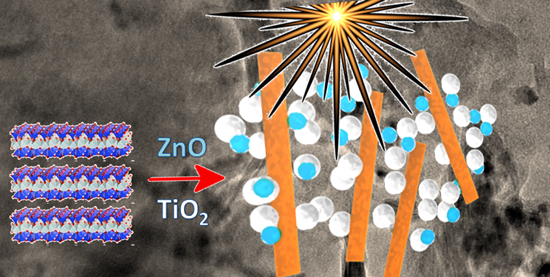
- often than ZnO NPs regarding their use as photocatalysts. One of the main applications of clay–semiconductor materials is the mineralization of organic pollutants, which represents an ideal solution for the remediation of wastewater contaminated with diverse organic species. This process consists in the
- oxidative decomposition of organic pollutants to non-toxic inorganic species such as carbon dioxide, avoiding the formation of any kind of residual sludge [23]. In fact, advanced oxidation processes (AOP) might be considered as promising technologies for the sustainable removal of pollutants from urban
- alkoxides, salts or coordination complexes, remain associated with the delaminated clay sheets, resulting in stable and efficient photoactive catalysts of particular interest for the removal of organic pollutants from wastewater [84][87][89][106][107][118][128]. Akkari and co-workers [118] have recently



Tailoring the stability/aggregation of one-dimensional TiO2(B)/titanate nanowires using surfactants
Beilstein J. Nanotechnol. 2019, 10, 1024–1037, doi:10.3762/bjnano.10.103
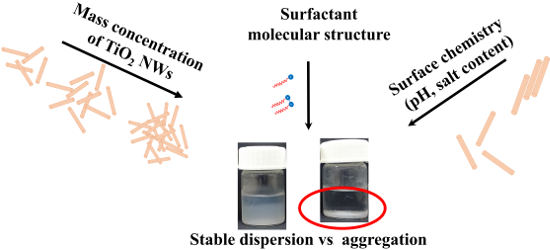
- because of their unique physicochemical properties compared to the bulk material. TNMs play an important role in various applications such as photocatalytic degradation of organic pollutants [1][2], sensors [3][4], solid oxide fuel cells [5], water purification [6][7], adsorption of radioactive and heavy


New micro/mesoporous nanocomposite material from low-cost sources for the efficient removal of aromatic and pathogenic pollutants from water
Beilstein J. Nanotechnol. 2019, 10, 119–131, doi:10.3762/bjnano.10.11
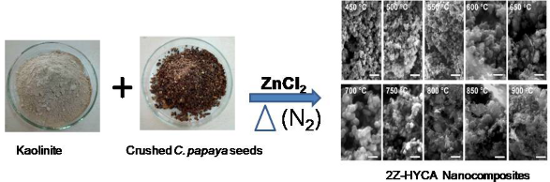
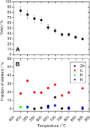
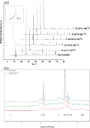
- situations. As a result, cheap yet highly efficient materials that can be used for the purification of very large volumes of water are therefore highly sought after [4]. This approach applies to all subgroups of contaminants – heavy metals, organic pollutants, and biological contaminants. One approach to




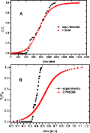
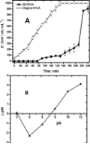
Impact of the anodization time on the photocatalytic activity of TiO2 nanotubes
Beilstein J. Nanotechnol. 2018, 9, 2628–2643, doi:10.3762/bjnano.9.244

- such as excellent chemical stability, photo-corrosion resistance, low cost, and low toxicity make TiO2 a material suitable for energy production and environmental applications, such as advanced oxidation processes for the decomposition of organic pollutants in water [2][3]. However, the material
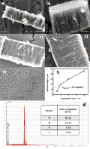



Nanocellulose: Recent advances and its prospects in environmental remediation
Beilstein J. Nanotechnol. 2018, 9, 2479–2498, doi:10.3762/bjnano.9.232
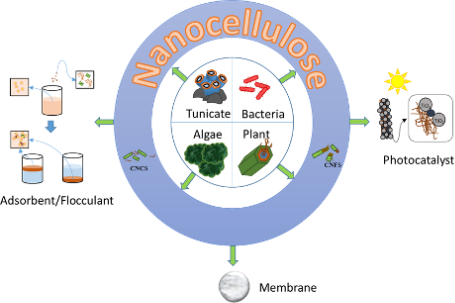
- concerns warrant the application of bio-renewable polymers in the production of nanomaterials. In recent years, nanomaterials have displayed potential in effective detection and removal of greenhouse gases, chemical contaminants, organic pollutants, and biological agents. These materials come in various
- adsorbent for wastewater treatment due to its adsorption affinity towards organic pollutants. Unlike micrometre-sized cellulose, the nanometre-sized counterparts are relatively smaller in dimensional size but also possess a larger surface area with improved porosity, which limits internal diffusion and
- nanocellulose for example, is desired due to their good performance in the removal of organic pollutants. Hokkanen et al. [88] reported that calcium hydroxyapatite-microfibrillated cellulose adsorbent was effective for the removal of chromium (Cr(VI)) from aqueous solution. They found that calcium


ZnO-nanostructure-based electrochemical sensor: Effect of nanostructure morphology on the sensing of heavy metal ions
Beilstein J. Nanotechnol. 2018, 9, 2421–2431, doi:10.3762/bjnano.9.227

- the presence of lead and other heavy ions, even in small quantities, is an important and topical task. ZnO nanostructures are promising candidates for use in such sensors. They are sensitive to various types of contamination, including almost all heavy metal ions and organic pollutants, and show very


SERS active Ag–SiO2 nanoparticles obtained by laser ablation of silver in colloidal silica
Beilstein J. Nanotechnol. 2018, 9, 2396–2404, doi:10.3762/bjnano.9.224
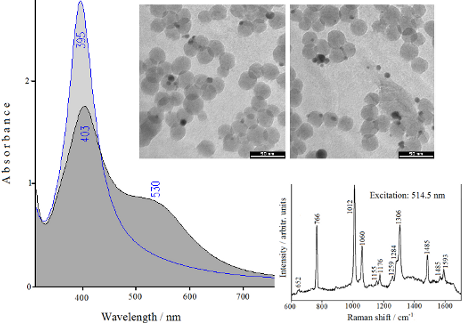
- chemical reactants. These nanocomposites, which combine the adsorption properties of silica with the plasmonic properties of nanometer-sized silver, can be used for several purposes, for example, for the SERS detection of environmental contaminants such as POPs (persistent organic pollutants), as



Synthesis of a MnO2/Fe3O4/diatomite nanocomposite as an efficient heterogeneous Fenton-like catalyst for methylene blue degradation
Beilstein J. Nanotechnol. 2018, 9, 1940–1950, doi:10.3762/bjnano.9.185
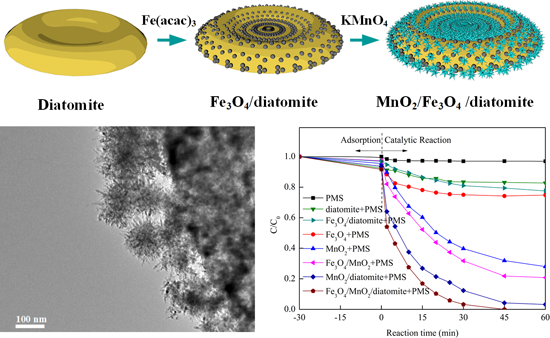
- ) oxide (Fe3O4); manganese(IV) oxide (MnO2); Introduction Organic contaminants are widely distributed in water and soil due to the excessive emissions of industrial processes, which causes a great threat to the ecosystem as well as to human health [1][2][3]. Most of the organic pollutants are toxic and
- -based catalysts, MnO2 shows good catalytic performance because of the Mn(III)/Mn(IV) redox loop and much less sludge formation due to the neutral functional pH value [11][12]. Although, the MnO2-PMS system shows good prospect in the treatment of organic pollutants, modifications focusing on the
- organic pollutants. XRD patterns of the purified diatomite and the prepared diatomite-supported composites. FTIR spectra of the purified diatomite and prepared diatomite-supported composites. The SEM images of diatomite (a), Fe3O4/diatomite (b, d), MnO2/Fe3O4/diatomite (c and e), EDX spectrum (f) and


Sulfur-, nitrogen- and platinum-doped titania thin films with high catalytic efficiency under visible-light illumination
Beilstein J. Nanotechnol. 2018, 9, 1629–1640, doi:10.3762/bjnano.9.155
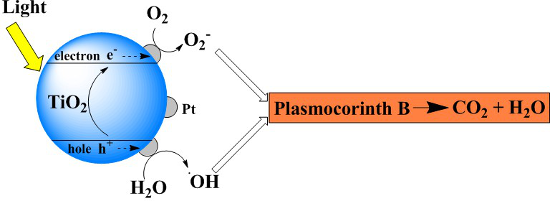
- of Novi Sad, Faculty of Technology, Bulevar cara Lazara 1, 21000 Novi Sad, Serbia 10.3762/bjnano.9.155 Abstract Titanium dioxide photocatalysts have received a lot of attention during the past decades due to their ability to degrade various organic pollutants to CO2 and H2O, which makes them



Cr(VI) remediation from aqueous environment through modified-TiO2-mediated photocatalytic reduction
Beilstein J. Nanotechnol. 2018, 9, 1448–1470, doi:10.3762/bjnano.9.137
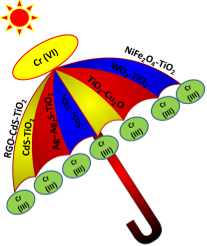
- irradiation of suitable light energy. The mechanism of photodegradation of organic pollutants involves the formation of reactive species like O2•− and •OH as per Equation 6 and Equation 7. Some of the O2•− species combine with H+ ions to form •OOH as represented in Equation 8. These active species (•OH, O2
- •− and •OOH) decompose the organic pollutants to less harmful compounds like H2O and CO2 (Equation 9). Photocatalytic reduction of Cr(VI) The semiconductor-mediated photocatalytic reduction of aqueous Cr(VI) has also recently gained tremendous importance because of its simple operation under ambient



Ag2WO4 nanorods decorated with AgI nanoparticles: Novel and efficient visible-light-driven photocatalysts for the degradation of water pollutants
Beilstein J. Nanotechnol. 2018, 9, 1308–1316, doi:10.3762/bjnano.9.123
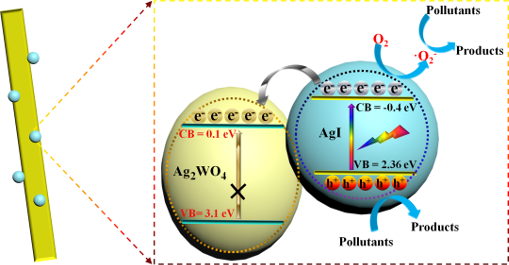
- still achieves the highest apparent rate constant (0.0292 min−1 for MO degradation and 0.0129 min−1 for 4-CP degradation) among all these samples. The mineralization of organic pollutants is crucial for pollutant treatment [46]. Thus, the total organic carbon (TOC) removal efficiency of RhB over 0.3AgI


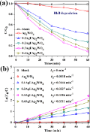
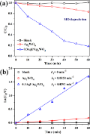

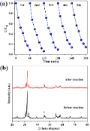


Facile synthesis of a ZnO–BiOI p–n nano-heterojunction with excellent visible-light photocatalytic activity
Beilstein J. Nanotechnol. 2018, 9, 789–800, doi:10.3762/bjnano.9.72
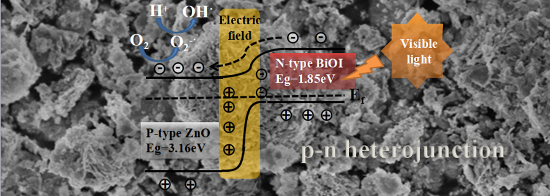
- , probably a result of the quantum confinement effect in the nanometer-sized ZnO particles. Photocatalytic degradation To test the as-synthesized samples’ ability to remove organic pollutants from waste water, the photodegradation of RhB was carried out under illumination by visible light from a 300 W Xe