


Search results
Search for "organic semiconductor" in Full Text gives 29 result(s) in Beilstein Journal of Nanotechnology.
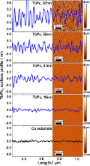
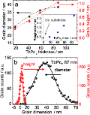
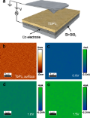
Optical properties and electrical transport of thin films of terbium(III) bis(phthalocyanine) on cobalt
Beilstein J. Nanotechnol. 2014, 5, 2070–2078, doi:10.3762/bjnano.5.215

- years. Terbium(III) bis(phthalocyanine) (TbPc2) is an excellent candidate to provide all the necessary features for molecular spintronics, as it is both an organic semiconductor and a single molecule magnet (SMM). TbPc2 was previously implemented in an organic field effect transistor (OFET) as a hole




Patterning a hydrogen-bonded molecular monolayer with a hand-controlled scanning probe microscope
Beilstein J. Nanotechnol. 2014, 5, 1926–1932, doi:10.3762/bjnano.5.203

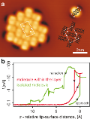
- archetypal organic semiconductor 3,4,9,10-perylene tetracarboxylic acid dianhydride (PTCDA) on a single-crystalline Ag(111) surface [10] (see Figure 1a). An Ag(111) single crystal was cleaned by repeated Ar-sputtering and annealing cycles. A small coverage of PTCDA molecules (less than 10% of a monolayer
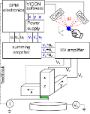


Terthiophene on Au(111): A scanning tunneling microscopy and spectroscopy study
Beilstein J. Nanotechnol. 2011, 2, 561–568, doi:10.3762/bjnano.2.60

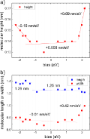
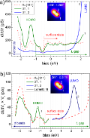
- the interface between the organic component and a metal electrode are of utmost importance. Essential parameters, such as the injection characteristics of charge carriers into the organic semiconductor or the temporal stability of a device function, critically depend on this interface behavior. As a



Self-organizing bioinspired oligothiophene–oligopeptide hybrids
Beilstein J. Nanotechnol. 2011, 2, 525–544, doi:10.3762/bjnano.2.57

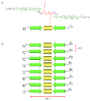
- advances in the understanding the self-organization processes observed for oligothiophene–oligopeptide conjugates, which are capable of forming long fibrillar aggregates in solution and on substrates. In particular, we reported on the successful synthesis of new bio-substituted organic semiconductor




Other Beilstein-Institut Open Science Activities



