


Search results
Search for "polyimide" in Full Text gives 51 result(s) in Beilstein Journal of Nanotechnology.
Optical orientation of nematic liquid crystal droplets via photoisomerization of an azodendrimer dopant
Beilstein J. Nanotechnol. 2018, 9, 870–879, doi:10.3762/bjnano.9.81
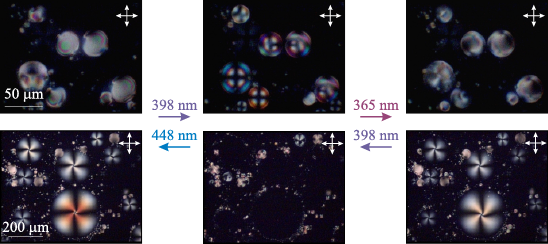
- surfaces with polyimide and rubbing in a particular direction. The comparison of these two samples allows one to reveal the role of binding of azobenzene moieties in the dendrimer molecules. To induce the photoisomerization processes in NLC films, the same LEDs as above were used. The exposure time (τexp


Effect of ferroelectric BaTiO3 particles on the threshold voltage of a smectic A liquid crystal
Beilstein J. Nanotechnol. 2018, 9, 824–828, doi:10.3762/bjnano.9.76

- Teflon spacer. The internal surfaces of glasses were covered by a transparent and conductive ITO layer. Polyimide was used as a planar aligning material. The process of filling of the electro-optical cell was carried out by a capillary method in the isotropic state of the LC. The capacitance of the


Mechanistic insights into plasmonic photocatalysts in utilizing visible light
Beilstein J. Nanotechnol. 2018, 9, 628–648, doi:10.3762/bjnano.9.59
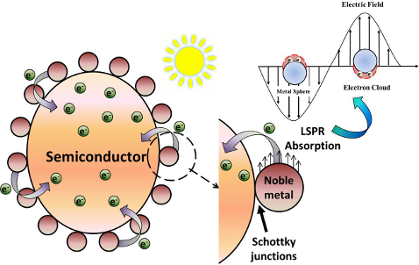
- . Polyimide films were used to control the distance between the two glass plates, and the space was filled with air-saturated water. In this way, it was confirmed that the •OH generated on the photocatalysts could diffuse to the HPF-coated glass. Detection methods of •O2− Spin-trapping electron paramagnetic





Design of polar self-assembling lactic acid derivatives possessing submicrometre helical pitch
Beilstein J. Nanotechnol. 2018, 9, 333–341, doi:10.3762/bjnano.9.33

- filled into glass cells (Military University of Technology, cell gap of 12 μm, homogeneous alignment) with indium tin oxide transparent electrodes and polyimide layers rubbed unidirectional, which ensured a planar geometry supporting an induction of bookshelf-like smectic structures. The alignment was


Nematic liquid crystal alignment on subwavelength metal gratings
Beilstein J. Nanotechnol. 2018, 9, 42–47, doi:10.3762/bjnano.9.6
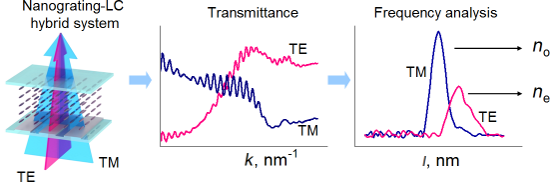
- gratings was used as a substrate for a LC cell: it was stacked with another substrate, namely a glass plate covered with rubbed polyimide layer (to provide the planar LC alignment) in a way that for half of the gratings, the rubbing direction is perpendicular to the slits of the gratings, and parallel to
- deviations the lowest value for the anchoring energy magnitude can be estimated as W0 ≥ πK2/(2d δφ) = 2.6 × 10⁻² mJ/m2, where we use K2 5 pN , d = 6 μm, and δφ = 0.05 radians. The estimated value is of the same order of the values as for the azimuthal anchoring strength for the E7 on the polyimide surface


![[Graphic 3]](/bjnano/content/inline/2190-4286-9-6-i7.svg?max-width=637&scale=1.18182) , the sample axis (rubbing direction) ...
, the sample axis (rubbing direction) ...


Impact of titanium dioxide nanoparticles on purification and contamination of nematic liquid crystals
Beilstein J. Nanotechnol. 2017, 8, 2766–2770, doi:10.3762/bjnano.8.275
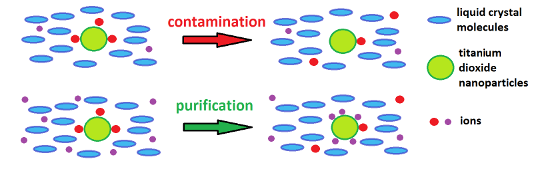
- substrates covered by indium-tin oxide (ITO) electrodes and rubbed polyimide layers were used for measurements. The thickness of the LC cells was set by spacers and controlled by measurements of empty cell capacitance. The thickness of the cells was 15 ± 1 μm. We used commercial nematic LC (ZhK1282, NIOPIK
Inelastic electron tunneling spectroscopy of difurylethene-based photochromic single-molecule junctions
Beilstein J. Nanotechnol. 2017, 8, 2606–2614, doi:10.3762/bjnano.8.261

- the sample. The MCBJ sample preparation [14] is as follows. Polyimide is spin-coated to be 2 μm in thickness on a softly polished bronze wafer (200 μm in thickness, CuSn6), and then the polyimide on the wafer is annealed for 6 hours at 430 °C in vacuum (10−5 mbar). Subsequently, the electron beam
- lithography is performed with a double layer of electron beam resists (copolymer/PMMA). After developing the resists, Au of around 70 nm in thickness is deposited, the electron-beam mask is lifted off in warm acetone, and then the polyimide layer is partially etched away (thickness reduction of ca. 700 nm) by


Parylene C as a versatile dielectric material for organic field-effect transistors
Beilstein J. Nanotechnol. 2017, 8, 1532–1545, doi:10.3762/bjnano.8.155
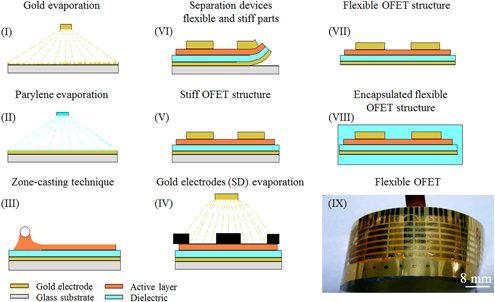
- adhesion of this polymer to different substrates. According to the literature Parylene C exhibits a satisfactory adherence to gold, platinum and silicon nitride [61], which is, however, in contradiction to older reports [62][63]. Its adherence to polyimide, on the other hand, is found to be very low [61




Advances in the fabrication of graphene transistors on flexible substrates
Beilstein J. Nanotechnol. 2017, 8, 467–474, doi:10.3762/bjnano.8.50
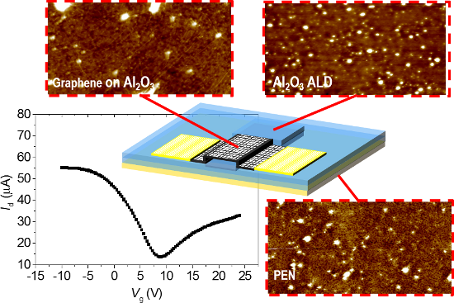
- in graphene FETs (Gr-FETs) even with gradually scaled (≈0.5 µm) channel lengths fabricated on a flexible polyimide substrate and adopting a back-gate configuration and Al2O3 as a gate dielectric. In addition, due to the low density of states (DOS) around the Dirac point, the carrier density of



Intercalation and structural aspects of macroRAFT agents into MgAl layered double hydroxides
Beilstein J. Nanotechnol. 2016, 7, 2000–2012, doi:10.3762/bjnano.7.191

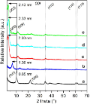
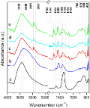
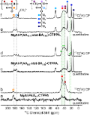
- ], elastomers [27], epoxy polymers [28], poly(ε-caprolactone) [29], polyesters [30], polyurethane [31] and polyimide [21]. Alternatively, Leroux et al. described the preparation of a hybrid LDH phase intercalated by an anionic polymerizable surfactant acting further as an anchor that compatibilizes the



Numerical investigation of depth profiling capabilities of helium and neon ions in ion microscopy
Beilstein J. Nanotechnol. 2016, 7, 1749–1760, doi:10.3762/bjnano.7.168
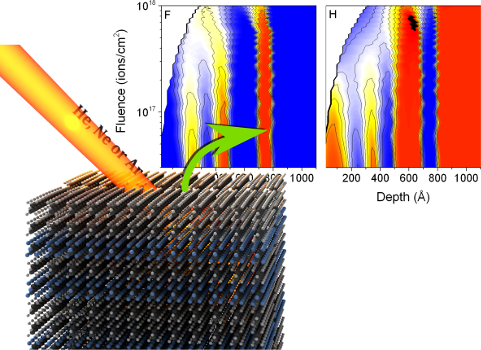
- + irradiation of polyimide (PI) and polyethersulfone improves the moisture uptake in the films [7]. Further applications include metal adhesion on polymer surface [8], novel inorganic films by ion bombardment of polymers [9], surface morphology for biocompatibility [10], etch resistance of polymers [11


Experimental and simulation-based investigation of He, Ne and Ar irradiation of polymers for ion microscopy
Beilstein J. Nanotechnol. 2016, 7, 1113–1128, doi:10.3762/bjnano.7.104
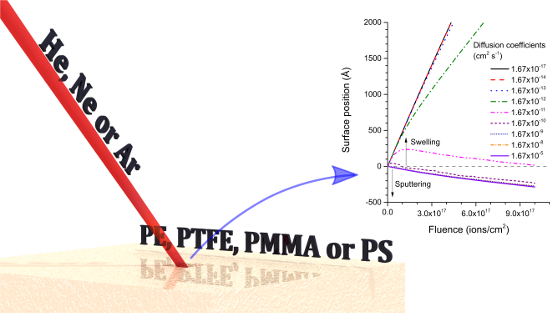
- to the enrichment of one of the elements in the near-surface region. This is known as preferential sputtering. This issue was also studied by Hnatowicz et al. for 100 keV He+, Ne+, Ar+ and Kr+ bombardment of polyimide and the depletion of H and O for fluences above 1014 ions/cm2 [20]. More recent


Role of solvents in the electronic transport properties of single-molecule junctions
Beilstein J. Nanotechnol. 2016, 7, 1055–1067, doi:10.3762/bjnano.7.99

- sodium/potassium alloy under inert gas atmosphere. TCB was dried over P4O10 and distilled under nitrogen inert gas atmosphere. Device fabrication As described in [11] the spin-coating of polyimide (2 μm in thickness) is performed on a softly polished bronze wafer (200 μm in thickness), and then the wafer
- is annealed for 6 h at 430 °C in vacuum (10−5 mbar). The polyimide layer serves as an electrical insulator and a sacrificial layer in the subsequent etching process. Prior to performing the electron beam lithography performed in a FEI scanning electron microscope XL30 equipped with a pattern
- rinsing in IPA, the patterned samples are mounted in an electron-beam evaporator of ultra-high vacuum (10−9 mbar) and gold of about 80 nm thickness is deposited at a rate of 1 Å/s. After lift-off, the polyimide layer is partially etched away (thickness reduction ca. 700 nm) by employing O2 plasma in the


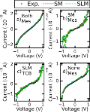


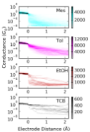

Thermo-voltage measurements of atomic contacts at low temperature
Beilstein J. Nanotechnol. 2016, 7, 767–775, doi:10.3762/bjnano.7.68

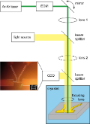
- junction substrates bronze or stainless steel [18][23][24]. Kapton Cirlex is an electrically insulating and optically opaque material based on polyimide. We use a thickness of 500 µm chosen such that it is mechanically robust yet giving flexibility across a wide temperature range down to 4 K and is thus
- . surface roughness of 1 µm it was necessary to polish the substrate before spin-coating a thin layer (2–3 µm) of polyimide which enhances the planarization of the substrate. Furthermore, the layer serves as a sacrificial layer to be etched in order to create a freestanding Au bridge of approximately 2 µm
- gold structure was placed on a Kapton Cirlex substrate (properties from COMSOL Material Library: Polyimide tape (Kapton HN)) with an additional polyimide layer (properties from COMSOL MEMS module: Polyimide) of 2.5 µm thickness. A Gaussian heat source with 1.5 mW and a diameter of 12 µm (FWHM) was



Synthesis and applications of carbon nanomaterials for energy generation and storage
Beilstein J. Nanotechnol. 2016, 7, 149–196, doi:10.3762/bjnano.7.17


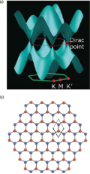


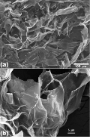


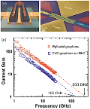


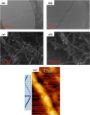







Conductance through single biphenyl molecules: symmetric and asymmetric coupling to electrodes
Beilstein J. Nanotechnol. 2015, 6, 1690–1697, doi:10.3762/bjnano.6.171

- show that there is clear coupling between end groups and interaction over the whole molecule, so that there is still fairly high conductance through this asymmetric biphenyl molecule. Experimental A flexible stainless steel sheet (200 μm thick) coated with an insulating polyimide layer is used as a


Electrical properties and mechanical stability of anchoring groups for single-molecule electronics
Beilstein J. Nanotechnol. 2015, 6, 1558–1567, doi:10.3762/bjnano.6.159

- consists of a fine-polished, 500 μm thick, phosphorous bronze sheet coated with 6 μm of insulating polyimide. A gold wire, with a 50 nm wide constriction in the middle, is fabricated on top of the polyimide with standard electron beam lithography, evaporation and lift-off techniques. After a final O2/CF4





Conformal SiO2 coating of sub-100 nm diameter channels of polycarbonate etched ion-track channels by atomic layer deposition
Beilstein J. Nanotechnol. 2015, 6, 472–479, doi:10.3762/bjnano.6.48
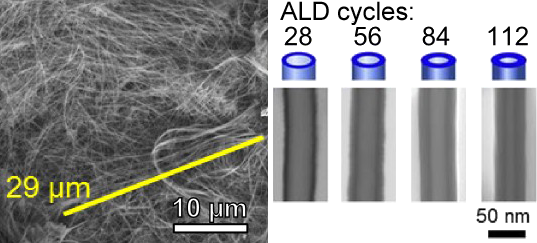
- narrow size distribution [4][5][6]. Typically, polymers such as polycarbonate (PC), polyethylene terephthalate, and polyimide are employed as templates. Hydrophilicity is sometimes improved by immersing the etched membrane in a surfactant solution such as polyvinylpyrrolidone. The addition of surfactants
- -butoxy)silanol and trimethylaluminium to coat 20, 100, and 200 nm diameter AAO channels with silica [23]. Channels (diameter 70 nm, length 2 µm) of polyimide templates fabricated by AAO-assisted dry etching were coated with Al2O3 [24]. Commercial track-etched membranes were successfully ALD-coated with


Electrical response of liquid crystal cells doped with multi-walled carbon nanotubes
Beilstein J. Nanotechnol. 2015, 6, 396–403, doi:10.3762/bjnano.6.39

- orientation. As mentioned above, other polymers such as polyimide are preferred as alignment layers for these LC devices. However, preliminary work with polyimide alignment layers showed that these effectively act as isolating layers, hindering eventual MWCNT-derived conductivity. Despite being a much less
- efficient aligning surface, PEDOT:PSS has a remarkably higher conductivity than polyimide, what is essential to keep electric continuity across the layer. Characterization method: driving waveform Impedance spectroscopy customarily employs sufficiently small voltage signals so that the system response is


Characterization of 10,12-pentacosadiynoic acid Langmuir–Blodgett monolayers and their use in metal–insulator–metal tunnel devices
Beilstein J. Nanotechnol. 2014, 5, 2240–2247, doi:10.3762/bjnano.5.233

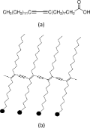
- junctions using polyimide LB films over a range of temperatures [7]. Kaneko et al. reported the use of polydiacetylene thin films in MIM and metal–insulator–semiconductor structures. They measured the thermionic emission through MIM diodes with polydiacetylene LB multilayers [8]. Ram et al. also fabricated


The influence of molecular mobility on the properties of networks of gold nanoparticles and organic ligands
Beilstein J. Nanotechnol. 2014, 5, 1664–1674, doi:10.3762/bjnano.5.177

- polyimide (Kapton) films) and electron beam lithography-written high-aspect-ratio (HAR) nanotrench electrodes devices [25]. The Au-NP–S-BPP arrays are stored in a dark and cold environment and can be kept for several months. Results and Discussion Imaging of Au-NP–S-BPP arrays and networks Scanning




Organic and inorganic–organic thin film structures by molecular layer deposition: A review
Beilstein J. Nanotechnol. 2014, 5, 1104–1136, doi:10.3762/bjnano.5.123
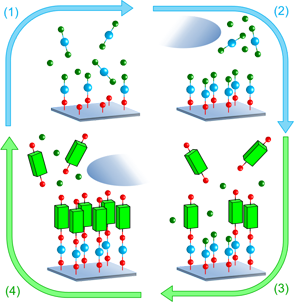
- corresponding to a vapor pressure of 2 mbar, which is a rather typical pressure used for ALD/MLD depositions. Organic thin films So far MLD has been used to produce polyamide, polyimide, polyimide–amide, polyurea, polyurethane, polythiurea, polyester and polyimine thin films. In Table 2, we list the
- characteristic polymer linkages seen in these films. For example, polyamides are polymers in which the precursors employed are combined with each other via amide bond formation whereas polyureas contain the urea linkage. And like the name of polyimide–amides suggests, these polymers contain both an imide and an
- works on polyimide thin films so far (Table 4). Putkonen et al. [61] combined PMDA together with ethane-1,2-diamine (ED) and hexane-1,6-diamine to produce semi-aromatic polyimides. The highest growth rates achieved for these thin films were 3.9 Å per cycle for the former and 5.8 Å per cycle for the




Deformation-induced grain growth and twinning in nanocrystalline palladium thin films
Beilstein J. Nanotechnol. 2013, 4, 554–566, doi:10.3762/bjnano.4.64

- Karlsruhe, Germany 10.3762/bjnano.4.64 Abstract The microstructure and mechanical properties of nanocrystalline Pd films prepared by magnetron sputtering have been investigated as a function of strain. The films were deposited onto polyimide substrates and tested in tensile mode. In order to follow the
- . However, this can be improved by sputtering onto compliant polyimide substrates to stabilize the specimens and to avoid strain localization during tensile testing [20][21][22]. Such samples were successfully used in the present work. The goal of the present work is to investigate the deformation processes
- sputter deposited onto flexible polyimide substrates. The samples were tensile tested ex-situ up to defined maximum strains and the resulting microstructure as a function of imposed strain was investigated using ACOM-TEM and CXRD after deformation. Two sets of sputtered samples were directly compared by


Characterization and properties of micro- and nanowires of controlled size, composition, and geometry fabricated by electrodeposition and ion-track technology
Beilstein J. Nanotechnol. 2012, 3, 860–883, doi:10.3762/bjnano.3.97
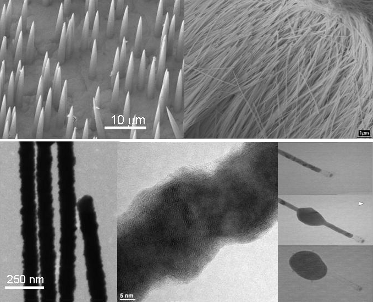
- possible to create a preset regular ion-track arrangement by using a microprobe [37]. Materials commonly used as multi- and single-pore etched-ion-track membranes include polymers such as polyimide (PI), polyethylene terephthalate (PET) and polycarbonate (PC), and inorganic materials such as mica and glass
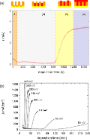
- loss of the ions in the given material is above the so-called etching threshold [38]. Figure 2a presents the energy loss of light- and heavy-ion projectiles in polyimide. The different symbols denote cylindrical (full), discontinuous (crossed), and spherical (open) damage morphology with respective








Current–voltage characteristics of single-molecule diarylethene junctions measured with adjustable gold electrodes in solution
Beilstein J. Nanotechnol. 2012, 3, 798–808, doi:10.3762/bjnano.3.89

- (Figure S1 in Supporting Information File 1). NMR spectra were recorded on a Bruker Avance DRX600 (600 MHz) and a Jeol ECP-Eclipse 400 (400 MHz). Device fabrication The spin-coating of polyimide (2 μm in thickness) was performed on a softly polished bronze wafer (200 μm in thickness), and then the wafer
- was annealed for 6 h at 430 °C in vacuum (10−5 mbar). The polyimide layer serves as an electrical insulator and a sacrificial layer in the subsequent etching process. Prior to performing the electron beam lithography process, a double layer of electron-beam resists, MMA-MAA/PMMA, was deposited by spin
- -coating on the wafer. After developing, the patterned samples were mounted in an electron-beam evaporator under ultrahigh vacuum (10−9 mbar), and gold of about 80 nm thickness was deposited at a rate of 1 Å/s. After lift-off, the polyimide layer was partially etched away (thickness reduction ≈700 nm) by





