

Search results
Search for "supercapacitor" in Full Text gives 32 result(s) in Beilstein Journal of Nanotechnology.
First examples of organosilica-based ionogels: synthesis and electrochemical behavior
Beilstein J. Nanotechnol. 2017, 8, 736–751, doi:10.3762/bjnano.8.77

- supercapacitor has a capacitance up to 90 F/g at room temperature [26]. Ameri et al. made IG transistors using graphene [27] for low voltage operation. Using a slightly different approach, Hesemann and coworkers and Néouze and coworkers incorporated IL-like functionalities into periodic mesoporous organosilicas











Synthesis of graphene–transition metal oxide hybrid nanoparticles and their application in various fields
Beilstein J. Nanotechnol. 2017, 8, 688–714, doi:10.3762/bjnano.8.74
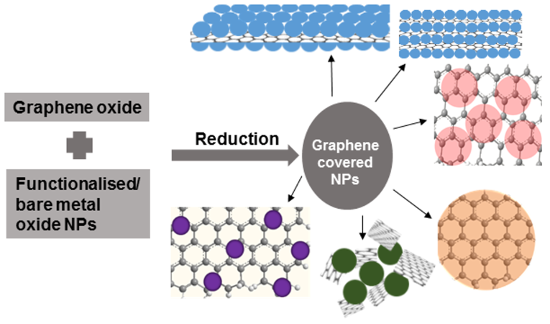
- surface area of graphene help to maintain the mechanical strength of the hybrid during the Li insertion and extraction process. Graphene is used as a supercapacitor because of its unique properties, such as high surface area, excellent flexibility, chemical inertness and good electrical conductivity [28
- abundance of Mn in nature. Among all the oxides of manganese, Mn3O4 has been studied widely as an anode material for LIB to achieve higher specific capacities than graphite [120]. Mn3O4 has a spinal structure and is a potentially interesting electrode material as an electrolytic supercapacitor because of
- ]. Ultrathin 2D MnO2 graphene hybrids form high-performance flexible planar supercapacitors [140]. Graphene-wrapped MnO2 is also used for supercapacitor applications [141]. MnO has low conversion potential, low voltage hysteresis (<0.8 V), and high density (5.43 g·cm−3). The application of MnO in LIB is a






Fundamental properties of high-quality carbon nanofoam: from low to high density
Beilstein J. Nanotechnol. 2016, 7, 2065–2073, doi:10.3762/bjnano.7.197
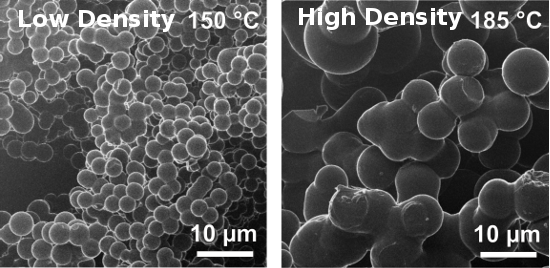
- various chemical elements have been investigated. In particular, foams from transition metals and noble metals have attracted attention, and interesting applications have been developed. Nickel nanofoam has been used for glucose sensing [1] and also been suggested for high-performance supercapacitor


Synthesis and applications of carbon nanomaterials for energy generation and storage
Beilstein J. Nanotechnol. 2016, 7, 149–196, doi:10.3762/bjnano.7.17
















Surfactant-controlled composition and crystal structure of manganese(II) sulfide nanocrystals prepared by solvothermal synthesis
Beilstein J. Nanotechnol. 2015, 6, 2319–2329, doi:10.3762/bjnano.6.238

- ), ≈100 K (β-MnS), and 154 K (α-MnS) [6]. The interesting physical properties and the rich polymorphism prompted research on MnS nanocrystals (NCs) in view of applications as photoluminescent components [7], photoreduction catalysts [8], anode materials in lithium-ion batteries [9], and supercapacitor


Carbon nano-onions (multi-layer fullerenes): chemistry and applications
Beilstein J. Nanotechnol. 2014, 5, 1980–1998, doi:10.3762/bjnano.5.207
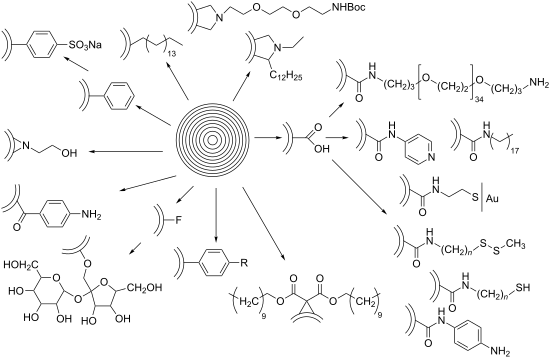
- materials in supercapacitor electrodes. Bushueva et al. for example, found capacitance values of the investigated CNO material of 20–40 F·g−1 and 70–100 F·g−1 with acidic or basic electrolyte solutions, respectively [56]. In 2010, Pech et al. published the preparation and characterization of ultrahigh-power
- micrometer-sized supercapacitors based on CNOs [57]. In an extensive electrochemical study in different aqueous and organic electrolytes, McDonough et al. investigated the influence of the CNO structure on their electrochemical performance in supercapacitor electrodes [58]. The increase of the capacitance of
- supercapacitor electrodes [46]. Also the CNO/PEDOT:PSS composites, which were previously discussed, showed promising properties for the application as electrode material in supercapacitors, such as a specific capacity of 96 F·g−1, good cation-exchange properties and a simple synthesis [47]. In a recent study


Modeling and optimization of atomic layer deposition processes on vertically aligned carbon nanotubes
Beilstein J. Nanotechnol. 2014, 5, 234–244, doi:10.3762/bjnano.5.25

- been applied in battery [2][3][4][5] and supercapacitor electrodes [6][7][8][9][10][11][12], fuel cells [13], and sensors [14][15][16][17]. For many of the proposed applications of these CNT/ceramic hybrids, the performances of the devices depend crucially on the thickness and conformality of the



Other Beilstein-Institut Open Science Activities