

Search results
Search for "upconversion" in Full Text gives 28 result(s) in Beilstein Journal of Nanotechnology.
Synthesis of hydrophobic photoluminescent carbon nanodots by using L-tyrosine and citric acid through a thermal oxidation route
Beilstein J. Nanotechnol. 2014, 5, 1513–1522, doi:10.3762/bjnano.5.164

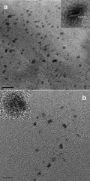
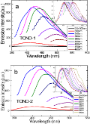
- air. These CNDs (less than 4 nm in size) exhibited a characteristic excitation wavelength dependent emission and upconversion emission properties and are insoluble in water, but soluble in organic solvents. FTIR and 1H NMR analyses showed a selective participation of L-tyrosine molecule during the
- : composite materials; fluorescence quenching; hydrophobic; luminescence; upconversion; Introduction The synthesis of fluorescent functional materials raised significant interest in order to understand biological processes such as DNA sequencing, detection of DNA-hybridization, protein sensing, single
- excitation wavelength dependent multicolor emission [2], upconversion photoluminescence (UCPL) [3], resistance to photobleaching, chemical and photochemical stability, low toxicity [4][5], and bio-compatibility. These associated properties of CNDs are exploited mostly in bio-imaging [6][7][8][9][10], bio






Nanostructure sensitization of transition metal oxides for visible-light photocatalysis
Beilstein J. Nanotechnol. 2014, 5, 696–710, doi:10.3762/bjnano.5.82
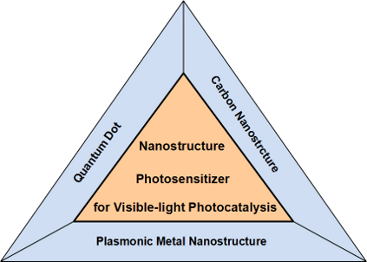
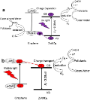
- photocatalytic mechanism for TiO2/carbon nanodots is schematically shown in Figure 9. When TiO2/carbon nanodots are illuminated by visible light, the carbon nanodots can absorb visible light (λ > 520 nm) and emit UV light (325 < λ < 425 nm) due to the PL upconversion of carbon nanodots. The UV light emitted by
- due to the photosensitization of carbon nanodots. By virtue of PL upconversion properties, carbon nanodots can also be used as photosensitizer to harness near-infrared light to further enhance the photocatalytic activity of some visible-light active semiconductors. Kang et al. recently reported that
- ) and then emit shorter wavelength light (300 to 530 nm) for the excitation of m-BiVO4 to further generate electron–hole pairs for photocatalytic degradation. Due to the special upconversion property of carbon nanodots, the carbon nanodots–m-BiVO4 nanospheres can be used as photocatalysts under the




Room temperature excitation spectroscopy of single quantum dots
Beilstein J. Nanotechnol. 2011, 2, 516–524, doi:10.3762/bjnano.2.56

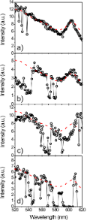
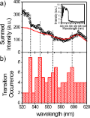
- such as Förster resonance energy transfer (FRET) pairs, fluorescent proteins and upconversion particles. Experimental We realized an instrument capable of single molecule excitation spectroscopy by combining a high power supercontinuum white light source (Fianium SC-400pp) with a grating spectrometer

Other Beilstein-Institut Open Science Activities