

Search results
Search for "gap" in Full Text gives 762 result(s) in Beilstein Journal of Nanotechnology. Showing first 200.
Better together: biomimetic nanomedicines for high performance tumor therapy
Beilstein J. Nanotechnol. 2025, 16, 1246–1276, doi:10.3762/bjnano.16.92
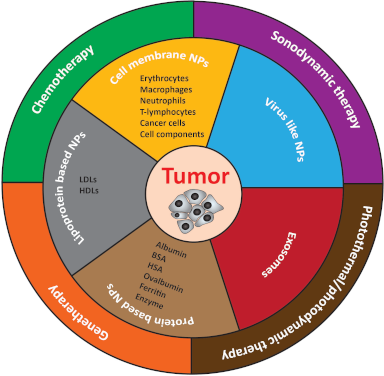
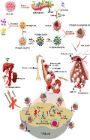
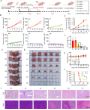
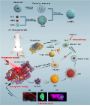
- applications. This discussion delves into the challenges and opportunities presented by biomimetic nanoparticles and offers a comprehensive exploration of their fundamentals and recent breakthroughs, with an eye towards clinical translation. By bridging the gap between scientific innovation and clinical







Electronic and optical properties of chloropicrin adsorbed ZnS nanotubes: first principle analysis
Beilstein J. Nanotechnol. 2025, 16, 1184–1196, doi:10.3762/bjnano.16.87
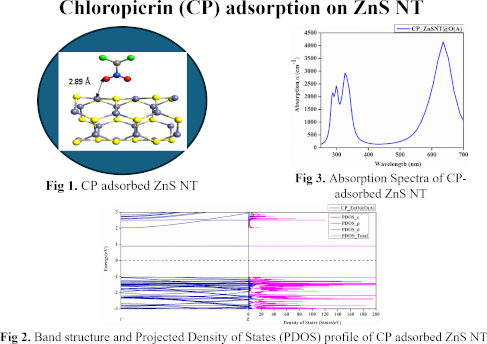
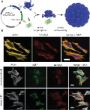
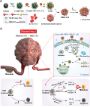
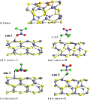
- highly toxic chemical warfare agent, remains an area with untapped potential. Addressing this gap, the present work constructs an armchair ZnS NT to investigate its adsorption configurations, charge transfer, band structure, density of states, optical absorption, and optical conductivity using a density
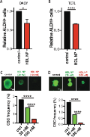
- , the most significant variation in the energy gap is observed for orientation A. Consequently, the conductivity of ZnS NT exhibits a significant variation, demonstrating its suitability for sensing applications. The sensitivity of the sensor is defined in terms of the change in the bandgap [61] by
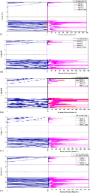
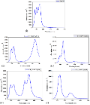
- between the valence and conduction bands, reflecting the fundamental optical properties of the material. Furthermore, the absence of significant absorption in the visible region (>400 nm) underscores the lack of mid-gap states in pristine ZnS NTs. Such optical characteristics align with previous reports



Multifunctional properties of bio-poly(butylene succinate) reinforced with multiwalled carbon nanotubes
Beilstein J. Nanotechnol. 2025, 16, 1014–1024, doi:10.3762/bjnano.16.76
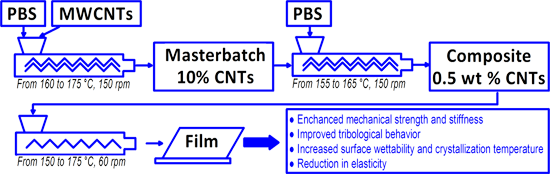
- improved thermal stability, crystallization temperatures, stiffness, and electrical conductivity (not investigated in this work), a significant gap remains regarding tribological performance, surface activity, and rheological responses under varying loads and temperatures. This study demonstrates that the




Time-resolved probing of laser-induced nanostructuring processes in liquids
Beilstein J. Nanotechnol. 2025, 16, 968–1002, doi:10.3762/bjnano.16.74
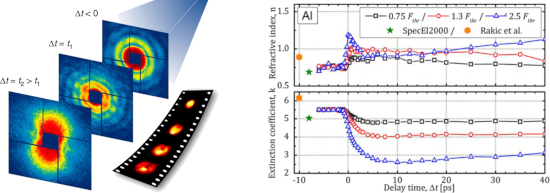
- dynamics across multiscale time domains remains elusive. Multiplexing probes, such as the combination of imaging and crystal diffraction, have advanced the understanding of complex phenomena by narrowing the gap between theory and observation (Figure 3) [80][81]. In an experiment combining single-particle


Heat-induced transformation of nickel-coated polycrystalline diamond film studied in situ by XPS and NEXAFS
Beilstein J. Nanotechnol. 2025, 16, 887–898, doi:10.3762/bjnano.16.67
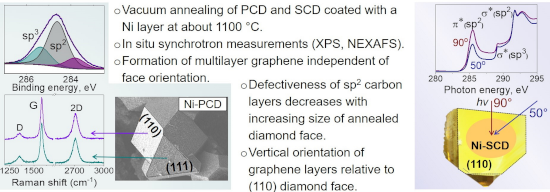
- eV corresponding to a second absolute gap in the diamond band structure [38]. In the TEY spectra of both PCD and Ni-PCD films, the aforementioned spectral features are well pronounced, indicating the preservation of the ordered crystalline structure of diamond in the bulk of the film after annealing
- spectra display the characteristic features of sp3-hybridized carbon, namely, the σ*(sp3)-resonance at 289.3 eV and the second gap at 302.3 eV, as well as the π*(sp2)- and σ*(sp2)-resonances at 285.3 and 291.4 eV of the sp2-hybridized carbon. In the spectrum of the Ni-SCD face, the π*(sp2)- and σ*(sp2


Morphology and properties of pyrite nanoparticles obtained by pulsed laser ablation in liquid and thin films for photodetection
Beilstein J. Nanotechnol. 2025, 16, 785–805, doi:10.3762/bjnano.16.60
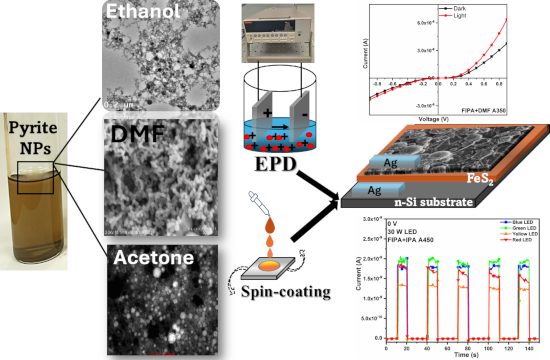
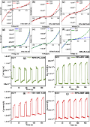
- [35], the p-type nature of FeS2 was identified. Based on this, an n-type Si (n-Si) substrate was chosen to achieve the photodiode structure. Well cleaned n-type silicon substrates were used as the anode and the cathode in the EPD setup. With a 4.5 mm gap between them, the electrodes were positioned






Nanostructured materials characterized by scanning photoelectron spectromicroscopy
Beilstein J. Nanotechnol. 2025, 16, 700–710, doi:10.3762/bjnano.16.54
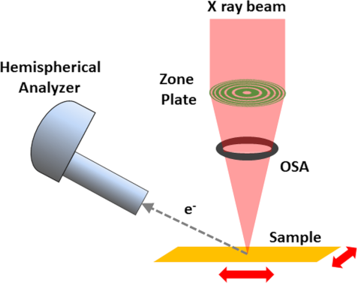
- few nanometers along the entire nanowire. For operando SPEM measurements, nanowires were transferred onto a prepatterned device template with flat, individually contacted Au/Ti electrodes deposited onto a SiO2/Si substrate, separated by a 1.5 µm wide insulating gap. Optical microscopy images of the
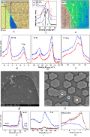
- nanowire surface. The measured binding energy shift amounts to 0.48 eV in the In 4d spectra and 0.47 eV in the P 2p spectra. Even though this is a significant and well-resolved shift, its value is surprisingly low compared with the InP band gap of 1.34 eV at room temperature. Similarly grown InP p–n


High-temperature epitaxial growth of tantalum nitride thin films on MgO: structural evolution and potential for SQUID applications
Beilstein J. Nanotechnol. 2025, 16, 690–699, doi:10.3762/bjnano.16.53
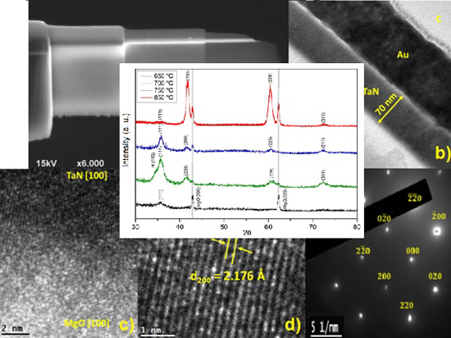
- significant progress, a major challenge remains in discovering materials that exhibit superconductivity at higher, more practical temperatures. The efficient fabrication of materials with a low superconducting energy gap and an intermediate Tc is crucial for the development and enhancement of superconducting
- has a superconductive energy gap lower than that of NbN [7], the most commonly used material for single-photon detectors in the gigahertz range; hence, this material can be a better candidate for superconductive electronic devices. Depending on the amount of incorporated nitrogen, x, the tantalum


Nanoscale capacitance spectroscopy based on multifrequency electrostatic force microscopy
Beilstein J. Nanotechnol. 2025, 16, 637–651, doi:10.3762/bjnano.16.49
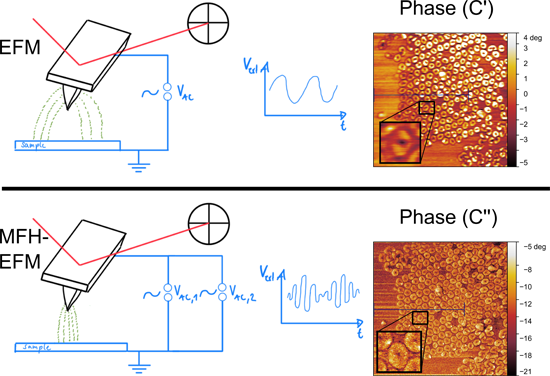
- study materials such as perovskite solar cells [18][19][20] and Li-ion batteries [21][22][23]. AFM enables simultaneous acquisition of topographic and electronic data by applying AC or DC voltages across the tip–sample gap, allowing for the detection of capacitive forces [24][25] or contact potential
- the gradient of the energy, WC, stored in the tip–sample capacitor C with respect to the tip–sample separation z, as given by where Vtip−sample specifies the electrical voltage across the tip–sample gap. In conventional EFM with single-frequency excitation, Vtip−sample is given by Equation 2 [18
- excitation signal that has to be considered in Equation 12. By using appropriate means of coupling the electrical excitation into the tip–sample gap, experiments at microwave or even at optical frequencies are possible. In our setup, the two excitation frequencies can be varied in frequency from ≈600 kHz up




A formulation containing Cymbopogon flexuosus essential oil: improvement of biochemical parameters and oxidative stress in diabetic rats
Beilstein J. Nanotechnol. 2025, 16, 617–636, doi:10.3762/bjnano.16.48
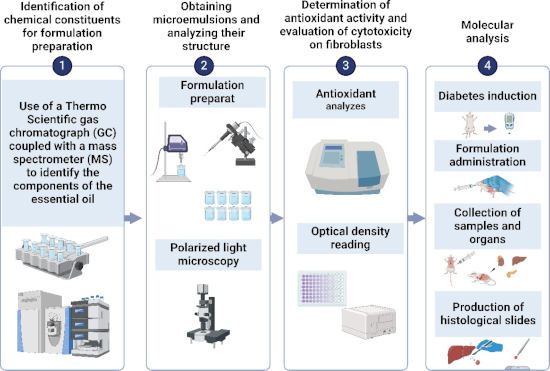
- behavior of the formulations was assessed by flow tests using the Modular Compact Rheometer (Anton Paar, MRC 302). A cone-plate geometry was used (diameter 49.9 mm, angle 1°, and gap 96 μm). The shear stress (γ) was evaluated as a function of the shear rate ranging from 0.1 to 200 s−1. The experiment was




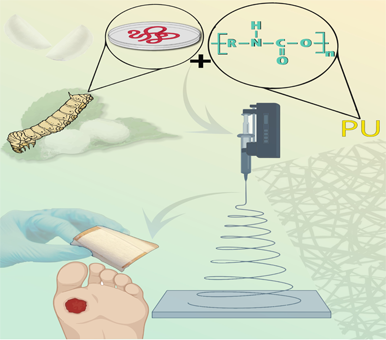
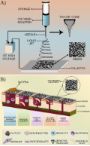
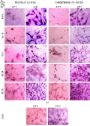
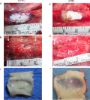
Polyurethane/silk fibroin-based electrospun membranes for wound healing and skin substitute applications
Beilstein J. Nanotechnol. 2025, 16, 591–612, doi:10.3762/bjnano.16.46



N2+-implantation-induced tailoring of structural, morphological, optical, and electrical characteristics of sputtered molybdenum thin films
Beilstein J. Nanotechnol. 2025, 16, 495–509, doi:10.3762/bjnano.16.38
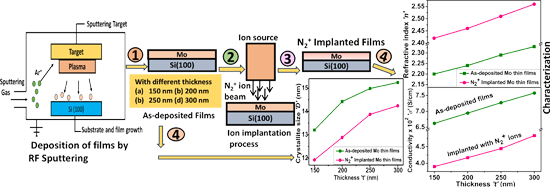
- films. Despite these advances, a noticeable gap exists in the systematic exploration of nitrogen implantation with variations in the thickness of Mo films. To address this gap, this study employs an extensive approach, implementing low-energy nitrogen ion implantation with a systematic variation in film


Effect of additives on the synthesis efficiency of nanoparticles by laser-induced reduction
Beilstein J. Nanotechnol. 2025, 16, 464–472, doi:10.3762/bjnano.16.35
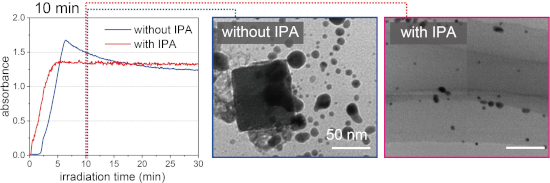
- Au–Pt alloy (atomic ratio, Au/Pt = 1:1) that has an immiscible gap in the binary phase diagram and is difficult to form a solid–solution alloy in a bulk form. Figure 6 shows a a) TEM image and b) STEM-EDS mappings of the particles produced after laser irradiation. The TEM results (Figure 6a


Synthetic-polymer-assisted antisense oligonucleotide delivery: targeted approaches for precision disease treatment
Beilstein J. Nanotechnol. 2025, 16, 435–463, doi:10.3762/bjnano.16.34
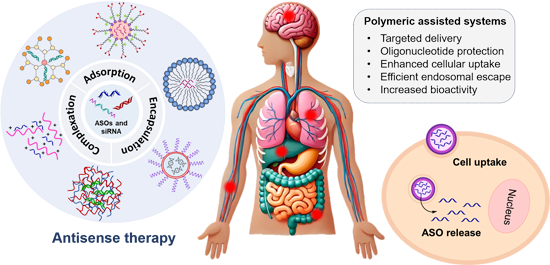
- activity and nucleic acid catalysis, effectively bridging the gap between short oligomers and functional RNAs under various environmental conditions. In addition to a delivery enhancer, PLL can be efficiently employed as an antisense oligonucleotide condenser. In their exploration of advanced drug delivery


Quantification of lead through rod-shaped silver-doped zinc oxide nanoparticles using an electrochemical approach
Beilstein J. Nanotechnol. 2025, 16, 422–434, doi:10.3762/bjnano.16.33
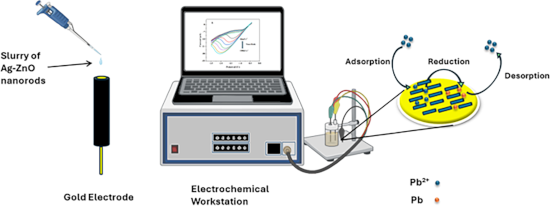
- . The 23 eV gap between two binding energies suggests that the Zn element is in a +2 oxidation state. The 1s orbital spectra of oxygen in Ag–ZnO samples are shown in Figure 7c, revealing a peak with a binding energy of 528 eV. The oxygen peak can be resolved into two distinct peaks, which indicates two




ReactorAFM/STM – dynamic reactions on surfaces at elevated temperature and atmospheric pressure
Beilstein J. Nanotechnol. 2025, 16, 397–406, doi:10.3762/bjnano.16.30
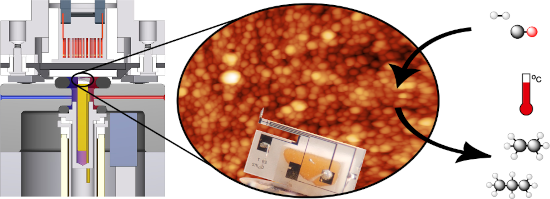
- whether a given catalyst becomes reactive, is referred to as the pressure gap. To provide an interpretive framework for catalysts under industrial conditions, new experimental and theoretical analysis tools are required. While recent years have witnessed a tremendous effort in this direction [3], many of
- these techniques are photon-based [4][5][6][7][8][9]. Even though they provide valuable insights, the development of surface-sensitive techniques that can image the catalyst at the atomic scale under high-pressure and high-temperature conditions remains crucial. In attempting to close the pressure gap
- ]. Alongside the pressure gap, the existence of the materials gap refers to the complexity and heterogeneity of real catalysts. Such catalysts are compounds that possess a special complex mixture consisting essentially of metals, oxides, and promoters, supported on refractory oxides. The requirement of a


Vortex lattices of layered HTSCs at different vortex–vortex interaction potentials
Beilstein J. Nanotechnol. 2025, 16, 362–370, doi:10.3762/bjnano.16.27
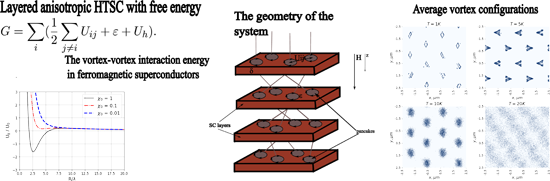
- superconductors have a layered structure and can be modeled as a stack of superconducting planes separated by an insulating gap. The Abrikosov vortex in such a structure can be represented as a stack of flat layered vortices, the so-called pancakes, connected by an interplanar bond. In samples that do not have


Pulsed laser in liquid grafting of gold nanoparticle–carbon support composites
Beilstein J. Nanotechnol. 2025, 16, 349–361, doi:10.3762/bjnano.16.26
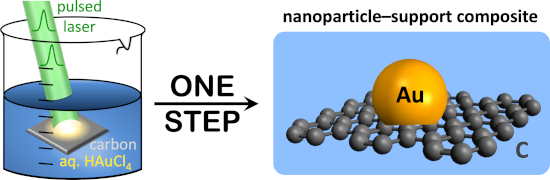
- , and the reference electrode was a reversible hydrogen electrode (Gaskatel HydroFlex®). Chronopotentiometry data were collected for 12 h at −10 mA·cm−2, provided by a Bio-Logic SP-150-EIS potentiostat, in a custom-made small-gap H-cell obtained from the Jaramillo group at Stanford University [82]. A


Tailoring of physical properties of RF-sputtered ZnTe films: role of substrate temperature
Beilstein J. Nanotechnol. 2025, 16, 333–348, doi:10.3762/bjnano.16.25
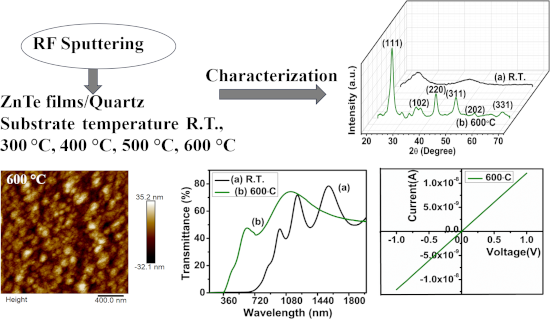
- with energy lower than the excitation photon energy are emitted. The recombination can occur either from band to band or through impurities and defects present within an energy level inside the forbidden gap. Grain boundaries are responsible for non-radiative recombination processes. For the present




Preferential enrichment and extraction of laser-synthesized nanoparticles in organic phases
Beilstein J. Nanotechnol. 2025, 16, 254–263, doi:10.3762/bjnano.16.20
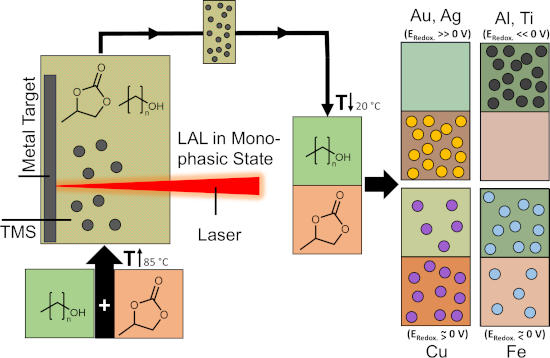
- unaddressed in literature. To tackle this knowledge gap, the present study investigates the phase preference of laser-generated noble metal (Au and Ag) and base metal (Cu, Fe, Al and Ti) nanoparticles within propylene carbonate/alcohol (PC/A) systems. Alcohols of increasing chain length (C6–C11) and hence
- , polarity of the solvent, or even physical attributes (e.g., boiling point), phase transfer methods are essential. To close this knowledge gap, we have performed ablation of six different metals (Au, Ag, Cu, Fe, Al, and Ti) ranging from high to low standard electrochemical reduction potentials in a




Nanocarriers and macrophage interaction: from a potential hurdle to an alternative therapeutic strategy
Beilstein J. Nanotechnol. 2025, 16, 97–118, doi:10.3762/bjnano.16.10



Instance maps as an organising concept for complex experimental workflows as demonstrated for (nano)material safety research
Beilstein J. Nanotechnol. 2025, 16, 57–77, doi:10.3762/bjnano.16.7
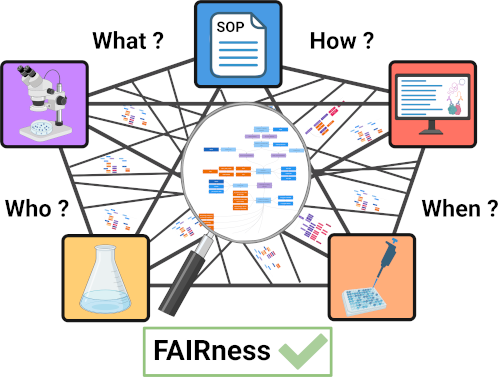
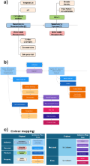
- which controls), as part of good research output management, is necessary to maximise the reuse potential and value of the data. Instance maps have been developed and evolved to visualise experimental nanosafety workflows and to bridge the gap between the theoretical principles of FAIR (Findable
- coronas, where the documentation of the nanomaterials’ dispersion and corona formation steps was very complete, but the description of the protein isolation and informatics steps was much less complete. This gap in documentation was attributed to the fact that the omics analyses are often performed by


Theoretical study of the electronic and optical properties of a composite formed by the zeolite NaA and a magnetite cluster
Beilstein J. Nanotechnol. 2025, 16, 44–53, doi:10.3762/bjnano.16.5
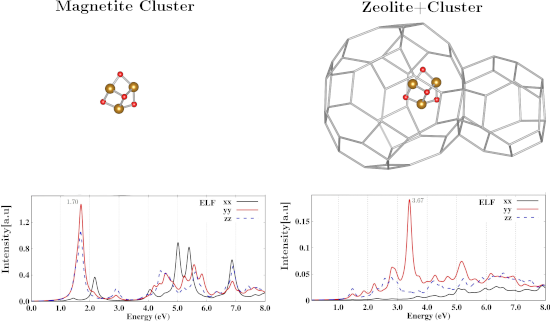
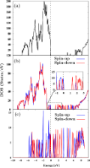
- characteristics for specific applications within the visible spectrum. Conclusion In this work, the influence of the inclusion of a magnetite cluster into NaA zeolite is studied through DFT calculations. The findings reveal that the cluster not only introduces states into the forbidden energy gap of the zeolite




Mechanistic insights into endosomal escape by sodium oleate-modified liposomes
Beilstein J. Nanotechnol. 2024, 15, 1667–1685, doi:10.3762/bjnano.15.131
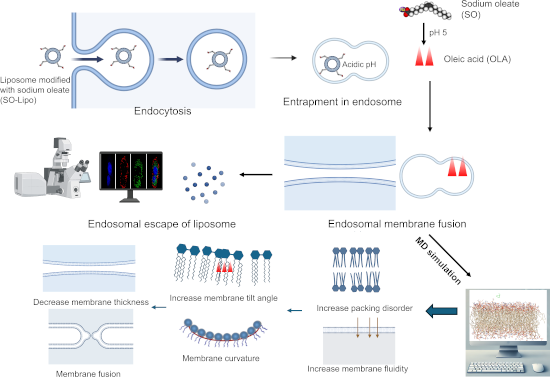
- simulations bridge the gap between experimental observations and mechanistic understanding. They also provide a robust framework for designing and optimizing innovative strategies for endosomal escape. Understanding these molecular interactions is akin to solving a complex puzzle, where each detail
- contributes to a comprehensive picture of overcoming endosomal entrapment. This study aims to bridge the knowledge gap by investigating the potential of SO in enhancing endosomal escape and elucidating the underlying mechanisms. We employ a multifaceted approach, combining in vitro experimentation, using 4T1




The round-robin approach applied to nanoinformatics: consensus prediction of nanomaterials zeta potential
Beilstein J. Nanotechnol. 2024, 15, 1536–1553, doi:10.3762/bjnano.15.121
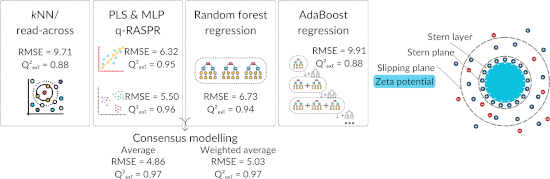
- [48]. Both the QSPR and read-across approaches are extensively used for data gap filling (predicting activity/property/toxicity values of compounds devoid of experimentally derived endpoint values). Recently, Luechtefeld et al. [49] introduced the concept of classification-based read-across structure