


Search results
Search for "interfaces" in Full Text gives 466 result(s) in Beilstein Journal of Nanotechnology. Showing first 200.
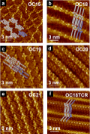
Ion beam processing of DNA origami nanostructures
Beilstein J. Nanotechnol. 2024, 15, 207–214, doi:10.3762/bjnano.15.20
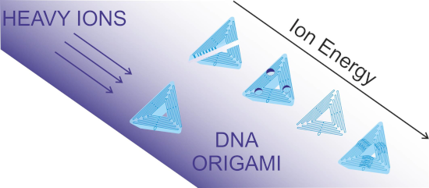
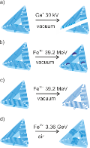
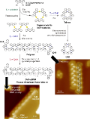
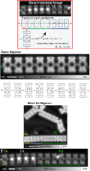
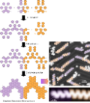
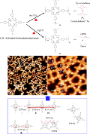
- interfaces. While we demonstrate here that the trimming of individual DNA nanostructures within the lattice is possible, the collective response of the lattice and defect formation as a response to ion impact represents an interesting direction for future studies. The processes leading to height modification


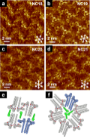
unDrift: A versatile software for fast offline SPM image drift correction
Beilstein J. Nanotechnol. 2023, 14, 1225–1237, doi:10.3762/bjnano.14.101

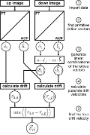
- properties of surfaces and interfaces across a variety of disciplines in chemistry and physics. One of the major artifacts in SPM is (thermal) drift, an unintended movement between sample and probe, which causes a distortion of the recorded SPM data. Literature holds a multitude of strategies to compensate
- force microscopy; calibration; drift correction; image correlation functions; periodic structures; scanning probe microscopy; Introduction In science and technology, scanning probe microscopy (SPM) techniques are widely used to study the structure and properties of surfaces and interfaces from the


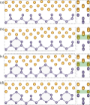
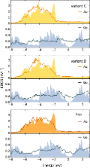
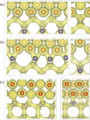
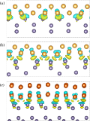
Density functional theory study of Au-fcc/Ge and Au-hcp/Ge interfaces
Beilstein J. Nanotechnol. 2023, 14, 1093–1105, doi:10.3762/bjnano.14.90

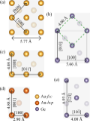
- structure; hexagonal gold; interface energy; Introduction Heterophase interfaces are responsible for unique properties of many advanced devices designed for electronics and other applications [1]. Understanding the formation and energetics of interfaces is highly important for the nucleation of new
- tunnelling microscopy. However, experimental data provide only partial insight into the formation of interfaces, and the interpretation of microscopic images is often ambiguous. Various simulation techniques can be used to resolve the uncertainties and reveal mechanisms stabilizing the observed interfaces
- . Deeper knowledge of surfaces and interfaces in heterostructures can play a crucial role in developing new methods for synthesizing such materials and in expanding their possible applications in nanoscience and nanotechnology. As a result of advances in computational methods and the increasing computer





Dual-heterodyne Kelvin probe force microscopy
Beilstein J. Nanotechnol. 2023, 14, 1068–1084, doi:10.3762/bjnano.14.88

- applications of KPFM are extremely broad. It is now used by physicists, chemists, and biologists to characterize the nanoscale electronic/electrostatic properties of an ever-expanding range of materials, interfaces, and devices, in ambient conditions, under ultrahigh vacuum, or at the liquid–substrate
- optoelectronic interfaces formed between caesium lead bromide perovskite nanosheets and highly oriented pyrolytic graphite. Kelvin Probe Force Microscopy Background, Amplitude-Modulated Heterodyne KPFM Many KPFM modes rely on the detection of a modulated component of the electrostatic force proportional to the
- organic blends, charge photogeneration can be understood, in a first approach, as the result of exciton dissociation into Coulomb bound charge transfer (CT) states at the donor–acceptor interfaces. This event is finally followed by the dissociation of the CT states into delocalized carriers of opposite




A visible-light photodetector based on heterojunctions between CuO nanoparticles and ZnO nanorods
Beilstein J. Nanotechnol. 2023, 14, 1018–1027, doi:10.3762/bjnano.14.84
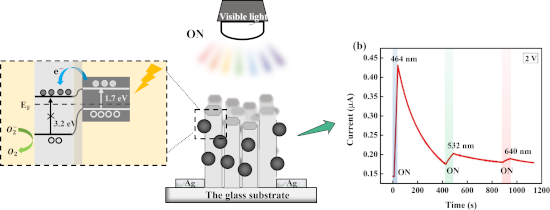
- negatively charged ions [43][61], following Equation 5: In addition, decorating CuO NPs onto ZnO NRs forms p–n junctions between the two materials. The heterojunction formation leads to a concentration gradient of charge carriers at the interfaces. CuO NPs act as a p-type semiconductor, in which holes are


Exploring internal structures and properties of terpolymer fibers via real-space characterizations
Beilstein J. Nanotechnol. 2023, 14, 1004–1017, doi:10.3762/bjnano.14.83

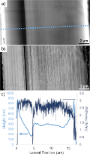
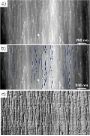
- the lateral direction are observed, akin to vertical steps from left to right, which indicate the interfaces between adjacent fibrils. Fibrils also oscillate with respect to the fiber axis, both laterally and “vertically” (i.e., into and out of the surface plane), reflecting the well-known pleated
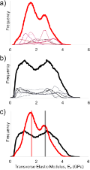
- additional insights into these fiber nanostructures. Fibrils in Kevlar® stiffness maps (Figure 6c) were clear with compliant longitudinal bands at the interfaces between adjacent fibrils. In addition, gradations in transverse stiffness were observed in the longitudinal direction, coinciding with adjacent
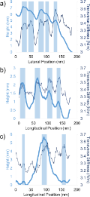
- quantitatively analyzed both lateral and longitudinal line scans within each of these maps. Lateral topography line scans in Kevlar® (Figure 7a) showed sharp jumps of up to tens of nanometers near fibril interfaces, likely reflecting interfaces between “stacks” of fibrils [11][18]. In contrast, Technora® lateral





Ni, Co, Zn, and Cu metal-organic framework-based nanomaterials for electrochemical reduction of CO2: A review
Beilstein J. Nanotechnol. 2023, 14, 904–911, doi:10.3762/bjnano.14.74
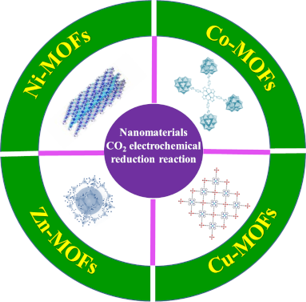
- accessibility to active sites and unstable MOFs/substrate interfaces. Therefore, further studies are required to develop binder-free electrodes by in situ synthesis of MOFs on conductive substrates, such as nickel foam, copper foil, and carbon cloth, to overcome the aforementioned limitations and advancing the


Two-dimensional molecular networks at the solid/liquid interface and the role of alkyl chains in their building blocks
Beilstein J. Nanotechnol. 2023, 14, 872–892, doi:10.3762/bjnano.14.72

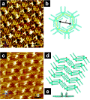
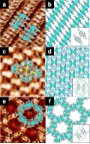
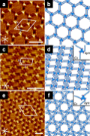
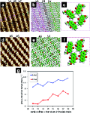
- flat conducting substrates, such as metal surfaces and highly oriented pyrolytic graphite (HOPG), under ultrahigh vacuum (UHV) conditions, at solid/air or solid/liquid interfaces [23][24][25][26][27][28]. Although UHV-STM offers high-resolution imaging, it requires large, complex, and expensive









Cross-sectional Kelvin probe force microscopy on III–V epitaxial multilayer stacks: challenges and perspectives
Beilstein J. Nanotechnol. 2023, 14, 725–737, doi:10.3762/bjnano.14.59
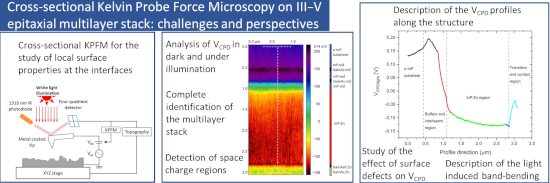
- consisting of many layers and interfaces. The study and the comprehension of the mechanisms that take place at the interfaces is crucial for efficiency improvement. In this work, we apply frequency-modulated Kelvin probe force microscopy under ambient conditions to investigate the capability of this
- containing numerous layers and interfaces [1]. The capability to conduct local investigations at the nanoscale level that provide information on the electrical properties of materials and along physical interfaces is becoming crucial for solar photovoltaic device efficiency improvement [2]. Electrical
- potential at the surface of the investigated structure and that of the KPFM probe [4]. KPFM has been extensively used in the PV field [5][6][7]; more specifically, by the analysis of interfaces in a solar device [8][9], it can reveal the presence of unintentional potential barriers or pn junctions, which


ZnO-decorated SiC@C hybrids with strong electromagnetic absorption
Beilstein J. Nanotechnol. 2023, 14, 565–573, doi:10.3762/bjnano.14.47
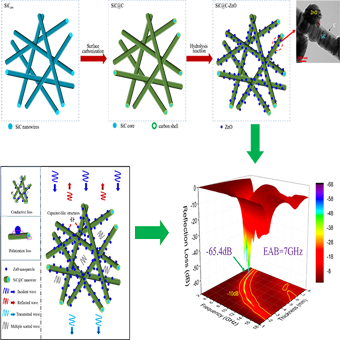
- same time, wide effective absorption bandwidth (EAB ≥ 7 GHz) remains a great challenge. A good strategy is to form hierarchical heterostructures, characterized by diverse components, abundant heterogeneous interfaces, multiple reflective paths, and enrichment of structural defects [18][19][20
- . Figure 2c clearly shows the two kinds of interfaces, that is (1) the interface between a SiC core and a carbon shell and (2) the interface between the carbon phase and a ZnO particle. The (111) and (002) interplane spacings of, respectively, β-SiC and ZnO can be seen (Figure 2d,f), while the carbon is an


Molecular nanoarchitectonics: unification of nanotechnology and molecular/materials science
Beilstein J. Nanotechnol. 2023, 14, 434–453, doi:10.3762/bjnano.14.35

- expression through nanoarchitectonics. Shi and co-workers created nanoparticle surfactants at liquid–liquid interfaces by exploiting the interaction between nanoparticles and polymer ligands [101]. They showed that a size-dependent aggregation of nanoparticle surfactants can be generated at the interface





Plasmonic nanotechnology for photothermal applications – an evaluation
Beilstein J. Nanotechnol. 2023, 14, 380–419, doi:10.3762/bjnano.14.33
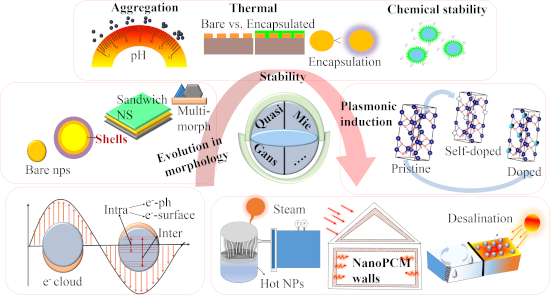
- controlled due to extremely localised heating [38]. For increasing the spatial distribution of the generated heat, compared to an individual nanoparticle, nanoparticle assemblies and/or increased interfaces (by including constructions such as holes and other scattering centres) within a single nanostructure




Polymer nanoparticles from low-energy nanoemulsions for biomedical applications
Beilstein J. Nanotechnol. 2023, 14, 339–350, doi:10.3762/bjnano.14.29
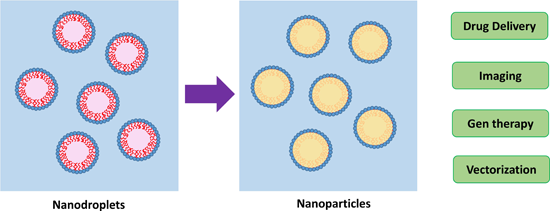
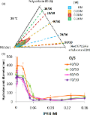
- temperature [9]. At low temperature, that is, below the so-called hydrophilic/lipophilic balance (HLB) temperature (THLB), the poly(oxyethylene) (POE) chain is highly hydrated, and therefore these surfactants self-assemble at interfaces with positive curvature and are able to form O/W droplets. At




Bismuth-based nanostructured photocatalysts for the remediation of antibiotics and organic dyes
Beilstein J. Nanotechnol. 2023, 14, 291–321, doi:10.3762/bjnano.14.26
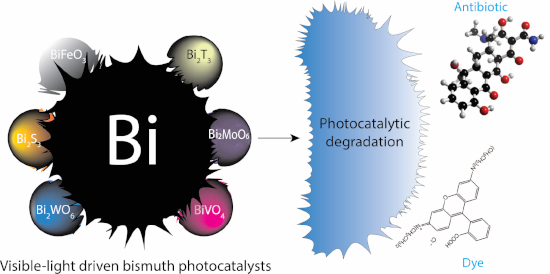
- : Heterojunctions, which are the interfaces between two different semiconductors, increase the charge carrier separation efficiency with increased kinetics and strong redox ability. This enhances the photocatalytic capabilities of photocatalysts [101][119][156][157][158][159][160][161]. Depending on how the


Spin dynamics in superconductor/ferromagnetic insulator hybrid structures with precessing magnetization
Beilstein J. Nanotechnol. 2023, 14, 233–239, doi:10.3762/bjnano.14.22

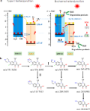
- boundary conditions can successfully describe the interfaces between, among other things, a superconductor and weak or strong ferromagnets [22][23][24], normal metals [25][26][27], and half-metals [28]. The first attempts to implement nonstationary, adiabatic, quasiclassical boundary conditions were made


High–low Kelvin probe force spectroscopy for measuring the interface state density
Beilstein J. Nanotechnol. 2023, 14, 175–189, doi:10.3762/bjnano.14.18

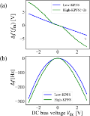
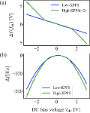
- high-resolution nanoscale measurements of impurity concentration and defect level distributions at the surfaces and interfaces of various semiconductor materials and devices. (a) Schematic of the metal tip–gap–semiconductor sample. (b) Energy band diagram of the metal–gap–semiconductor sample. Emission



Combining physical vapor deposition structuration with dealloying for the creation of a highly efficient SERS platform
Beilstein J. Nanotechnol. 2023, 14, 83–94, doi:10.3762/bjnano.14.10

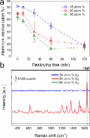
- Adrien Chauvin Walter Puglisi Damien Thiry Cristina Satriano Rony Snyders Carla Bittencourt Plasma-Surface Interaction Chemistry, University of Mons, 23 Place du Parc, 7000 Mons, Belgium Chemistry of Surfaces, Interfaces and Nanomaterials, Faculty of Sciences, Université libre de Bruxelles, 50




Cooper pair splitting controlled by a temperature gradient
Beilstein J. Nanotechnol. 2023, 14, 61–67, doi:10.3762/bjnano.14.7

- -transparency barriers at NS interfaces [20][21] and later extended to the case of arbitrary barrier transmissions [22][23][24][25]. Positively cross-correlated non-local shot noise was indeed observed in a number of experiments [26][27]. Real-time observation of Cooper pair splitting was also reported in a


The influence of structure and local structural defects on the magnetic properties of cobalt nanofilms
Beilstein J. Nanotechnol. 2023, 14, 23–33, doi:10.3762/bjnano.14.3
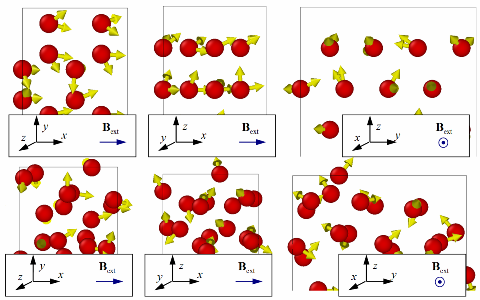
- interfaces of nanofilms on the magnetic properties). Experimental studies on the subject of work are associated with a number of difficulties, and related results are planned to be published in following papers. Problem statement for the complex study of cobalt and niobium heterostructures. The sketch of the


Utilizing the surface potential of a solid electrolyte region as the potential reference in Kelvin probe force microscopy
Beilstein J. Nanotechnol. 2022, 13, 1558–1563, doi:10.3762/bjnano.13.129

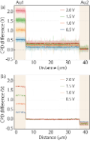
- this subtraction are shown in Figure 5a. In all the data, a voltage drop occurs at the Au electrode–solid electrolyte interfaces, and the potential change in the solid electrolyte region is constant. These results are direct experimental evidence that the electric field in the solid electrolyte was
- voltage drop across the Au1 electrode–solid electrolyte interface was greater than across the Au2 electrode–solid electrolyte interface. This asymmetric potential drop arises from the differences in the electrochemical properties of the two interfaces. As the DC voltage increased, the potential of the Au2
- reduction of Ti ions. These results prove that, even if the DC voltage is accurately controlled, the electrode potential depends on the electrochemical properties of the interfaces, and that simply measuring the potential relative to ground using KPFM is not sufficient to analyze the electrochemical system




Induced electric conductivity in organic polymers
Beilstein J. Nanotechnol. 2022, 13, 1551–1557, doi:10.3762/bjnano.13.128

- following values n0 = 1021−1023 m−3, μ = 10−15 to 10−17 m2/Vs. The analysis of the I–V characteristics within the framework of Schottky barrier formation makes it possible to estimate the height of potential barriers at the metal/polymer interfaces utilizing the Richardson expression [18]: where T is the



Photoelectrochemical water oxidation over TiO2 nanotubes modified with MoS2 and g-C3N4
Beilstein J. Nanotechnol. 2022, 13, 1541–1550, doi:10.3762/bjnano.13.127

- light, which can be explained as follows: The photocurrent density of MoS2/TNAs promptly increased because of the efficient separation of the e−–h+ pairs at the interfaces between TNAs and MoS2 [58] and the rapid transfer of the photo-induced electrons from MoS2 to the TNAs electrode [59]. This result


Density of states in the presence of spin-dependent scattering in SF bilayers: a numerical and analytical approach
Beilstein J. Nanotechnol. 2022, 13, 1418–1431, doi:10.3762/bjnano.13.117

- θ↑ and θ↓. In other words, we are not considering spin-active interfaces. In the case of spin-active barriers, one should use the boundary conditions introduced in [87][97][98], rather than the standard Kupriyanov–Lukichev boundary conditions in Equation 6 and Equation 7. The parameter γ determines
- . Analytical result for the interfaces with low transparency and qualitative picture Here, we employ the analytical expression (Equation 20) obtained in the limit of low proximity and thin F layer. Considering the problem in such limit makes it possible to use a simple expression for the qualitative


Dry under water: air retaining properties of large-scale elastomer foils covered with mushroom-shaped surface microstructures
Beilstein J. Nanotechnol. 2022, 13, 1370–1379, doi:10.3762/bjnano.13.113

- Salvinia-like biomimetic surfaces are permanent over years, like in many air–water interfaces a neustonic microbial biofilm (“Bacterioneuston”), usually associated with fungi, becomes established under non-sterile and non-turbulent conditions rather fast. On the MSM already after one month the air–water


Straight roads into nowhere – obvious and not-so-obvious biological models for ferrophobic surfaces
Beilstein J. Nanotechnol. 2022, 13, 1345–1360, doi:10.3762/bjnano.13.111
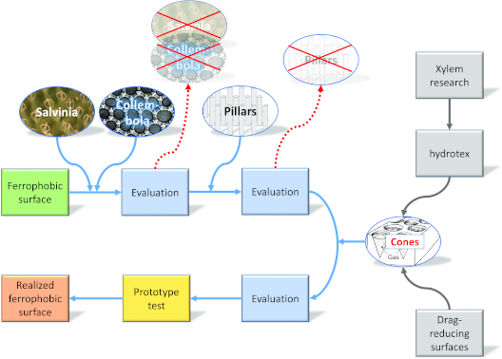
- obvious biological models are no guarantee for success, and that it is difficult to arrive at a formalised biomimetic working scheme. Rather, a broad understanding of biological function and its complexity is beneficial. Keywords: air-retaining interfaces; bioinspiration; biomimetics; biomimicry; blast
- furnace; Collembola; gas/liquid interfaces; interfacial effects; persistant air layers; pits; Salvinia molesta; surfaces; tuyère failure; water transport in plants; xylem; Young–Laplace equation; Introduction and Motivation The basic concept of biomimetics is the derivation of technical applications from
- , persistence of the gas pockets within the structured surface should be energetically favourable over their displacement. The interfaces that separate the gas pockets from the liquid iron should form autonomously, that is, without the need for external manipulations. The typical dimensions of the structures





