


Search results
Search for "nanocarrier" in Full Text gives 60 result(s) in Beilstein Journal of Nanotechnology.
Atomic-level characterization and cilostazol affinity of poly(lactic acid) nanoparticles conjugated with differentially charged hydrophilic molecules
Beilstein J. Nanotechnol. 2018, 9, 1328–1338, doi:10.3762/bjnano.9.126
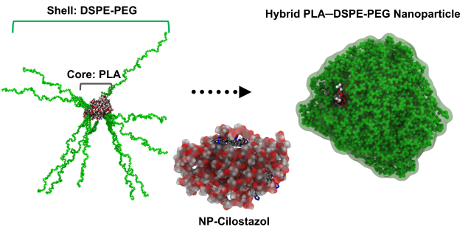
- using AutoDock tools (ADT) [48]. The orientation of polymer chains obtained from the above MD simulations was used to carry out the docking calculations. Due to the fact that the polymer core is the protective portion for drugs in this kind of nanocarrier [31], only the PLA core was considered for
- the surface of the NP, interacting with the terminal groups of lipid chains (for example through electrostatic interactions) or with the solvent, and thus, the protective function of the nanocarrier would be revoked. However, significant differences in experimental results (drug loading) have been


Nanoparticle delivery to metastatic breast cancer cells by nanoengineered mesenchymal stem cells
Beilstein J. Nanotechnol. 2018, 9, 321–332, doi:10.3762/bjnano.9.32
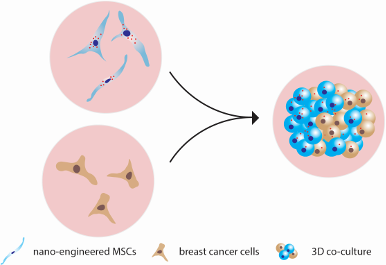
- almost twice as much QDs compared with MCF7 cells (Figure 6F–H). Thus, we demonstrated that nanoengineered MSCs could be a tool for targeting metastatic breast cancer cells. It has been reported that metastatic breast cancer cells demonstrate higher nanocarrier uptake efficiency than MCF7 due to the



Development of polycationic amphiphilic cyclodextrin nanoparticles for anticancer drug delivery
Beilstein J. Nanotechnol. 2017, 8, 1457–1468, doi:10.3762/bjnano.8.145

- their intrinsic apoptotic effect in our first paper [26] in unloaded blank nanoparticle form. This study focuses on the nanocarrier properties and drug delivery system potential of the polycationic CD nanoparticles for PCX, which is an anticancer drug with several serious bioavaibility and toxicity


Chitosan-based nanoparticles for improved anticancer efficacy and bioavailability of mifepristone
Beilstein J. Nanotechnol. 2016, 7, 1861–1870, doi:10.3762/bjnano.7.178

- preparation, has been extensively studied for obtaining nanocarrier systems with a good capacity of drug encapsulation and an adjustable drug release rate [22][23]. The aim of this work was to prepare MIF-encapsulated CNs (MCNs) to regulate the drug release rate of MIF for bioavailability improvement, and


Novel roles for well-known players: from tobacco mosaic virus pests to enzymatically active assemblies
Beilstein J. Nanotechnol. 2016, 7, 613–629, doi:10.3762/bjnano.7.54
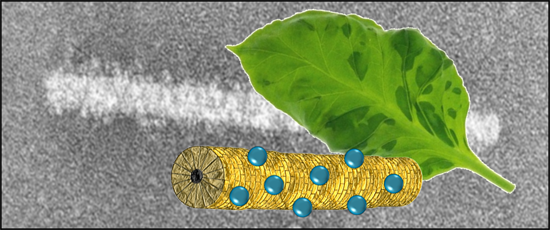
- . Prospects for novel layouts enabling lab-on-a-chip applications and improved orientation of enzymatically active TMV rods. A: Scheme of a microchannel of a glucose sensor chip equipped with a blend of two TMV enzyme nanocarrier species. By an appropriate mixture thereof, an optimally composed two-enzyme


Comparison of the interactions of daunorubicin in a free form and attached to single-walled carbon nanotubes with model lipid membranes
Beilstein J. Nanotechnol. 2016, 7, 524–532, doi:10.3762/bjnano.7.46
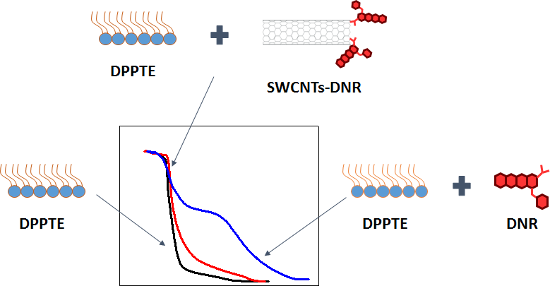
- -DNR monolayer and incorporated drug in the free form. This proves that the amount of the drug in the model membrane is similar for both types of the drug delivery: direct or bound to the nanocarrier. However, basing on the results of monolayer studies, the effect of SWCNTs-DNR adducts on the
- . Moreover, it was shown that the surface concentration of the drug on the electrode surface is similar for both the drug in a free form and the drug–nanocarrier adduct. This observation proves that application of single-walled carbon nanotubes as drug delivery system allows for the transport of the




PLGA nanoparticles as a platform for vitamin D-based cancer therapy
Beilstein J. Nanotechnol. 2015, 6, 1306–1318, doi:10.3762/bjnano.6.135

- (Figure 1, white arrow) [29]. Both forms of vitamin D3 were used for the formulation of the nanocarrier system and variations in the encapsulation efficiency and loading capacity were noticed. The observed differences may be based on their chemical structure, since calcitriol has two extra hydroxy groups


Release behaviour and toxicity evaluation of levodopa from carboxylated single-walled carbon nanotubes
Beilstein J. Nanotechnol. 2015, 6, 243–253, doi:10.3762/bjnano.6.23

- groups from carboxylated CNTs. In this case, the solubility of the nanocarrier increases with an increase in pH value [24], resulting in more carboxylate anions (–COO−) produced in pH 7.4 as compared to pH 4.8. In addition, the different release mechanisms of LD at different pH levels could be also due
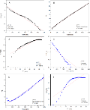
- therapeutic effect [26] and may benefit the treatment of PD. Release kinetics of LD To further analyse the release kinetics of LD from the SWCNT–COOH nanocarrier, pseudo-first-order (Equation 1), pseudo-second-order (Equation 2) and a parabolic diffusion equation (Equation 3) were adopted [3][27][28] as
- , R2, rate constant and half-time resulting from the pseudo-second-order model fits are also presented in Table 3. The second-order reaction suggests that the release of LD from its nanocarrier is dependent on the concentration, and that the half-time should increase as the process continues [29




Synthesis of boron nitride nanotubes and their applications
Beilstein J. Nanotechnol. 2015, 6, 84–102, doi:10.3762/bjnano.6.9
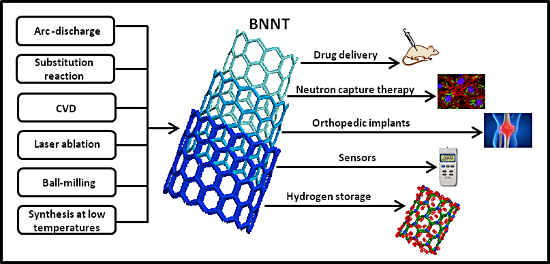
- multifunctional, BNNT-based nanocarrier was synthesized using an Fe catalyst to render them magnetic and coated with PEI whereby QDs were attached to the PEI-coated BNNTs [83]. The cellular uptake of the BNNTs was tracked by QDs which revealed that the cellular uptake of the BNNTs depends upon the distance from




Anticancer efficacy of a supramolecular complex of a 2-diethylaminoethyl–dextran–MMA graft copolymer and paclitaxel used as an artificial enzyme
Beilstein J. Nanotechnol. 2014, 5, 2293–2307, doi:10.3762/bjnano.5.238

- micelles carrying a drug, they have been shown to be transported to and act on not only endosomes and lysosomes but also the Golgi body and mitochondria [4]. A block copolymer micelle can be used to deliver a hydrophobic drug as a nanocarrier with water-soluble biological affinity. Knowledge of the





