

Search results
Search for "polymeric nanoparticles" in Full Text gives 52 result(s) in Beilstein Journal of Nanotechnology.
Ceria/silicon carbide core–shell materials prepared by miniemulsion technique
Beilstein J. Nanotechnol. 2011, 2, 638–644, doi:10.3762/bjnano.2.67
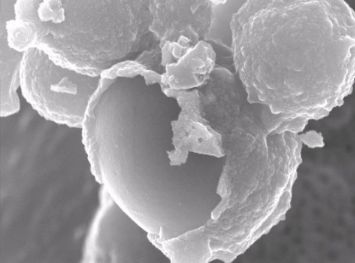
- ; TPO catalytic; Introduction In recent years miniemulsions have been studied intensively [1][2][3]. Polymeric nanoparticles [1][2] from homo- or copolymers [3] as well as hybrid materials [3][4] such as magnetic [5][6][7][8] or silica/polymer nanoparticles [9][10] have been synthesized by this


Platinum nanoparticles from size adjusted functional colloidal particles generated by a seeded emulsion polymerization process
Beilstein J. Nanotechnol. 2011, 2, 459–472, doi:10.3762/bjnano.2.50

- incorporation. Quantitative incorporation, for example, to create a precise stoichiometry of several different molecules within a latex particle, is thus impeded by emulsion polymerization [16]. Miniemulsion polymerization on the contrary is a powerful tool for the synthesis of highly functional polymeric
- nanoparticles [17][18][19][20]. Here, the monomer droplets are preformed by ultrasonication and critically stabilized against coagulation by the addition of surfactants. Ostwald ripening, the mechanism that leads to formation of bigger particles at the expense of smaller ones due to the higher Laplace pressure



Other Beilstein-Institut Open Science Activities