Search results
Search for "structural properties" in Full Text gives 181 result(s) in Beilstein Journal of Nanotechnology.
Bioselectivity of silk protein-based materials and their bio-inspired applications
Beilstein J. Nanotechnol. 2022, 13, 902–921, doi:10.3762/bjnano.13.81

- -based materials are interesting candidates due to their natural origin, biological activity, and structural properties. Silk materials, in particular those made of spider silk proteins and their recombinant counterparts, are characterized by extraordinary properties including excellent biocompatibility
- and derived bio-inspired materials thereof. Protein-based materials are interesting candidates due to their natural origin, biological activity, and structural properties. Among them are silk materials, in particular one made of spider silk proteins [104]. These are well-studied examples characterized



Self-assembly of C60 on a ZnTPP/Fe(001)–p(1 × 1)O substrate: observation of a quasi-freestanding C60 monolayer
Beilstein J. Nanotechnol. 2022, 13, 857–864, doi:10.3762/bjnano.13.76
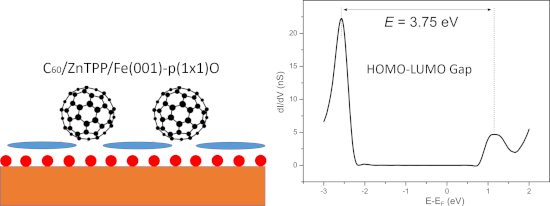
- materials possessing antithetic electronic and structural properties. In this frame, the molecule–metal interaction arising at the interface plays a crucial role in determining the morphology and the electronic properties of the hybrid organic/inorganic system. With regard to the structural aspects, a
- structure [36][37][38]. In this paper, we investigate the effects induced by a ZnTPP buffer layer covering the Fe(001)–p(1 × 1)O surface on the electronic and structural properties of a C60 ultrathin film. The Fe(001)–p(1 × 1)O surface is characterized by a single layer of oxygen atoms, adsorbed in the




Revealing local structural properties of an atomically thin MoSe2 surface using optical microscopy
Beilstein J. Nanotechnol. 2022, 13, 572–581, doi:10.3762/bjnano.13.49

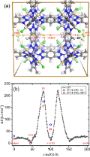
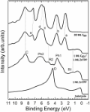
- with the SHG and photoluminescence optical images, indicating the relationship between local structure and optical properties of the MoSe2 flake. These results contribute to understand the impacts of local structural properties on the Raman enhancement at the surface of the 2D transition-metal
- local structural properties on the Raman enhancement at 2D-TMDC monolayer surfaces. Results In this work, triangular MoSe2 flakes were chemically synthesized on a precleaned Si substrate coated with a thermally grown layer of SiO2. To investigate the Raman enhancement effect on a MoSe2 flake, we choose
- show a clear dependency on the excitation polarization and the local structural properties of the underlying MoSe2 flake. Figure 1g shows the Raman spectra collected from the center position of the CuPc/MoSe2 flake in Figure 1f and Figure 1h, which is marked by the blue star. The Raman signal obtained


The role of sulfonate groups and hydrogen bonding in the proton conductivity of two coordination networks
Beilstein J. Nanotechnol. 2022, 13, 437–443, doi:10.3762/bjnano.13.36
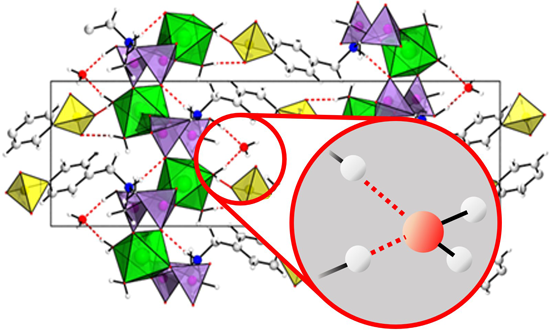
- strongly humidity- and temperature-dependent. We discuss how differences in the conduction behavior may be related to the respective structural properties. Results and Discussion The compounds [Mg(H2O)2(H3L)]·H2O and [Pb2(HL)]·H2O were synthesized using the linker molecule H5L (see Supporting Information


Micro- and nanotechnology in biomedical engineering for cartilage tissue regeneration in osteoarthritis
Beilstein J. Nanotechnol. 2022, 13, 363–389, doi:10.3762/bjnano.13.31
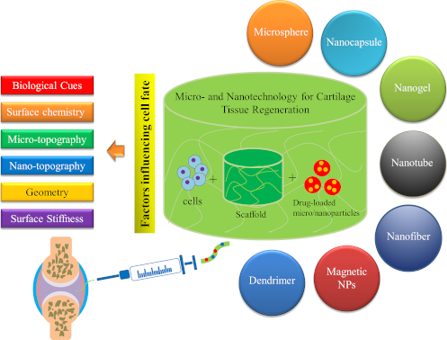
- biomedicine, in particular, TE. However, nanotube studies have been mainly limited to CNTs. Nanotube arrays such as boron nitride nanotubes (BNNTs) and halloysite nanotubes (HNT) have not been investigated despite their superior physicochemical attributes and structural properties similar to CNTs. For example


Selected properties of AlxZnyO thin films prepared by reactive pulsed magnetron sputtering using a two-element Zn/Al target
Beilstein J. Nanotechnol. 2022, 13, 344–354, doi:10.3762/bjnano.13.29
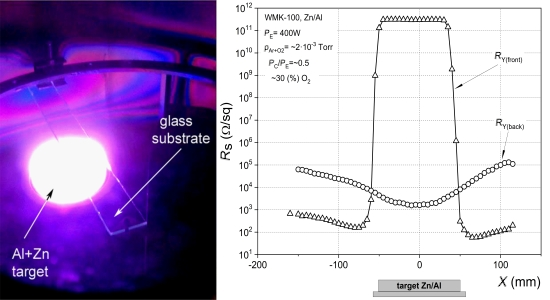
- was performed using the WTheiss Hard- and Software Scout software, ver. 4.17. X-ray diffraction in the grazing incidence mode (GIXRD) was used to assess the structural properties of the deposited thin films. For this purpose, an Empyrean PANalytical X-ray diffractometer equipped with a PIXel3D
- and are then repulsed by the field near the target toward the substrate placed above it. For the case presented here, an analysis of the XRD results may be used to clarify the sudden change in the electrical properties of the deposited thin films depending on X. Measurements of structural properties
- the front surface of the substrates, outside the zone directly above the target (off-axis geometry). Analysis of structural properties showed that all thin films were nanocrystalline composites of ZnO and Al2ZnO4. Increasing X caused an increase of the crystallite size from ca. 4 to 16 nm, a decrease



Interfacial nanoarchitectonics for ZIF-8 membranes with enhanced gas separation
Beilstein J. Nanotechnol. 2022, 13, 313–324, doi:10.3762/bjnano.13.26
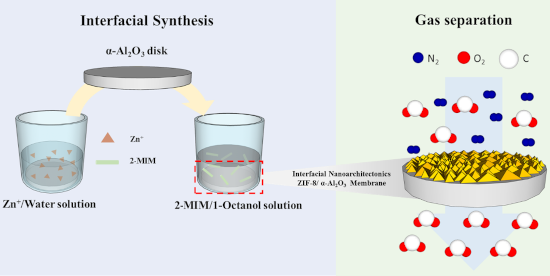
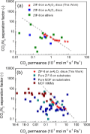
- ]. Given these structural properties, MOFs are widely applied to gas storage [18], gas/liquid separation [18][19][20], energy storage [21][22][23], sensing [24], catalysis [25], electrochemistry [26], and bio-related fields [27]. Zeolitic imidazolate frameworks (ZIFs), a subclass of MOFs, comprise


Investigation of a memory effect in a Au/(Ti–Cu)Ox-gradient thin film/TiAlV structure
Beilstein J. Nanotechnol. 2022, 13, 265–273, doi:10.3762/bjnano.13.21

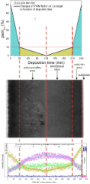
- impurities were observed in the coating. Structural properties were analyzed using X-ray diffraction (XRD) and transmission electron microscopy (TEM). XRD patterns were obtained with a PANalytical Empyrean PIXed3D powder diffractometer with Cu Kα radiation (1.5406 Å) and no diffraction peaks were observed
- very thin (ca. 10 nm) region with different structural properties and chemical composition. From the performed TEM analysis (Figure 8) it can be interpreted as an amorphous area. During the deposition process, the flow of oxygen supplied to the working chamber was constant. Decreasing the power



Effects of drug concentration and PLGA addition on the properties of electrospun ampicillin trihydrate-loaded PLA nanofibers
Beilstein J. Nanotechnol. 2022, 13, 245–254, doi:10.3762/bjnano.13.19

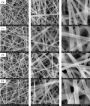
- improved mechanical properties compared to those of PLA nanofibers and PLA/PCL nanofibers, improving cell viability and differentiation. Conclusion Nanofibers can be effectively used in tissue engineering and controlled drug delivery due to their structural properties, which are morphologically similar to



Theoretical understanding of electronic and mechanical properties of 1T′ transition metal dichalcogenide crystals
Beilstein J. Nanotechnol. 2022, 13, 160–171, doi:10.3762/bjnano.13.11

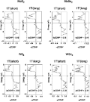
- , the partial crystal orbital Hamilton population (-pCOHP) is analyzed using the LOBSTER program through the partition of the band-structure energy into orbital–pair interactions [47][48]. Results Structural properties The geometrical structures of TMDs in the 1T′ structural polytype are illustrated in
- structural properties is small. For example, the difference between Mo–X and W–X bond lengths in the same polytype is less than 0.03 Å. As a comparison, the difference between the TM–S and TM–Se bond lengths in the same polytype can be larger than 0.10 Å. This is because Mo4+ and W4+ have similar radii of
- . It suggests that the weak vdW interlayer interactions can have a considerable impact on the structural properties. The reduced lattice constants in the monolayers indicate a higher TM–X bonding strength. A big difference in thickness can be found because the interlayer space is not taken into




Topographic signatures and manipulations of Fe atoms, CO molecules and NaCl islands on superconducting Pb(111)
Beilstein J. Nanotechnol. 2022, 13, 1–9, doi:10.3762/bjnano.13.1
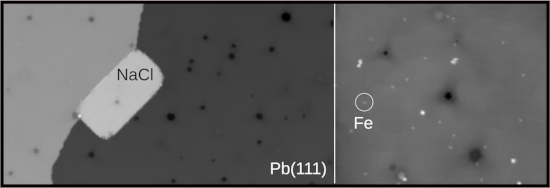
- predicted as a key ingredient for quantum computing. However, not only the design of complex heterostructures is primordial for future applications but also the characterization of their electronic and structural properties at the atomic scale using the most advanced scanning probe microscopy techniques


First-principles study of the structural, optoelectronic and thermophysical properties of the π-SnSe for thermoelectric applications
Beilstein J. Nanotechnol. 2021, 12, 1101–1114, doi:10.3762/bjnano.12.82
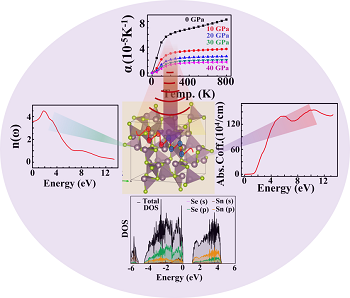
- Gibbs2 code [54] by considering lattice vibrations. To calculate the thermoelectric properties, we used the Boltzmann transport theory employed in the BoltzTrap2 [55] code by utilizing the rigid band estimation under a constant relaxation time. Results and Discussion Structural properties We have


Local stiffness and work function variations of hexagonal boron nitride on Cu(111)
Beilstein J. Nanotechnol. 2021, 12, 559–565, doi:10.3762/bjnano.12.46
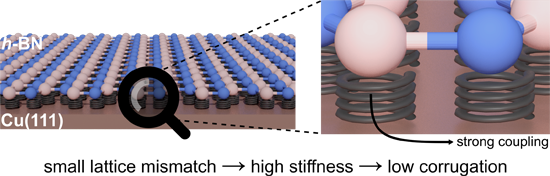
- transfer [41]. Additionally, this leads to in-plane electric fields, which have been shown to trap atoms, molecules, and nanoclusters [11][13][42]. To map the local Φ fluctuations and to correlate them with the structural properties of the surface, we use two complementary methods: The first method is


Solution combustion synthesis of a nanometer-scale Co3O4 anode material for Li-ion batteries
Beilstein J. Nanotechnol. 2021, 12, 424–431, doi:10.3762/bjnano.12.34
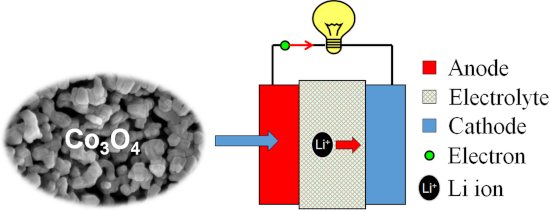
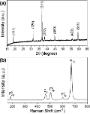
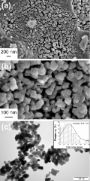
- , the resulting gel precursor was heated in an alumina crucible from 300 to 700 °C for 5 h in air. The flowchart of the synthesis is presented in Figure 4. Characterization of the Co3O4 material: The structural properties of the Co3O4 material were determined using powder X-ray diffraction (XRD) and


Structural and optical characteristics determined by the sputtering deposition conditions of oxide thin films
Beilstein J. Nanotechnol. 2021, 12, 354–365, doi:10.3762/bjnano.12.29
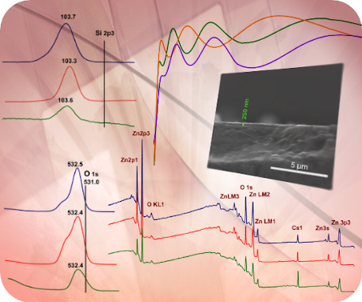
- ; optical quality; SiO2 and ZnO; structural properties; thin films; Introduction The application of oxide thin films is quite diverse due to their excellent properties [1][2][3][4][5], such as dielectric properties [6][7][8] for the production of metamaterials [9]. Metamaterials applied in the field of


High-responsivity hybrid α-Ag2S/Si photodetector prepared by pulsed laser ablation in liquid
Beilstein J. Nanotechnol. 2020, 11, 1596–1607, doi:10.3762/bjnano.11.142

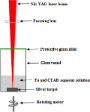
- reference in one cuvette and the second cuvette was filled with thiourea solution and Ag2S nanoparticles. An X-ray diffractometer (XRD-6000, Shimadzu) was used to investigate the structural properties of Ag2S NPs deposited on the glass substrate. A Fourier-transform IR (FTIR) spectrophotometer (8400S




Optically and electrically driven nanoantennas
Beilstein J. Nanotechnol. 2020, 11, 1542–1545, doi:10.3762/bjnano.11.136
- revealing local structural properties is illustrated in [49], where crystalline and amorphous regions within core–shell silicon nanowires are discerned with an optical resolution of a few nanometers. This study further demonstrates that it is possible to combine polarization angle-resolved experiments with
Role of redox-active axial ligands of metal porphyrins adsorbed at solid–liquid interfaces in a liquid-STM setup
Beilstein J. Nanotechnol. 2020, 11, 1264–1271, doi:10.3762/bjnano.11.110

- rates. First, only the overall potential difference between the tip and the sample is known. The potential drops from the surfaces to the solution are governed by the material of the surface and structural properties of the interface, the type and polarizability of the solvent, the solutes (and their


Revealing the local crystallinity of single silicon core–shell nanowires using tip-enhanced Raman spectroscopy
Beilstein J. Nanotechnol. 2020, 11, 1147–1156, doi:10.3762/bjnano.11.99
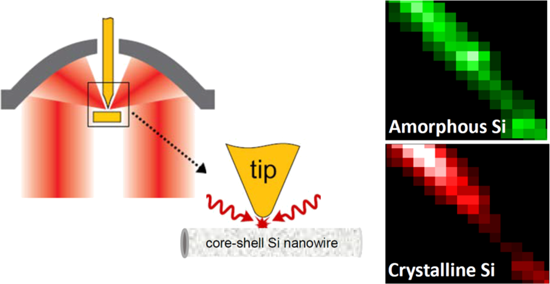
- , Germany 10.3762/bjnano.11.99 Abstract Tip-enhanced Raman spectroscopy is combined with polarization angle-resolved spectroscopy to investigate the nanometer-scale structural properties of core–shell silicon nanowires (crystalline Si core and amorphous Si shell), which were synthesized by platinum
- local structural properties of Si nanomaterials at the sub-10 nanometer scale using tip-enhanced Raman techniques. Keywords: core–shell nanowires; local crystallinity; polarization angle-resolved spectroscopy; silicon; tip-enhanced Raman spectroscopy; Introduction The properties of silicon are long
- popular method to investigate structural properties of silicon samples [16][17]. Mizoguchi et al. [18] and Hopkins et al. [19] utilized it to show the influence of stress on the crystal lattice orientation angles and to determine the degree of surface roughness. Kolb et al. measured the lattice


Simulations of the 2D self-assembly of tripod-shaped building blocks
Beilstein J. Nanotechnol. 2020, 11, 884–890, doi:10.3762/bjnano.11.73

- crucial to reduce time, cost, and effort regarding the preparation of networks with predefined structural properties. There are various molecules that possess the ability to self-assemble on solid surfaces. One of the most interesting types are building blocks of linear [8][9][10][11][12], V-shape [13][14
- though these models are able to compare explicitly the quantities measured in experiments, the possibilities in the prediction of structural properties are limited due to the complex form of the employed interparticle potentials used in the empirical force field, such as Amber99sb [31][32] or MMFF94 [33


Understanding nanoparticle flow with a new in vitro experimental and computational approach using hydrogel channels
Beilstein J. Nanotechnol. 2020, 11, 296–309, doi:10.3762/bjnano.11.22

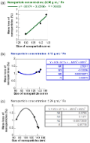
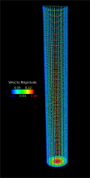
- vascular constructs. Therefore, we first synthesized a series of chemically cross-linked pHEMA hydrogels and investigated their structural properties and water absorption capability to find the best suitable formulation for fabricating flow channels mimicking a soft vascular platform. In this study, we




Internalization mechanisms of cell-penetrating peptides
Beilstein J. Nanotechnol. 2020, 11, 101–123, doi:10.3762/bjnano.11.10

- properties of the peptide and the cargo as well as the concentration applied, in combination with the structural properties of the plasma membrane. As an example, nowadays it is well established that at physiological conditions and low peptide concentration endocytosis prevails, while when a peptide is


Synthesis of amorphous and graphitized porous nitrogen-doped carbon spheres as oxygen reduction reaction catalysts
Beilstein J. Nanotechnol. 2020, 11, 1–15, doi:10.3762/bjnano.11.1

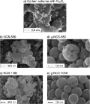
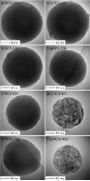
- correlations between structural properties and electrochemical performance. In the following we will first give a detailed structural and chemical analysis of the resulting materials (section 1 in “Results and Discussion”), followed by a discussion of their performance as ORR catalyst in electrocatalytic





Nanostructured and oriented metal–organic framework films enabling extreme surface wetting properties
Beilstein J. Nanotechnol. 2019, 10, 1994–2003, doi:10.3762/bjnano.10.196

- ][41][42][43][44][45]. Thereby, they are attractive synthesis targets for a large variety of applications, including gas storage and separation, chemical sensing, thermoelectrics, capacitors, transistors or photovoltaics [46][47][48][49][50][51][52]. Due to their exceptional variety of structural
- properties and functions, MOFs are intriguing candidates for the design and synthesis of coatings combining a superhydrophilic, superhydrophobic, superoleophilic or superoleophobic character with desired features such as light filtering, hosting cavities, electrical conductivity, etc. In the literature, the


Long-term entrapment and temperature-controlled-release of SF6 gas in metal–organic frameworks (MOFs)
Beilstein J. Nanotechnol. 2019, 10, 1851–1859, doi:10.3762/bjnano.10.180

- temperature, the host MOF can be recycled for further gas-capture cycles. In the future we plan to study the influence of the material crystal size on the loading capacity and focus on engineering structural properties of MFU-4 in order to prepare its analogues with different pore aperture sizes. We believe