


Search results
Search for "surface characteristics" in Full Text gives 52 result(s) in Beilstein Journal of Nanotechnology.
Functionalization of vertically aligned carbon nanotubes
Beilstein J. Nanotechnol. 2013, 4, 129–152, doi:10.3762/bjnano.4.14
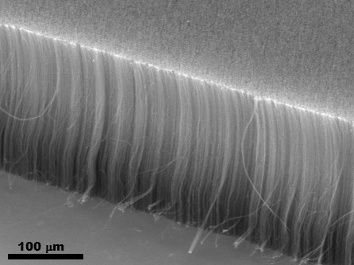
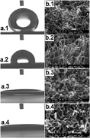
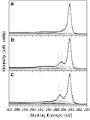
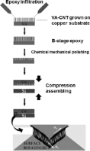
- conductivity, and the uniformly long length. However, practical uses of VA-CNTs are limited by their surface characteristics, which must be often modified in order to meet the specificity of each particular application. The proposed approaches are based on the chemical modifications of the surface by








Friction and durability of virgin and damaged skin with and without skin cream treatment using atomic force microscopy
Beilstein J. Nanotechnol. 2012, 3, 731–746, doi:10.3762/bjnano.3.83

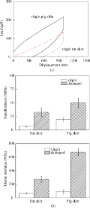
- cosmetics and drugs [23][24], rat skin has also been used as an animal model. Pig skin and rat skin have been compared for percutaneous absorption [25][26], epidermal barrier layer lipids and morphology [27][28]. Table 1 shows some surface characteristics of virgin rat and pig skin. The stratum corneum and
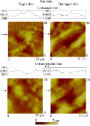
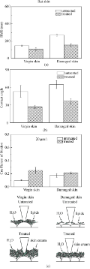
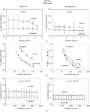
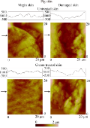
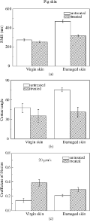
- data, which serve as quantified expressions of the surface characteristics, are shown in Figure 4a. The damaged skin has a higher roughness than virgin skin. After treatment with skin cream, the roughness of virgin skin and damaged skin decreased. The reasonable explanation is that the skin cream can
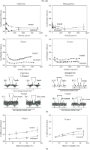
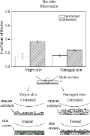
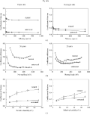
- skin is higher than virgin skin. After treatment, the coefficient of friction of virgin and damaged skin increases. The coefficient of friction of pig skin is higher than that of rat skin because of the different surface characteristics discussed earlier. Effect of velocity, normal load, relative





Other Beilstein-Institut Open Science Activities



