

Search results
Search for "zinc oxide (ZnO)" in Full Text gives 52 result(s) in Beilstein Journal of Nanotechnology.
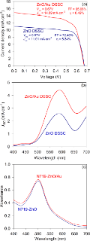
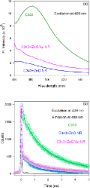
Highly efficient ZnO/Au Schottky barrier dye-sensitized solar cells: Role of gold nanoparticles on the charge-transfer process
Beilstein J. Nanotechnol. 2011, 2, 681–690, doi:10.3762/bjnano.2.73

- for Basic Sciences, Sector - III, Block - JD, Salt Lake, Kolkata 700098, India 10.3762/bjnano.2.73 Abstract Zinc oxide (ZnO) nanorods decorated with gold (Au) nanoparticles have been synthesized and used to fabricate dye-sensitized solar cells (DSSC). The picosecond-resolved, time-correlated single
- electrons is high at each interface. Law et al. [5] proposed the use of single crystalline zinc oxide (ZnO) nanowires instead of the widely used titanium oxide (TiO2) porous thin film to reduce the probability of electron recombination in the DSSC by providing a direct pathway for the electrons to diffuse



Enhanced visible light photocatalysis through fast crystallization of zinc oxide nanorods
Beilstein J. Nanotechnol. 2010, 1, 14–20, doi:10.3762/bjnano.1.3

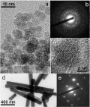
- ][3][4]. Optical absorption in the ultraviolet region (peaking around 220 nm) [5] and low photoefficiency [6][7] are factors that deter the wide scale use of TiO2 for photocatalytic activities under sunlight. Zinc oxide (ZnO), with a high surface reactivity owing to a large number of native defect


Other Beilstein-Institut Open Science Activities