


Search results
Search for "biodistribution" in Full Text gives 84 result(s) in Beilstein Journal of Nanotechnology.
Synthesis of boron nitride nanotubes and their applications
Beilstein J. Nanotechnol. 2015, 6, 84–102, doi:10.3762/bjnano.6.9
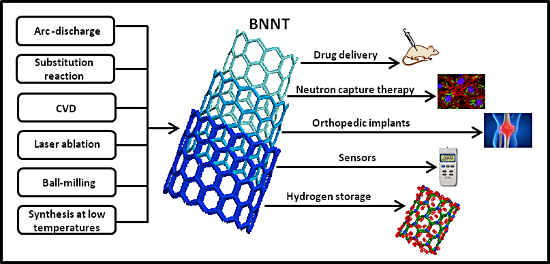
- structures have potential in cancer therapy [85]. To investigate in vivo biodistribution of the BNNTs, they were functionalized with GC then radiolabeled with 99mTc [86]. After 30 min of injection into mice, the BNNTs were in the systemic circulation and accumulated in the liver, spleen and intestinal




The fate of a designed protein corona on nanoparticles in vitro and in vivo
Beilstein J. Nanotechnol. 2015, 6, 36–46, doi:10.3762/bjnano.6.5

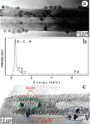
- biodistribution. Our intention was less to add precise binding data on another SPIO example to the literature but more to develop a technique that would allow studying the influence of a preformed test corona also in vivo. This gives reduced amount of information on exchanging parameters of the protein corona but
- we can follow and quantify the consequences of a protein corona formation on the biodistribution of the particle and the test protein directly in vivo, a topic that is most relevant for any nanomedical application in the future. We first looked in an in vitro experiment for the equilibrium binding of
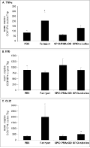
- charged SPIOs had no preformed transferrin corona but must have been also coated by plasma proteins before liver uptake took place implicating a similar biodistribution. This confirms the stability of a corona in a recent study by Wang et al. using a cell culture model [22]. Conclusion This pilot study


Functionalized polystyrene nanoparticles as a platform for studying bio–nano interactions
Beilstein J. Nanotechnol. 2014, 5, 2403–2412, doi:10.3762/bjnano.5.250

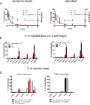
- biodistribution. Polystyrene does not degrade in the cellular environment and exhibits no short-term cytotoxicity. Because polystyrene nanoparticles can be easily synthesized in a wide range of sizes with distinct surface functionalizations, they are perfectly suited as model particles to study the effects of the




The surface properties of nanoparticles determine the agglomeration state and the size of the particles under physiological conditions
Beilstein J. Nanotechnol. 2014, 5, 1774–1786, doi:10.3762/bjnano.5.188
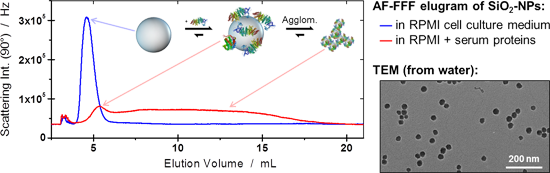
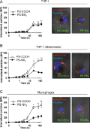
- furthermore induce agglomeration. This affects particle characteristics especially with respect to particle size and size distribution, which can influence the biodistribution, circulation time, intracellular trafficking, clearance or uptake mechanism [17]. Within this paper, we present the size


The cell-type specific uptake of polymer-coated or micelle-embedded QDs and SPIOs does not provoke an acute pro-inflammatory response in the liver
Beilstein J. Nanotechnol. 2014, 5, 1432–1440, doi:10.3762/bjnano.5.155
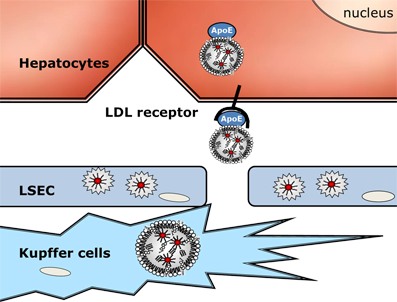
- cadmium-induced toxicity were observed. Other studies focus on the quantification of cadmium as tracer for injected nanocrystals. The laboratory of Lin investigated the biodistribution of QDs in mice over four months [10]. In this study, a slow redistribution of the chemical components from peripheral



The protein corona protects against size- and dose-dependent toxicity of amorphous silica nanoparticles
Beilstein J. Nanotechnol. 2014, 5, 1380–1392, doi:10.3762/bjnano.5.151
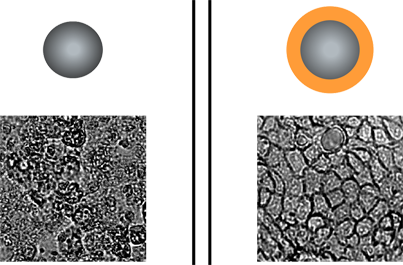
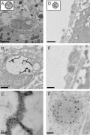
- modulate nanoparticle-induced processes such as opsonization which have direct consequences on the mode of interaction with cells, the efficacy of cellular NP uptake and thus, the organ targeting, biodistribution, and circulatio time of NP in vertebrates and non-vertebrates [22]. Our study indicates that




Optimizing the synthesis of CdS/ZnS core/shell semiconductor nanocrystals for bioimaging applications
Beilstein J. Nanotechnol. 2014, 5, 919–926, doi:10.3762/bjnano.5.105

- in vivo imaging indicated the great potential of 470 nm laser excitation for autofluorescence-free QDs-based animal imaging. Further studies involving a systemic administration of the nanoparticles via the intravenous route and their subsequent studies of the biodistribution are required to gather


Near-infrared dye loaded polymeric nanoparticles for cancer imaging and therapy and cellular response after laser-induced heating
Beilstein J. Nanotechnol. 2014, 5, 313–322, doi:10.3762/bjnano.5.35
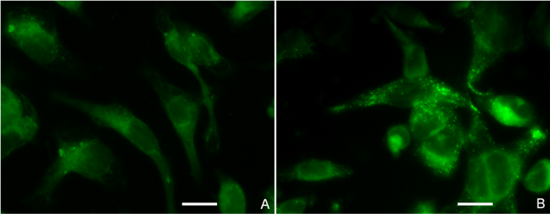
- pharmacokinetics and biodistribution of IR820-PGMD NPs [24]. The present manuscript concentrates primarily on the in vitro response of cancer cells after hyperthermia. Therefore, this paper focuses not only on the cancer imaging and therapy capabilities of IR820-PGMD NPs, but also on exploring the cellular
- Figure 6B, respectively. These images show that the biodistribution of IR820-PGMD NPs is initially very similar to free IR820, as both were processed rapidly through hepatobiliary excretion and start to accumulate in the liver within the first 15 min. After 24 h, it seems that both free dye and NPs were
- plasma concentration 24 h after injection compared to free IR820. In addition, our biodistribution studies showed that kidney IR820 dye content was lower in NP form than in free IR820 form, which means less IR820 was excreted through the renal system when in NP form. This is consistent with kidney


Extracellular biosynthesis of gadolinium oxide (Gd2O3) nanoparticles, their biodistribution and bioconjugation with the chemically modified anticancer drug taxol
Beilstein J. Nanotechnol. 2014, 5, 249–257, doi:10.3762/bjnano.5.27

- treatment of cancer, we first synthesized extracellular, protein-capped, highly stable and well-dispersed gadolinium oxide (Gd2O3) nanoparticles by using thermophilic fungus Humicola sp. The biodistribution of the nanoparticles in rats was checked by radiolabelling with Tc-99m. Finally, these nanoparticles
- ) and X-ray photoemission spectroscopy (XPS). The Gd2O3–taxol bioconjugate was confirmed by UV–vis spectroscopy and fluorescence microscopy and was purified by using high performance liquid chromatography (HPLC). Keywords: bioconjugation; biodistribution; gadolinium oxide; humicola sp; transmission
- spectra was performed by using the Shirley algorithm. The chemically distinct species were resolved by a nonlinear least square fitting procedure. Radiolabelling and biodistribution studies Radiolabelling of gadolinium oxide (Gd2O3) nanoparticles with Tc-99m To fabricate Tc-99m–Gd2O3 nanoparticles, 10 mg


Other Beilstein-Institut Open Science Activities



