


Search results
Search for "emulsion" in Full Text gives 77 result(s) in Beilstein Journal of Nanotechnology.
Review and outlook: from single nanoparticles to self-assembled monolayers and granular GMR sensors
Beilstein J. Nanotechnol. 2010, 1, 75–93, doi:10.3762/bjnano.1.10

- , larger ones by TOPO. The dendrimer has a very high dissociation constant which results in a strong binding to the metal atoms and, therefore, in a slow growth. 1.2 Alternative methods 1.2.1 Micro emulsion and magnetotactic bacteria Another method for the synthesis of nanoparticles is the micro emulsion
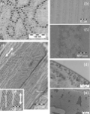
- hydrophobic tails. Such micelles have a size of 1 to 50 nm depending on the tenside concentration [18]. The precursor is confined within these defined droplets which may, thus, act as nanoreactors in which particle growth is initiated. A typical result obtained by the use of an isopropanol/water emulsion and
- cetyltrimethylammonium bromide (CTAB) as a tenside is shown in Figure 4(a); the reducing agent is sodium borohydride. While micro emulsion allows for much lower temperatures during the synthesis, stabilizing tensides usually need to be injected after the actual growth. Therefore, the additional control of the particle




Preparation and characterization of supported magnetic nanoparticles prepared by reverse micelles
Beilstein J. Nanotechnol. 2010, 1, 24–47, doi:10.3762/bjnano.1.5

- present contribution. It is worth noting, however, that in the interim the carrier principle has also been transferred to spherical colloidal polystyrene (PS) particles which can be loaded with various metal precursors by emulsion and miniemulsion methods [57][58]. 1.2 Polymers and precursors In the






Other Beilstein-Institut Open Science Activities



